If you’re planning Seoul to Bali flights with children, start by deciding the routing-versus-fare tradeoff: fewer stops and shorter total travel time usually cost more but save stress, while cheaper multi-leg itineraries demand tougher logistics and more buffer time. For families the arithmetic includes seat availability in the same row, connection windows long enough for restroom and snack breaks, and baggage rules that don’t turn a missed transfer into a huge expense. This guide gives immediate practical steps—what to confirm before you click Book—and explains why each detail matters for kids and caregivers. Prepare exact travel dates, full ages of all travelers, and minimum carry items before checking live options so you can filter by seat maps, connection duration, and fare conditions. If you want a quick comparison, check a consolidation site such as Trip.com alongside carrier sites to verify baggage, change/refund terms, and real-time seat maps on the airline’s booking page.
See live routes for your exact travel day
Compare direct and connecting choices with the same baggage and traveler details.
Routing: direct, one-stop, or multicity connections
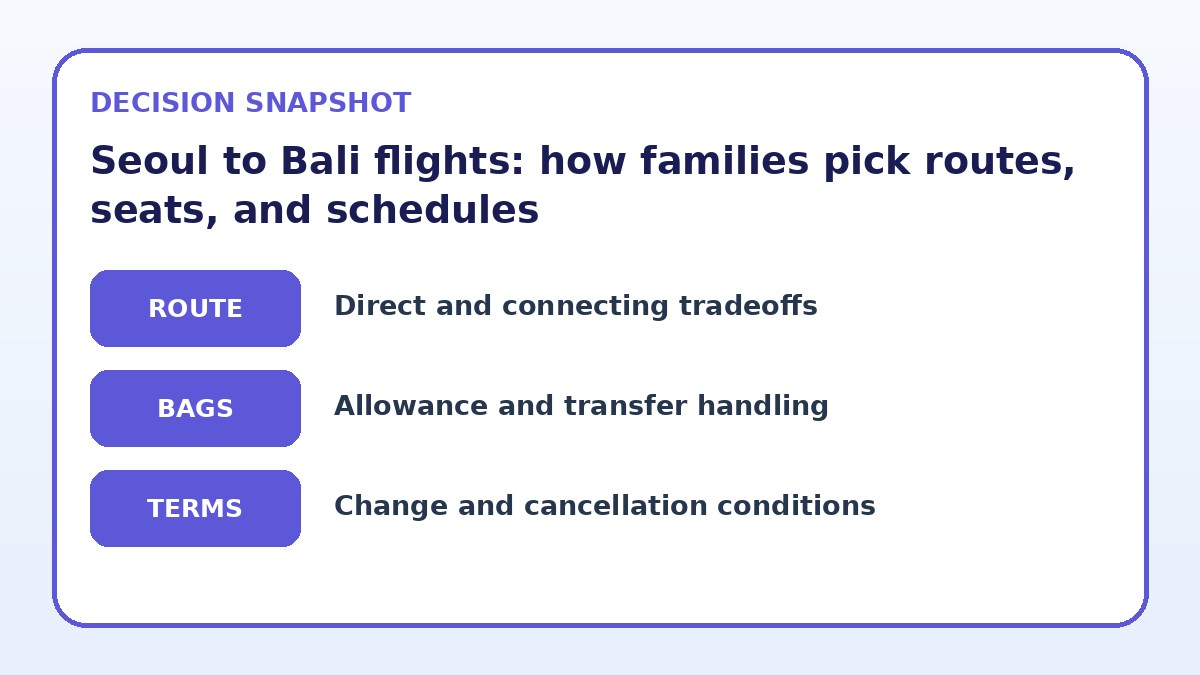
Routing is the core planning choice: a direct or single-connection itinerary reduces handling and stress but may cost more. For families with infants or toddlers, minimizing transfers lowers the chance of lost luggage and gives you a simpler time moving between gates with strollers or carry items. If a direct flight is available, weigh the extra fare against the value of fewer transitions—this is particularly true if one adult will be caring for small children through long transfer walks, security re-checks, or terminal changes.
Multicity or budget routing can save money but adds layers of risk: separate tickets can require you to collect and re-check baggage, and tight layovers can turn a single delay into a missed onward flight. When choosing a one-stop option, prefer connections in airports with compact layouts and automated transfer processes. Always check whether the itinerary is protected by a single carrier or alliance; protected itineraries give more assurance that the airline will rebook you after a delay, while separate tickets shift responsibility to you.
Baggage and connection risk: practical checkpoints
Before committing to any fare, confirm baggage allowances—including checked piece limits, weight, and carry-on size—on the airline’s final booking page. Families often travel with strollers, car seats, and extra luggage: know whether those items are complimentary or count toward your allowance, and how they are handled at connections. If your trip mixes carriers, find out whether bags are interlined. If not, you’ll need extra time to collect, re-check, and clear security—plan at least two to three hours for such transfers depending on airport size.
Assess connection risk by checking minimum connection times at each transfer airport and factoring in typical delays and terminal changes. Look up the layout of your connection airport and whether transfers require a shuttle or immigration clearance. For critical connections, build in cushion time for restroom breaks, feeding, and diaper changes; if your chosen window is tight, consider paying a bit more for a longer scheduled layover. For international transfers, confirm whether visas or transit permits are required for non-departure gate areas.
Compare flight-selection strategies
| Flight strategy | Best for | Risk to check |
|---|---|---|
| Direct or single-connection premium fare | Families needing minimal transfers and reliable schedules | Higher ticket cost but less connection stress and fewer baggage-handling risks |
| Budget multi-leg itinerary on separate tickets | Price-sensitive families willing to manage logistics | Lower fare but higher chance of missed transfers, extra baggage steps, and no automatic rebooking |
| One-carrier connecting itinerary (protected ticket) | Families who want a balance of cost control and protection | Moderate fares with airline protection, but fewer schedule choices and possibly longer total travel time |
| Split-ticketing with long connection cushion | Families that want cheaper legs but realistic transfer time | Saves money while reducing stress, yet still requires managing two separate bookings and potential visa/transit checks |
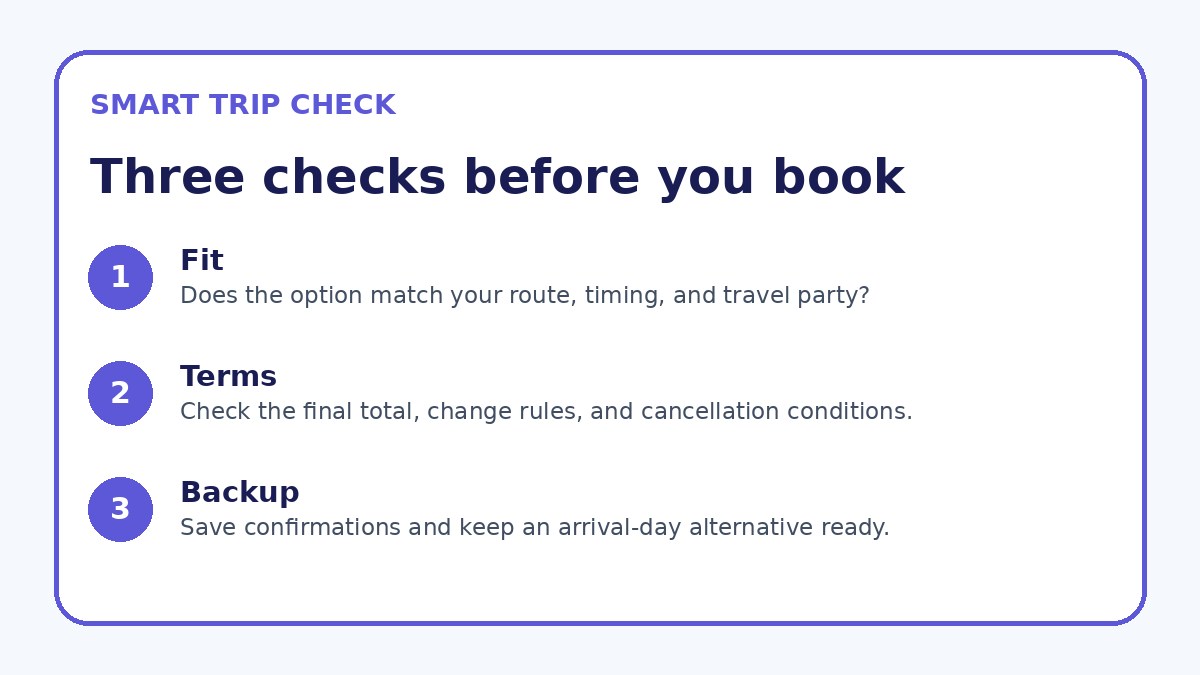
Recheck the complete itinerary
Confirm airports, connection handling, baggage, and change conditions before deciding.
Schedule fit: travel times, routines, and sleep strategy
Align flight times with your children’s routines where possible. Daytime departures that match wake windows make it easier to manage meals and entertainment; overnight flights can work well for longer legs if your children sleep reliably on planes. Factor in local time changes and plan a straightforward arrival day: arriving late evening into Bali may mean a tired household but easier hotel check-in, while morning arrivals can give you a full first day—choose based on how your family handles jet lag and naps.
Think beyond the airborne segment: include transfer bus/taxi times and airport-to-hotel travel when creating your door-to-door schedule. If a connection requires terminal hopping with long walks, that will shape whether you can keep a stroller or need to gate-check. When comparing options, match each itinerary against the family’s typical daily rhythm—feeding times, medication schedules, and sleep windows—and reject any schedule that forces repeated routine breaks that will amplify fussiness and fatigue.
Flight details to verify
- Gather full traveler details (names as in passports and children’s exact ages) and final travel dates before searching fares to filter appropriate prices and seat options.
- Check the airline’s official baggage policy for each fare before booking, including rules for strollers, car seats, and infant items.
- Verify connection airport layouts and minimum connection times, and add at least 60–120 minutes extra for families when switching terminals or retrieving luggage.
- Reserve seats together as soon as available; if bulkhead or bassinet seats are needed, confirm eligibility and book directly with the carrier after purchasing.
- Confirm fare change and cancellation terms on the carrier’s booking page; pay slightly more for flexible fares if your plans could change.
- Prepare an airport kit (snacks, basic medicines, extra clothes, small toys) and plan entertainment and feeding breaks for each scheduled connection.
Fare conditions and booking details to verify
Fare rules determine flexibility and unexpected costs: check change and cancellation terms, the ability to add or change seats, and baggage fees for each fare class. When making a family booking, prioritize fares that allow free or low-cost changes—especially if you have children under two or uncertain travel dates. Verify whether infant fares, lap seats, or reduced child fares apply, and confirm exactly what documentation is required at check-in so there are no surprises at the airport.
When the itinerary involves codeshares or mixed carriers, verify which airline’s rules govern your ticket for baggage and rebooking. Always review the final booking screen on the airline’s site before purchase to confirm seat assignments, carry-on limits, and whether amenities like bassinets or priority boarding are available and can be reserved. If you use an aggregator such as Trip.com to compare options, finish the purchase or at least confirm fare rules on the carrier’s official booking page to ensure accuracy.
Flight Guide questions travelers ask
Should I book a nonstop or a one-stop flight from Seoul to Bali for young children?
If a nonstop is available and within your budget, it simplifies travel—fewer transfers mean less walking, fewer security checks, and lower luggage risk. For many families, the extra fare is worth the time and stress saved. If nonstop options are limited or expensive, a single well-chosen connection with a generous layover in a compact airport can be a practical compromise. Always check whether the itinerary is on one ticket for protection, and confirm baggage transfer policy so you aren’t surprised at the connection.
How long should a layover be when traveling with infants or toddlers?
Plan longer layovers than you would solo: a safe rule is to add at least an extra 60–90 minutes beyond the airline’s stated minimum connection time when you’re managing children, strollers, and extra baggage. For separate-ticket transfers where you must recheck luggage, allow two to three hours depending on airport size and whether immigration is required. Factor in time for feeding, diapering, and short rest stops; a longer buffer reduces the stress of hurrying and the chance you’ll miss your onward flight.
What should I verify on the airline’s booking page after finding a good itinerary?
On the carrier’s final booking page, confirm seat availability and adjacent seats, exact baggage allowances and fees, whether bassinets or priority boarding are available, and specific change or cancellation conditions. If your itinerary involves codeshares or partner airlines, check which carrier’s rules apply to baggage and rebooking. Also verify required travel documents for each passenger. If you used a third-party site to discover the fare, use the airline page to confirm these details before you pay to avoid surprises at check-in.
Final decision note
Planning Seoul to Bali flights for a family trip is a balance between reducing transfer complexity and managing fare costs. Prioritize routing that keeps connections simple, verify baggage and fare rules on the carrier’s booking page, and align schedules with your children’s routines to limit disruption. When comparing itineraries, factor in protected tickets, seat availability together, and realistic transfer times rather than just headline fares. With exact travel dates and traveler details at hand you’ll make faster, safer choices—book seats and any special equipment early and leave a comfortable time cushion at each connection so your family can travel with less stress.
Continue planning
Check current options and final conditions
Use the provider page to confirm live availability, the final total, cancellation terms, and every condition that matters to your trip.
This evergreen planning guide was created with AI-assisted drafting and a structured quality review. It does not display live prices, schedules, availability, visa guidance, or provider rankings. Verify current details before booking. Some links are affiliate links; we may earn a commission at no additional cost to you.