If you’re traveling to Singapore with large suitcases, sports gear, or multiple checked bags, the first practical decision is whether driving will save time and hassle at all. For many city-center itineraries in Singapore the main benefits of renting are flexibility and easier transfers when public transport would mean juggling bags across trains and taxis. Airport pickup puts the car right where you land; city pickup can cut fees and lessen return friction. This article gives a clear recommendation up front, spells out the tradeoffs you’ll face with insurance and pickup/return logistics, and offers a non-driving fallback you can book instead. Read on to decide which pickup point matches your luggage, schedule, and comfort level — and what to verify on the final booking page before you commit.

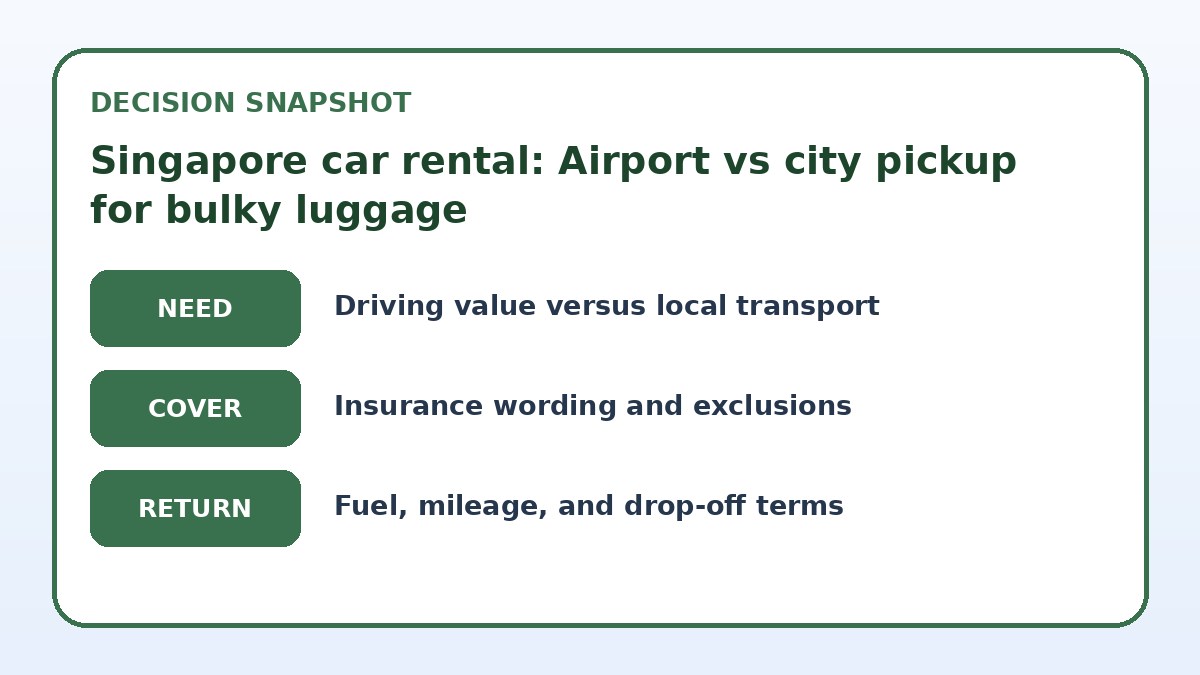
Should you drive in Singapore with extra luggage?
Begin by evaluating route value. Singapore is compact and has excellent public transport and taxi services; if your itinerary is limited to central neighborhoods, museums, or short island trips, the time saved by driving may be minimal once parking and congestion are included. Conversely, if you plan day trips to outlying spots, night transfers with heavy bags, or multi-destination touring with equipment, a car can transform logistics and reduce repeated handling of luggage.
Also weigh personal comfort and group size. A solo traveler comfortable with MRT and airport transfers may prefer public transit, while families, people with mobility needs, or groups carrying sports equipment will often find a rented vehicle a net convenience. Make a short list of the trips you’ll actually make in Singapore and map whether each benefits from private transport versus a single taxi or multiple transit rides.
Decide whether driving earns its place
| Mobility strategy | Best for | Cost or friction to check |
|---|---|---|
| Airport pickup with immediate drive | Travelers landing late, carrying bulky suitcases, or heading straight out of the city. | Often higher surcharges and potentially longer return queues; confirm after-hours policies and airport fees on the booking page. |
| City pickup after arriving by taxi/public transport | Guests staying overnight in central hotels who want lower surcharges and more vehicle options. | Requires an extra transfer with luggage to reach the pickup point; check transfer time and luggage handling capacity. |
| One-way rental with different return location | Drivers planning linear itineraries that end near another major terminal or city exit. | May incur drop-off fees and limited availability; verify one-way terms, allowed return locations, and extra charges before booking. |
| Skip driving: taxi/rideshare or private transfer | Short city itineraries, travelers uncomfortable with driving, or those avoiding parking and tolls. | Less flexibility for multi-stop day trips; compare cumulative taxi costs and convenience against rental total before deciding. |
Check live rental choices only after the route test
Use the exact driver, dates, pickup point, and return plan to compare current conditions.
Route value and pickup/return friction
Airport pickup minimizes immediate handling: you step from arrivals to the rental desk or shuttle with your bags. That convenience is valuable if you land late, have tight connections, or wish to drive straight to a hotel outside the city center. However, airport pickups sometimes come with higher surcharges and can mean long return lines; check the rental operator’s stated pickup process and any shuttle requirements on the booking page.
City pickup places the collection point nearer downtown hotels and often lowers airport surcharge exposure. It can be a good choice if you intend to stay centrally overnight before starting a longer drive. The tradeoff is the transfer from the airport to the city pickup location: factor in taxi time, luggage handling, and potential traffic delays, plus whether the city location has convenient after-hours return options and secure parking for returns.

Compare the full rental conditions
Confirm insurance wording, exclusions, deposit, fuel, mileage, and return terms on the final page.
Insurance, fees, and what to verify before booking
Insurance wording is crucial when you carry costly equipment or intend to cross jurisdictions. On the final booking page, verify liability limits, excess/deductible amounts, whether CDW (collision damage waiver) and TP (third-party) coverage are optional or included, and if personal belongings are covered or require separate insurance. If the rental will be used for sports equipment or off-island trips, confirm any exclusions or additional endorsements that may apply.
Also confirm fees and practical terms you’ll face at pickup and return: airport surcharge presence, after-hours pickup or drop-off policies, extra-driver charges, young-driver fees, mileage limits, and fuel policy. When provider-specific facts could change, note the exact wording on the final booking page and take screenshots or download terms for your records; that guarantees you know what the counter agent will reference at handover.
Car rental terms to verify
- On the rental provider’s booking page, confirm whether airport pickup includes an airport surcharge and note the exact wording of any fees.
- Verify insurance coverage details: collision damage waiver, third-party limits, deductible amounts, and any exclusions for sports gear.
- Confirm pickup and return hours, after-hours procedures, and whether a shuttle is required to reach the rental desk.
- Check vehicle trunk capacity and request a specific vehicle category or accessory (roof box, larger trunk) if you have oversized luggage.
- Compare estimated total cost for rental days plus parking and tolls against pre-booked taxi or private transfer alternatives.
- Save or screenshot the rental terms and required documents (license, passport, credit card) shown on the final booking page for counter reference.
Non-driving fallback and final decision tips
Have a solid fallback in case renting becomes unattractive: pre-book a large-capacity taxi, private transfer, or an airport-to-hotel shuttle with room for oversized luggage. Singapore’s taxis and rideshares can handle bulky items and avoid the need to navigate parking and unfamiliar signage. If cost is a concern, compare the total estimated taxi fares for your planned drives against the daily rental plus likely parking and surcharge costs to see which is cheaper and less stressful.
Before you book, make a checklist: confirm pickup location details, required documents, fuel policy, and any additional vehicle equipment (roof box, child seats) you need. If you still tilt toward driving, choose the pickup option that minimizes the number of times you handle luggage: airport pickup for immediate departures, city pickup if you’ll be staying centrally first. Finally, keep flexibility — refundable options or free changes reduce risk if plans change.
Car Rental & Road Trip questions travelers ask
Is airport pickup worth it if I only have one oversized suitcase?
Airport pickup is often worth it when you want to avoid extra transfers and immediate handling of an oversized suitcase, especially if you land late or plan to drive out of the city straight away. However, if your stay is centrally located and you’ll be checking into a hotel first, the added cost of airport surcharges may outweigh the convenience. Compare taxi transfer ease and cost to the airport pickup surcharge on the provider’s booking page to make a choice tailored to your arrival time and comfort with handling luggage on trains or between transfers.
What specific insurance clauses should I look for when transporting equipment?
Look for clauses that mention personal effects coverage and explicit exclusions for sporting or professional equipment; many standard policies limit or exclude coverage for valuable gear. Verify collision damage waiver (CDW) terms, deductible amounts, and whether theft protection applies when the vehicle is unattended. If cross-border travel or island hopping is planned, confirm territorial limits. Always capture the exact policy language on the booking page and ask the provider to add written endorsements for any additional coverage you need before pickup.
Can I return the car to a downtown location if I picked up at the airport?
Many operators allow one-way returns to city locations, but availability and extra fees vary widely. Before booking, check the rental company’s allowed return sites and any associated drop-off charges on the final reservation page. Also confirm logistics for after-hours returns and whether the downtown lot provides secure keys drop or requires an agent to be present. If the provider’s one-way terms are unclear, contact them directly and request the written return procedure to avoid surprises at drop-off.
Final decision note
For travelers with extra luggage in Singapore, the right pickup choice depends on your arrival timing, itinerary shape, and tolerance for extra handling. Choose airport pickup if you value a single-step transfer from plane to car and are heading out of the city immediately; expect potential surcharges and double-check after-hours policies. Choose city pickup if you’ll stay centrally first and want to reduce airport fees, accepting the added transfer with baggage. If you decide against driving, pre-book a large-capacity taxi or private transfer and compare total costs to the rental scenario. Whatever you choose, verify insurance wording, surcharge details, and pickup/return terms on the provider’s final booking page before you commit.
Continue planning
Check current options and final conditions
Use the provider page to confirm live availability, the final total, cancellation terms, and every condition that matters to your trip.
This evergreen planning guide was created with AI-assisted drafting and a structured quality review. It does not display live prices, schedules, availability, visa guidance, or provider rankings. Verify current details before booking. Some links are affiliate links; we may earn a commission at no additional cost to you.