If you’re solo and weighing Seoul to Jeonju transport options, the most practical choice hinges less on speed and more on ticket flexibility. Decide first whether you value the freedom to change plans, guaranteed seat access, or the cheapest possible non-refundable option. Rail typically wins for seat comfort and straightforward station transfers, coaches can offer more departure choices and lower walking distance to some terminals, and combinations (train plus local bus or taxi) sometimes give the best door-to-door fit. This article gives a straightforward decision path: compare where you start and end in the city, how much luggage and transfer hassle you’ll accept, what change and refund rules matter to you, and how to set a realistic disruption backup. Read on to prioritize criteria and use the comparison rows when you’re ready to book or rebook.
Choosing a mode: rail, coach, or mixed
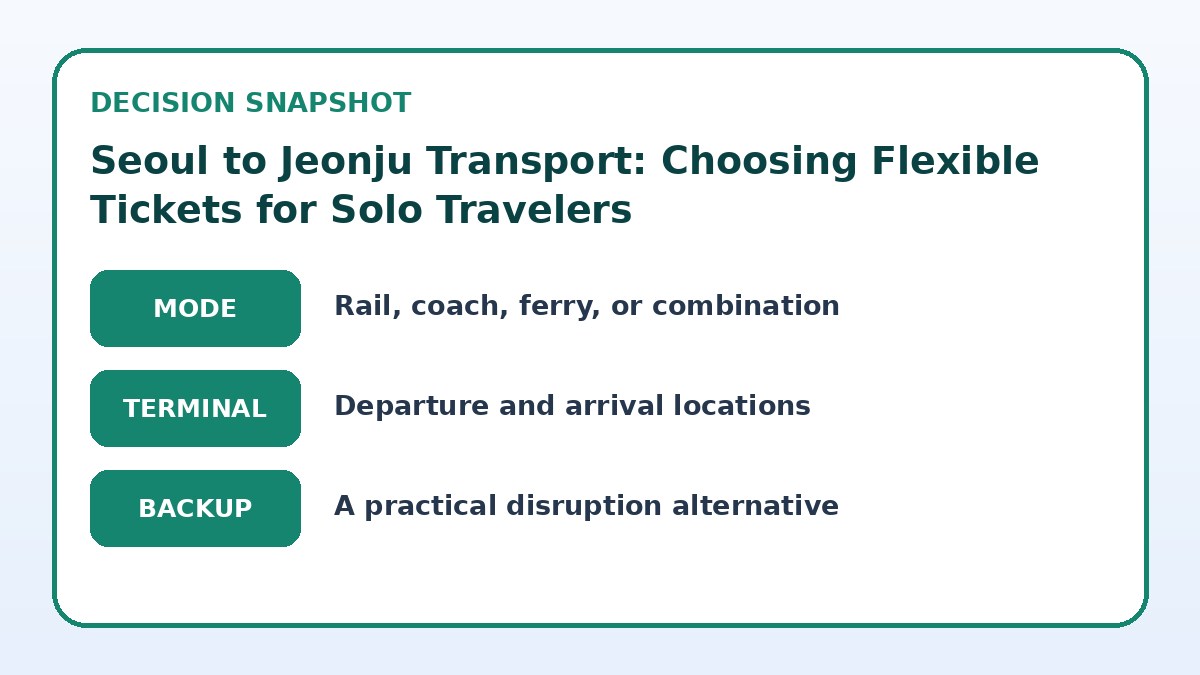
For solo travelers the first decision is which transport mode fits your day: consider rail, intercity coach, or a mixed option that pairs a train with a local bus or taxi. Trains usually serve major stations with clear connections to local transit; coaches often depart from bus terminals that may be easier to reach with heavy bags. Mixed options let you use a fast train for the bulk of the distance and a short coach or taxi for the final leg, which can be useful if your accommodation is outside Jeonju’s central area.
When comparing modes for ticket flexibility, focus on how each provider handles changes, transfers, and missed connections. Some train tickets permit day-of changes for a fee or require seat exchange at the station; coach providers may let you board a later service on the same day or enforce strict no-change rules. A mixed itinerary adds complexity because you may need to understand separate policies for each leg and whether a missed connection is considered the passenger’s responsibility or protected by the carrier.
Choose the end-to-end journey plan
| Journey approach | Best for | Friction to check |
|---|---|---|
| Flexible train ticket (refundable/changeable) | Travelers who want straightforward station transfers and the ability to shift to another train with minimal hassle. | Higher upfront ticket flexibility often means paying more or accepting seat reservation conditions; verify exact change windows and fees before booking. |
| Non-refundable discounted coach or train | Solo travelers with fixed plans who prioritize lower cost and can confidently keep scheduled times. | Saves money if plans are fixed but offers little help for same-day disruptions or missed connections; cancellation usually means no refund. |
| Mixed itinerary (train + local coach/taxi) | Those needing precise door-to-door fit when arrival/departure points are outside main terminals. | Adds complexity: each leg may have different rules and separate change fees, so a missed connection can be costly or require rebooking multiple tickets. |
| Open or semi-flex tickets with multiple carriers | Travelers who want the freedom to pick the best departure on the travel day across several providers. | Convenience depends on the policy details and on having multiple departure options; may require more advance research to confirm cross-carrier acceptance. |
Check live intercity options
Look beyond the ride itself and compare terminals, transfers, luggage, and arrival fit.
Terminal fit and luggage/transfer friction
Terminal location determines door-to-door practicality. In Seoul, different rail and bus terminals are spread across the city—pick the option that minimizes transfers between where you’re staying and the departure point. Heavy luggage increases friction: check whether the terminal has luggage storage, elevators, or long walks between platforms. If you expect to join the trip from an outer district or arrive late, a departure point with simple taxi access can outweigh a slightly faster ride from a distant station.
Transfer friction also affects ticket flexibility in practice. A ticket that allows changes is less valuable if the alternative departure requires long transfers or if the connecting provider enforces separate policies. For mixed itineraries, verify whether the second leg’s boarding point is within easy reach of the arrival platform and factor in the time needed for ticket exchanges or customer service visits—these are the real costs of so-called flexible options.
Timing flexibility and how to compare change/refund rules
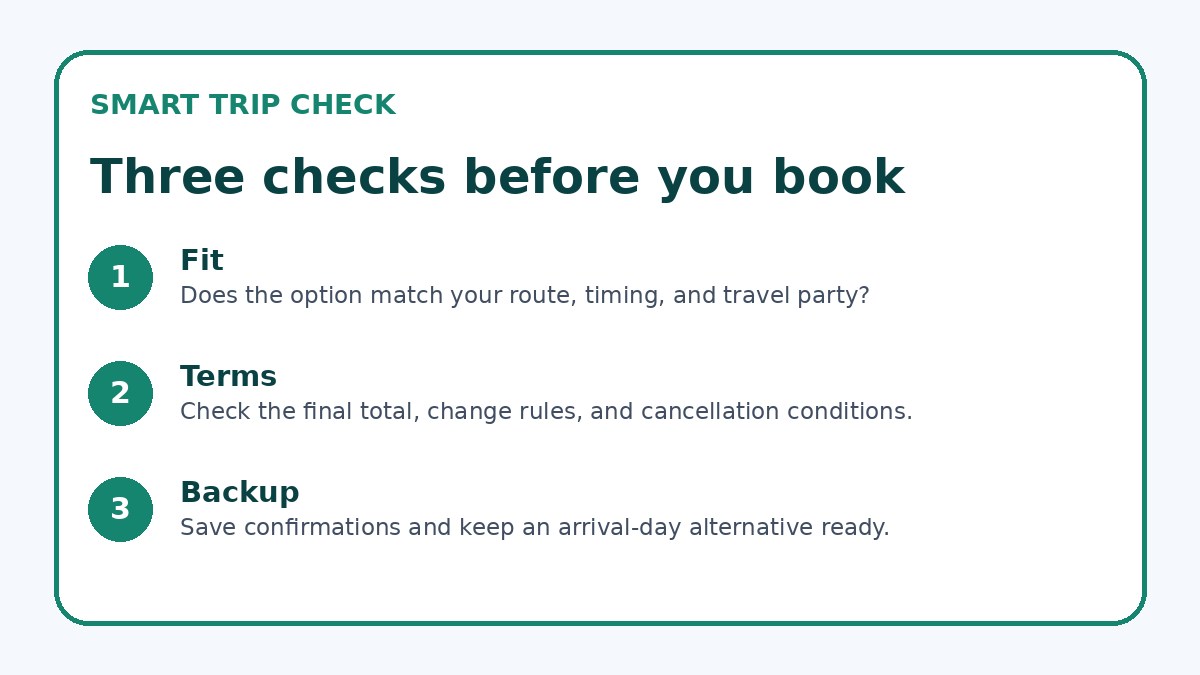
Timing flexibility is more than how many departures exist; it’s about how the provider treats changes and refunds. Before booking, read the final booking page to confirm allowable change windows, incremental fees, refund processing, and whether a change preserves seat class or requires paying fare differences. For solo travelers who prioritize spontaneity, give extra weight to tickets that permit free or low-cost same-day changes and those with many departures, since those allow you to shift plans without a long wait.
If you’re comparing a direct train versus a connecting itinerary, watch for combined-ticket protections. A single-ticket connection generally offers more protection for missed legs than two independently booked legs. If the provider does not offer combined protection, build in longer transfer margins or opt for a single flexible ticket where possible. Always verify whether the operator’s printed policy applies to online bookings, phone reservations, or station-only purchases—policies can differ by sales channel.
Compare the practical alternatives
Use the final page to confirm what is actually offered on your dates and save a workable fallback.
Intercity travel checklist
- Map your door-to-door time from accommodation in Seoul to your final address in Jeonju, including likely taxi or transit legs at both ends.
- Open the provider’s final booking page and copy the exact change and refund policy, noting time windows, fees, and whether online changes are allowed.
- Compare how many daily departures each mode offers and choose a ticket type that matches your tolerance for waiting or shifting plans.
- If using a mixed itinerary, confirm boarding points between legs and add at least 30–60 minutes as buffer for unexpected delays.
- Identify at least two disruption backups (later train, coach option, or taxi) and estimate their additional cost before you book.
- If using a comparison site like Trip.com, still verify all fare rules on the carrier’s official booking page before finalizing payment.
Disruption backup and end-to-end practicality
Plan a disruption backup that prioritizes getting you to your final door, not just to a station. Identify alternate routes, such as later trains, coaches, or reasonably priced taxi segments, and estimate how each backup affects time and cost. For solo travelers, a practical backup might be a more flexible ticket on the return leg, a refundable portion you can cancel, or a reserve fund for a short taxi if connections fail late at night—choose whichever keeps you safe without untenable expense.
Finally, confirm practical details before you commit: station-to-station transfer time, last-mile taxi or public transit options at your arrival in Jeonju, and whether you’ll need additional local transport to reach your accommodation. Verify all change, cancellation, and boarding rules on the provider’s booking page; if you want an aggregated view of availability and rules before booking, consult a comparison site like Trip.com but always confirm policy details with the carrier at checkout.
Rail & Intercity Transport questions travelers ask
Can I change a Seoul to Jeonju train ticket on the travel day and catch a later departure?
It depends on the ticket class and the train operator’s rules. Some flexible train fares allow same-day changes for a fee or at no extra cost within a specific window; others require advance changes or impose seat-reassignment steps at the station. Always check the exact terms on the operator’s final booking page before purchase. If same-day changes are important, prefer fares explicitly labeled changeable or refundable and confirm whether you’ll need to visit a ticket office to complete the change.
How should I handle luggage and transfers when prioritizing flexibility?
Pick a departure point that minimizes walking and elevation changes if you travel with heavy bags—terminals with direct taxi ranks or subway links reduce transfer friction. Flexible tickets help if a disruption forces you to wait for another departure, but they don’t reduce the physical effort of moving luggage between platforms or terminals. If terminals have luggage storage, factor that into transfer plans; otherwise choose a ticket and itinerary that keeps transfers short and simple.
What counts as a protected connection versus an independent booking for mixed routes?
A protected connection is typically sold as a single ticket covering both legs; the carrier or the combined ticket provider takes responsibility for missed connections under their policy. Independent bookings mean each leg is a separate contract and missed connections are usually your responsibility. Always confirm on the booking page whether multiple legs are sold as one combined fare or as separate bookings, and read the provider’s missed-connection and rebooking rules before committing.
Final decision note
For solo travelers on the Seoul to Jeonju route, ticket flexibility should be judged by door-to-door practicality rather than onboard speed alone. Start by mapping transfers and luggage needs, then prioritize tickets whose change and refund rules match how spontaneous you want to be. If protecting a tight schedule, choose flexible or refundable options; if your plans are firm and you accept more risk, non-refundable options can work. For mixed itineraries, treat each leg’s rules separately or buy a combined ticket to avoid uncovered missed connections. Always confirm exact policies on the provider’s final booking page, and consider a simple disruption backup to keep your journey predictable.
Continue planning
Check current options and final conditions
Use the provider page to confirm live availability, the final total, cancellation terms, and every condition that matters to your trip.
This evergreen planning guide was created with AI-assisted drafting and a structured quality review. It does not display live prices, schedules, availability, visa guidance, or provider rankings. Verify current details before booking. Some links are affiliate links; we may earn a commission at no additional cost to you.