If you’re traveling New York City to Boston, pick the right combination of rail, coach, or a mixed route by focusing first on where each mode starts and finishes. For many visitors this is less about the fastest ride and more about terminal proximity to your origin or destination, how easy transfers are with luggage, and what to do if a service is delayed. Start by mapping door-to-door travel time: your hotel to the departure terminal, then the terminal to your Boston address. Consider whether you need one straight transfer or several steps between subways, regional rail, or buses. This article explains tradeoffs — terminal fit, luggage friction, schedule flexibility, and a clear disruption backup — so you can choose the most practical option for your arrival and departure plans.
Choosing between rail, coach, ferry, or mixed routes
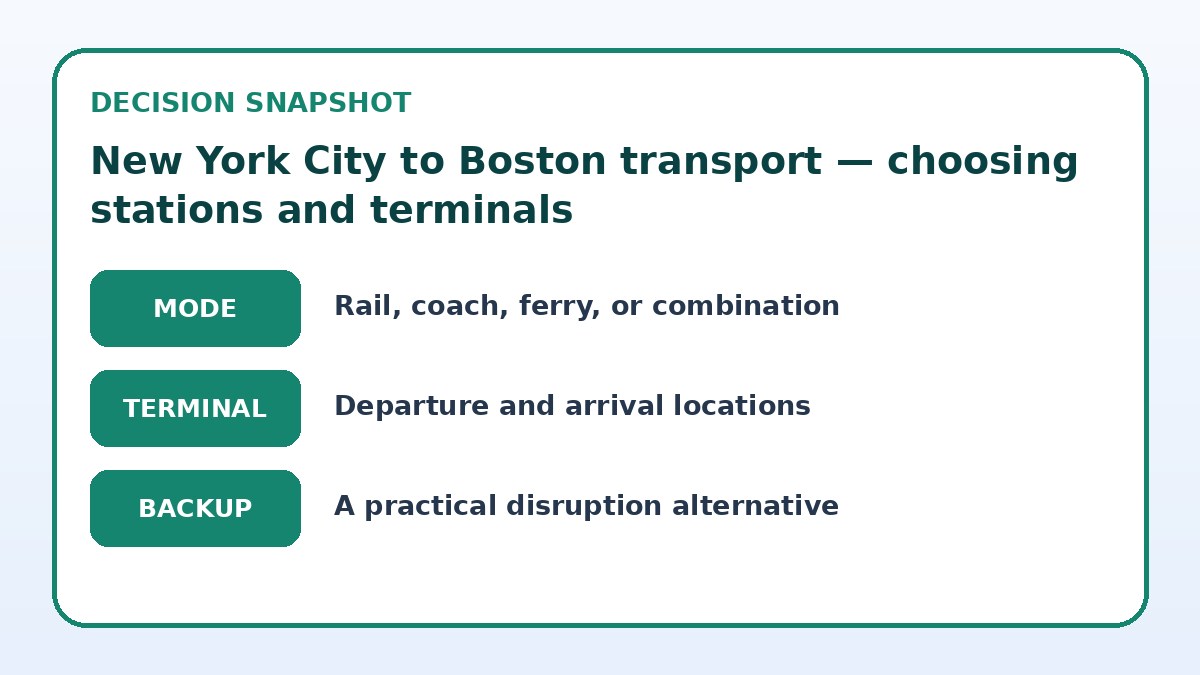
Start by identifying the terminals each mode uses and how each terminal fits your origin and destination neighborhoods. In dense cities, a central train station can be closer to hotels and transit than an intercity bus terminal or an airport. Coaches often use curbside or terminal stops that are cheaper but may require an extra subway or taxi hop in each city. Mixed routes — for example, a train to a nearby city followed by a short bus or rideshare — can reduce costs or provide different departure times but multiply the number of transfers and the chance of missed connections.
For first-time visitors, practicality beats theoretical speed: map the exact walking time, subway or taxi time, and waiting time between legs. Consider how comfortable you are with multiple changes under time pressure and with luggage. If your itinerary requires punctual meetings or early check-ins, prefer options with fewer transfer points or more frequent departures. Use train and coach operator booking pages to verify terminal addresses and entry procedures before you finalize any reservation; if you compare availability on Trip.com remember to check the operator’s own site to confirm boarding rules, luggage limits, and terminal entry advice.
Choose the end-to-end journey plan
| Journey approach | Best for | Friction to check |
|---|---|---|
| Direct intercity rail (single train, central terminals) | Travelers who prioritize fewer transfers and easier station-to-station navigation. | May require longer pre- or post-journey travel to reach central stations or higher ticket flexibility costs. |
| Intercity coach (curbside or bus terminal stops) | Visitors seeking frequent departures or lower upfront fares with straightforward curbside boarding. | Often involves extra urban transfers and more luggage handling at stops, increasing door-to-door time. |
| Mixed route (train plus short coach or rideshare legs) | When schedules or pricing make a single-mode option unavailable or inconvenient for your exact times. | Increases the number of handoffs and the risk of missed connections; needs more buffer time. |
| Flexible multi-option plan (bookable backups and flexible tickets) | Travelers with tight schedules who want contingency options and reduced stress from delays. | Typically more expensive and requires active monitoring of schedules and rebooking policies. |
Check live intercity options
Look beyond the ride itself and compare terminals, transfers, luggage, and arrival fit.
Terminal fit and station access in both cities
Terminal fit means how easy it is to get from your starting address in New York City to the departure terminal and from the arrival terminal in Boston to your final destination. Central train stations typically connect directly with local transit lines, while some bus terminals are located near arterial roads and may need a short subway or bus ride. Check whether terminals have elevators, baggage trolleys, or curbside drop-off; these details matter when you have heavy luggage or mobility concerns. If your hotel is near a specific transit line, prioritize services that use a station on that line to reduce extra taxi fares and transfer time.
Think about the micro-steps: elevator waits, stairs, escalators, and the distance from curb to platform. A terminal that looks close on a map can be a long haul with luggage if it requires several flights of stairs or narrow sidewalks. For arrivals in Boston, confirm which station or stop is closest to your neighborhood — some long-distance services arrive at different terminals or stops. When operator-specific details could change, verify terminal addresses, platform procedures, and luggage allowances on the provider’s final booking page so you won’t be surprised at check-in.
Luggage, transfer friction, and timing flexibility
Assess luggage friction by counting transfer steps: how many times you’ll need to lift bags into a bus or up stairs, and whether there is checked-luggage service. Trains often have space for carry-on and some overhead storage, while coaches may restrict dimensions or require curb-side handling. If you must move between subway lines or across large stations, allow extra time — especially during peak hours when elevators and escalators are busy. Choose connections with comfortable margins and consider travel insurance or flexible tickets if your schedule is tight and disruptions would be costly.
Timing flexibility matters more than a few minutes saved on the scheduled journey. Frequent coach services and multiple daily trains give you wiggle room; single, early departures require a stricter plan. When comparing options, align departure windows with the least stressful part of your day: avoid overnight arrivals at unfamiliar terminals and aim to arrive during daylight if you’re unfamiliar with local transit. If you are booking separate tickets for each leg, leave additional buffer time between services to account for typical urban congestion and potential delays.
Compare the practical alternatives
Use the final page to confirm what is actually offered on your dates and save a workable fallback.
Intercity travel checklist
- Map door-to-door time from your NYC address to the departure terminal and from the Boston arrival terminal to your final destination.
- Verify terminal addresses, entry procedures, and luggage rules on the operator’s final booking page before you confirm any reservation.
- Choose services with fewer transfer steps if you travel with heavy luggage or have mobility needs — prioritize elevators and short walking distances.
- Leave at least one alternate departure or route in your itinerary and note how you would reach it quickly from your origin point.
- Download offline maps for both cities, save boarding confirmations and terminal addresses, and screenshot customer-service contacts.
- Compare total trip friction (walking, stairs, waiting, rideshare time) not just vehicle travel time when selecting between rail and coach.
Disruption backups and end-to-end door-to-door practicality
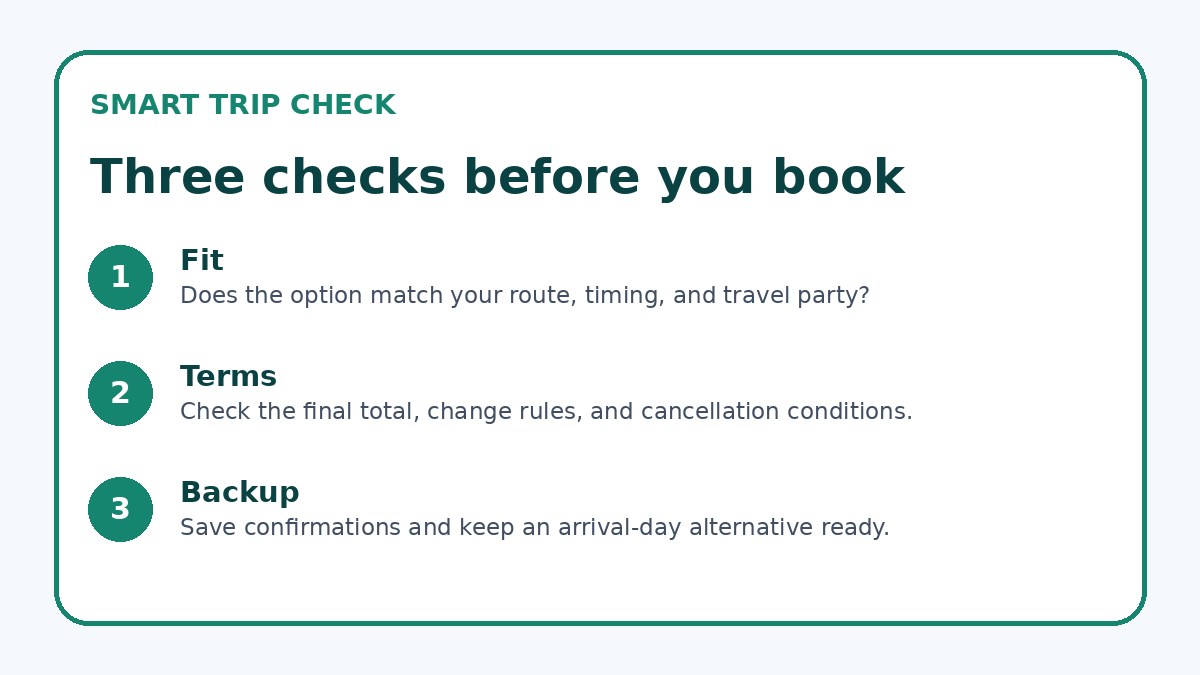
A realistic backup plan should be simple to execute: identify the next available service type (train or coach), a nearby terminal you can reach quickly, and an alternative route using local transit or rideshare. Make a shortlist of two backup departures and note how you would reach them from your origin if the first option is canceled. If you have tight onward connections, look for through-ticketing options that protect you in the operator’s rules; when through-ticketing isn’t available, plan a generous buffer and know the penalties or rebooking steps on the provider’s final booking page.
Focus on door-to-door practicality: a slightly longer trip that minimizes transfers and avoids stairs often beats a faster but fragmented itinerary. Keep digital and paper copies of reservation confirmation, terminal addresses, and customer-service numbers. Share your plan with any travel companions and set check-in points. If you rely on transit apps or mapping tools, download offline maps for both cities and verify terminal locations in advance so you can adapt quickly if platforms change or a last-minute reroute is announced.
Rail & Intercity Transport questions travelers ask
How do I decide whether to take the train or the coach between New York City and Boston?
Decide by comparing door-to-door time rather than only scheduled ride time. Determine which terminal is closest to your start and end locations, how many transfers each option requires, and how much luggage handling will be necessary. If you prefer fewer transfers and bigger luggage allowances, a direct train that arrives at a central station may be preferable. If you need more departure times or lower upfront cost, coaches typically run more frequently but can add an extra subway or taxi hop in each city. Verify terminal details and luggage rules on the provider’s booking page before you finalize.
What should I check about terminals before I book a trip?
Confirm the terminal’s exact address, platform or stop location, elevator and escalator availability, and curbside drop-off procedures. Check whether the terminal connects easily to local transit lines that link to your hotel and whether there are safe waiting areas if you arrive early. Also verify luggage policies and whether the provider handles checked baggage or requires carry-on only. Since terminal facilities and boarding rules can change, always review the operator’s final booking information and any arrival instructions on the confirmation email.
How much buffer time should I leave for transfers and disruptions?
Leave a generous buffer — more than the minimum connection time — especially if your route includes separate tickets or multiple modes. For most first-time visitors, building at least 60–90 minutes of extra time for city transfers, luggage handling, and unexpected delays reduces stress. If you have a single through-ticket with guaranteed connections, you can reduce this buffer according to the operator’s guidance, but when traveling on separate tickets or during peak traffic periods, err on the side of more time. Always identify alternate services you could reach within that buffer window.
Final decision note
Planning New York City to Boston transport for the first time is mainly about matching terminals and transfers to your specific door-to-door needs. Identify which mode lands closest to your start and end points, account for luggage handling and station access, and choose schedules that give you practical buffer time. Prepare a simple disruption backup and verify terminal addresses and luggage rules on the provider’s booking page before confirming. With those steps you’ll select an approach that reduces transfer friction and delivers the most reliable, stress-free journey for your itinerary.
Continue planning
Check current options and final conditions
Use the provider page to confirm live availability, the final total, cancellation terms, and every condition that matters to your trip.
This evergreen planning guide was created with AI-assisted drafting and a structured quality review. It does not display live prices, schedules, availability, visa guidance, or provider rankings. Verify current details before booking. Some links are affiliate links; we may earn a commission at no additional cost to you.