For most families traveling Sydney to Melbourne, the practical answer is to prioritize the airport that minimizes transfers and door-to-door hassle rather than squeezing out a small fare saving. That often means departing from the main Sydney airport closest to your accommodation or public-transport link so you spend less time moving luggage and more time on the trip itself. Balance this convenience against any fare differences and schedule choices: a cheaper flight from a different airport can be tempting, but extra driving, parking, or an early wake-up can erase the savings. Before you shop, have exact travel dates, the number and ages of travelers, and your carry-on and checked-bag needs ready — these details change which option truly saves time and stress. As you compare live options, verify terminal, baggage allowance, connection times, and cancellation/change rules on the airline or booking page. Trip.com is one place to compare current availability and conditions if you choose to use an aggregator.

See live routes for your exact travel day
Compare direct and connecting choices with the same baggage and traveler details.
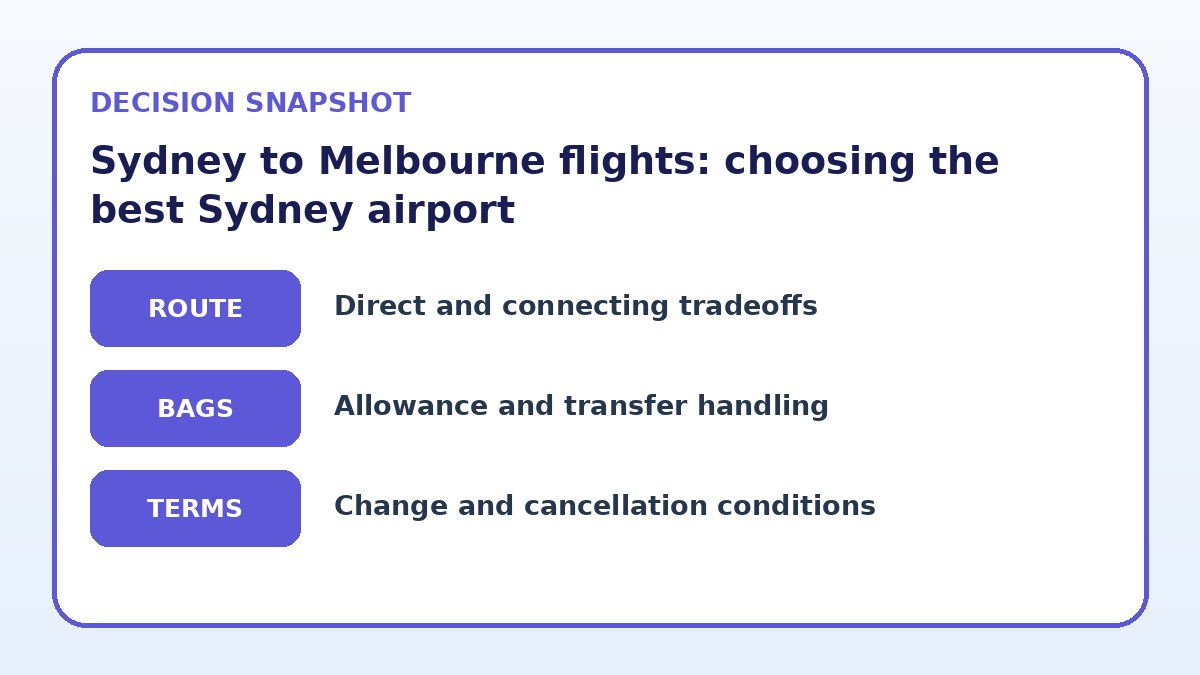
Routing: direct versus extra legs and which airport simplifies the trip
Families should compare whether flights from each Sydney airport are direct to Melbourne or require stops or self-transfers. A single hop with fewer ground transfers is almost always easier with small children and bulky equipment like strollers and car seats. If the main domestic airport offers direct options that land closer to your Melbourne destination or allow the whole family to stay together in one booking, that convenience can outweigh a marginally cheaper fare from an alternate departure point that requires an intermediate stop or a change of planes.
When comparing routes, look beyond the marketed flight time and focus on total door-to-door travel: getting to a further-away departure airport, parking for several days, or riding a shuttle with tired kids can be a larger time and stress cost than the saved fare. Also verify whether a cheaper itinerary means separate tickets for each leg; separate tickets can mean you are responsible for transfers and baggage between flights if something is delayed. Always confirm layover lengths, terminal changes, and whether a single ticket covers both legs before booking.
Baggage and connection risk: what to plan for with family gear
Families carry more than just suitcases—think stroller, car seat, prams, and activity bags. Confirm the baggage allowance and whether each item is counted as checked or allowed as a gate-checked item. Different departure airports can have different airline mixes on offer, and those carriers vary in how they treat child equipment and stroller rules. If you rely on bringing specific gear, prioritize flights and airports where the airline’s baggage policy aligns with your needs, and confirm size and handling rules on the carrier’s official booking page.
Connection risk rises if you need to self-transfer between airlines or terminals at the departure airport. A missed connection becomes much more consequential with children: rebooking, additional fees, and the possibility that equipment is delayed or rerouted. Where possible, book a single itinerary that guarantees interline baggage transfer. If you must self-transfer, allow generous buffer time and plan contingencies—pack essentials in carry-on bags and know the airport transfer options so you can move between terminals quickly if required.
Compare flight-selection strategies
| Flight strategy | Best for | Risk to check |
|---|---|---|
| Depart from the main Sydney airport for shortest transfers | Families prioritizing convenience, fewer transfers, and simpler baggage handling | Often less chance of huge savings; may have busier terminals and longer lines |
| Choose a cheaper flight from a secondary Sydney airport | Families willing to trade travel time for lower ticket prices | Extra ground time, possible self-transfers, and higher connection risk with kids |
| Book the most flexible fare regardless of departure airport | Families with uncertain plans who need changeable tickets | Higher upfront cost; ensure flexibility covers baggage and seat needs |
| Match flight times to child schedules, even if a different airport | Families valuing sleep and routine over airport proximity | May require longer pre-departure travel or parking despite better timing |
Recheck the complete itinerary
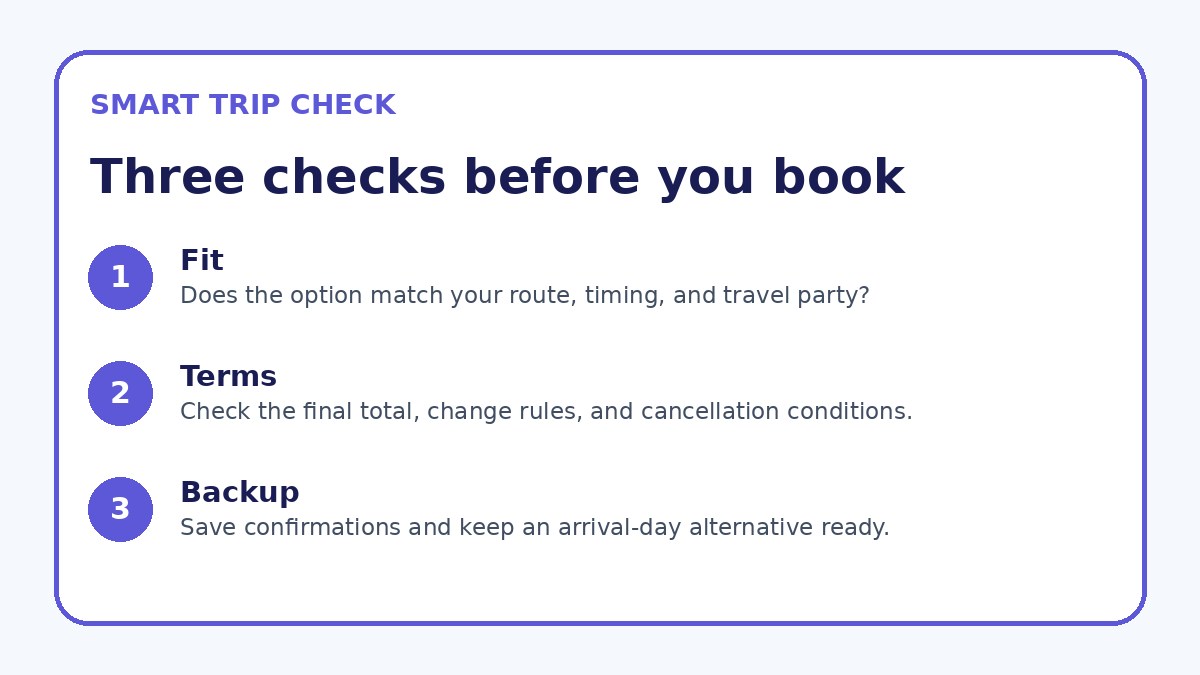
Confirm airports, connection handling, baggage, and change conditions before deciding.
Schedule fit: choosing flight times that suit family routines
Pick flights around your family’s sleep and meal routines. For young children, mid-morning departures often avoid the chaos of overnight packing and the exhaustion of very early starts. Late-afternoon flights can be useful if naps line up, but they risk delays compounding into missed bedtime. Consider travel time to the chosen Sydney airport at your planned departure hour: peak traffic, public transport schedules, and early-morning or late-night service gaps can dramatically change the convenience of a specific airport.
Also think about arrival time in Melbourne and how it affects the rest of your day. Arriving during daylight and public-transport operating hours reduces the complexity of getting to accommodation. When you compare flights, don’t treat all departures as equivalent—run a quick door-to-door timing check for each option, including parking retrieval or taxi/ride-share waits. Confirm the schedule on the airline’s final booking page, and verify connection times and terminal assignments to ensure the itinerary fits your family’s practical needs.
Flight details to verify
- Confirm exact travel dates, number and ages of travelers, and whether infants need a separate seat before searching fares.
- Check baggage allowances and rules for strollers, car seats, and checked bags on the airline’s official booking page.
- Run a door-to-door time estimate for each airport option, including parking, transfer, and public-transport schedules.
- Verify whether itineraries are single-ticket or separate tickets; if separate, plan generous transfer time and contingencies.
- Compare final totals on the carrier’s checkout page, including seat selection, baggage fees, and change/cancellation rules.
- Pack a carry-on with essentials for children (snacks, medications, chargers, a change of clothes) in case checked gear is delayed.
Fare conditions: what to verify before you lock in tickets
Fare differences between airports often hide rules that matter more to families than headline prices. Inspect change and cancellation policies, fees for name changes, and how child or infant pricing is applied. If plans could shift, paying slightly more for a flexible fare could be the better option. Also check whether the fare includes seat selection so you can sit together; seat and baggage fees added at checkout can quickly erase the advertised saving on a cheaper ticket.
When you are ready to book, compare final totals on the airline’s booking page: taxes, ancillary fees, and any surge pricing for extras like preferred seats or additional carry items. If you use an aggregator to shortlist options, click through to the carrier’s site to verify the exact fare rules and baggage allowances on the seller’s confirmation screen. That final verification step prevents surprises and ensures the chosen departure airport and flight match your family’s priorities.
Flight Guide questions travelers ask
Is it worth driving farther to a cheaper airport when traveling with children?
Driving farther can be worth it if the fare savings are substantial and you’re comfortable with extra ground time. For families, calculate the total cost including fuel, parking, and the value of your time; add the potential stress of early starts or long transfers. If a cheaper flight requires self-transfers or tight connections, that increases risk and can negate savings if delays occur. Always run a door-to-door timing check and confirm baggage rules on the airline’s booking page before deciding.
How much buffer time should I allow when self-transferring between flights with kids?
When self-transferring, build a generous buffer—more than you would alone—because unexpected stops, stroller handling, and bathroom breaks add time. Allow at least a couple of hours between flights to account for disembarkation, baggage retrieval, terminal change, and security lines. If you’re unfamiliar with the airports involved or traveling during peak times, increase that margin. Check the exact transfer requirements and minimum connection times on the airline pages and factor in the time to move between terminals or parking areas.
What fare features should families prioritize when booking Sydney to Melbourne flights?
Families should prioritize flexibility and clarity on baggage and seat assignments. Look for fares that allow free or low-cost changes, a reasonable checked-bag allowance, and the ability to reserve seats together. Flight times that suit children’s routines and minimal connections are also critical features to value. Before purchase, verify all these features on the airline’s final booking confirmation page, since bundled prices and ancillary rules vary and will affect the true cost and convenience of the trip.
Final decision note
Choosing the most practical Sydney departure airport for a family trip to Melbourne is a question of total convenience, not just headline price. Prioritize routes and airports that reduce transfers, simplify baggage handling, and fit your family’s daily rhythms. Check fare conditions for flexibility, confirm baggage and stroller rules, and run door-to-door time comparisons for each airport option you consider. Have exact traveler details and dates before you search, and verify final schedules, seat assignments, and fees on the carrier’s booking page. With these checks done, you can pick the option that genuinely saves time, stress, and unexpected costs for your family.
Continue planning
Check current options and final conditions
Use the provider page to confirm live availability, the final total, cancellation terms, and every condition that matters to your trip.
This evergreen planning guide was created with AI-assisted drafting and a structured quality review. It does not display live prices, schedules, availability, visa guidance, or provider rankings. Verify current details before booking. Some links are affiliate links; we may earn a commission at no additional cost to you.