For families deciding how to travel between Sydney and Melbourne, the practical choice is the one that lowers transfer friction and keeps the group together from door to door. Start by comparing rail and coach as primary options; each has different station locations, luggage policies and transfer needs at either end. Think about where you’ll arrive in Sydney and Melbourne, how you’ll get to and from those terminals with children and luggage, and which combination of services reduces walking, waiting and multiple vehicle changes. This article focuses on station and terminal transfers—what to check at booking, how to schedule connections with buffer time, how to handle luggage and strollers, and what backup plans to prepare for disruptions—so your family journey is as smooth as possible.
Choosing between rail, coach or a mixed route
When comparing transport modes for Sydney to Melbourne, focus on how each option fits into your overall door-to-door plan rather than thinking only about the ride. Trains often deliver more space to stretch and move around, which matters with restless children and carry-on items; however, train stations may be further from certain neighbourhoods and require an extra taxi, rideshare or local transit link. Coaches may offer more direct terminal-to-terminal routing and fewer changes but can include tighter luggage compartments and more sensitive timing if traffic is heavy. A mixed route—for example, coach into a city centre followed by a short train or public transfer—can combine benefits but increases the number of transfers, so weigh the trade-off between comfort and transfer complexity.
When evaluating options, map your door-to-door chain: front door to departure terminal, the intercity leg, and arrival terminal to final accommodation. Note whether each leg requires walking with a stroller, multiple flights of stairs, platform changes or a taxi queue. Families should prioritise fewer handoffs and shorter transfer distances; an extra 15–30 minutes waiting time can be far less disruptive than an additional short transfer that requires juggling luggage and children. Make your decision against real constraints: how much you can comfortably carry, whether you’ll have a pram or mobility needs, and what time windows you prefer for arrivals and departures.
Choose the end-to-end journey plan
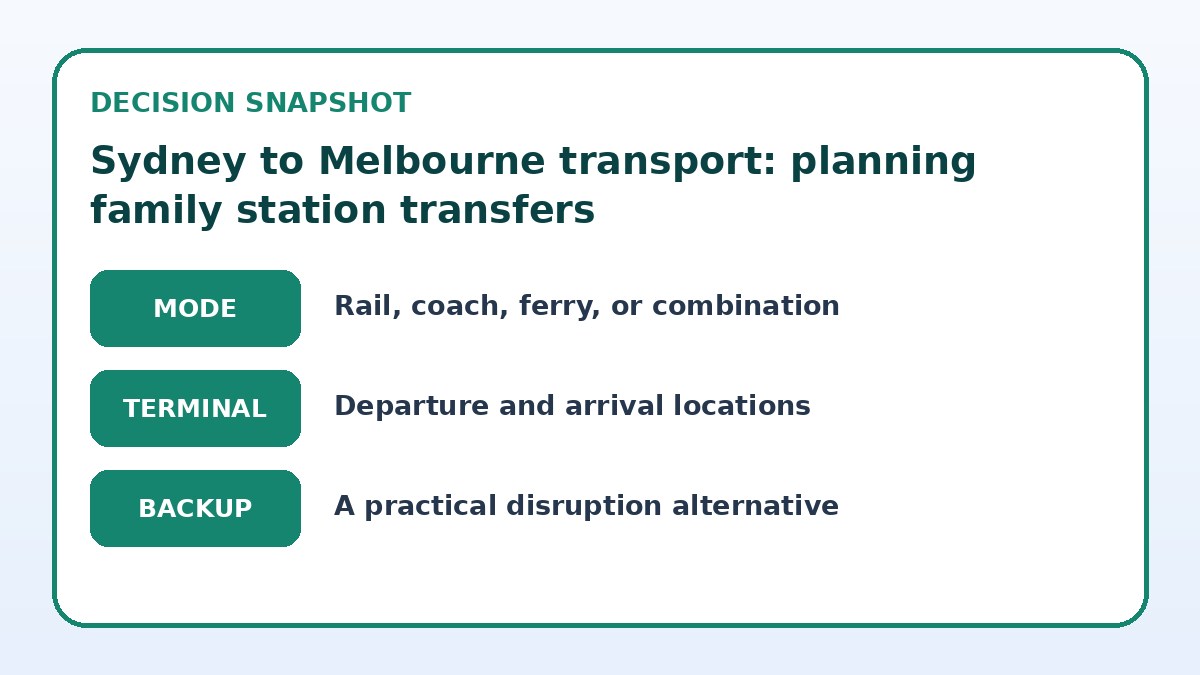
| Journey approach | Best for | Friction to check |
|---|---|---|
| Direct train with single transfer to accommodation | Families wanting simpler on-board comfort and fewer vehicle changes | May require a longer local transfer between the station and lodging |
| Direct coach between central terminals | Groups prioritising simpler terminal-to-terminal routing and fewer platform moves | Traffic-sensitive arrivals and tighter baggage compartments can reduce comfort |
| Mixed route: coach plus short local train or taxi | Families balancing direct routing with final-mile flexibility | More handoffs increase transfer friction and planning complexity |
| Flexible booking with buffer times and backup options | Those who want contingency-ready plans for delays or disruptions | May mean choosing less convenient departure times or paying for flexible fare options |
Check live intercity options
Look beyond the ride itself and compare terminals, transfers, luggage, and arrival fit.
Terminal fit and local access at each end
Terminal fit means how well the chosen arrival or departure point connects with your accommodation and family needs. Some terminals and main stations sit near public transit, taxi ranks and shuttle services; others require a longer transfer that can include stairs or multiple platform changes. With children, proximity to your accommodation reduces taxi costs and the physical burden of moving luggage and prams. Before booking, check the station or terminal address, whether lifts and ramps are available, and where the taxi and rideshare pickup areas are located. Visualise the walk from platform to street level and the likely route to your hotel or rental.
Verify what transport options exist for the last mile at each end: local trains, suburban buses, dedicated airport shuttles or rideshare-pickup zones. If you must transfer between different stations or terminals (for example, switching from an intercity station to an airport), plan the transfer mode in advance and estimate realistic travel time including peak traffic, ticket queues, or child restroom stops. Families often find it worthwhile to book a short taxi or rideshare for terminal-to-accommodation legs to reduce complexity, but confirm how much space the vehicle must have for seats, prams, and luggage before departure.
Luggage, strollers and transfer friction
Transfer friction multiplies with each bag, stroller and child. Look at luggage allowances and on-board storage when comparing options and plan where bulk items travel: with you, in hold luggage, or sent ahead. For families, the most practical setup keeps essential items (snacks, medicines, nappies, a change of clothes) in an easily accessible carry-on and secures larger suitcases for loading and unloading only once at the start and finish of the trip. Also review whether platforms and terminal access have ramps and lift capacity for strollers and prams; if a transfer includes stairs, factor in the need for extra hands or assistance.
Make physical transfer tasks explicit when you book: note how many suitcases, the presence of a stroller, and whether you’ll need assistance boarding. Some carriers and stations offer porter or assistance services, while others require you to manage luggage yourself. Where those services are not guaranteed, arrange help through your accommodation or taxi firm at each end to avoid juggling children and heavy bags. Pack strategically—use wheeled luggage, keep nappies and a small change mat in an easily reachable bag, and consider a compact stroller that fits through standard lifts and vehicle boots.
Compare the practical alternatives
Use the final page to confirm what is actually offered on your dates and save a workable fallback.
Intercity travel checklist
- Map your full door-to-door chain and list each transfer point with estimated walking time and required mode.
- Confirm terminal and station accessibility features (lifts, ramps, taxi/rideshare pickup locations) on the provider or station website.
- Pack a ready-to-reach family essentials bag with snacks, medicines, nappies and change of clothes for quick access.
- Reserve or pre-book any assistance, porter service, or larger vehicle capacity if your family needs extra help.
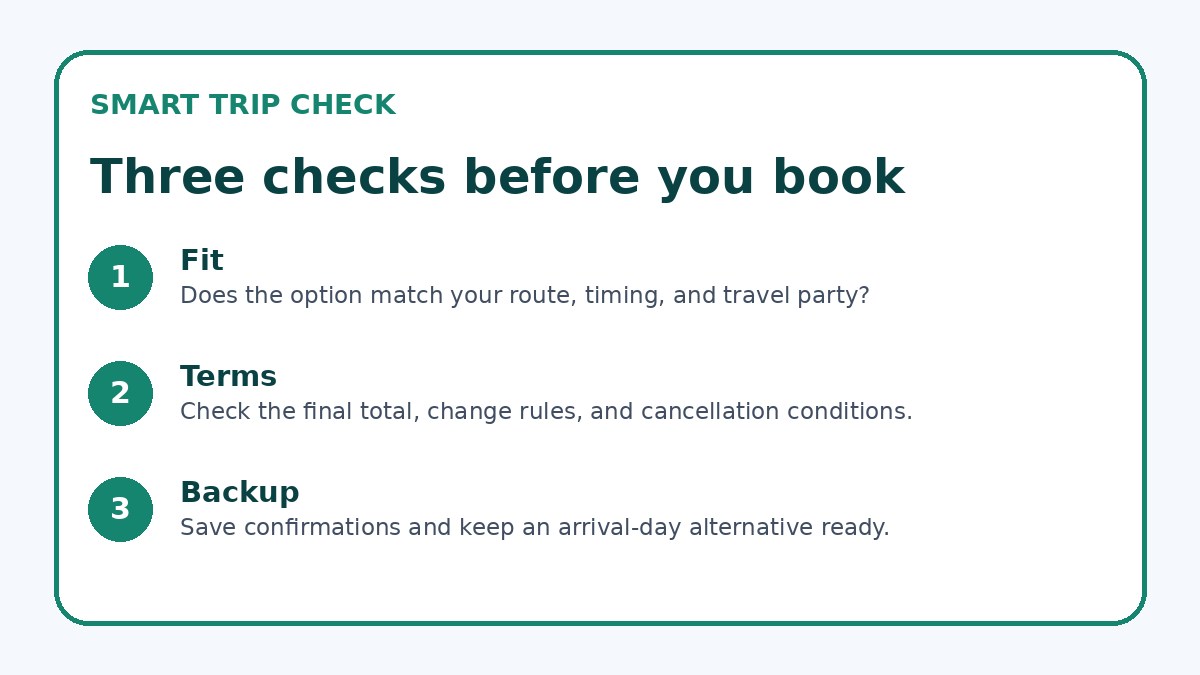
- Allow at least 30–60 minutes buffer for each transfer, and plan alternate routes or times in case of delay.
- Save digital and printed booking confirmations, accommodation address, and local taxi numbers for fast rebooking if needed.
Timing flexibility and disruption backups
Build buffer time into every transfer: arrival, platform changes, and the final trip to accommodation. Families need extra minutes for toilets, snack breaks, and unexpected lines. When you compare departure and arrival windows, prefer options that leave a margin of at least 30–60 minutes for terminal transfers or when shifting between station and airport. If you have a connecting service, choose one with a gap long enough to cover delays and the time it takes to navigate between platforms or terminals without rushing children. Avoid tight same-platform changes if luggage or a stroller will slow your movement.
Prepare a disruption backup plan before you leave home. Identify alternative departure times, a nearby station or coach stop you can reach easily, and a list of local taxi firms or rideshare options you can call if the scheduled service is delayed or cancelled. Keep digital and paper copies of booking references and the addresses of your accommodation. If you need to rebook, know which provider contact channels will handle family requests quickly and whether you can change tickets online. Consider travel insurance that covers missed connections and keep essential items with you in case luggage is delayed.
Rail & Intercity Transport questions travelers ask
How can I minimise stress during station-to-terminal transfers with young children?
Minimise stress by planning your transfer chain in advance and reducing handoffs. Choose options with minimal walking and secure a vehicle with enough boot space for luggage and a stroller. Pack an essentials bag with snacks, wet wipes and spare clothes to avoid rummaging through suitcases during a transfer. Book any available assistance or porter services when you arrive or depart, and aim for off-peak departure times to avoid crowded platforms and taxi queues. Having a short taxi or rideshare for the final leg often simplifies the last-mile logistics for families.
What should I check about luggage and stroller policies before booking?
Before booking, review the carrier’s official luggage rules and any size limits for carry-on and checked items, and verify whether strollers fold and travel for free or need to be checked. Check how boarding and luggage loading are handled—whether staff will assist or if you must manage loading yourself—and whether there are extra fees for oversized items. If a transfer includes a taxi or rideshare, confirm vehicle space for prams and suitcases. Where policies can change, verify the provider’s final booking page or contact customer service for up-to-date confirmation.
If a service is delayed or cancelled, what’s the quickest way to keep the family moving?
If a delay happens, implement your pre-planned backup: check for the next available departure on the provider’s app or website and compare quick alternatives like another nearby station, coach option, or a short taxi ride. Keep essential documents and booking references ready to rebook or speak with staff. If you can reposition to a different terminal or station quickly, count transfer time and child needs before switching. For convenience, consider contacting your accommodation to request flexibility on arrival time and, where possible, pre-book a taxi to avoid long queues while rebooking transport.
Final decision note
Choosing how to travel Sydney to Melbourne with family comes down to reducing transfer friction and planning for realistic door-to-door timing. Prioritise options that cut the number of handoffs, provide clear accessibility at stations and terminals, and leave buffer time for snacks, toilets and unexpected delays. Use the comparison criteria—terminal fit, luggage handling, timing flexibility and contingency plans—to decide whether a direct train, coach, mixed route or flexible booking works best for your household. Before you book, verify terminal addresses, accessibility details and luggage rules on providers’ final booking pages; Trip.com can be used as one place to compare current availability, but always confirm specifics with the carrier or station.
Continue planning
Check current options and final conditions
Use the provider page to confirm live availability, the final total, cancellation terms, and every condition that matters to your trip.
This evergreen planning guide was created with AI-assisted drafting and a structured quality review. It does not display live prices, schedules, availability, visa guidance, or provider rankings. Verify current details before booking. Some links are affiliate links; we may earn a commission at no additional cost to you.