Decide where to base yourself in Gyeongju first, then match that area to the hotel’s flexible booking policy. For solo travelers the core choice is between staying near Gyeongju Station or Busan–Daegu transit links, sitting inside the historic Bomun Lake resort cluster, choosing a quiet residential hanok area near Bulguksa and Seokguram, or taking a central spot near downtown attractions like Cheomseongdae and Tumuli Park. Each area changes how much walking or transit you’ll do daily and which booking terms make sense: refundable vs nonrefundable, free cancellation windows, and the ability to change dates without penalty. This guide gives a quick recommendation up front, then explains the daily-route friction, room and party needs, and what to verify on the booking page so you can shortlist an area before opening live inventory.

Check live stays in the areas that fit
Use your dates and party size to compare current rooms after you narrow the neighborhood fit.
Neighborhood fit: pick your base by daily priorities
Start by naming the single most important thing each day: minimizing transit time, maximizing quiet and culture, or being in nightlife and dining. If you want to be near buses that connect to Busan or Daegu, a hotel by Gyeongju Station or a major bus stop reduces the hassle of dragging luggage between transit hubs. If your priority is visiting Bulguksa, Seokguram, and temple trails, choosing a hanok guesthouse or small hotel closer to those sites cuts morning commute time and lets you leave the rest of the day flexible.
Consider what matters at night: quiet streets and a local feel usually come with smaller, family-run properties that may have stricter cancellation policies or limited front-desk hours. Resorts and larger hotels near Bomun Lake offer more on-site services and clearer flexible-booking options, but they place you farther from downtown eateries. Identify whether you want on-site dining, 24-hour check-in, or the option to change dates; this will immediately narrow which neighborhoods make sense.
Choose an area-selection strategy
| Area approach | Best for | Tradeoff to check |
|---|---|---|
| Transit-hub (near station/major bus stop) | Travelers prioritizing quick connections and easy arrival/departure logistics | Busier surroundings and fewer traditional/quiet stays |
| Bomun Lake resort cluster | Those who want resort amenities and on-site services | Farther from downtown attractions, more daily travel required |
| Hanok and temple-adjacent neighborhoods | Travelers seeking quiet, cultural immersion and morning temple visits | Smaller properties may have stricter cancellation and check-in rules |
| Central Tumuli Park/downtown | Shoppers, museum-goers, and travelers who want to walk to many sites | Can be busier after dark and offer fewer large-hotel flexible options |
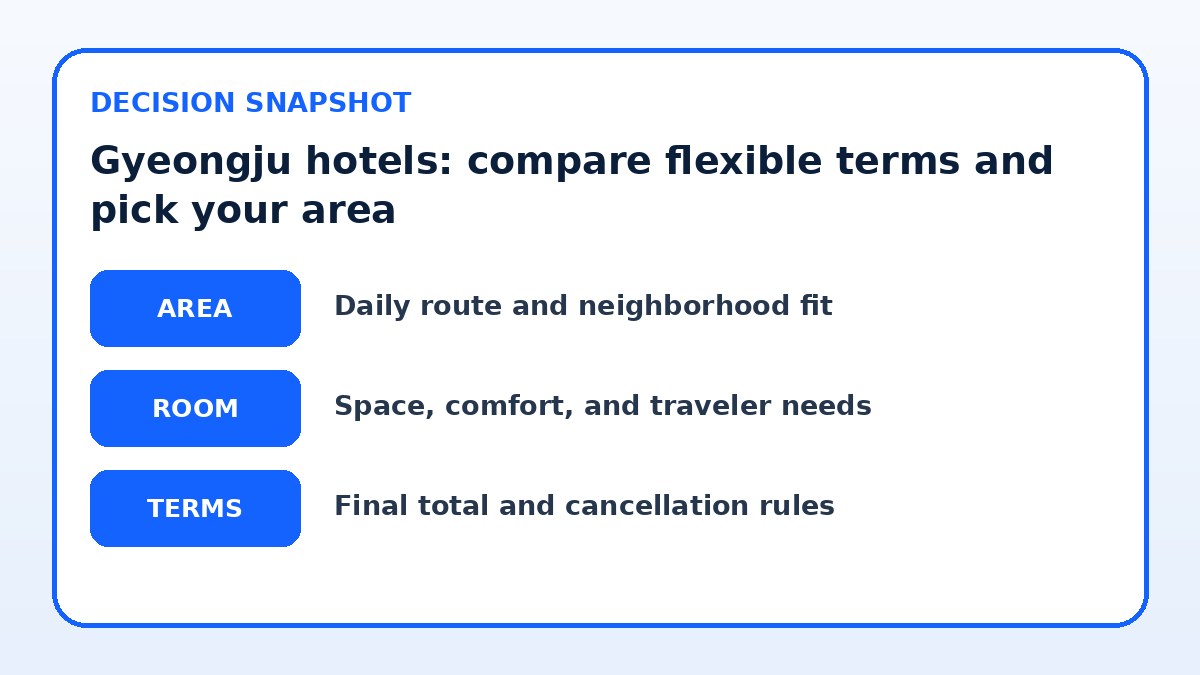
Daily-route friction: how area choice affects movement
Gyeongju’s attractions are spread out, so your base determines how often you’ll use buses, taxis, or walk. A central downtown base near Tumuli Park makes short walking circuits for museums and restaurants possible, reducing the frequency you’ll need to re-check booking terms for late arrivals. Conversely, staying at Bomun Lake concentrates resorts and can require longer daily transfers to city museums, meaning you might prefer a room with flexible check-in or an easy way to delay or extend a stay without penalty.
If you plan multiple day trips beyond the city, prioritize areas with reliable bus access and flexible cancellation windows that allow date changes. Solo travelers who don’t want to navigate night buses should verify the hotel’s late check-in policy and whether a refundable rate remains available if your arrival time shifts. For anyone relying on shared shuttles or seasonal transport, check the provider’s refund and change rules on the booking page before finalizing.
Now compare like with like
Keep the same dates, guests, room needs, and cancellation preferences while you compare the final choices.
Room and party needs: what solo travelers usually require
Solo travelers typically want a safe, compact room with clear cancellation and check-in instructions. Look for single or twin rooms with flexible booking terms — free cancellation up to a specified time or the option to change dates without losing the entire deposit. If you expect evening arrivals, prioritize guaranteed late check-in or 24-hour reception; these are often listed under property policies. Also consider whether you need private bath facilities, luggage storage, or a kitchen corner for longer stays.
If you plan to join small guided tours or meet other travelers, check whether the hotel allows name changes on reservations or permits short-notice amendments. For digital nomads, reliable Wi-Fi and a comfortable desk may outweigh the need for a refundable rate, but if dates are uncertain, choose flexible cancellation. Before booking, confirm on the provider’s final page how refunds are processed, what blackout dates apply, and whether changes trigger new rate rules.

Hotel booking check before payment
- Decide which neighborhood priority matters most: transit convenience, resort amenities, temple proximity, or downtown walkability.
- Search only rates that list exact cancellation deadlines and copy those deadlines into your phone before booking.
- Verify deposit amount, how refunds are processed, and whether refunds are immediate or take multiple days.
- Confirm check-in window and late-arrival instructions; request 24-hour check-in if arrival times are uncertain.
- Ask the property if name changes, date moves, or early checkouts produce fees, and get the reply in writing or screenshot.
- Compare the final booking page policies on at least two platforms (one can be Trip.com) before you pay.
Final booking terms: what to verify on the provider page
On any booking page, explicitly check four things: the free-cancellation deadline, the penalty for late changes or no-shows, whether a deposit is collected and when it’s refundable, and the method and timeline of refunds. Don’t assume policies shown earlier in search results are final; hotels sometimes show more detailed rules at checkout. If a rate is nonrefundable but allows date transfers, the specific transfer policy and any rate differences should be visible before you confirm.
Also confirm arrival procedures and identity rules: some small guesthouses require a signed form, local ID verification, or targeted arrival windows. If you want the flexibility to extend your stay, verify whether the same rate is offered for extensions or whether you’ll be rebooked at a different rate. When in doubt, use the provider message function or call the property, and compare conditions on a booking platform such as Trip.com for current availability and stated policies before you complete payment.
Hotel Guide questions travelers ask
Should solo travelers choose refundable or nonrefundable rates in Gyeongju?
Refundable rates give the most flexibility for unpredictable travel plans, especially if you might change dates or return later than planned. Nonrefundable rates can be cheaper but carry the risk of losing the payment if you cancel or change plans. For short solo trips where dates are firm, a nonrefundable rate may be acceptable; if you expect schedule shifts, prioritize a rate with a clear free-cancellation window. Always check the provider’s final checkout page for the exact refund deadline, penalty amounts, and how refunds are issued.
How much walking versus transit should I expect from each neighborhood?
Staying near Tumuli Park or downtown places you within comfortable walking distance of many museums, cafes, and restaurants, reducing daily transit. Bomun Lake hotels centralize lake-side attractions and resort facilities but typically require longer transit to city museums and temple areas. Properties near major stations give easy access to regional buses and trains, which helps for day trips but may increase short taxi or bus rides to local sights. Estimate your typical day and match the neighborhood to whether you prefer walking loops or regular short bus rides.
What specific booking-page terms should I screenshot before I pay?
Screenshot the cancellation policy (including exact deadline), deposit or prepayment amount, refund method and timeline, and any clauses about date changes or name swaps. Also capture check-in/out times, late arrival rules, and contact details for the property. If the host responds to a messaging question (for example, confirming late check-in or luggage storage), keep that message as proof. These screenshots will help if you need to dispute a charge or request a change after the booking is processed.
Final decision note
Start your Gyeongju planning by locking in the neighborhood that matches how you plan to spend your days. Transit hubs ease arrivals and departures; Bomun Lake gives resort conveniences; hanok areas provide cultural calm; downtown positions you for walkable sightseeing. Once you shortlist an area, prioritize rooms with cancellation and change policies that fit your flexibility needs — free cancellation windows, refundable deposits, and clear late-arrival rules are the main features to compare. Before paying, always verify cancellation deadlines, refund timing, and any age or ID rules on the provider’s final booking page. Use the checklist above and consider checking current options on a booking platform like Trip.com to compare availability and exact terms before you confirm.
Continue planning
Check current options and final conditions
Use the provider page to confirm live availability, the final total, cancellation terms, and every condition that matters to your trip.
This evergreen planning guide was created with AI-assisted drafting and a structured quality review. It does not display live prices, schedules, availability, visa guidance, or provider rankings. Verify current details before booking. Some links are affiliate links; we may earn a commission at no additional cost to you.