If your family trip to Seoul can be flexible, prioritize the shoulder seasons — the weeks just before peak summer and after winter holiday peaks — for a better balance of milder weather, thinner crowds and more negotiable rates. The practical booking move is simple: compare three things at once when you search for Seoul travel deals — neighborhood, accommodation type (family room, serviced apartment), and refundable vs nonrefundable booking conditions — then pick the combination that gives the best tradeoff between convenience and flexibility. For families, small differences in location and bedding options matter more than a marginal price cut: a quieter neighborhood near a subway line and a kitchenette can save time and expense on meals, reduce transit stress and make naps and early bedtimes easier to manage.
Why shoulder seasons matter for families
Shoulder seasons squeeze the extremes of Seoul’s busy tourist calendar into more family-manageable conditions. Crowds are typically lighter than during summer breaks and major holidays, which makes lines at popular museums and palaces shorter and reservations for kid-friendly restaurants easier to secure without long waits. Milder temperatures often mean more comfortable daytime schedules: long stroller walks, outdoor playtime in parks and shorter transit legs between attractions. For families with young children or multiple caregivers, these softer rhythms reduce the stress of keeping to a rigid itinerary and allow for more spontaneous rest periods when a child needs downtime.
From a planning perspective, shoulder seasons also give families greater negotiating room on accommodation choices and add-ons. While you shouldn’t rely on specific discounts, inventory tends to be more varied outside the busiest weeks, making it easier to find rooms with two beds, sofa beds, or kitchen facilities that accommodate feeding and napping routines. Importantly, shoulder-season travel still requires deliberate timing: choose dates that avoid local school holidays and major national events to preserve the quieter conditions you want. In other words, shoulder months offer advantages, but they work best when you cross-check calendars and neighborhood event listings before you finalize bookings.
Where to stay: neighborhoods and the family tradeoffs
Deciding where to stay in Seoul during shoulder seasons is about balancing convenience, calm and what you want nearby. Central neighborhoods offer fast connections to major sights and are often lively with family-friendly dining options, but they can be noisier and may have smaller rooms. More residential districts give quieter evenings and local parks within walking distance, which can be a boon for toddlers and early bedtimes, yet you may need slightly longer transit times to reach central attractions. For families, prioritize a short walk to a subway station and easy access to at least one green space or indoor play facility—these reduce transit friction and allow quick returns to the room if a child needs a break.
Accommodation type is another core decision: a hotel room with interconnecting doors can simplify supervision of children, while a serviced apartment or family suite with a kitchenette reduces meal costs and lets you stick to familiar routines. If your family values convenience over cost, choose a place with on-site laundry and an elevator; if you’d rather save and don’t mind more planning, a well-located guesthouse or apartment with a kitchen can be economical. When evaluating Seoul travel deals, weigh the time saved by convenience features against any small price premium—time and reduced stress often beat the money saved when traveling with children.
| Approach | Best for | Tradeoff to check |
|---|---|---|
| Central hotel near main attractions | Families who prioritize walking distance and quick returns to the room | Higher noise levels and typically smaller rooms compared with residential options |
| Serviced apartment or suite with kitchenette | Families wanting meal flexibility and space for naps or routines | May be farther from tourist hubs, adding transit time for daily outings |
| Residential guesthouse in quieter neighborhood | Families seeking calm evenings and access to local parks | Fewer hotel-style services; may lack elevators or on-site laundry |
| Flexible refundable bookings | Families who need schedule flexibility and peace of mind | Often carry a modest rate premium compared with nonrefundable deals |
How to compare Seoul travel deals for families
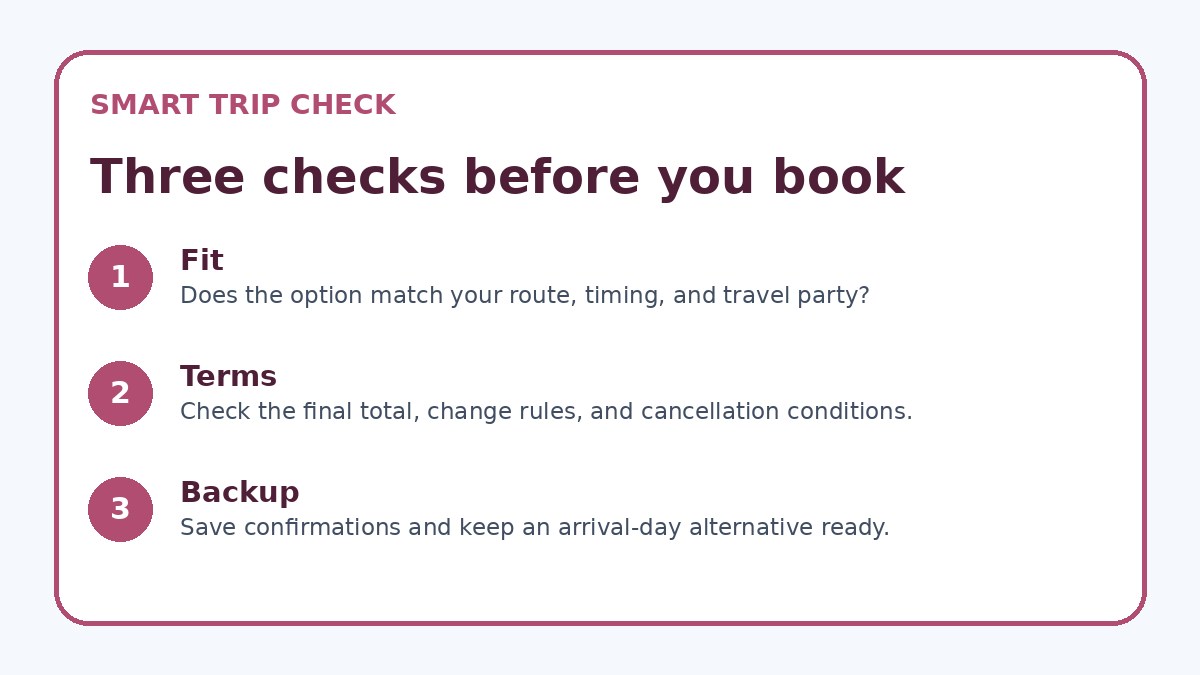
Treat each listed deal as a bundle of visible features and potential extra costs. Start by checking the headline rate alongside the room configuration (beds, sofa beds), included meals or breakfast, and basic amenities like laundry and kitchen access. Next, evaluate cancellation terms and whether the fare is refundable or changeable—families benefit from flexibility more than most, so paying a modest premium for refundable options can be worthwhile. Also verify whether quoted rates include local taxes and mandatory charges; if not, add those to your calculation so you compare true out-the-door costs across choices.
Beyond the numbers, read recent guest comments focused on family experiences: look for mentions of noise at night, stroller access, elevator reliability and whether staff were helpful with cribs or late check-ins. For transport, compare how many subway changes a trip to main attractions will require and whether taxis are an easy fallback for evenings. Finally, run a simple scenario test: imagine a delayed flight or a child’s illness and check whether the accommodation’s change policy, refundable fare, and proximity to a clinic or pharmacy would keep your family calm. These nonprice factors often determine whether a deal is actually a good fit for family travel.
Before you book
- Verify room configuration and bedding options (two beds, crib availability, interconnecting rooms) on the property’s booking page before reserving.
- Compare total costs by adding taxes, service fees, and estimated local transit or taxi fares to the nightly rate.
- Confirm cancellation and change policies on the accommodation’s official confirmation; screenshot or save the policy for easy reference.
- Check proximity to the nearest subway station and at least one green space or playground within walking distance.
- Locate nearby medical facilities and a pharmacy; save their addresses and phone numbers in your phone and paper copy.
- If you need a kitchenette or laundry, verify those amenities are functional and included—ask for photos or recent guest comments mentioning them.
Timing and logistics to check before you book
Before you hit confirm, cross-check three calendars: your travel dates against local school holidays and major events, supplier cancellation windows, and any seasonal service changes that affect attractions and transport. Local festivals or conference weeks can fill otherwise quiet shoulder-season dates, so verify event schedules for venues and neighborhoods you plan to visit. Also confirm transfer options from the airport—compare direct express services with transfers requiring family-friendly luggage handling, and check whether your chosen arrival time will coincide with peak transit congestion that could make the initial journey more tiring for children.
Finally, gather practical contact and backup information: the accommodation’s emergency contact, the nearest clinic or hospital that handles children, and the location of a larger supermarket or pharmacy for supplies. When booking via an aggregator or booking site, keep in mind that provider-specific policies can change; always verify final cancellation terms, included amenities and infant/child bedding options on the accommodation’s own booking page or confirmation email. Having those confirmations printed or saved offline makes it easier to resolve last-minute issues without losing time on the trip.
Frequently asked questions
When exactly are Seoul’s shoulder seasons and how do they affect family plans?
Shoulder seasons are the periods just before and after the busiest travel peaks; in Seoul that typically means late spring before the summer holidays and early autumn after the summer rush. For families, these windows often bring milder weather and thinner crowds, making outdoor sightseeing and museum visits less exhausting for children. However, you should still check local school holidays and event calendars, because localized events can make certain dates busier. Use shoulder-season flexibility to choose accommodations with family amenities rather than chasing the absolute lowest nightly rate.
How should families weigh refundable vs nonrefundable deal options when booking?
Refundable bookings cost a bit more but provide flexibility for delays, illness, or changing plans—common issues with children. Families should estimate the value of that flexibility by considering the cost of rearranging travel, potential cancellation fees for flights, and the emotional cost of a disrupted schedule. If you have fixed dates and low risk of change, a nonrefundable rate can save money, but always ensure backup plans exist: travel insurance covering cancellations, a secondary accommodation option, or a credit that can be applied later. Verify cancellation rules on the provider’s final booking page before committing.
What transport and arrival logistics should parents confirm when evaluating deals?
Check how many transfers are needed between the airport and your accommodation, whether the hotel offers airport shuttles and if taxis are readily available at your arrival time. For families, direct transfer options reduce stress—especially with luggage and children—so compare estimated door-to-door travel complexity, not only price. Also assess first-day logistics: if you arrive late, choose a place with easy late check-in and straightforward directions. Always read the property’s check-in instructions on the official confirmation and have a backup contact or local map downloaded in case you need assistance.
Final planning note
Planning Seoul travel deals around shoulder seasons gives families a practical path to calmer days, more comfortable weather and roomier choices for family-friendly accommodations. Rather than focusing solely on the cheapest headline rate, compare neighborhood convenience, room layout and flexibility—these often have a bigger impact on your trip’s success. Use shoulder-season timing to prioritize proximity to a subway line, access to a park or indoor play area, and at least one convenience feature like a kitchenette or laundry. Before booking, verify cancellation terms, exact room details and nearby services on the provider’s final booking page so your family has a smooth, adaptable trip.
Continue planning
Check current options and final conditions
Use the provider page to confirm live availability, the final total, cancellation terms, and every condition that matters to your trip.
This evergreen planning guide was created with AI-assisted drafting and a structured quality review. It does not display live prices, schedules, availability, visa guidance, or provider rankings. Verify current details before booking. Some links are affiliate links; we may earn a commission at no additional cost to you.