If you’re flying to Osaka with extra luggage, the practical first step is simple: set price alerts, but pair them with a pre-checklist so alerts trigger decisions you control, not impulse buys. Start by listing the real costs you must compare—checked-bag fees, included baggage allowance, change/cancellation rules, and transportation between airport and accommodation—then activate alerts only after you’ve mapped those variables across package and separate bookings. Price alerts are useful for spotting fare trends, but a lower headline fare can disappear once baggage and restrictive rules are added. This article explains how to use alerts to find good opportunities, what to compare in packages versus DIY bookings, how to protect flexibility for oversized or multiple bags, and what to verify on the provider’s final booking page before you click purchase.

Test package value fairly
| Booking approach | Best for | Tradeoff to check |
|---|---|---|
| All-inclusive package (flight + hotel + transfers) | Travelers who want one-ticket simplicity and clear bundled baggage terms. | May be less flexible and more costly if your baggage needs change or if transfer capacity is limited. |
| Flights and hotels booked separately with fare that includes checked bags | Those who want airfare baggage guarantees while keeping hotel choices flexible. | Requires more manual comparison and coordination; changes to one component can complicate others. |
| Basic flight fare with baggage purchased à la carte, plus separate hotel | Travelers seeking potentially lower base fares and pinpoint control over baggage purchases. | Can produce unexpected total costs once baggage fees, change fees, and transfer limits are added. |
| Package with flexible-change or refundable options | Those prioritizing flexibility for dates or baggage decisions near departure. | Flexibility often carries a higher headline price and may still require proving baggage allowances on final tickets. |
Check current package and separate options
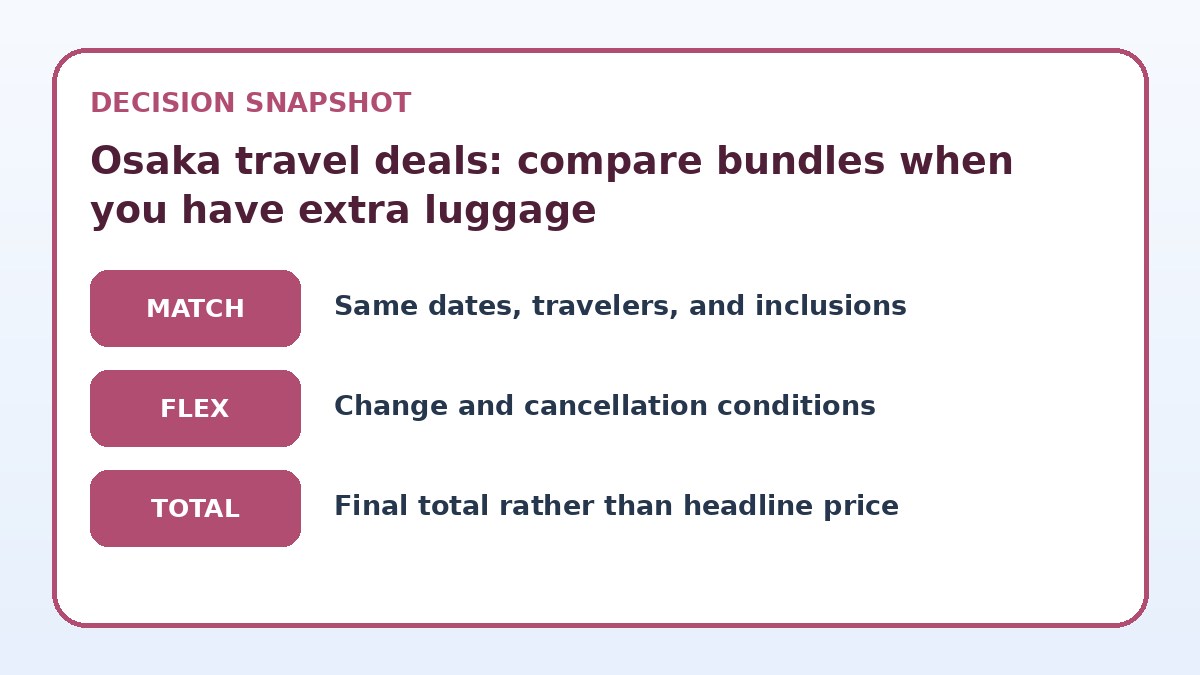
Use identical dates, travelers, room needs, baggage, and flexibility so the comparison stays meaningful.
What to compare before judging a package
Start with inclusions: a package headline often bundles flights, hotel nights, and sometimes transfers or activities. For travelers with extra luggage, the critical inclusion is baggage allowance on the flight portion. Don’t assume a bundled fare includes the same baggage terms you would get buying the flight separately. Also check whether airport transfers in a package allow space and weight for your extra items—minivans or shared shuttles may have limits that affect comfort and cost.
Next review flexibility and penalties. Bundles can be stricter: changing dates or names may require changing the whole package or paying combined penalties that are higher than altering a single flight or hotel. Compare final booking terms: who issues the ticket, which carrier’s rules apply, and whether the package provider passes through carrier baggage rules or sets its own fees. Finally, determine traveler-specific value by matching bundle inclusions to your needs—if baggage and flexibility are top priorities, a bundle that looks cheaper on the headline may be worse value overall.
How to use price alerts without impulse booking
Use alerts as signals, not orders. Create two types of alerts: one for bundled offers that include or explicitly state baggage allowances, and another for raw flight fares with specified baggage options. When an alert fires, run a quick checklist: confirm the same dates, same number of travelers, baggage allowance, change/cancellation rules, and total landed cost after fees. That disciplined approach keeps you from reacting to a low fare that doesn’t match your luggage needs or forces a last-minute expensive upgrade.
Limit impulse booking by setting alert thresholds tied to your budget and non-negotiables—e.g., ‘book only if total cost for two checked bags per person plus fare is below X’—and include time-to-decide rules, like waiting 24 hours after an alert before completing a purchase. Save screenshots or links from different providers for the same alert so you can compare conditions side-by-side. This paper trail helps you verify that a seemingly better deal truly matches all requirements before you commit.
Look past the headline total
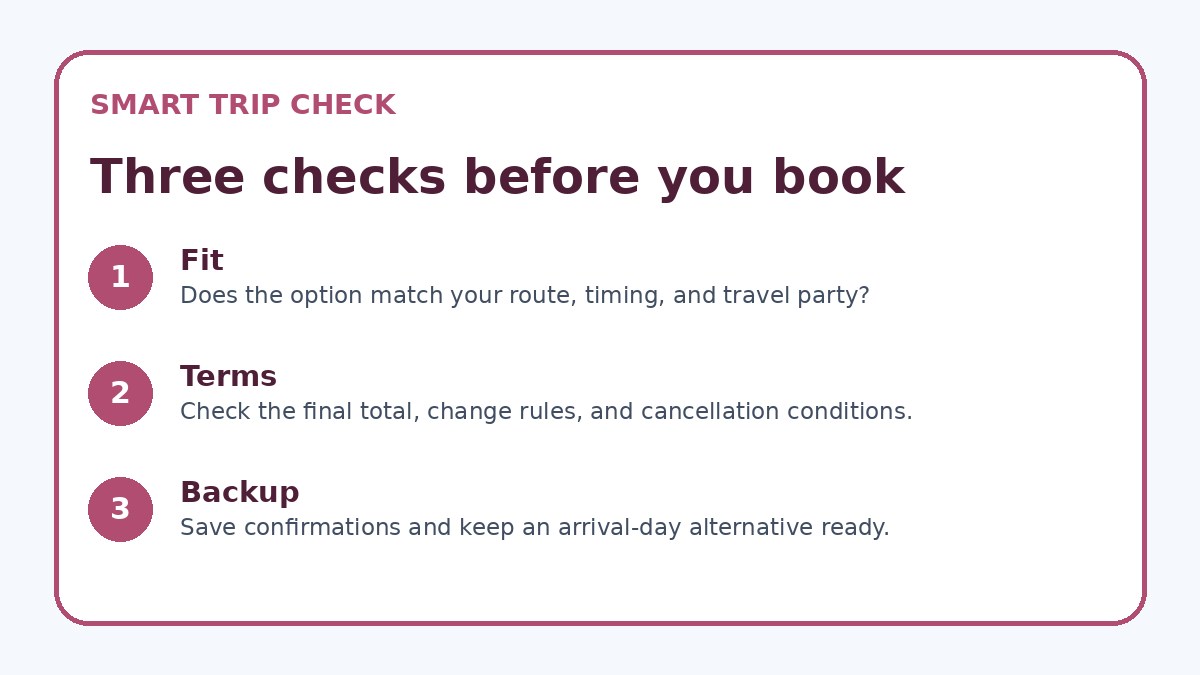
Compare inclusions and change conditions before deciding whether a package is genuinely useful for this trip.
Deal comparison checklist
- Set parallel price alerts for equivalent itineraries: one for packages and one for separate flight+hotel options with identical dates and travelers.
- Predefine your acceptable total cost by adding anticipated baggage fees per person to the base fare before evaluating any alert.
- When an alert fires, compare the same fare class and baggage allowance across providers; save screenshots of the final booking page showing baggage rules.
- Contact the package provider or airline to confirm which carrier’s baggage policy applies if a package contains multiple operators.
- Verify transfer vehicle size and baggage handling notes for included ground transport before booking a package that lists transfers.
- Wait at least 24 hours after an attractive alert and re-check availability and total landed cost before purchasing to avoid impulse decisions.
Traveler-specific value: luggage types and how they change the math
Consider what kind of extra luggage you have: multiple standard suitcases, oversized items, sports gear, or fragile pieces needing special handling. Airlines and ground transfer services price and restrict these differently. For example, a package that includes a low-cost carrier flight with only carry-on allowance can become more expensive once you add two checked bags. Conversely, some packages explicitly include one or two checked bags which can make them better value when compared to separate bookings with add-on fees.
Also factor in connection logistics. If your trip involves train transfers, ferries, or low-capacity shuttles, baggage quantity can affect mobility and comfort, potentially increasing local transfer costs. When alerts show a good bundle price, verify transfer size and how luggage is handled at each segment. If the package doesn’t describe baggage handling, treat that as a red flag and compare the total expected landed cost—including any porter, storage, or oversized-item surcharges—before buying.
Final terms to verify on the booking page
Before you click purchase, verify these provider-specific facts on the final booking page: exact baggage allowances and fees for the fare class, change and cancellation penalties, who issues each ticket or voucher, and whether name or date changes require full package reissue. Look for explicit notes about transfer vehicles and whether ground suppliers allow oversized or extra items. If a bundle includes airfare operated by multiple carriers, check which carrier’s baggage allowances prevail, because codeshares can be inconsistent.
Also confirm how refunds or credits are processed if you change only part of the trip, and whether the booking platform or a third-party agent handles customer service for baggage disputes. If any critical detail is missing or ambiguous, contact the provider to get written confirmation before purchasing. If you use a comparison site such as Trip.com, remember to validate all baggage and change policies on the airline or hotel’s official booking page before relying on an alert-triggered decision.
Travel Deals & Booking Strategy questions travelers ask
Will a cheaper bundled price usually include more baggage allowance than booking flight alone?
Not necessarily. A bundled price can sometimes include checked bags, but it can also pair a low-cost fare with a hotel that has no effect on baggage rules. Always confirm the flight fare class and explicit baggage allowance listed in the bundle’s terms. If the bundle uses a low-cost carrier or an unpublished fare class, baggage may be excluded or limited. Check the final booking page to see whether the package provider lists the airline’s baggage policy or whether you must add bags separately during or after booking.
How can I use alerts to track oversize or sports-equipment fees for Osaka-bound travel?
Set alerts for itineraries that correctly reflect the carrier and fare class you plan to use, then research that carrier’s oversize and sports-equipment policies independently, because those fees are often carrier-specific. When an alert fires, open the airline’s official baggage policy page linked from the booking page to confirm oversize rules and any advance-notice requirements. If the package mentions transfers, also verify whether ground providers allow oversized items or require special reservations to accommodate them.
If a package appears cheaper after alerts, what final checks prevent a false saving?
Compare the same dates, traveler count, and exact baggage allowances; add any ancillary fees (checked bags, oversized items, seat selection, and transfer surcharges) to the headline price; and verify change and cancellation policies. Confirm which entity issues the ticket and handles disputes. If the package includes flights on multiple carriers or shared transfers, ensure those specifics won’t add hidden costs. If anything is ambiguous on the booking page, request written confirmation from the seller before accepting the alerted deal.
Final decision note
Price alerts are powerful tools for watching Osaka travel deals, but they become decision aids only when paired with a pre-defined checklist and disciplined comparison across identical conditions. For travelers with extra luggage, the headline fare is only one piece of the puzzle—baggage allowances, transfer capacity, change rules, and who handles customer service matter as much. Use alerts to spot opportunities, but always verify final booking-page baggage policies and cancellation terms before buying. When in doubt, compare an all-inclusive package’s total landed cost to a separately booked flight that explicitly includes the checked bags you need; that comparison prevents impulse purchases that later force expensive upgrades or stressful last-minute changes.
Continue planning
Check current options and final conditions
Use the provider page to confirm live availability, the final total, cancellation terms, and every condition that matters to your trip.
This evergreen planning guide was created with AI-assisted drafting and a structured quality review. It does not display live prices, schedules, availability, visa guidance, or provider rankings. Verify current details before booking. Some links are affiliate links; we may earn a commission at no additional cost to you.