Practical answer first: choose your Bangkok neighborhood based on the tradeoff you’re willing to make between nightlife and late transport options (Sukhumvit/Ratchada), historic sights and quieter evenings (Rattanakosin/Banglamphu), fast airport access and modern malls (Sathorn/Si Lom), or budget friendliness and market atmosphere (Chatuchak/Pradipat). For solo travelers who want flexible booking terms—free cancellation, refundable rates, and modest prepayment—pick an area whose daily rhythm matches how you plan to move around so you don’t lose time or money to transit. This guide explains how each neighborhood style affects daily-route friction, what to book about rooms and privacy when traveling alone, and which refund and change policies to prioritize. Use the comparison rows to shortlist one approach before you open live inventory, and check the provider’s booking page for the exact cancellation window, refund timing, and any nonrefundable extras.

Check live stays in the areas that fit
Use your dates and party size to compare current rooms after you narrow the neighborhood fit.
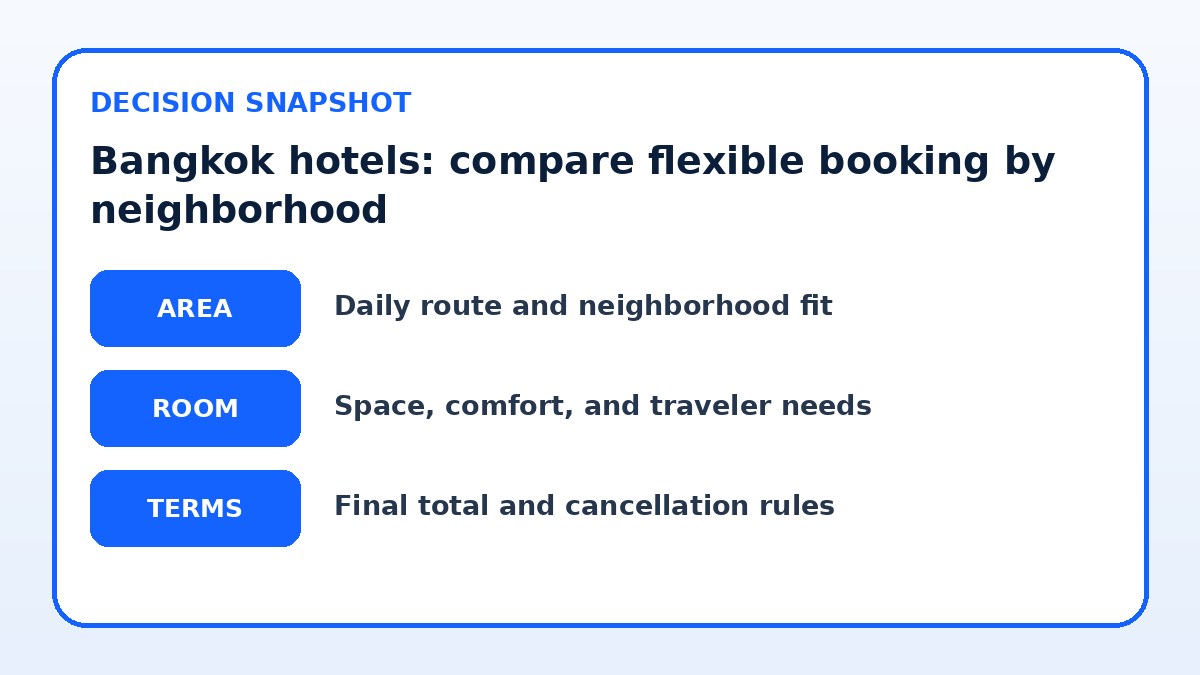
Neighborhood fit: pick an area that matches how you’ll spend the day
Start by matching your daily intentions to a Bangkok neighborhood’s character. If evenings and street food are central to your solo trip, Sukhumvit or Ratchada offer lively night markets, bars, and eateries that stay active late into the night. If museums, temples, and riverside cafés are your draw, Rattanakosin and Banglamphu put you close to major sights with many guesthouses and boutique hotels that can be quieter after dark. If work or meetings matter, Sathorn and Si Lom concentrate business-class hotels with reliable Wi-Fi and easy transfers to express transit corridors. Narrow your choices to one or two neighborhoods before scanning hotels—this reduces friction when comparing flexible rates.
When considering neighborhood fit, factor in how you’ll move between interests during a typical day. If you expect multiple cross-town trips, staying near a BTS or MRT station reduces taxi fares and keeps your schedule forgiving, which pairs well with moderate cancellation windows. If you plan long days along the river or bus-heavy trips to outer markets, a riverside or transport-hub base saves time. For solo travelers prioritizing evening safety and convenience, opt for areas where pedestrian paths are lit and late-night transport options are accessible without long walks.
Choose an area-selection strategy
| Area approach | Best for | Tradeoff to check |
|---|---|---|
| Nightlife-centric areas (Sukhumvit/Ratchada) | Solo travelers who prioritize late-night dining and bars with easy late transport. | Higher evening activity can mean noise and higher nightly movement; prioritize flexible check-in/out and late-arrival policies. |
| Historic/central (Rattanakosin/Banglamphu) | Sightseeing-focused days near temples and riverside attractions, minimizing travel time between sights. | Quieter nights but fewer late-night transport options; choose refundable rates in case you need to move for evening plans. |
| Business districts (Sathorn/Si Lom) | Work-friendly stays with reliable services, good transit links, and airport-commuting convenience. | Less nightlife and higher weekday demand; confirm flexible cancellation windows for changing meeting schedules. |
| Market/budget hubs (Chatuchak/Pradipat) | Budget-conscious solo travelers who prioritize markets and local neighborhoods over centrality. | Longer transit to some attractions; favor refundable, short-notice cancellation policies to avoid being tied to slow commutes. |
Daily-route friction: how transit and timing affect flexible bookings
Daily-route friction is the hidden cost of a neighborhood decision. Even with a fully refundable room, slow or unreliable transit can make you sacrifice a day or rearrange bookings. Consider whether the neighborhood has convenient connections for your planned day routes: BTS/MRT access for cross-city hops, river ferry piers for historic sites, or airport rail links for arrival and departure days. If your schedule includes early flights or late arrivals, prioritize hotels with flexible check-in and check-out or ones that explicitly list luggage storage; this pairs well with refundable rates so you aren’t forced into a new booking because your flight shifts.
Also think about the rhythm of local businesses and attractions. Festivals, temple ceremonies, or market days can shift opening hours and crowd levels; flexible booking lets you delay or cancel without penalty if you encounter closures or days when sites are extremely crowded. When comparing listings, compare their stated cancellation windows against your most likely schedule changes—look for clear language about last-minute changes, processing time for refunds, and whether the hotel requires immediate partial payment for a flexible rate. Always confirm those provider-specific details on the final booking page.
Now compare like with like
Keep the same dates, guests, room needs, and cancellation preferences while you compare the final choices.
Room and party needs: what solo travelers should prioritize in a room
As a solo traveler, you can optimize room choice for both comfort and flexibility. Prioritize a single or queen room with a private bathroom for privacy; confirm whether the rate includes free Wi-Fi and whether housekeeping is optional, which can be helpful if you prefer to stay in or work between activities. If you plan to meet people or host small gatherings, check whether the hotel allows additional guests in the room and whether any extra-person fees apply—these rules can vary and affect refunds if you need to change plans. Also ask about secure in-room storage and 24-hour reception for added safety on late returns.
Flexible booking plays into room choice when you’re unsure of trip length or where you’ll spend nights. Look for rates that allow date changes without hefty penalties and confirm whether name changes are allowed if someone else might use the booking. If you anticipate changing arrival times, choose hotels with clear late-arrival policies and explicit statements about holding rooms for delayed guests. On the provider’s final booking page verify what portion of the rate is refundable, how refunds are processed, and whether third-party prepaid extras (like airport transfers) are independently refundable.
Hotel booking check before payment
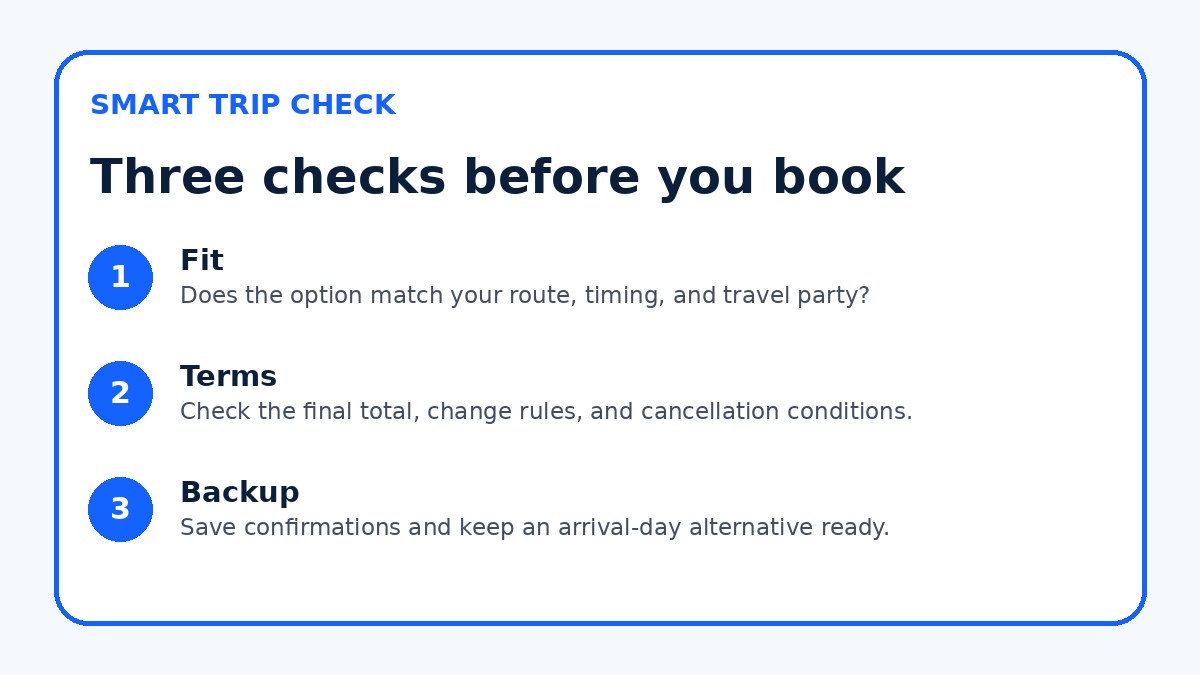
- Confirm the exact cancellation window (hours or days before check-in) on the hotel’s final booking page and screenshot it for your records.
- Verify whether refunds are credited to your original payment method, a platform wallet, or as hotel credit and note the stated processing time.
- Check the rate rules for date changes, name swaps, and whether shortening or extending a stay incurs penalties.
- Ask the hotel or platform about holds on your card for incidentals and how long after check-out the hold is released.
- Compare flexible rates across at least two booking sources (hotel direct and one OTA) and confirm which party handles refunds.
- Confirm front-desk hours, late-arrival policies, and luggage storage options to avoid forced early bookings or extra nights.
Final booking terms: what to verify before you confirm
Before you hit confirm, inspect the exact words of the booking terms. Find the cancellation window (how many hours or days before check-in you can cancel), the refund method and timeline, any nonrefundable deposit amount, and whether taxes or service charges are returned on cancellation. Pay attention to wording about changes versus cancellations—some rates permit date changes but not full refunds, or they allow changes only up to a certain number of hours before arrival. If the listing mentions a refundable security hold, ask the hotel how and when that hold is released after check-out.
Also verify operational details that often affect flexible plans: whether the room rate includes airport transfer credits that are refundable, whether early check-in or late check-out is guaranteed or only upon request, and what penalties apply for shortening or extending a stay. If booking through a third-party platform, confirm whether the platform or the hotel processes refunds, and read the platform’s policy about mediation in disputes. Trip.com can be used as one place to compare current availability and terms, but always use the hotel’s booking page or direct confirmation email to validate the final cancellation and refund specifics.
Hotel Guide questions travelers ask
How much flexibility should a solo traveler actually expect from hotel bookings in Bangkok?
Expect a range: some rates are fully refundable until a set deadline, others are partially refundable or nonrefundable. Solo travelers should aim for a rate that allows free cancellation at least 24–72 hours before arrival if possible, but read the provider’s language carefully because hotels and booking platforms differ on whether refunds cover taxes and fees. Verify the refund method, processing time, and any required paperwork on the final booking confirmation to avoid surprises if plans change.
If I book a refundable rate but need to change dates at the hotel, what should I ask for?
Ask whether the booking permit date changes without penalty, whether the rate difference will be charged, and whether cancellations versus modifications have different deadlines. Also confirm whether changing dates requires rebooking or simply calling the front desk, and whether the booking’s refundable deposit transforms into a nonrefundable hold after a modification. Always get confirmation in writing and keep screenshots of any new terms the hotel provides during the change.
Can I rely on third-party platforms for refund enforcement if the hotel refuses?
Third-party platforms can mediate many disputes, but policies differ and resolution timelines can be slow. If you rely on a platform, document all communications and keep receipts. For best protection, prefer direct bookings for certain refundable perks or ensure the platform explicitly states it will handle refunds for cancellations. Check the platform’s dispute and chargeback procedures on its final booking page and note whether they act as an intermediary or merely pass requests to the hotel.
Final decision note
For solo travelers in Bangkok, the most useful approach is to choose the neighborhood that matches your daily rhythm first, then layer flexible booking terms that protect that plan. Whether you favor late-night streets, central sightseeing, business convenience, or market immersion, prioritize refundable windows, clear refund methods, and explicit policies for date changes and holds. Shortlist one or two neighborhood styles using the comparison rows, then compare flexible rates across the hotel’s page and a booking platform to confirm who processes refunds. Keep screenshots of the final terms and contact details so you can change plans without unnecessary cost or stress.
Continue planning
Check current options and final conditions
Use the provider page to confirm live availability, the final total, cancellation terms, and every condition that matters to your trip.
This evergreen planning guide was created with AI-assisted drafting and a structured quality review. It does not display live prices, schedules, availability, visa guidance, or provider rankings. Verify current details before booking. Some links are affiliate links; we may earn a commission at no additional cost to you.