If you’re traveling Paris to Rome with oversized suitcases, sports gear, or several checked bags, the two most important decisions are which routing keeps baggage handling simple and how much airport time you build into the plan. Practical choices boil down to direct versus connecting flights, fare rules for checked pieces, and realistic minutes for check-in, drop-off and possible re-check at a connection. Start by confirming exact travel dates, number and size of bags, and whether any items need special handling (bikes, instruments, long skis). With those details you can check specific fares and baggage rules on an airline booking page or a comparison site like Trip.com. Below you’ll find the straightforward answer first, then the tradeoffs and a clear checklist to get booked with confidence.

See live routes for your exact travel day
Compare direct and connecting choices with the same baggage and traveler details.
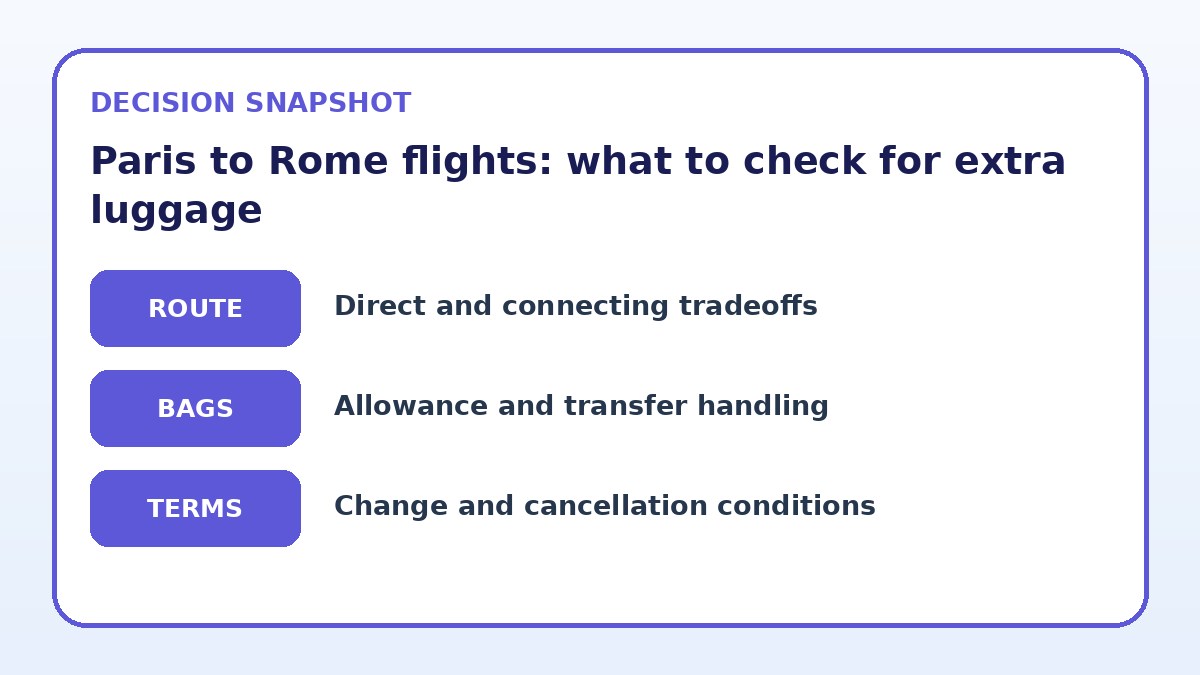
Routing: direct vs connecting for extra baggage
Direct flights keep baggage logistics simplest: a single check-in and one baggage handling chain to your Rome destination. That reduces variables such as missed connections, separate re-checks, or the need to collect and re-drop luggage during a self-transfer. When you have bulky or numerous bags, every additional touchpoint raises the risk of delay or mishandling. However, direct services may operate from different terminals and airports in Paris and Rome; verify exactly where each flight arrives and departs so you can plan ground transport and any terminal transfers.
Connecting flights can still work well if the itinerary includes a through-checked option where the first carrier tags bags all the way to Rome. If the booking is on a single ticket and the airlines have an interline or alliance agreement, you often don’t need to reclaim bags at the layover. But not all ticket combinations offer that convenience, especially on separate one-way tickets or with low-cost carriers. Compare the connection airport’s minimum connection times, the terminal layout, and whether your layover allows a straightforward transfer without needing to exit security or change terminals far apart.
Baggage risk and what to verify before booking
Before you commit, list every piece you plan to check and measure or weigh them. Then compare fare rules for checked bags, excess-weight/oversize charges, and rules for special items like sports equipment or musical instruments. Airlines vary in whether they count large items as a single piece, charge by dimension, or require advance notice and special handling fees. On the carrier’s final booking page, verify exactly how many free/paid checked pieces your fare includes, the size and weight limits, and whether you must reserve or pay for oversize baggage in advance.
Also verify connection baggage policies on multi-carrier itineraries. If a booking includes separate tickets or a mix of legacy and low-cost carriers, you may have to reclaim and re-check luggage at the connection — sometimes even between adjacent terminals. On the airline or booking provider page, check if the itinerary shows through-checking of bags to Rome. If it’s unclear, contact the operating carriers directly or choose a single-ticket itinerary that explicitly states through-checking to reduce the risk and potential time needed at the connection.
Compare flight-selection strategies
| Flight strategy | Best for | Risk to check |
|---|---|---|
| Direct flight, single ticket | Minimizing handling and risk for multiple or oversized bags | Often fewer scheduling options and sometimes higher fares; verify baggage allowance on the exact fare. |
| Connecting on single-ticket itinerary with through-check | Balancing cost savings with minimal baggage transfer work | Depends on airline agreements; confirm through-check explicitly to avoid reclaiming luggage. |
| Self-transfer (separate tickets) with budget carriers | Lower base fares when you can manage baggage reclaim and re-check yourself | Requires long layovers and more airport time; higher risk of missed onward if first flight is delayed. |
| Buy flexible fare that includes extra baggage | Travelers who value flexibility and predictable baggage policy | Higher upfront cost, but reduces uncertainty and possible airport surcharges. |
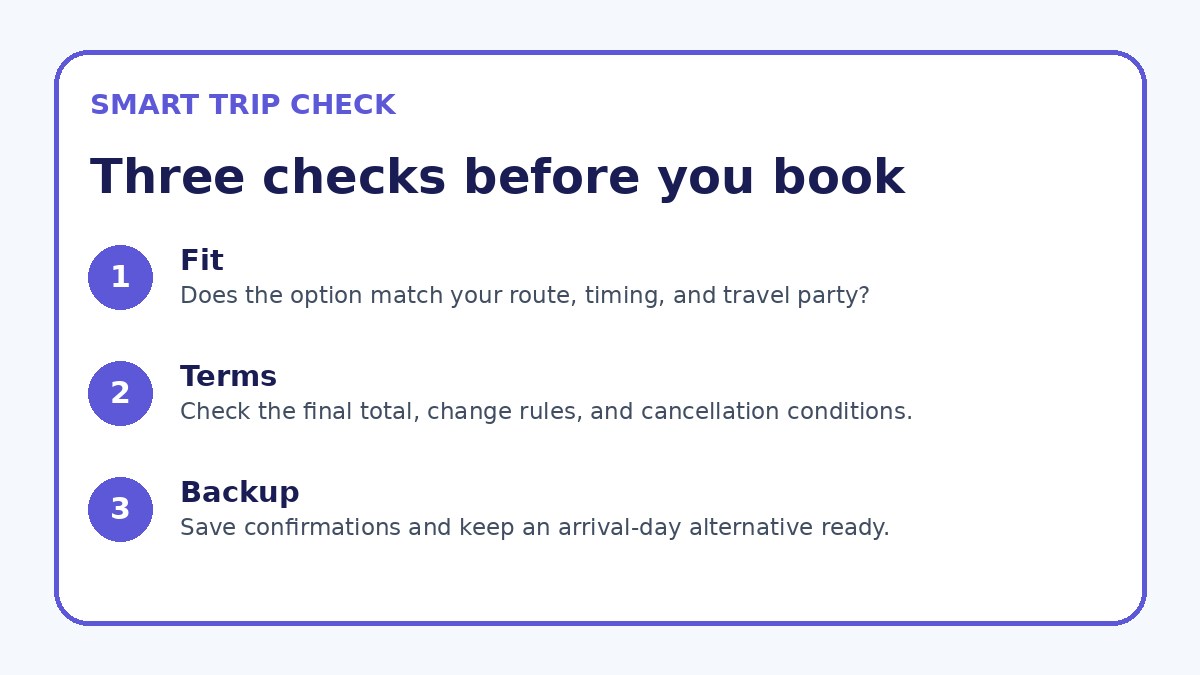
Recheck the complete itinerary
Confirm airports, connection handling, baggage, and change conditions before deciding.
Airport time: how much extra to allow at departure and connections
For departures from Paris, build in additional time beyond standard recommendations when you have extra luggage. Oversized items often need special counters that open later or have different queue behavior. Aim to arrive early enough to allow for a longer bag drop, possible weight checks, and any paperwork for oversized or special items. If you need to visit an airline’s oversized baggage desk or a cargo/service counter, those desks may be located away from the main check-in halls; plan the extra walking and potential waiting that entails.
At connections, plan time for the worst-case scenario: retrieving bags and re-checking them. If a through-checked option isn’t confirmed, factor in passport control, baggage reclaim, terminal transfer and re-check formalities. Even with through-checked luggage, allow buffer time for delayed incoming flights; longer layovers reduce stress but may cost more. Before booking, check terminal maps and available inter-terminal transfer options, and decide whether you prefer a single longer layover or two shorter connections that might be riskier for luggage.
Flight details to verify
- Confirm travel dates, flight times and exact airports/terminals before searching fares.
- Measure and weigh every bag; note fragile or oversized items and whether they need special tags.
- Check the fare’s included checked-piece allowance and the carrier’s oversize/overweight fees on the booking page.
- Verify if the itinerary is single-ticket with through-checked baggage; if unclear, call the operating airline.
- Allow extra airport time: arrive early at Paris for oversized drop-off and add long buffers for self-transfers.
- Decide in advance if you’ll add baggage online or at the airport and complete any required special-item forms.
Fare conditions and schedule fit for luggage-heavy travelers
When comparing fares, prioritize the baggage allowance and flexibility matching your plans. Low fare tickets often exclude checked bags or limit size and weight, making them a poor match if you’re carrying extra items. Look for fares that either include the number of checked pieces you need or allow straightforward paid add-ons at booking; adding baggage later at the airport can be more expensive and time-consuming. Also confirm change and cancellation rules in case you must swap to a later flight with more favorable baggage handling.
Schedule fit matters too: choose flights that align with realistic ground time and connections when you factor in baggage handling. Early-morning departures can reduce traffic risks but might complicate oversized bag service availability; late-evening options could have limited staff at special-handling counters. Verify on the airline’s booking page or customer service whether oversized baggage desks are available at your chosen times. Collect the exact flight times, terminals, and fare baggage rules before finalizing a booking to avoid surprises at check-in.
Flight Guide questions travelers ask
How much extra time should I add at Paris airports when checking oversized luggage?
Add at least 30–90 minutes beyond normal recommended check-in time when you have oversized or multiple checked items. Special counters can take longer to process, and you may need additional paperwork or an inspection. Factor in transport to the terminal and possible queues at dedicated baggage desks. If your first flight is early morning or late evening, confirm the counter hours with the carrier to avoid arriving when oversized services are closed.
Can I avoid reclaiming bags during a connection between Paris and Rome?
You can avoid reclaiming bags if your entire itinerary is on a single ticket and the airlines involved agree to through-check baggage to the final destination. The booking page will usually indicate whether checked luggage is routed through; if it doesn’t, contact the carriers involved. If you buy separate tickets or mix legacy and low-cost carriers without an interline agreement, plan to reclaim and re-check luggage and add substantial connection time.
What should I do if I need to travel with a bike, skis, or musical instrument?
Treat special items as separate from standard checked baggage: measure dimensions and confirm the airline’s special-item rules and whether advance reservation is needed. Some carriers require special packaging, protective cases, or payment of a special handling fee, and they may have specific drop-off counters. On the booking page, verify whether the item is considered a checked piece, whether it needs pre-notification, and whether there are size limits. If you must transfer flights, confirm that the special item will be through-checked or plan extra transfer time.
Final decision note
For Paris to Rome travel with extra luggage, the simplest path is to prioritize routings and fares that reduce baggage touchpoints: direct flights or single-ticket connections with through-checked baggage. Before you compare options, prepare exact dates, passenger names, and a detailed bag list so you can match fares to your needs and avoid surprises at the airport. Verify baggage allowances and special-item procedures on the airline’s final booking page, check terminal and desk hours at your flight times, and build generous buffers into your airport schedule. Taking these steps minimizes stress and gives you a predictable transfer from Paris to Rome.
Continue planning
Check current options and final conditions
Use the provider page to confirm live availability, the final total, cancellation terms, and every condition that matters to your trip.
This evergreen planning guide was created with AI-assisted drafting and a structured quality review. It does not display live prices, schedules, availability, visa guidance, or provider rankings. Verify current details before booking. Some links are affiliate links; we may earn a commission at no additional cost to you.