If you’re traveling in Busan with oversized suitcases, sports gear, or more bags than a compact car comfortably holds, driving can be practical — but only after you weigh pickup and return friction. Driving adds route flexibility: easier access to coastal sights, remote parks, and luggage-storing convenience between stops. But extra baggage changes what you need at pickup (larger vehicle, trunk protection) and return (drop-off inspections, late return fees, fuel and cleanliness rules). This article gives the short answer first: choose to rent a car in Busan only if the route value (time saved, remote stops, multiple hotels) outweighs the extra hassle of confirming cargo allowances, pickup vehicle condition, and return terms. If not, use a non-driving fallback like taxis, rail plus local taxis, ride-hailing with luggage-friendly vehicles, or luggage forwarding. Read on to compare pickup/return checkpoints, insurance wording to check, and a final checklist you can use on the booking page.

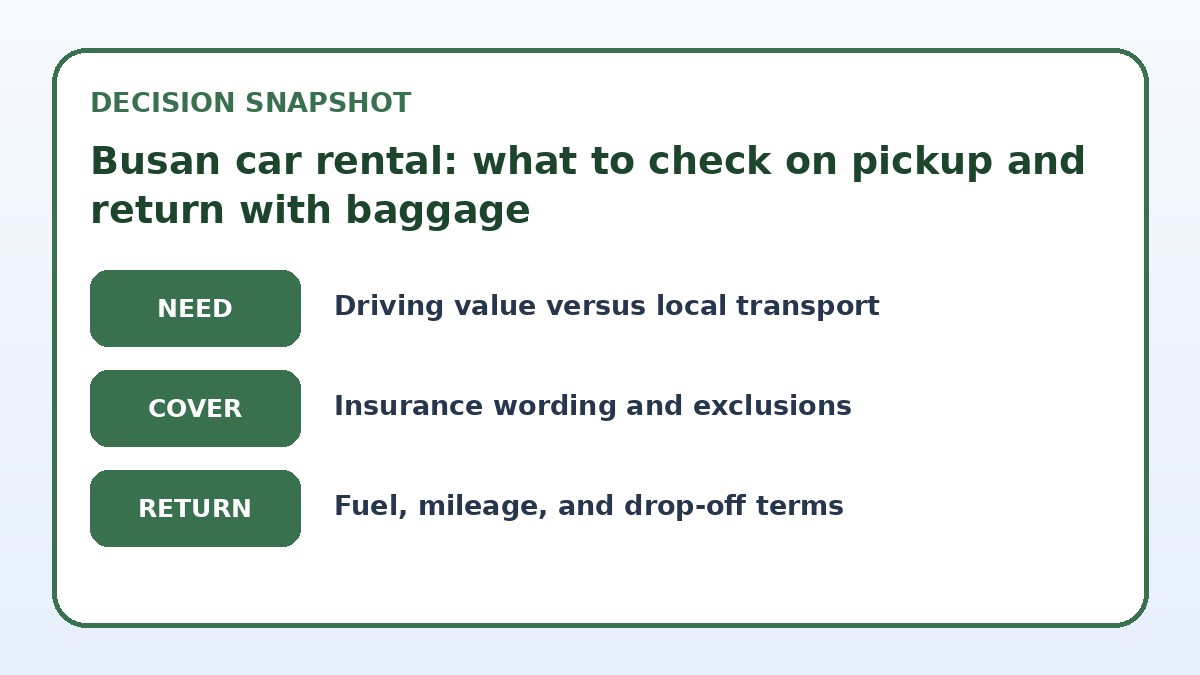
Route value: when luggage makes driving worth it
Start by mapping your core itinerary and asking whether a vehicle materially improves it. Driving pays when your plan includes multiple outer-city stops — like Taejongdae, Oryukdo, or coastal routes south of Busan — where transit frequency drops and transfers multiply with luggage. If your hotels are spread across neighborhoods, or you’re carrying sports gear, musical instruments, or extra suitcases that would otherwise need storage, a car reduces repeated hauling and offers secure, private space to store items between activities.
Contrast that with inner-city stays anchored near Haeundae, Seomyeon, or Nampo-dong where public transit and taxis serve most attractions quickly. There, the time saved by a car may be small compared with parking hassles, one-way drop fees, and the need to find a larger-class vehicle at pickup. Use practical route-value criteria: number of outer stops, average transfer count with public transport, and how often you’d need to load or unload luggage. If those numbers are high, driving is worth deeper pickup/return scrutiny.
Decide whether driving earns its place
| Mobility strategy | Best for | Cost or friction to check |
|---|---|---|
| Rent a larger car (SUV/van) | Travelers needing secure, continuous storage and multiple remote stops | Higher pickup/return inspection burden, possible extra fees, and careful verification of trunk/roof capacity |
| Taxis or local vans on demand | Short trips, single-direction transfers, and avoiding vehicle return paperwork | Potentially higher cumulative cost and less flexibility for multi-stop day trips |
| Rail or metro plus short taxi legs | Urban-centered itineraries with heavy luggage forwarded between hotels | Multiple transfers with bags; may require luggage shipping for bulky items |
| Ride-hailing XL or luggage-forwarding services | Travelers who prefer no inspection, no rental contract, and point-to-point convenience | Costs per trip can add up; availability of larger vehicles may vary by time and area |
Check live rental choices only after the route test
Use the exact driver, dates, pickup point, and return plan to compare current conditions.
Insurance and contract wording to check before you book
Insurance summaries on booking pages are often shorthand. Always view the actual rental contract or terms and conditions before you commit. Key phrases to verify include the coverage for third-party liability, the difference between collision damage waiver (CDW) and deductible/waiver options, and whether personal effects are covered. For travelers with expensive equipment packed in luggage, check whether loss, theft, or damage to items inside the vehicle is excluded and whether you’ll need separate travel insurance or an equipment rider to be protected.
Also read the fine print on mileage limits, cross-border driving restrictions (if you plan to cross provincial boundaries), and excess reduction products. If a supplier uses unfamiliar terms, request clarification or a written excerpt that explicitly mentions damage inspection procedures and how luggage-related damages (scuffed trunks, broken roof-racks, interior stains) are handled. When provider-specific facts could change, compare final terms on the booking page and, if needed, ask the rental counter to annotate your contract before you sign. Trip.com can be a place to compare current availability, but verify the rental firm’s final page for legal wording.
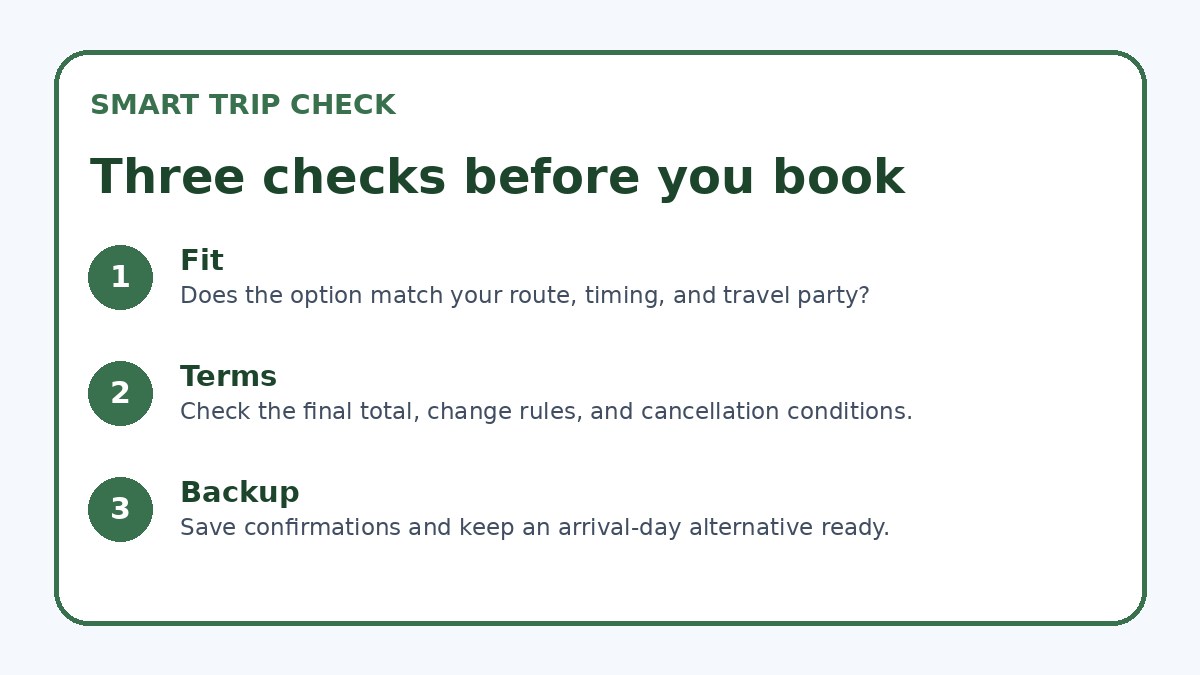
Compare the full rental conditions
Confirm insurance wording, exclusions, deposit, fuel, mileage, and return terms on the final page.
Pickup and return friction: what creates the most hassle
Pickup friction rises with vehicle class, airport or downtown desk location, and the complexity of checking for existing damage with luggage on board. At pickup, inspect the trunk and interior with the attendant while your bags are present: photograph trunk space, take time-stamped photos of any existing scratches or dents, and open the spare wheel storage if you’ll use that area. Confirm that roof-rack or tow attachments are listed on the contract if you reserved them, and get written confirmation about any pre-booked child seats or cargo covers. Ask how long the free grace period is for late arrival and whether the contract allows a different pickup spot.
Return friction often centers on inspections performed with minimal time or under pressure. Know where the return lot is, whether you must return with a full tank, and how cleanliness is judged — many providers charge for pet hair, heavy sand, or food smells. Request to have your return inspected in front of you and keep copies of inspection reports or digital photos. If drop-off hours differ from desk hours, confirm the after-hours drop box process and the liability timing window so you know when responsibility ends.
Car rental terms to verify
- Photograph the vehicle interior and trunk with your luggage in place before driving off and save time-stamped copies.
- Confirm trunk volume or exact vehicle model at booking if you need to fit oversized items; request a larger class if dimensions are unclear.
- Request written confirmation for roof-rack, tow bars, child seats, or cargo covers and ensure they’re listed on the rental contract.
- Ask the counter to walk you through the return inspection procedure and keep a copy or photo of the signed return report.
- Note fuel return requirements and the acceptable proof for a full tank (receipt, gauge reading) to avoid disputes.
- If you carry expensive gear, verify whether the contract or local laws cover personal effects and buy separate insurance or an equipment rider if needed.
Non-driving fallback: alternatives that handle extra luggage
If you decide a rental’s pickup/return costs outweigh the benefits, pick from four practical alternatives. Taxis and larger vans can handle oversized bags without the return inspection hassle of rentals; agree on trunk use and any luggage fees in advance. Korea’s intercity trains and light rail combined with short taxi rides work well for city-to-city segments if you can limit transfers. For bulky or specialized gear, regional luggage forwarding services can transport items between hotels or to the airport, reducing the need to carry them on transit.
Also consider ride-hailing services with minivan or XL options; they let you avoid rental paperwork and inspections entirely, though you’ll pay per trip. When comparing alternatives, factor door-to-door time, total cost for multiple trips versus one rental, and the risk to fragile items during transfers. The right fallback depends on the length of stay, the number and size of bags, and whether you need the car for sightseeing that public transport does not serve efficiently.
Car Rental & Road Trip questions travelers ask
How much extra luggage is too much for a standard Busan rental car?
There’s no universal rule because trunk sizes vary by vehicle and rental class. Rather than guessing, check the exact vehicle model or class details on the booking page and compare trunk volume or seat-folding options. If the site lists just a class (compact, intermediate), ask the provider which models typically fulfill that class and confirm measurements or request a larger class. At pickup, test-fit a representative bag or two — vendors expect this — and get any agreed vehicle changes documented before you leave the lot.
What should I do if I find new damage when returning the car with luggage inside?
If you discover new damage during return inspection, ask the attendant to document it immediately and request a written damage report. Photograph the damage from multiple angles and keep the timestamped images. If you disagree, ask for the supervisor to review and do not leave before an initial report is produced whenever possible. Afterward, retain all return paperwork and follow the rental firm’s dispute process; also check whether your credit card or travel insurance covers damage claims. Verify the provider’s exact claims process on the booking page so you know where to report concerns.
Can I avoid return cleaning fees when I travel with sandy or wet gear?
Avoiding cleaning fees requires planning and clear expectations. Use trunk liners, heavy-duty plastic bags, or a collapsible crate to contain sand or moisture and clean the area before returning. Some providers allow you to wash or vacuum the interior yourself and show the result to the attendant; others charge set cleaning rates regardless. Before booking, read how the supplier defines unacceptable cleanliness and whether receipts for professional cleaning are accepted in disputes. If beach or marine activities are central to your trip, consider reserving a vehicle class with washable interiors or choosing alternative transport to sidestep cleaning charges.
Final decision note
For travelers with extra luggage in Busan, the choice to rent boils down to route value versus pickup/return friction. If your plan includes multiple outer-city stops, equipment-heavy activities, or scattered accommodations, a larger rental can save time and simplify logistics — but only if you confirm trunk dimensions, accessory availability, and return inspection rules before booking. If your itinerary is urban and compact, non-driving options like taxis, rail plus short taxis, ride-hailing vans, or luggage forwarding often remove the inspection and cleaning headaches. Use the checklist above at the counter and verify exact contract language on the supplier’s final booking page; that step is the single most effective way to avoid surprises at pickup and return.
Continue planning
Check current options and final conditions
Use the provider page to confirm live availability, the final total, cancellation terms, and every condition that matters to your trip.
This evergreen planning guide was created with AI-assisted drafting and a structured quality review. It does not display live prices, schedules, availability, visa guidance, or provider rankings. Verify current details before booking. Some links are affiliate links; we may earn a commission at no additional cost to you.