Practical answer first: before you book any Toronto travel deal, add up every element—base fare, taxes, baggage, transfers, local transit, city taxes, and the cost of flexibility—using the same dates and traveler profile. Only then can you tell whether a package (flight + hotel or flight + hotel + car) actually saves money or simply bundles charges in ways that look cheaper at first glance. For a solo traveler the math is different from couples or families: single-occupancy rates, solo traveler supplements, and limited-use perks can tilt value toward separate bookings or a tailored package. This article walks through the exact comparisons to run, the inclusions that matter most for solo travelers in Toronto, and the contract terms to verify on the provider’s final booking page so you avoid surprises after paying.

Test package value fairly
| Booking approach | Best for | Tradeoff to check |
|---|---|---|
| All-in-one package (flight + hotel) | Travelers who want simple logistics and one-vendor support | May combine different suppliers under one cancellation policy and can hide single-occupancy or line-item fees |
| Flight-only + separate hotel booking | Solo travelers who prioritize hotel choice, location, or loyalty points | Requires more booking steps and potentially higher coordination if flights change |
| Flight + hotel + car bundle | Travelers needing a car or rural accommodation outside transit reach | Car rental terms, drop-off locations, and insurance may add complexity and unexpected cost |
| Book everything separately with a travel insurance policy | Solo travelers who want maximum flexibility and control over refunds | May miss logistical convenience of a package and requires managing multiple suppliers |
Check current package and separate options
Use identical dates, travelers, room needs, baggage, and flexibility so the comparison stays meaningful.
Start with apples-to-apples comparisons
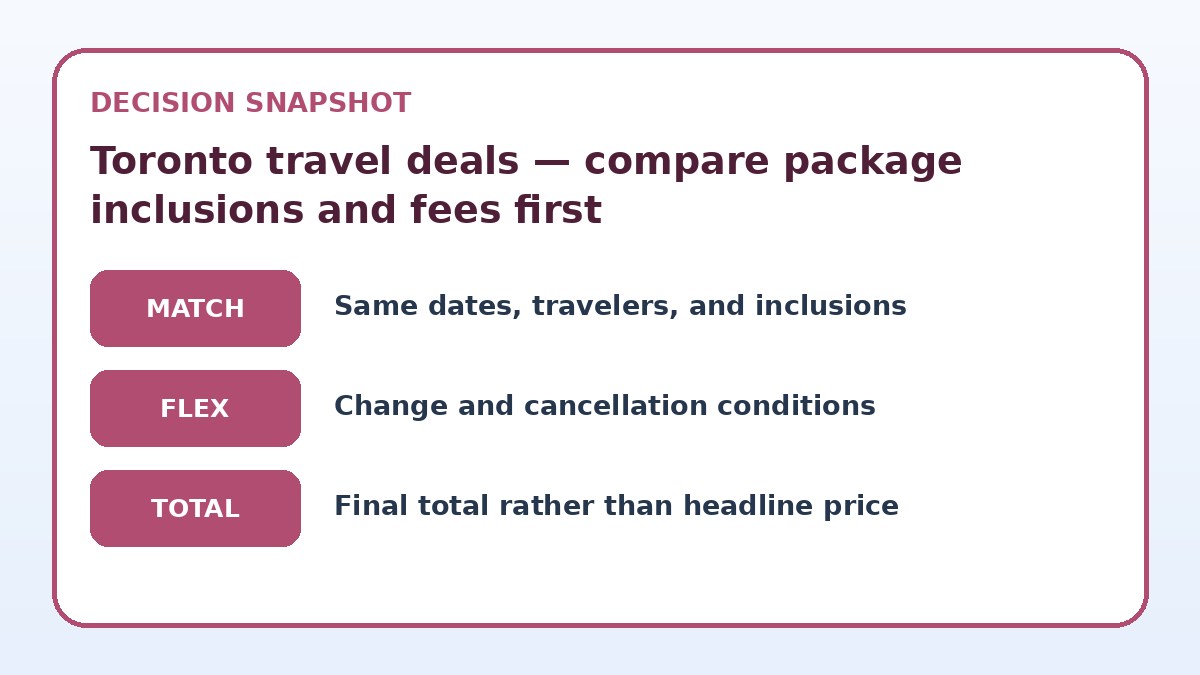
Begin by creating a simple comparison grid with identical inputs for every option: exact travel dates, the same airport pair, the same departure and arrival windows, and one traveler. Use the same currency and note whether displayed fares include taxes. Check whether fares shown are per person or per booking; packages sometimes show a single total that hides per-person surcharges. If a package quotes a nightly hotel rate, confirm whether that rate assumes double occupancy or charges a single supplement. For flights, make sure you compare the same cabin and connection pattern—direct versus connecting flights change value, timing, and risk of missed connections.
When comparing, list every line-item instead of relying on a single total. Put base price, taxes/fees, luggage, seat selection, airport transfers, and local occupancy or tourism taxes in separate rows. For hotel inclusions, record whether breakfast, Wi-Fi, resort fees, or city taxes are included or added later. If a package includes credits, vouchers, or optional tours, write in the usable value for a solo traveler—some vouchers assume multiple travelers or minimum spend thresholds that reduce practical benefit.
Inclusions that actually move the needle for solo travelers
For a solo traveler, some inclusions are worth more than others. Free checked luggage is high value if you typically travel with a bag; airport transfers save both money and hassle when arriving late or navigating unfamiliar routes. Breakfast can be useful for saving time and avoiding small daily purchases, but only if it replaces your usual eating patterns. Conversely, perks like two-for-one dining credits or multi-person tour vouchers may be less valuable for one person. Note whether the hotel charges a single occupancy supplement and if the quoted rate assumes double occupancy—this is a common source of surprise for solos.
Also check the practical nitty-gritty: Wi-Fi bandwidth and where it’s available, the location relative to public transit, and whether the accommodation offers luggage storage for late departures. If the package includes a rental car, compare the car’s drop-off locations and included mileage—solo travelers relying on public transit may prefer a central hotel credit or transit pass over a car. Think through what you would actually use during your stay rather than letting included extras influence you emotionally; an extra you won’t use adds nothing to net value.
Look past the headline total
Compare inclusions and change conditions before deciding whether a package is genuinely useful for this trip.
Deal comparison checklist
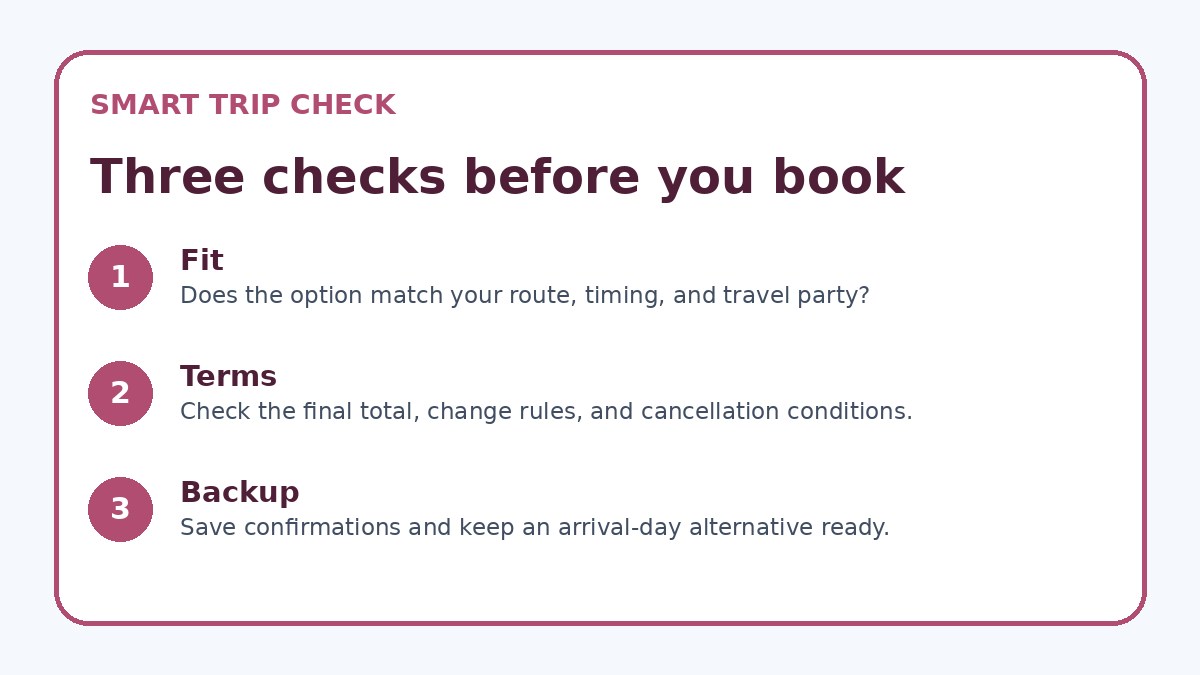
- Match the same exact travel dates, airports, and number of travelers before comparing totals for each option.
- Confirm whether displayed prices include taxes, city occupancy fees, and tourist levies; record them separately.
- Verify baggage allowance, seat selection fees, and whether those are charged per person or per booking.
- Read cancellation, change, and refund policies for each supplier listed on the final checkout page.
- Check whether hotel rates assume double occupancy or carry a single-occupancy supplement for solo travelers.
- Note emergency contact procedures and whether any included transfers or excursions have separate rebooking rules.
Flexibility, refunds, and the small-print terms
Flexibility often determines whether a small upfront saving is genuinely worth it. Check cancellation windows, change fees, and whether refunds are issued to the original payment method or as travel credit. For flights, see whether the fare allows free name changes, date changes with a fee, or is non-refundable; for hotels, verify the difference between free-cancel rates and prepay-and-save rates. If a package bundles services under a single cancellation policy, you may lose refund protections that an individual hotel or airline booking would offer separately. Make sure any transfer or excursion included in the bundle has clear rebooking rules.
Read the provider’s final booking page before paying: verify who is the contracting party for each part of the package, whether the supplier is a third-party partner, and which cancellations require contacting the vendor versus the package seller. Note emergency contact options and whether insurance is offered or required. If a provider offers “flex” fares or partial refunds, record exactly what triggers them and any administrative fees. These details matter more than the headline price because they determine whether you can recover costs when plans change.
Traveler-specific value and final decision criteria
Decide based on what matters to you: lowest out-of-pocket cost, simplest logistics, or maximum flexibility. If you value arrival ease and the package includes an assured pickup from the airport, that could justify a modest premium. If you prioritize flexibility or have specific hotel preferences, separate bookings let you mix and match airlines and properties. Consider safety and convenience tradeoffs for solo travelers—proximity to transit, well-lit neighborhoods, and front-desk hours may be worth paying a bit more. Also test how easy it is to contact customer service; the ability to fix problems quickly can make a package worth more than a small discount.
Before confirming, do one last check: replicate the same trip as separate bookings and as a package, entering the same personal details and verifying final totals on the provider’s checkout page. Compare the final out-the-door price, refund policy, and any prepayment requirements. If you want an independent point of comparison, you can check availability on Trip.com or another aggregator, but always verify terms on the seller’s final page since aggregators may not reflect all fees or supplier policies.
Travel Deals & Booking Strategy questions travelers ask
If a Toronto travel deal looks cheaper than booking separately, how can I verify it actually saves money?
Recreate the same itinerary with separate bookings using the same dates and traveler profile, then compare the final checkout totals side by side. Include every line item: base prices, taxes, baggage fees, seat assignments, airport transfers, city taxes, and any hotel supplements. If the package includes credits or vouchers, determine whether you can realistically use their full value as a solo traveler. Finally, check cancellation and change penalties—sometimes a cheaper-looking package imposes higher fees that nullify the initial savings.
What specific contract terms should I verify on the seller’s final booking page?
Confirm who is the contracting party for each element (airline, hotel, car rental) and whether the package seller or the supplier handles refunds and customer service. Check cancellation windows, change fees, and whether refunds are issued to the original payment method or as travel credit. Verify prepayment requirements and the deadline for free cancellation if offered. Also look for any single-occupancy supplements and the exact inclusions for transfers, tours, and other extras so there are no surprises at check-in or arrival.
How should solo travelers weigh convenience against potential small cost savings?
Decide whether time and simplicity are worth a modest premium: an all-in-one package can reduce coordination and offer a single support number if problems arise, which can be valuable when traveling alone. Conversely, separate bookings often allow better hotel choice, loyalty benefits, or refundable fares. Estimate the monetary difference and then factor in the non-monetary costs—time spent managing separate bookings, the risk of missed connections, and peace of mind. If the financial savings are tiny but the hassle is significant, paying more for convenience can be the sensible choice.
Final decision note
Solo travelers booking Toronto should treat any attractive headline price as the start, not the finish, of the decision process. Run an apples-to-apples comparison using identical dates and traveler details, list every fee and inclusion, and verify cancellation or change policies on the seller’s final booking page. Pay special attention to single-occupancy charges, the practical value of included extras for one person, and who handles refunds if something goes wrong. If you want an additional marketplace view, check availability on aggregators such as Trip.com, but always confirm the full terms with the supplier before paying. That careful check will help you book with confidence and avoid last-minute surprises.
Continue planning
Check current options and final conditions
Use the provider page to confirm live availability, the final total, cancellation terms, and every condition that matters to your trip.
This evergreen planning guide was created with AI-assisted drafting and a structured quality review. It does not display live prices, schedules, availability, visa guidance, or provider rankings. Verify current details before booking. Some links are affiliate links; we may earn a commission at no additional cost to you.