If you’re flying Sydney to Melbourne with extra bags, the central tradeoff is simple: direct routing saves time but can mean stricter baggage limits or higher checked-bag fees, while connecting or flexible-fare options may allow more luggage but add complexity and risk. Start by deciding whether minimizing time on the ground (arrive later, fewer transfers) or minimizing out-of-pocket baggage cost matters more to you. From that decision flow the rest: which airport check-in window to use, whether to buy additional allowance in advance, and how to build contingency time for missed connections or long baggage-drop queues. This article gives practical steps for comparing direct and connecting flights, sizing how much extra time to allow at Sydney Airport, reducing connection risk, and reading fare conditions so your luggage plan stays predictable. Have exact travel dates, passenger ages, baggage counts and any frequent-flyer details ready before checking live options or booking through Trip.com or an airline site.
See live routes for your exact travel day
Compare direct and connecting choices with the same baggage and traveler details.
Routing: direct versus connecting options
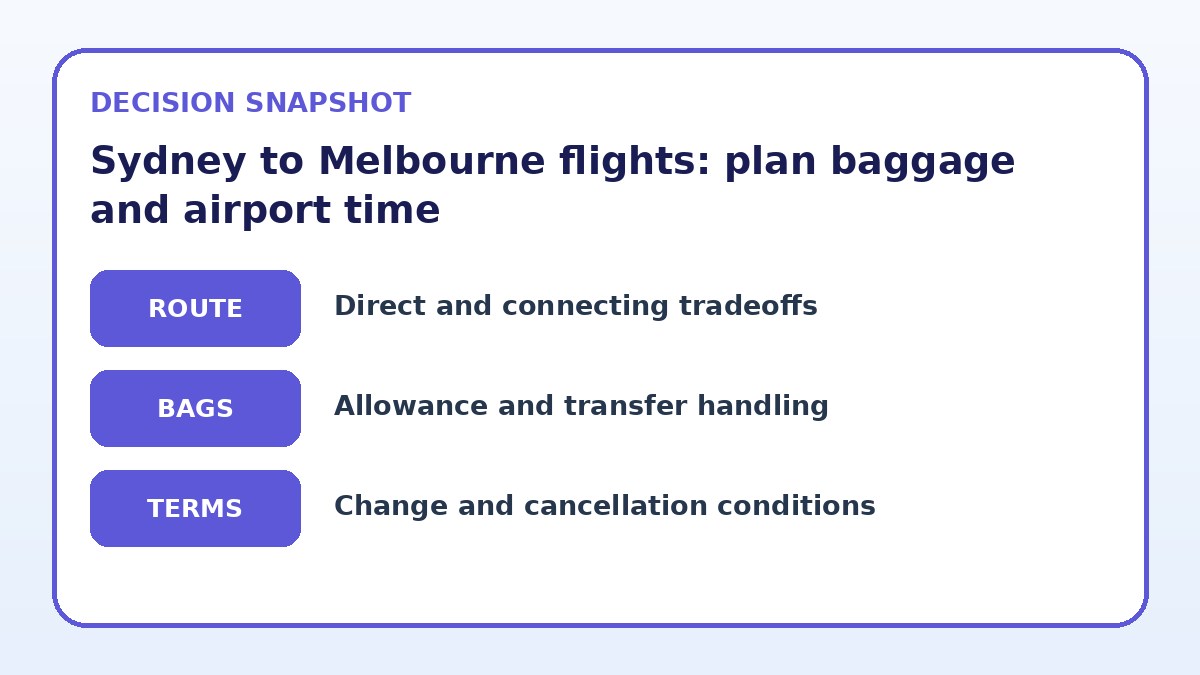
Start by listing whether the options shown for your dates are direct flights or include connections. Direct flights reduce the number of times your luggage is handled and usually shorten total journey time, which matters when you have extra or fragile bags. Connecting itineraries can offer lower fares or higher included allowances on some fare types, but each change of aircraft multiplies the chance of delay, misrouting, or extra handling fees. Before you pick a route, note how many times your luggage will be checked through and whether the booking tool shows through-checked baggage or requires re-check at the connection airport.
To compare fairly, put exact travel dates, traveler ages and how many checked pieces you have into the search. If you see an itinerary with the same carrier across legs and a single booking reference, baggage is typically handled through; if separate tickets appear or different carriers are involved, plan for baggage collection and re-check which adds time and hassle. For irregular sizes or very heavy items, ask the carrier about special handling options and whether a dedicated oversized-bag service is recommended — these services affect which routing is practical.
Baggage and connection risk: what to check
Read baggage allowance rules for each fare and carrier carefully before you assume anything is included. Fare pages and the airline’s baggage policy will state piece limits, weight limits, and permitted dimensions; these are the items that most commonly change between seemingly similar flights. When carriers allow a checked bag on a basic fare for one leg but not another, the cheapest itinerary can suddenly become costly after you add the baggage you actually need. Also check whether fragile, musical, or sporting equipment needs to be pre-declared or shipped as cargo instead of normal checked luggage.
Connection risk is a practical concern when choosing an itinerary. If your flight requires a change, compare the minimum connection time listed by the airline with realistic buffers you need for baggage transfer, customs (if applicable), and potential delays. Single-ticket connections typically include protections for missed connections and will transfer baggage for you; separate tickets often do not. If avoiding risk is a priority, prefer routes with single-ticket connections or direct flights, and consider buying fare options that include flexible rebooking or higher-priority baggage handling.
Compare flight-selection strategies
| Flight strategy | Best for | Risk to check |
|---|---|---|
| Direct flight, standard fare | Travelers prioritizing speed and fewer handling points for multiple bags. | Often less flexible on baggage allowances and might have higher per-piece fees compared with bundled fare options. |
| Connecting flight on one ticket with higher-fare class | Those willing to pay more for checked-piece allowances and protection against missed connections. | Longer total travel time and potentially more time in airports, despite improved baggage coverage. |
| Cheapest fare plus separately purchased baggage | Price-sensitive travelers who can pre-pay for exactly the baggage they need. | Must verify transfer rules and can lose protections on separate-ticket connections; fees can add up if miscalculated. |
| Flexible or premium fare with priority baggage handling | Travelers carrying fragile, oversized, or high-value items wanting reduced handling time and priority service. | Higher upfront cost that may not be necessary for routine extra luggage without tight schedules. |
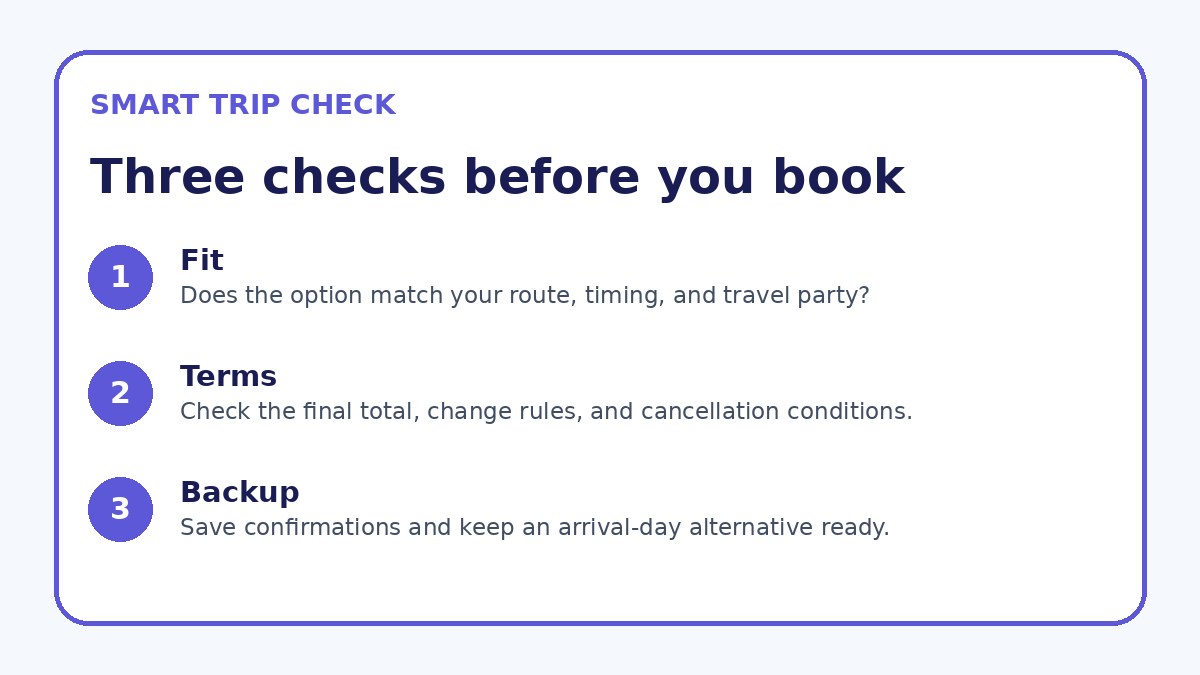
Recheck the complete itinerary
Confirm airports, connection handling, baggage, and change conditions before deciding.
Schedule fit: planning airport arrival and buffer time
Work backward from the flight departure time to set your arrival at the airport. For travelers with extra luggage, allocate additional time for the baggage drop queue, oversized-baggage counter, and potential gate checks. If you need to check multiple pieces or oversized items, expect to spend more time than the typical carry-on passenger; plan enough time to complete check-in, security screening, and any special processing without rushing. Remember that ground transport variability—traffic, ride-share drop-offs or parking—adds to the required buffer, so include margin for these factors.
If you have a tight schedule on the Melbourne end—meetings, train connections, or onward car pickups—factor in potential delays from baggage handling and claim. For early morning or late-night flights, check airport opening times and whether your airline’s bag-drop desks are available at those hours. When planning door-to-door timing, add contingency for slow baggage belts or additional screening that can delay reclaiming oversized items. If minimizing airport wait is your priority, choose flights with convenient check-in windows and, where offered, priority boarding or priority baggage handling for purchased fare upgrades.
Flight details to verify
- Confirm exact travel dates, full passenger names, ages, and the precise number and dimensions of each bag before searching fares.
- Compare included checked-piece counts and weight/dimension limits on the airline’s final booking page, not just summary search results.
- If booking a connection, ensure the itinerary is a single ticket that includes through-checked baggage and missed-connection protections.
- Pre-purchase extra allowance during booking if the carrier shows a lower online rate than the airport fee for additional bags.
- Plan airport arrival with extra buffer for oversized-bag drop and security, and choose a flight with earlier check-in windows if possible.
- Take photos of each packed item and keep receipts for high-value contents; note special handling or insurance options on the booking page.
Fare conditions and booking checks before purchase
Before you commit to a ticket, read the fare conditions for baggage allowances, change and cancellation rules, and the exact fees for extra or oversized pieces. Different fare classes can vary sharply in what they include. Make sure the carrier’s final booking page or the booking confirmation spells out what’s included in your fare: number of checked bags, maximum weight per bag, and any mandatory charges at airport check-in. If the booking tool lets you add baggage during purchase, compare the pre-purchase rate to the airport rate so you can decide whether to add allowance now or later.
Also verify refund and rebooking policies for your chosen fare, because flexible options reduce the cost of contingency planning around luggage problems and missed connections. If you travel with high-value items, check whether the fare or carrier offers higher liability or optional insurance and whether any claim limits apply to checked baggage. Finally, confirm pickup details at both ends—where oversized items are returned, how baggage is labeled, and the cut-off times for special handling—to ensure the fare you buy actually meets your luggage needs.
Flight Guide questions travelers ask
How early should I arrive at Sydney Airport with extra checked baggage for a Sydney to Melbourne flight?
Arrival time depends on your check-in needs and the size/number of bags. For multiple checked pieces or oversized items, allow significantly more time than a carry-on traveler. Account for bag-drop queue, any special handling counters, and standard security lines; if you also need to buy or pay for extra allowance at the counter, that adds time. If you have pre-purchased baggage online and a printed or mobile boarding pass, you often save time but still allocate buffer for irregular baggage. Verify the airline’s recommended check-in cut-off on the booking page and aim to arrive well before it to avoid last-minute stress.
Is it safer to buy extra baggage allowance during booking or at the airport?
Buying allowance during booking is usually more predictable and may be cheaper, but that depends on the carrier. Pre-purchase ensures your reservation reflects the correct number of bags and reduces the chance of surprises at check-in. If the booking tool shows baggage as an add-on, compare the online rate with the airport rate and factor that into your decision. Also confirm on the airline’s final booking page that pre-purchased allowance applies to all legs of your itinerary and whether any restrictions exist for oversized or special items.
What should I check if my itinerary includes a connection on the way to Melbourne?
When a connection is part of the trip, verify whether the booking is on a single ticket and whether baggage will be transferred automatically between legs. If the tickets are separate, you will likely need to collect and re-check bags, which increases both time and risk. Check the minimum connection times listed, whether the carrier offers protections for missed connections on a single reservation, and how long customs or transfer processes typically take at the connection airport. Also confirm baggage transfer procedures and special handling instructions on the airline’s confirmation page to avoid surprises.
Final decision note
Planning Sydney to Melbourne flights with extra luggage becomes straightforward when you make three decisions up front: prioritize time versus cost, quantify exactly what you need to carry, and choose a booking type that protects baggage transfer. Compare direct and single-ticket connecting itineraries for total door-to-door time, and always read the carrier’s final booking page for baggage allowances, weight limits, and change or refund rules. Pre-purchase any extra allowance you need if the online price looks better than airport fees, and leave generous buffer time at Sydney Airport for oversized or multiple bags. With exact dates and luggage details in hand, you can choose the itinerary that balances convenience, cost, and risk.
Continue planning
Check current options and final conditions
Use the provider page to confirm live availability, the final total, cancellation terms, and every condition that matters to your trip.
This evergreen planning guide was created with AI-assisted drafting and a structured quality review. It does not display live prices, schedules, availability, visa guidance, or provider rankings. Verify current details before booking. Some links are affiliate links; we may earn a commission at no additional cost to you.