For couples deciding how to get from Seoul to Busan, the practical answer is to choose the combination of modes that balances where you start and end, how much luggage you have, and how flexible your schedule must be. Start by comparing Seoul and Busan terminals (central train stations, coach terminals, or ferry piers) against your accommodation locations. Then evaluate luggage handling, transfer complexity, and how a delay would affect onward plans. Rail gives simple, city-center to city-center access; coaches sometimes offer lower cost with main-terminal pickup; ferries suit those wanting a scenic sea leg or specific coastal stops. Plan a disruption backup—an alternate train or coach and a nearby hotel option—so one delay doesn't derail the whole multi-city itinerary.
Terminal fit: start and end points matter
When mapping Seoul to Busan transport, the location of your departure and arrival terminals will shape everything else. For couples, door-to-door practicality is more important than in isolation travel: pick modes that drop you near your hotel or a convenient subway line. If your Seoul lodging is near a major train station, that tilts the choice toward rail; if you’re staying near a long-distance bus terminal, a coach may save an extra transfer. Ferry piers and peripheral coach stops often mean taxi or subway rides before and after the main leg, increasing friction.
Assess walking distances, available taxis, and subway connectivity before booking so you know if a transfer will be quick or add 30–60 minutes. Consider how each partner’s mobility and luggage capacity affect walking between terminals and accommodations. Small, frequent bags are easier for mixed itineraries that require changes; bulky suitcases favor single-leg rail journeys. Finally, check which terminals operate late or early if you travel outside standard daytime hours—this can determine whether a single connection is realistic.
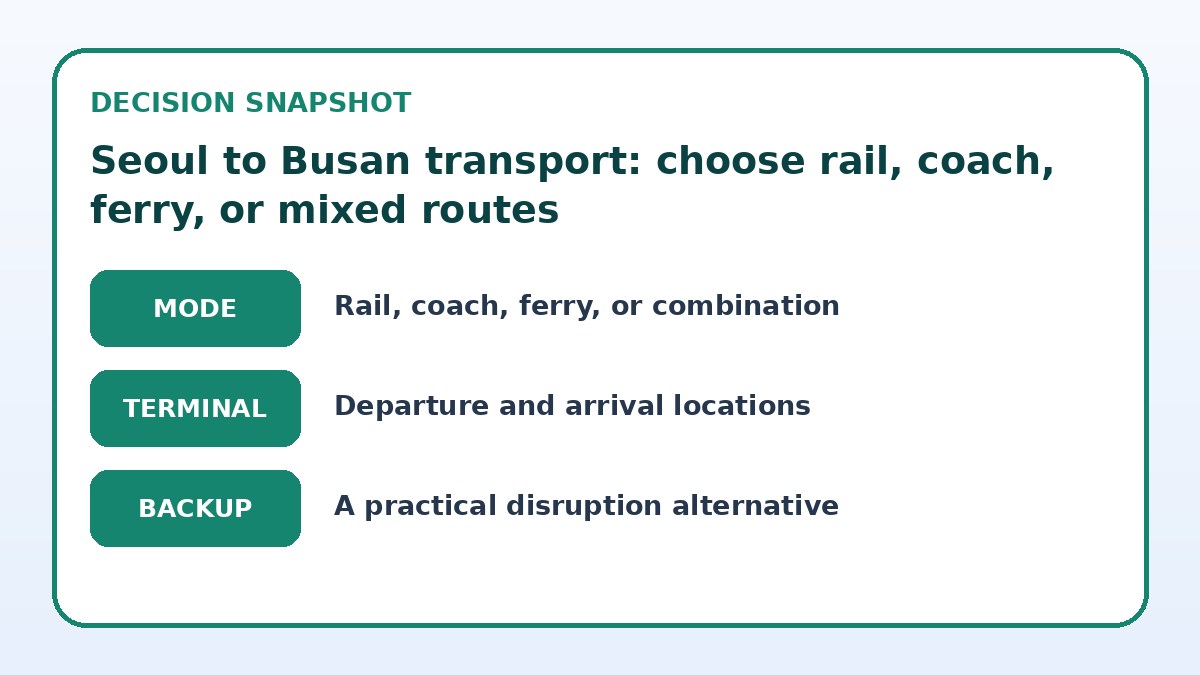
Choose the end-to-end journey plan
| Journey approach | Best for | Friction to check |
|---|---|---|
| All-rail plan (seamless city-center to city-center) | Couples prioritizing minimal transfers and easy luggage handling | Less scenic coastline time and fewer late-night departures in peripheral areas |
| All-coach plan (single operator between terminals) | Couples seeking a budget-conscious, single-seat journey with direct terminal boarding | Potentially more time on the road and extra walking at suburban terminals |
| Ferry-inclusive plan (sea leg for coastal stops) | Couples wanting relaxed pace, coastal scenery, or a unique overnight leg | More transfers and luggage handling, and time-sensitive to weather or schedules |
| Mixed-mode plan (rail + coach or rail + ferry) | Couples balancing speed with sightseeing or specific stopovers en route | Requires careful transfer planning and slightly higher coordination overhead |
Check live intercity options
Look beyond the ride itself and compare terminals, transfers, luggage, and arrival fit.
Luggage, transfers and couple-friendly friction
Luggage is an often-underestimated factor for couples. Trains generally allow more room to keep bags with you or in nearby storage, reducing the need to juggle suitcases during transfers. Coaches sometimes have hold space managed by staff, but you'll still handle bags at each stop; ferries require moving luggage onto a different vessel, which can be awkward with two people and multiple bags. Think about whether one partner will carry a bag while the other manages tickets and navigation—choose options that minimize repeated lifting and stair transfers.
Transfers are where plans can feel smooth or stressful. A single through-ride saves time and energy; multi-leg itineraries need clear transfer instructions and buffer time. As a couple, agree who manages navigation and who carries what, and budget at least 30–60 minutes between scheduled arrivals and departures when switching modes. If either of you prefers fewer physical demands, favor routes with minimal platform changes, step-free access, or direct terminal-to-terminal connections even if they cost a bit more in convenience.
Timing flexibility and planning for romance
Timing needs depend on your priorities: sightseeing stops, dinner reservations, or a relaxed arrival in Busan. Rail gives predictable travel windows good for planning a romantic dinner or evening walk; coaches and ferries may have fewer departure times, making timing less flexible. Couples who want to split the day—one partner exploring en route while the other rests—should pick modes that allow easy drop-off and reboarding without losing luggage or seats.
When building your schedule, include comfortable buffer time if you plan a scenic stop or photo break during a multi-city route. If you’re booking activities at the destination, aim to arrive with multiple hours margin rather than cutting it close. Balance the desire to maximize sightseeing with the need to avoid travel fatigue: sometimes a slightly longer but less stressful transfer is worth preserving energy and mood for evening plans together.
Compare the practical alternatives
Use the final page to confirm what is actually offered on your dates and save a workable fallback.
Intercity travel checklist
- Confirm exact station, terminal, or pier names for both departure and arrival to map door-to-door transfers.
- Check step-free access and elevator availability at each transfer point if either partner has mobility concerns.
- Allocate at least 30–60 minutes between connections when combining modes to reduce stress.
- Pack luggage so each partner manages an achievable share and designate who handles tickets and navigation.
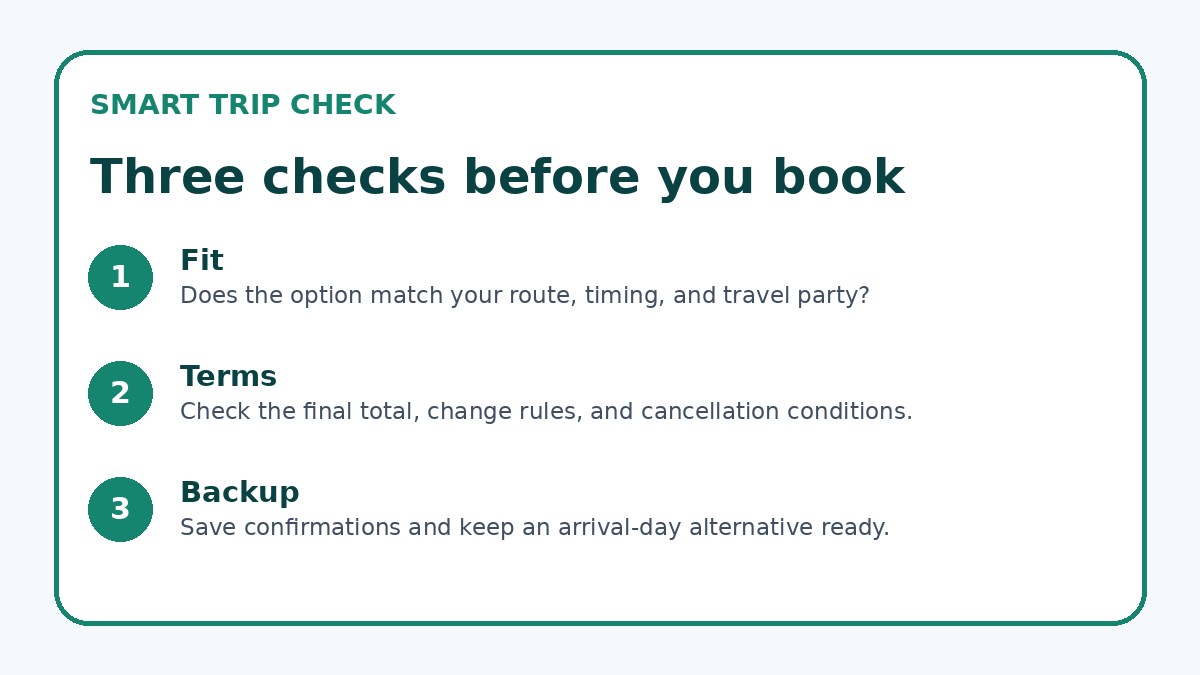
- Save digital and printed copies of reservations and take screenshots of booking reference numbers.
- Identify one alternate departure and one nearby hotel or rest option in case of significant delays.
Disruption backup: realistic fallbacks for couples
A disruption plan keeps a couple’s trip on track without turning a delay into an argument. Identify at least one alternate route for each planned leg—an earlier or later train, a different coach operator, or a nearby ferry pier—and confirm how easy it is to change to that option. Make a simple contingency: if a scheduled connection is missed, who buys the next ticket, which nearby hotel would accept a late check-in, and how you will communicate changes between yourselves and with any hosts or ticket vendors.
Also prepare for common annoyances: a missed connection, a luggage hold delay, or sudden weather affecting a sea leg. Keep digital copies of bookings, know station names in Korean and English, and have a local taxi app and cash or a card available for immediate alternatives. If one partner prefers making quick decisions, agree ahead who will lead the contingency so the other can relax and reduce friction when plans change.
Rail & Intercity Transport questions travelers ask
How should couples decide between rail and coach for Seoul to Busan transport?
Choose rail if you want the fewest transfers and the easiest city-center access—especially useful when both accommodations are near major stations. Coaches can be more straightforward when your pickup and drop-off are already near coach terminals and you prefer a single seat for a longer stretch. Evaluate last-mile travel from terminal to hotel, luggage handling needs, and whether you want frequent departure times or are comfortable with fixed coach schedules. Ultimately, pick the mode that minimizes repeated lifting and extra taxi rides for the two of you.
Is it practical to include a ferry stop between Seoul and Busan for sightseeing?
A ferry can add a scenic dimension and slower pacing to your trip, which some couples appreciate for photos and coastal stops. However, ferries typically introduce extra transfers to reach piers and can be more sensitive to weather, so you should be comfortable with the additional logistics and luggage transfers. If a seaside stop is central to your plan, build sizable time buffers and a clear backup plan—confirm how to rebook or switch to rail or coach if a sailing is cancelled.
What’s the best disruption backup strategy for couples traveling ground-only between Seoul and Busan?
Keep two concrete fallbacks: an alternate scheduled service (earlier or later train/coach) and a nearby accommodation option allowing flexible check-in. Share responsibilities—decide who will handle rebooking and who notifies any onward reservations—so decisions are fast and calm. Also keep translations of station names, screenshots of tickets, and a local taxi or ride-hail app ready. If you want an outside comparison before changing plans, check availability platforms such as Trip.com to verify current options, but always confirm details on the provider’s official booking page.
Final decision note
For couples planning Seoul to Busan transport, the right choice balances terminal fit, luggage ease, timing flexibility, and a simple disruption backup. Start by mapping where you’re staying in both cities and favor modes that reduce walking and repeated handling of bags. If both partners prioritize comfort and minimal transfers, lean toward rail; if you want a coastal pause, add a ferry and accept extra transfers; if terminals align, a coach can be straightforward. Whatever you choose, build buffers between connections, agree roles for navigation and contingency decisions, and save alternate options so a delay doesn’t spoil your shared plans.
Continue planning
Check current options and final conditions
Use the provider page to confirm live availability, the final total, cancellation terms, and every condition that matters to your trip.
This evergreen planning guide was created with AI-assisted drafting and a structured quality review. It does not display live prices, schedules, availability, visa guidance, or provider rankings. Verify current details before booking. Some links are affiliate links; we may earn a commission at no additional cost to you.