If you’re traveling from Melbourne to Queenstown with extra luggage, your primary tradeoff is often route flexibility versus fare baggage allowances. A direct routing (if available) reduces connection risk and the chance of checked-bag misrouting, but it may come with tighter fare rules and smaller included baggage. Connecting itineraries can offer lower base fares or larger checked allowances on one sector, yet add transfer stress and the need to re-check or re-tag luggage. Before you search prices, decide whether minimizing transfers or securing a comfortable baggage allowance is more important. This article gives the practical checklist to prepare exact dates and traveler details, then explains how to weigh routing, baggage risk on connections, schedule fit and fare conditions so you can compare live options efficiently and book the best fit for your needs.
See live routes for your exact travel day
Compare direct and connecting choices with the same baggage and traveler details.
Routing: direct versus connecting itineraries
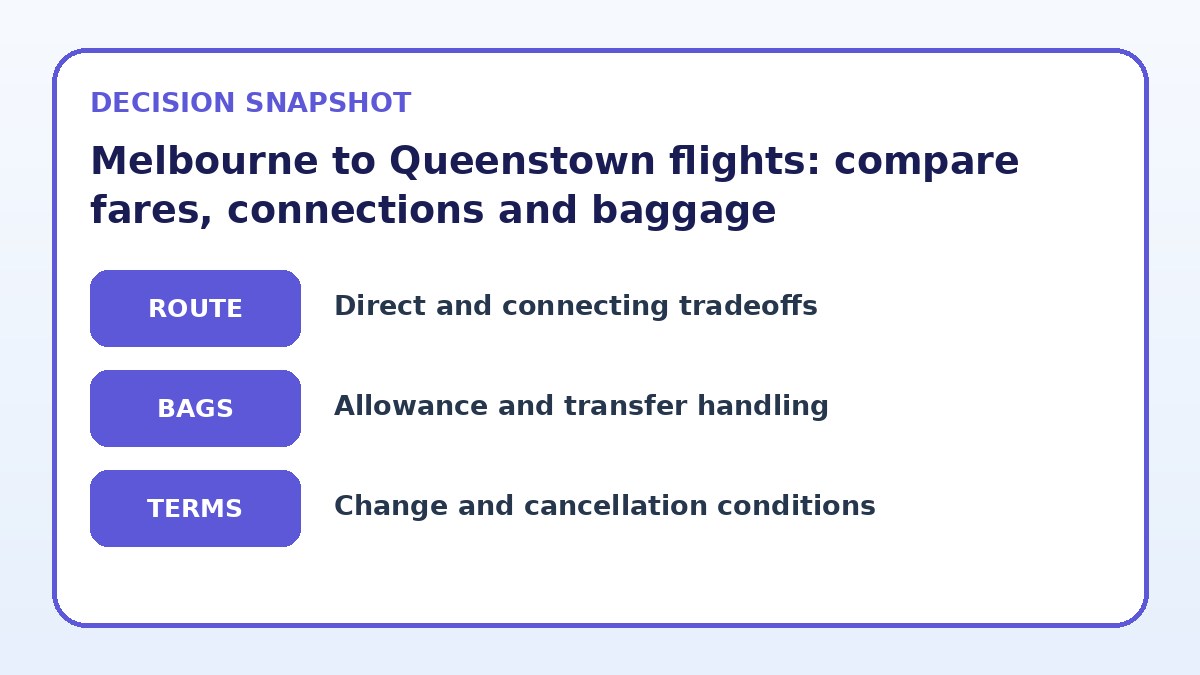
Route choice is the foundation of your decision. Direct flights (when offered) reduce the number of handoffs for your luggage and typically shorten travel time, lowering the chance of a delayed connection breaking your trip. However, direct options may have stricter carry-on allowances or limited checked-bag weight in cheaper fare buckets. Conversely, connecting itineraries expand the number of carriers and fare combinations available, which can sometimes include more generous baggage allowances on one or both segments.
When you compare routes, list exact departure and arrival airports and any transfer points, then check whether the connection is on a single ticket. Single-ticket itineraries generally provide better baggage transfer protection and rebooking assistance from carriers if disruptions occur. If you select separate tickets, assume you may need to collect and re-check baggage; plan extra layover time and factor in possible terminal transfers between arrival and departure flights.
Baggage and connection risk: what to verify
Before booking, read the fare baggage policy line by line for both carry-on and checked items. Look for piece limits, weight limits, maximum linear dimensions, and fees for additional or overweight bags. Pay special attention to whether domestic and international legs use consistent baggage rules; some international carriers apply different limits for trans-Tasman or domestic sectors. If baggage allowances differ between segments, calculate the out-of-pocket fees you’d pay and whether it’s cheaper to buy an upgraded fare or add bags a la carte.
If you will connect, confirm whether baggage is checked through to your final destination on the same ticket. If the airline’s wording is unclear on transfer handling, contact the carrier before you buy. For separate-ticket connections, assume baggage will not transfer automatically—plan a longer layover and check terminal transfer requirements. Also verify maximum allowed pieces per passenger, since some fares limit the number of checked bags even where weight is higher.
Compare flight-selection strategies
| Flight strategy | Best for | Risk to check |
|---|---|---|
| Choose a single-ticket itinerary with a transfer | Travelers prioritizing lower fare plus some baggage protection | Offers baggage transfer protection but adds connection exposure and potential longer total travel time |
| Book a direct flight where available | Travelers who want minimal transfers and simpler luggage handling | May have stricter included baggage limits and fewer cheap fare classes |
| Buy two separate tickets to mix carriers | Travelers seeking a custom schedule or larger allowed bags on one carrier | Higher risk: you may need to re-check luggage and allow extra time for transfers |
| Book a higher fare class with included extra baggage | Passengers who value certainty on baggage allowances and fewer add-on fees | Higher upfront cost but reduces the complexity and uncertainty of a la carte baggage purchases |
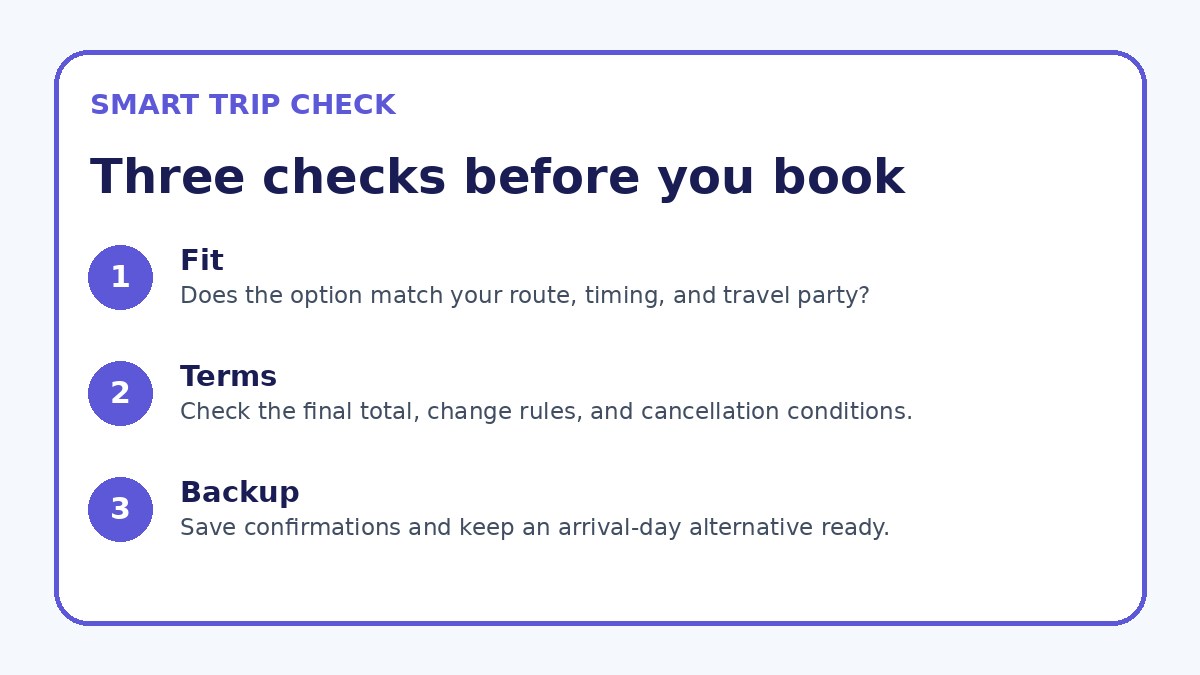
Recheck the complete itinerary
Confirm airports, connection handling, baggage, and change conditions before deciding.
Schedule fit and practical timing
Match flight times to your real timetable, not just the cheapest itinerary. Consider arrival time in Queenstown relative to ground transport, check-in windows at your accommodation and any activities planned that first day. If you’re traveling with heavy or bulky luggage, earlier check-in at your origin and a later arrival in Queenstown might change how you handle last-mile transfers—book transfers or rental cars that can accommodate larger items and confirm pickup/drop-off hours in advance.
For connections, build cushion into both arrival and departure times. Short connections increase the risk of missed flights and require faster baggage transfers; long connections add fatigue and potential overnight stays if delays occur. If you must take an overnight stop, check whether your fare allows free name/date changes or includes hotel support in irregular operations. Keep a flexible contingency plan: list alternate flights, ground transfer options, and luggage storage choices at both airports.
Flight details to verify
- Confirm exact travel dates, full traveler names as on ID, and the number and dimensions of all luggage before opening any booking search.
- Search and note fare rules and the specific baggage allowance for each sector; screenshot the carrier’s baggage policy page before purchase.
- Verify whether your itinerary is single-ticket or separate tickets and confirm if baggage is checked through to Queenstown.
- Calculate the cost difference between upgrading to a higher fare class that includes extra bags versus buying bags à la carte during booking.
- If connections are required, plan minimum layovers (allow extra time for baggage transfer and terminal changes) and list backup flights for disruptions.
- Record the airline’s final booking page contact details, baggage receipts, and fare conditions; save emails and screenshots in case you must claim or rebook.
Fare conditions and what to confirm on the final booking page
Fare rules can hide the real cost of your trip. On the airline’s booking page, verify change and cancellation fees, refundability, baggage fees, and whether seat selection is included. Confirm when additional bags must be purchased—at booking, at online check-in, or only at the airport—and whether purchasing baggage ahead of time yields a lower fee. If you’re comparing multi-carrier itineraries, check whether the ticket is issued as a single contract or multiple tickets; this affects who is responsible if a disruption causes missed connections or lost luggage.
Before finalizing any booking, verify that passenger details (name spelling, frequent flyer numbers, contact details) match official documents. Check the total price breakdown for base fare, taxes, and any mandatory surcharges and baggage extras. If visa, health, or document checks could affect connection routing, verify the carrier’s instructions on their booking confirmation page and save screenshots of baggage allowances and fare rules for reference in case of disputes.
Flight Guide questions travelers ask
Will my checked luggage automatically transfer on connecting flights between Melbourne and Queenstown?
It depends on whether your itinerary is on a single ticket and whether the carriers involved have an interline or codeshare agreement. Single-ticket itineraries typically allow checked luggage to be tagged to the final destination so you do not reclaim it during layovers. For separate tickets, plan to collect and re-check luggage. Always confirm on the airline’s final booking page and ask the airline or agent directly if the ticket confirms through-checking to Queenstown.
Is it cheaper to upgrade to a fare with more baggage or to buy extra bags individually?
There’s no universal rule; the cheaper option depends on the carrier’s baggage fees and the fare class differences on your specific travel dates. Compare the total cost of upgrading against the per-bag and overweight fees published by the airline. Include the value of reduced risk and convenience—an upgraded fare may offer free changes or refunds that a cheap base fare with add-on bags does not. Verify all fees on the carrier’s booking page before confirming.
How much connection time should I allow when I have bulky or heavy luggage?
Allow more buffer than you would with cabin-only travel. A longer connection reduces the risk of missed flights and gives time to move between terminals and re-check luggage if needed. If you’re on separate tickets, add time for collect-and-recheck procedures and any required customs or immigration formalities. Because airport layouts and transfer times differ, check suggested minimum connecting times from the airline or airport and add extra margin based on luggage volume and your comfort level.
Final decision note
Booking Melbourne to Queenstown flights with extra luggage is a practical decision: decide first whether you value fewer transfers or a larger included baggage allowance, then use the checklist to gather exact dates, passenger names and luggage details before searching fares. Compare single-ticket versus separate-ticket risks, read fare baggage policies carefully, and verify transfer handling on the airline’s final booking page. If a direct routing is available, weigh the convenience against baggage limits; if connecting, allow extra time and confirm baggage transfer. Save booking screenshots and baggage receipts so you can resolve issues quickly if they arise.
Continue planning
Check current options and final conditions
Use the provider page to confirm live availability, the final total, cancellation terms, and every condition that matters to your trip.
This evergreen planning guide was created with AI-assisted drafting and a structured quality review. It does not display live prices, schedules, availability, visa guidance, or provider rankings. Verify current details before booking. Some links are affiliate links; we may earn a commission at no additional cost to you.