If you need to get from Melbourne to Adelaide, start by matching how you value time, comfort and scenery. A few realistic options exist: overnight train services that prioritise space and sleep; long-distance coaches that maximise flexibility and frequency; driving or car hire for independent stops; and seasonal ferry+drive combinations for a different coastline-focused trip. Each option trades journey time against cost, convenience and the kind of travel experience you want. This article cuts to the practical choice first, then explains the factors to compare—total door-to-door time, luggage rules, onboard comfort, frequency, and where you save or spend time and money. I’ll also list what to verify on provider sites before booking and a short checklist to finish your plan confidently.
Quick practical answer: which mode to pick and when
If you prioritize comfort and a low-stress, luggage-friendly journey and can accept longer travel time, the overnight train is often the best fit for first-time visitors who want to arrive refreshed and avoid the hassle of transfers. Coaches suit travellers looking for a simple, usually cheaper daytime option with predictable departure patterns from central terminals. Driving works when you want full control, multiple stops or are carrying bulky equipment; it turns the transfer into part of the trip rather than just transit. Ferry combinations are niche: they add variety and coastal scenery but require more planning around seasonal schedules and vehicle rules.
Before booking, decide what matters most: speed, comfort, cost, or the experience. Compare total door-to-door time—not just scheduled journey time—because getting to and from stations or ports affects your day. Check luggage allowances, seat or berth options, onboard amenities, and cancellation terms. If you plan connections—train into coach, ferry then drive—make conservative connection windows. Finally, check provider pages for the latest timetables, vehicle size rules, and baggage policies; Trip.com is a useful place to compare current availability if you want a quick cross-check.
Train vs coach: comfort, convenience and what you give up
Trains typically offer more space, the ability to move freely, and options for reclining seats or sleeper berths; that makes them attractive for overnight travel when you want to rest rather than maximise daytime sightseeing. Coaches usually have more frequent departures and can be easier to book at short notice, but legroom and onboard facilities vary. Consider how important onboard toilets, power outlets, and the ability to walk around are for your comfort on a long journey. Also account for where each service leaves from—central stations save time getting into town compared with some coach depots.
Cost differences are real but fluctuate, so avoid assuming one mode is always cheaper—check providers’ booking pages. Look at luggage rules: coaches may allow checked items but typically limit size; trains often permit more baggage and sometimes a bike for a fee. If you have mobility needs, investigate accessibility details directly with providers. Lastly, if you need to travel with pets or special equipment, verify restrictions before booking since rules differ widely by operator and can change.
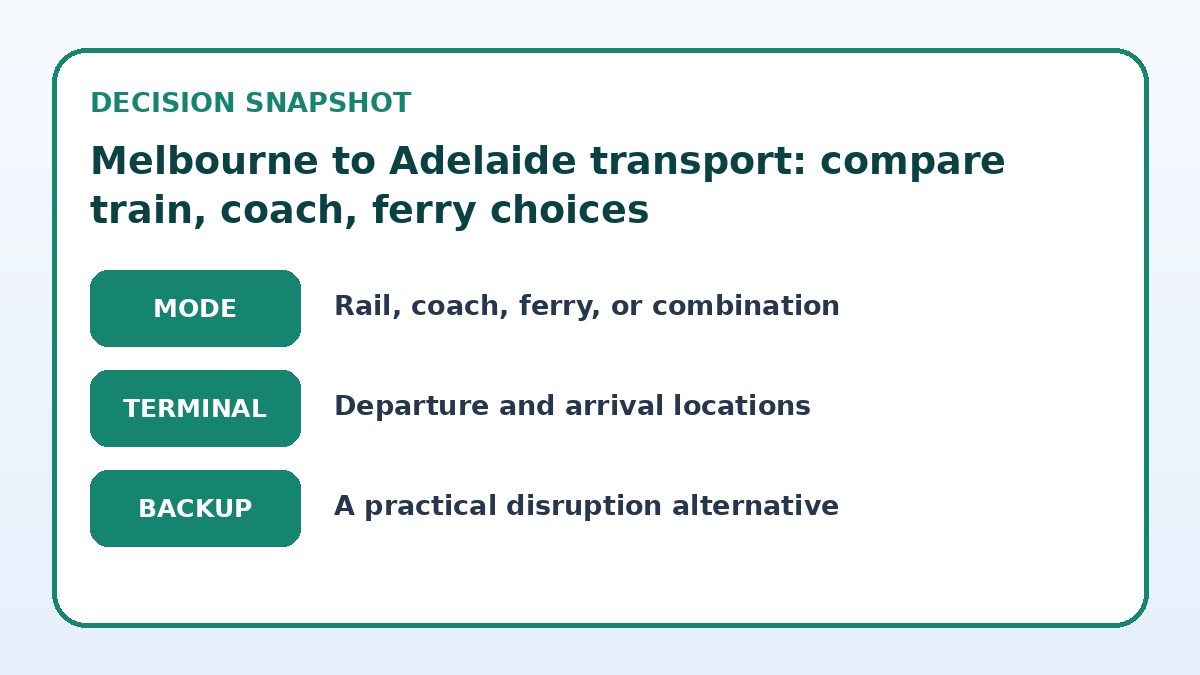
| Approach | Best for | Tradeoff to check |
|---|---|---|
| Overnight train | Travelers wanting space to sleep and minimal transfers | Longer scheduled travel time, less flexibility in departure times |
| Long-distance coach | Budget-conscious travelers needing frequent departures | Less onboard space and comfort than trains, potential luggage limits |
| Drive or car hire | Those who want full schedule control and scenic detours | Higher responsibility for driving, fuel, parking and route planning |
| Ferry + drive combination | Travelers seeking coastal scenery and a varied itinerary | Dependent on ferry schedules and vehicle restrictions; more planning required |
Driving and mixed ferry options: control and coastal scenery
Hiring a car or driving your own vehicle gives you the most flexible schedule and the freedom to stop for vineyards, coastal lookouts or small towns between Melbourne and Adelaide. This option converts the route into a self-guided road trip—useful if you’re travelling with several people, lots of luggage, or want remote detours. When planning, map realistic daily distances and factor in driver swaps, rest breaks, and overnight stops if you prefer not to drive long stretches in a single day. Also plan where you’ll park and whether your accommodation provides long-term parking.
Ferry combinations are less common but appealing if you want a different coastal perspective—typically involving a ferry crossing along the way paired with driving on either end. These itineraries can add variety but introduce dependency on ferry timetables, vehicle size limits, and weather. If you consider this route, check the ferry operator’s vehicle restrictions, boarding times and cancellation policies. Also verify whether reservation of a vehicle berth is required and whether passenger-only options affect your onward transport plans.
Before you book
- Decide your top priority: time savings, comfort, cost, or sightseeing stops before you compare options.
- Check total door-to-door duration for each option, adding travel to/from terminals and expected connection buffers.
- Review luggage and vehicle policies on the provider’s final booking page, including size limits and fees for bikes or large items.
- Confirm cancellation and change terms directly with the seller before you pay, and note any refund windows or penalties.
- If driving, map fuel stops, likely parking options at arrival, and single-way hire fees if picking up and dropping off in different cities.
- For multi-leg plans, leave at least 60–90 minutes between connections on different operators to reduce the risk of missed links.
How to compare options and make the booking decision
Build a simple comparison: total door-to-door duration, estimated out-of-pocket cost, comfort level (seat, sleeper or private vehicle), frequency or availability, and risk (weather sensitivity, strict cancellation rules). Put your must-haves at the top—sleeping space, minimal transfers, or the ability to detour—and eliminate options that don’t meet those baseline needs. For timed connections, allow generous buffer time; unexpected delays can turn a reasonable plan into a scramble. Always review refund and change policies before payment, because long-distance travel plans often shift.
When comparing direct and connecting services, treat the total journey as one product: if a direct train is offered, weigh its continuous travel benefits against cheaper connecting coach segments that require transfers. For car hire, compare single-way fees if you plan different pickup and drop-off locations. For all bookings, verify the latest timetables, seat and berth availability, luggage and vehicle rules on the provider’s final booking page. Use Trip.com or operator websites for current comparisons, but confirm specific terms on the seller’s site before you finalise.
Frequently asked questions
Is there a direct train from Melbourne to Adelaide and should I prefer it?
Direct services may be offered on this route; whether you prefer a direct train depends on your priorities. Direct trains remove transfer stress and are useful if you value sleeping or moving freely on board. However, they may run less frequently than coaches and require booking in advance for certain seat types or sleepers. Before deciding, check the operator’s timetable and berth availability on the official booking page; confirm baggage rules and whether the service runs on your intended dates.
How do I compare total travel time between train, coach and driving?
Compare the complete door-to-door journey rather than published scheduled times alone. Add time to reach the station or depot from where you are staying, expected check-in or boarding windows, and time from your arrival terminal into the city centre. For driving, include realistic rest stops and possible traffic at peak times. If your plan has transfers, add buffer time to absorb delays. Use provider pages to verify station locations and recommended arrival times for each mode before you book.
What should I verify about luggage, pets and bikes before booking?
Luggage, pet and bicycle rules vary widely by operator and often change, so always check these specifics on the provider’s final booking page before paying. Look for size and weight limits, charges for excess items, whether pets are allowed and in what conditions, and whether bicycles require reservations or special packaging. If you’re combining operators (for example, train then hire car), confirm rules for each leg because what’s allowed on one service may be restricted on another.
Final planning note
Choosing how to travel from Melbourne to Adelaide comes down to a short list: how much time you can spend, how important onboard comfort is, and whether you want freedom to detour. Trains offer rest and space; coaches give frequent, practical departures; driving hands you full control; and ferry-plus-drive options add coastal variety at the cost of extra planning. Use the checklist above to compare total door-to-door time, baggage rules and cancellation policies, and always verify the latest timetables and restrictions on the provider’s booking page. For a quick cross-comparison of availability and conditions, Trip.com can help, but confirm key terms with the seller before you finalise your booking.
Continue planning
Check current options and final conditions
Use the provider page to confirm live availability, the final total, cancellation terms, and every condition that matters to your trip.
This evergreen planning guide was created with AI-assisted drafting and a structured quality review. It does not display live prices, schedules, availability, visa guidance, or provider rankings. Verify current details before booking. Some links are affiliate links; we may earn a commission at no additional cost to you.