Practical answer: book flights and a hotel for a Busan business trip once your meeting schedule is confirmed and at least two full working days are blocked for travel contingency; prefer a 3–8 week window for routine domestic or short international itineraries and 6–12 weeks if flights require advance purchase for better availability. That timing balances company expense controls with better schedule options. If you need flexible changes, look for refundable or change-permitted fares and hotels that allow free cancellation through the day before arrival. When evaluating bundles, first compare the same travel dates, number of travelers, and included components — airfare, transfers, hotel nights, and any meeting/office space — before you assume a package saves money or time.

Test package value fairly
| Booking approach | Best for | Tradeoff to check |
|---|---|---|
| Full package (flight + hotel + transfer) | Teams needing one-stop procurement and centralized billing with predictable itineraries. | May lock in stricter change rules and fewer vendor choices than separate bookings. |
| Flight + hotel bundled, transfers separate | Travelers who want procurement simplicity but prefer handling local transport locally. | Saves booking steps but can complicate refunds or changes if flight and hotel change dates independently. |
| Separate flight and hotel bookings | High-flexibility travelers who need specific fares, carriers, or hotel brands and flexible change options. | More time to book and manage; potential for higher administrative overhead for expense reconciliation. |
| Prepaid hotel with refundable flight | Short-notice meetings where accommodation certainty matters but flight timing may shift. | Potentially higher overall cost if prepaid hotel is non-refundable and the trip is canceled. |
Check current package and separate options
Use identical dates, travelers, room needs, baggage, and flexibility so the comparison stays meaningful.
What to compare before a bundle looks useful
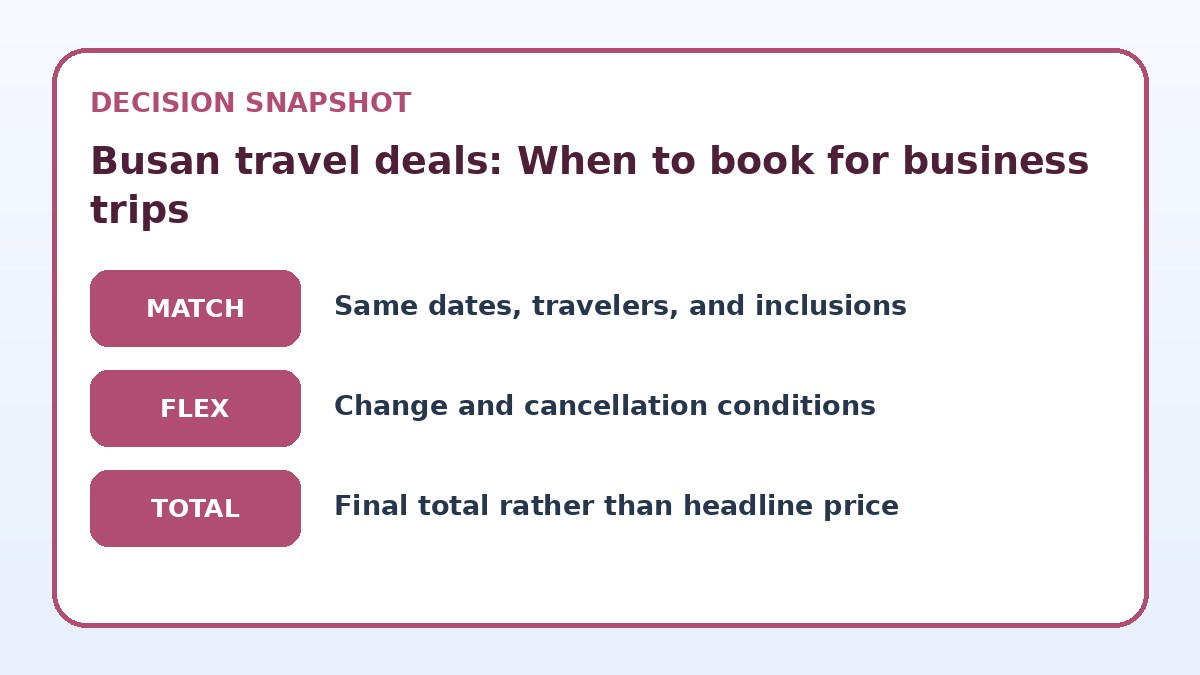
Before deciding whether a package is worth it for Busan travel deals, line up every element the bundle claims to include and compare those pieces one by one with separate bookings. That means matching the exact flight times or acceptable windows, identical hotel room category and board basis, the same number of hotel nights, and any ground transfers or extras. Only by holding dates, traveler counts, and inclusions constant will you see whether the package eliminates work or actually changes the economics. Pay attention to whether the bundle uses refundable or restricted airfares and whether hotel rates are pre-paid or cancellable, because those choices affect real flexibility for business schedules.
Also factor in administrative costs and policy requirements from your employer: some companies prefer centrally billed packages for simplicity and reporting, while others mandate advance approval that eliminates many bundled savings. Ask whether an aggregated booking will meet your travel policy for per diem, preferred vendors, or required travel insurance. Finally, check how changes are processed: does the package provider handle all changes centrally, or will you still need to juggle separate suppliers? Clarify that before assuming a package reduces hassle.
Inclusions: what to verify in every offer
Look beyond the headline to find what the package actually includes and what it leaves as an add-on. Confirm the exact flight class (and allowed baggage), the hotel room type and whether breakfast or Wi-Fi are part of the booking, and whether airport transfers or train tickets are included. For business travelers, included Wi-Fi and a late checkout or early check-in option can be far more valuable than a lower headline price. If the package mentions 'transport' or 'transfer,' verify whether that means a private car, shared shuttle, or just a suggestion for an add-on you must buy separately.
Make sure any promised meeting facilities, co-working credits, or lounge access are spelled out: hours, capacity, equipment, and booking procedures. If the deal bundles travel insurance or a refund waiver, read the exact coverage and exclusions on the provider’s final booking page. When you compare to booking separately, run the same list — same seat selection options, same room type, same transfer level, and same cancellation rules — so you avoid comparing a low-inclusion package to a fully refundable standalone booking and mistakenly concluding you saved money.
Look past the headline total
Compare inclusions and change conditions before deciding whether a package is genuinely useful for this trip.
Deal comparison checklist
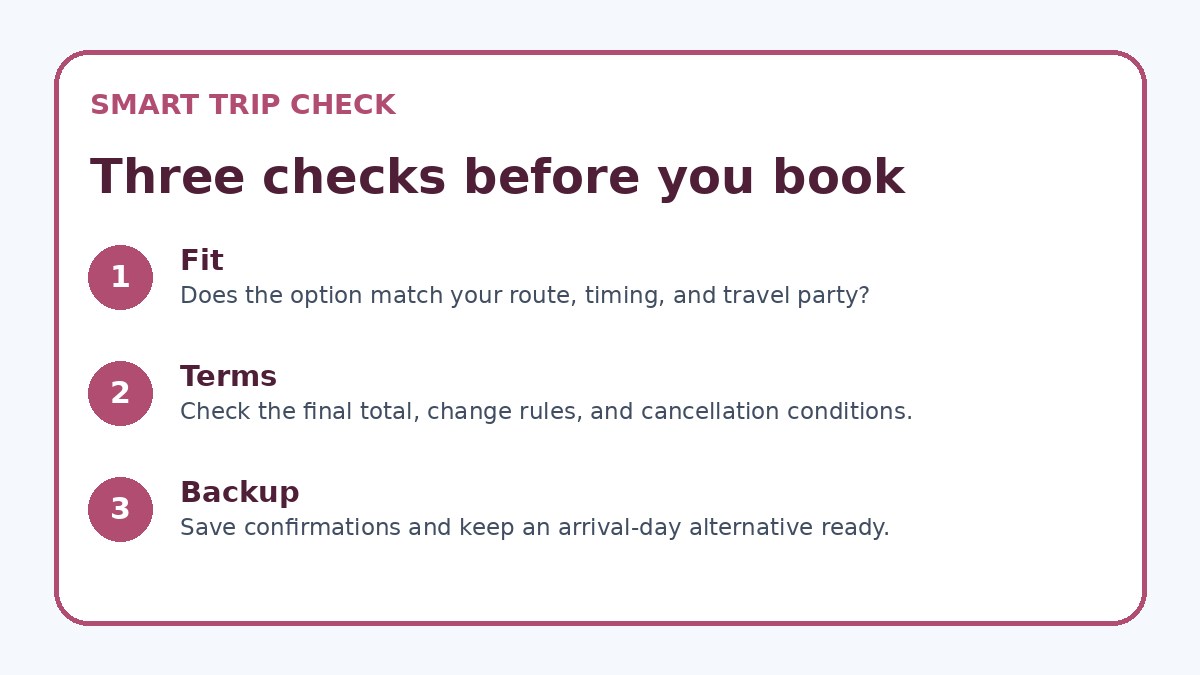
- Match the exact travel dates, number of travelers, and room type before comparing package and separate prices.
- Confirm flight fare rules: change fees, refundability, baggage allowance, and whether seat selection is included.
- Verify hotel inclusions: breakfast, Wi-Fi, check-in/out flexibility, and any meeting space credits.
- Ask how changes are processed: centralized by the bundle provider or passed through to each supplier.
- Request sample invoices or receipts to ensure bundled billing meets corporate accounting and reimbursement rules.
- Check the provider’s final booking terms for cancellation windows, payment timing, and emergency contact procedures.
Flexibility: change and cancellation tradeoffs
For business travel, flexibility often matters more than the lowest headline price. Compare change fees, refundability, and how soon before departure you can change dates without penalties. A slightly higher fare with free changes can be more cost-effective when your itinerary might shift. Verify whether the package allows individual components to be changed separately (for example, changing only the flight while leaving hotel nights intact) or whether any modification triggers a full package reprice. That distinction affects whether the package actually reduces administrative time when plans evolve.
Also check who absorbs risks if a component becomes unavailable. Some bundle providers will rebook or refund only within their inventory constraints and may offer vouchers rather than cash refunds. If your company requires receipts for reimbursement, confirm how refunds or credits are issued. Finally, confirm whether bundled fare rules apply to each traveler equally — group bookings can have stricter change conditions that apply to every passenger, which can create unnecessary complications for mixed schedules.
Traveler-specific value and final terms to verify
Evaluate the bundle relative to the traveler’s priorities: short meetings with tight schedules need central hotels and guaranteed transfers; long cross-time-zone trips prioritize seats with more legroom and flexible change rules. Ask the traveler which elements they actually use — airport lounge access, early check-in, or guaranteed late checkout — and whether the package supplies those in a usable form. If your traveler will claim expenses, confirm that invoicing meets corporate accounting rules and that supplier names on receipts match required formats.
Before committing, verify the provider’s final booking page for exact cancellation windows, change fees, supplier identity (airline and hotel brand), baggage rules, and any mandatory local taxes or service charges not included in the bundle headline. Confirm payment timelines, whether the price is locked at booking or subject to supplier surcharges, and how emergency changes are handled. You can compare live offerings on sites like Trip.com to view standard terms, but always rely on the provider’s final contract for the binding conditions.
Travel Deals & Booking Strategy questions travelers ask
How far in advance should I book Busan travel deals for a typical two-day business trip?
For a typical two-day business trip to Busan, aim to book once your meeting dates are finalized and travel approval is in hand. A common practical window is several weeks ahead—enough to secure decent flight options and a preferred hotel while still allowing for schedule edits. If your company requires pre-approval, align booking timing with that process to avoid last-minute charges. Use refundable or changeable fare classes if there's a real chance your meeting will move; those options reduce disruption even if they cost slightly more upfront.
Are package deals a good choice for frequent business travelers to Busan?
Package deals can suit frequent travelers when they reduce administrative steps and meet corporate policy, especially if the bundle includes consistent hotel choices near your meeting locations or straightforward transfer options. However, frequent travelers often prefer separate bookings to retain seat selection, airline loyalty accrual, and specific room preferences. Weigh the convenience of a one-stop booking against potential limitations on changes, loyalty benefits, and the ability to tailor components to personal preferences.
What specific contract terms should I verify on the final booking page before confirming a bundle?
On the final booking page, check exact cancellation windows for each component, change fees, whether refunds are issued as cash or vouchers, and the named supplier for each service (airline, hotel, transfer operator). Confirm baggage allowances, seat selection rules, and any included amenities like breakfast or Wi-Fi. Also verify payment deadlines, invoice formats for expense reporting, and emergency support contact methods. These details determine the bundle’s real value and whether it fits your employer’s travel policy.
Final decision note
For business travelers to Busan, the right booking window balances schedule certainty against flexibility needs. Start by matching identical itineraries and inclusions when you compare packages to separate bookings. Prioritize refundable or changeable options when meeting times might move, and choose a bundle only when it demonstrably reduces administrative work or aligns with company billing rules. Always verify the provider’s final booking terms for cancellation, change fees, supplier names, and invoicing procedures before you confirm. When in doubt, prefer a short-to-medium advance booking window that secures preferred options while keeping changes manageable.
Continue planning
Check current options and final conditions
Use the provider page to confirm live availability, the final total, cancellation terms, and every condition that matters to your trip.
This evergreen planning guide was created with AI-assisted drafting and a structured quality review. It does not display live prices, schedules, availability, visa guidance, or provider rankings. Verify current details before booking. Some links are affiliate links; we may earn a commission at no additional cost to you.