If this is your first time in Rome, pick a neighborhood that matches how you want to spend your days: sightseeing on foot, museum-heavy itineraries, evenings in lively piazzas, or a quieter base to recharge. For most first-time visitors the sensible choices are Centro Storico/Spanish Steps, the area around the Colosseum/Fori Imperiali, Trastevere, and near Termini station. Each gives a distinct experience — from postcard views and walkability to better transport connections and lower nightly rates — and none is inherently “wrong.” This article compares those areas with clear tradeoffs and decision criteria so you can match hotel choices to your priorities, not to vague labels. Read the quick points for a short recommendation, then use the sectioned comparisons to decide whether to favor central charm, proximity to ruins, nightlife, or transport convenience when you book Rome hotels.
Centro Storico & Spanish Steps: best for iconic walks and historic ambiance
Centro Storico and the area around the Spanish Steps are ideal if you want to step outside your hotel and immediately be in the postcard Rome most visitors imagine. Expect cobbled lanes, palaces, boutique shops, and piazzas like Piazza Navona and the Trevi Fountain within comfortable walking distance. Hotels here range from small boutique properties to established luxury addresses. If you prioritize waking up within minutes of a major sight and spending days exploring on foot, this area minimizes time on public transport and maximizes atmosphere.
The tradeoffs are straightforward. Rooms can be smaller, quieter side streets may still feel touristy, and availability can be limited during busy travel periods. If you need a quieter night or easier car access, ask the hotel about courtyard rooms or quieter-facing windows, and confirm arrival logistics on the hotel’s booking page. For families or heavy packers, look for hotels advertising elevators or accessible rooms because many historic buildings have stairs.
Colosseum & Fori Imperiali: best for history-first itineraries
Staying near the Colosseum and Roman Forum suits travelers who want to prioritize ancient sites and open-air ruins. The immediate area feels archaeological, with spectacular morning and evening light on the ruins. From here you can easily reach Palatine Hill and the Capitoline Museums, and the neighborhood offers a quieter, slightly more local rhythm after daytime tours end. Many hotels have views of historic monuments or are housed in restored buildings, offering character that ties directly to your itinerary.
Consider that this area can be spread out with uneven ground and some hotels set on slopes or accessed by steps. While daytime exploring is unmatched, evenings may be calmer than in the Centro Storico or Trastevere. Check each hotel’s exact street access and whether they provide assistance for luggage. Also verify how close the property is to metro stops if you plan to visit museums on the other side of the city or take day trips that start from different train stations.
| Approach | Best for | Tradeoff to check |
|---|---|---|
| Centro Storico/Spanish Steps | Walkers who want most sights within easy reach and a historic atmosphere | Smaller rooms and higher demand; limited parking and more tourist crowds |
| Colosseum/Fori Imperiali | History-focused visitors who prioritize proximity to ancient ruins | Quieter evenings and uneven streets; some hotels have steep access |
| Trastevere | Food and nightlife seekers who want a local, charming neighborhood | Further from some museums and can be noisy at night |
| Termini/Esquilino | Travelers valuing transport links, ease of arrival, and budget rooms | Less classic Roman ambiance and variable evening atmosphere |

Trastevere: best for nightlife, food, and a local neighborhood feel
Trastevere is a favorite for travelers who want lively evenings and an authentic Roman neighborhood experience. Narrow, ivy-clad alleys, sidewalk trattorias, and busy piazzas create an intimate atmosphere that’s perfect for food-centered trips. The area’s charm comes from strolling, dining, and popping into local bars after sunset. If your priorities are long relaxed dinners, nightlife, and a less touristy feel in the evenings while still being a short walk or tram ride from central sights, Trastevere is a top consideration.
The main compromises are distance and noise. Trastevere is across the Tiber, so some museum-heavy itineraries require a tram or a longer walk. At night it can be boisterous: choose a hotel on a quieter side street or ask about soundproofing if you need restful nights. Confirm how your chosen property connects to public transport or taxi ranks, and check whether a short uphill walk is involved when returning late from dinner.
Before you book
- Decide which matters most: walking proximity to major sights, nightlife, transport links, or lower nightly rates.
- Filter hotel listings by exact address and then map-walk to your primary sights to verify realistic walking distance.
- Confirm on the hotel’s booking page whether elevators, luggage help, or ground-floor rooms are available if mobility or stairs matter.
- Read recent guest comments for noise, street access, and whether rooms face a main road or a quiet courtyard.
- Check public-transport stops and how long a taxi or tram ride will be to your planned museums and train stations.
- Compare cancellation and arrival policies directly on the provider’s final booking page before committing.
Termini & Esquilino: best for transport ease and budget-minded stays
The Termini and Esquilino area is the practical choice for travelers who prioritize connections: two metro lines, buses, regional trains and night services link you quickly to airports and rail departures. Hotels here often offer more room for the price and easier luggage logistics because streets are flatter and many properties have straightforward check-in processes. If you plan day trips outside Rome or arrive late/leave early, this is a sensible base to reduce transit stress.
However, this convenience comes at the cost of a less atmospheric setting than central piazzas or Trastevere’s lanes. Some parts near the station are more modern and utilitarian, and evening foot traffic varies. When booking in this district, read the hotel’s description about exact distance from the station and verified guest comments about safety and nightlife noise. Also confirm whether the property provides luggage storage or early check-in options if those are important to your schedule.
Frequently asked questions
Which Rome neighborhood is safest for first-time visitors?
All four neighborhoods covered here are common choices for tourists and generally safe during daytime sightseeing. Safety in Rome is often about staying aware of your surroundings, guarding belongings in crowded areas, and choosing well-lit streets at night. If you prefer constant activity, Centro Storico and Trastevere feel busy into the evening; Termini has strong transport links but varies block by block; near the Colosseum is quieter after dark. For peace of mind, pick a hotel with good guest reviews mentioning safety, and verify location details and nearby services on the hotel’s booking page.
How far will I be from major museums if I stay in Trastevere?
Trastevere is a short tram ride or a healthy walk from central museums like the Vatican Museums and Galleria Borghese; walking times depend on your exact hotel location and pace. Plan for a 20–40 minute transit window to some museums when including waiting and walking, or a shorter 10–20 minute trip to nearby sites across the Tiber. If visits to a sequence of museums are central to your trip, check the specific tram or bus routes and station stops listed on the hotel’s booking page and allow time for transfers when planning daily itineraries.
Is it better to stay near Termini if I have an early train or late arrival?
Staying near Termini simplifies early departures and late arrivals because the station connects regional and high-speed trains with buses and metro lines. Hotels around Termini often advertise early check-in, luggage storage, or shuttle coordination, which helps when schedules are tight. If you prefer a more atmospheric area for evenings, you can still base in Termini and take a short taxi or metro trip to Centro Storico. Before booking, confirm transport options and any early-arrival or storage services on the hotel’s booking page to ensure they meet your timing needs.
Final planning note
Choosing where to stay in Rome for your first visit comes down to matching neighborhood character with your practical needs. If seeing the major monuments without daily transit appeals to you, Centro Storico or the Colosseum area will put many highlights within walking reach. For evenings filled with food and local energy, Trastevere gives a lively neighborhood feel, while Termini is the pragmatic pick for transport connections and value. Use the decision criteria and checklist above: map your priorities, confirm accessibility and noise details on hotel booking pages, and pick a place that reduces friction so more of your time in Rome is spent exploring rather than commuting.
Continue planning
Check current options and final conditions
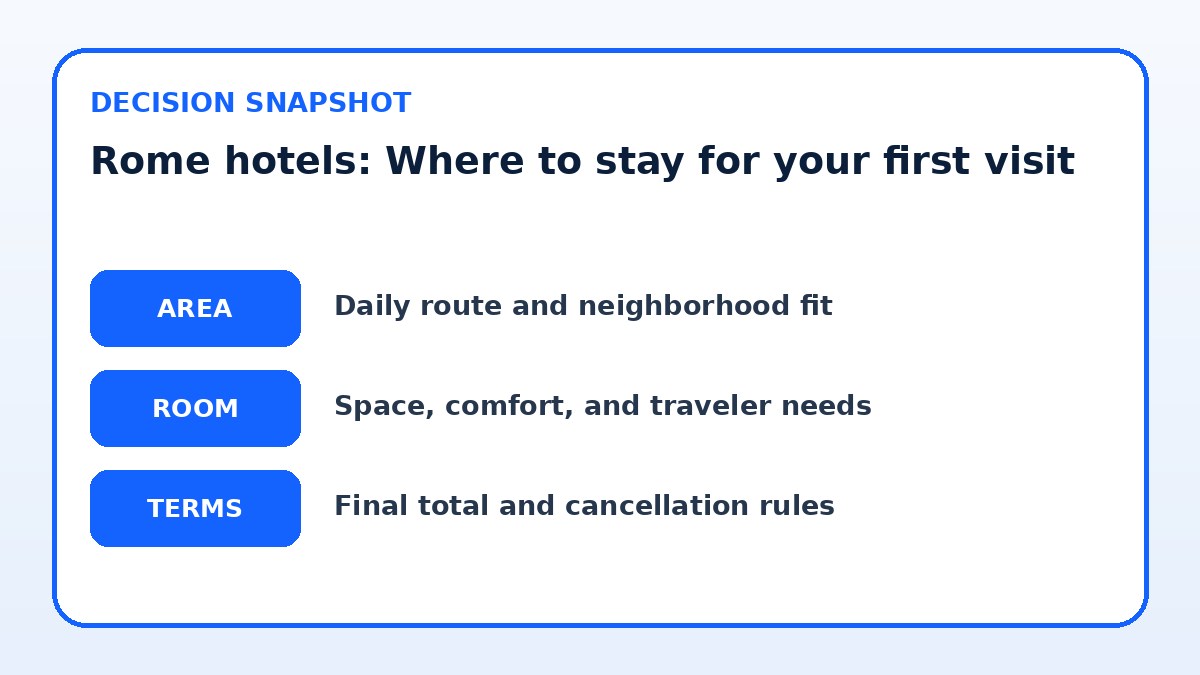
Use the provider page to confirm live availability, the final total, cancellation terms, and every condition that matters to your trip.
This evergreen planning guide was created with AI-assisted drafting and a structured quality review. It does not display live prices, schedules, availability, visa guidance, or provider rankings. Verify current details before booking. Some links are affiliate links; we may earn a commission at no additional cost to you.