If your trip can shift by hours or days, check change and cancellation rules first—those terms will determine cost, flexibility, and whether you can rebook a client meeting without losing the fare. For Seoul to Busan flights the practical approach is simple: identify the fare family, find the change fee and whether the ticket value is retained as credit, and confirm same-day rebooking or standby policies. Also verify whether the carrier allows name changes, voluntary refunds, or travel credits, and whether taxes and government fees are refundable. Use that information to decide whether to buy a flexible fare, a refundable ticket, or a cheaper restricted fare plus a protection strategy (corporate travel insurance, refundable hotel reservations, or a backup train/bus option). Finally, before you click purchase, read the airline’s final booking page closely—that’s the legal contract that lists exact fees and any time limits or blackout dates.
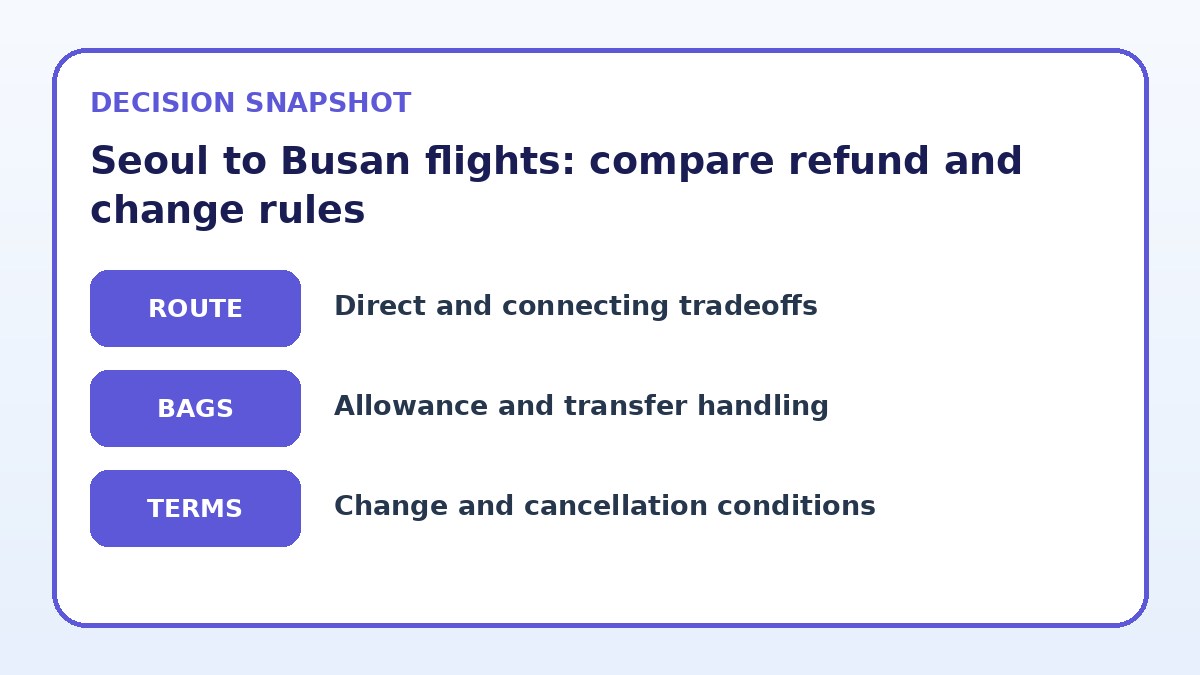
See current options before you compare the details
Availability and final conditions change. Open Trip.com now or keep reading for the practical comparison.
How to read change and cancellation terms
Airlines present change and cancellation rules in a few standard places: the fare rules on the booking page, the ticketing confirmation email, and the carrier’s customer-service policy pages. For business travelers, pay attention to three elements: the explicit change fee (a fixed amount or percentage), whether the fare difference is charged when moving to a higher-priced flight, and whether the leftover value of the original ticket is issued as a travel credit or a refundable balance. Some fares permit free name-corrections or same-day confirmed swaps, while others allow only involuntary schedule-change protections.
When you compare options, read the fine print about time windows and blackout dates. A policy that says “changes allowed” without listing the fee is incomplete until you find the fee schedule or the fare basis code. Also check how taxes and government-imposed charges are handled—these sometimes remain refundable even when the base fare is not. If you see a corporate fare class or a code-share flight, verify both the operating and marketing carrier’s rules; the operating carrier’s conditions usually govern day-of-travel procedures.
Deciding between flexibility and upfront savings
Choosing a flexible fare typically means higher upfront cost but simpler changes: lower or no change fees, refundable options, and priority rebooking. For short business hops like Seoul to Busan, calculate the break-even point: how likely are you to change travel dates, and what cost would a last-minute replacement ticket or train fare incur? If your schedule is fluid—client meetings that might run long or shift—paying extra for a flexible fare can be worth it to avoid the stress and administrative time of calling the airline or filing refund requests.
If you prefer the lowest base fare, build a contingency plan. That can include buying travel insurance that explicitly covers trip changes, choosing a refundable hotel rate, and learning the refund and credit issuance timelines so you can reclaim funds fast enough for rebooking. Remember that cheap fares often carry reissue fees and nonrefundable clauses that make them unattractive when changes are likely. Balance your company’s travel policy, the value of your time, and the operational risk of missing or changing meetings when deciding.
| Approach | Best for | Tradeoff to check |
|---|---|---|
| Buy a flexible fare | Frequent last-minute changes and clients with shifting schedules | Higher upfront cost but lower rebooking stress and fees |
| Buy a low-cost restricted fare | Fixed itineraries with little likelihood of change | Lowest ticket price but potentially expensive change or no-refund rules |
| Restricted fare + travel insurance | Moderate risk tolerance and access to good insurance policies | Insurance adds cost and claims can take time to process |
| Book refundable fare and rebook if needed | Executives who require full refund flexibility | Most expensive option; refunds may still have processing delays |
Ready to check the option that fits your plan?
Use your exact dates and traveler details so the provider page can show the current total and conditions.
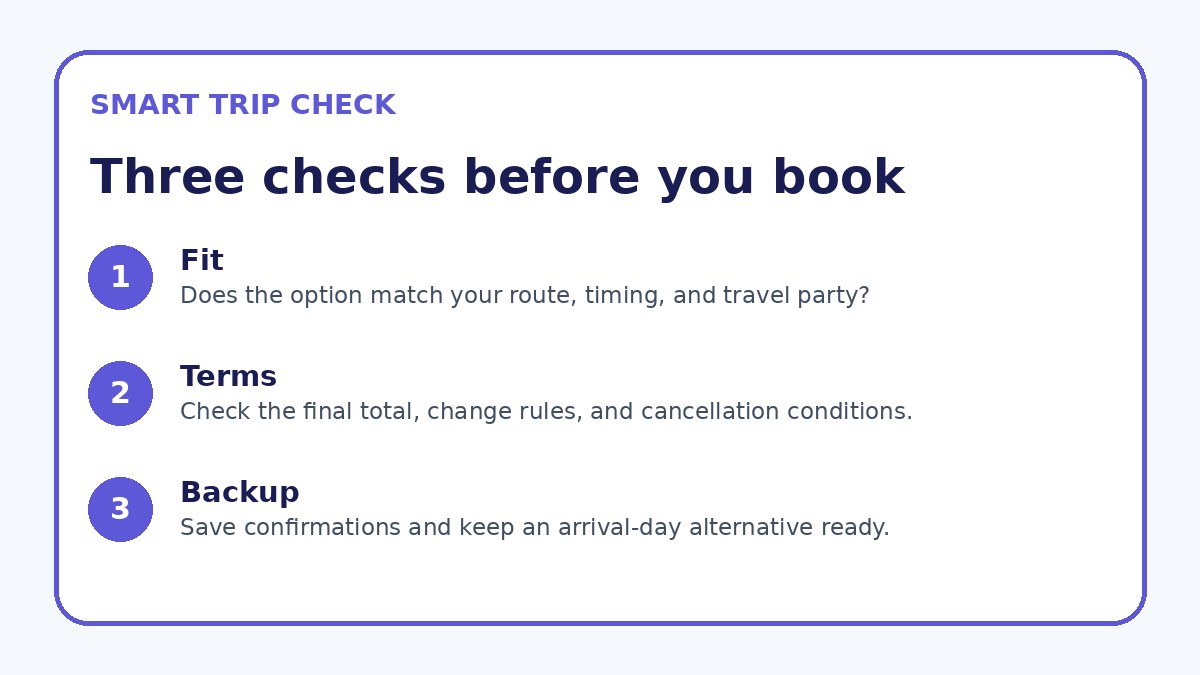
Practical checks before you finalize a booking
Before you hit purchase, do these quick checks on the airline’s final booking page: locate the full fare rules link, note the exact change fee amounts and whether they vary by route or travel class, confirm the deadline for free same-day changes if offered, and see if the airline provides travel credits valid for a specific period. Also check whether COVID-era flexible policies remain in effect or have been tightened—airlines have been changing those terms and the booking page will reflect current policy.
If you are booking through a corporate travel platform or an online travel agency, confirm whether that intermediary adds fees for changes or cancellations; some agencies charge an additional service fee or require you to call them to process a change. Trip.com can be a place to compare current availability and conditions, but always verify the exact change and refund language on the airline’s own ticketing page before accepting the purchase terms. Save screenshots of the fare rules and the confirmation email for immediate reference.
Before you book
- Open the fare rules link on the airline booking page and save a screenshot of change and cancellation terms.
- Confirm whether unused fare value becomes an airline credit or a cash refund and note the credit’s expiry date.
- Check the exact change fee amounts and whether fare difference applies when switching to a higher-priced flight.
- Verify same-day confirmed change and standby policies on the operating carrier’s website before you book.
- If booking via an agency, ask about any additional change or service fees the agency applies.
- If uncertain, compare a flexible fare cost to the likely cost of rebooking (airfare difference plus change fees) for your worst-case scenario.
Comparing direct versus connecting options
For Seoul to Busan travel there may be direct flights, alternative flights with connections, and high-speed rail or bus options; never assume direct service without checking. If a direct flight is available, its change policy will be simpler: single carrier rules, single ticket value. Connecting itineraries can complicate rebooking because each segment may be governed by the operating carrier, and changes to one segment might require reissuing the entire ticket, possibly with multiple change fees or different credit rules.
When comparing direct and connecting choices, evaluate total risk: how many potential disruption points exist, the time buffer between connections, and whether the fare rules allow reissue without major penalties. For business travelers, a slightly more expensive direct flight with forgiving change conditions often beats a multi-leg itinerary that saves money but increases the chance of needing multiple rebookings or dealing with separate carriers. Factor in ground time, meeting windows, and your tolerance for itinerary complexity.
Frequently asked questions
Can I change the traveller name on a Seoul to Busan ticket if plans shift within my company?
Name-change policies vary by airline and fare class. Some carriers allow minor name corrections (spelling fixes) without penalty; others prohibit transferring a ticket to a different passenger entirely. If your company routinely swaps passengers, choose a fare or fare class that explicitly permits name changes, or buy a refundable ticket. Always check the operating carrier’s final booking page for the exact wording and any required documentation—this is what the airline will enforce at check-in.
If my flight is canceled by the airline, do I get a full refund for a Seoul to Busan ticket?
When an airline cancels a flight it generally offers rebooking onto another flight or a refund, but the exact remedy depends on the carrier’s policy and the ticket type. Refunds for involuntary cancellations are commonly processed to the original form of payment, though timing can vary. For domestic Korea routes, verify the airline’s stated remedies on its policy page and the booking confirmation. Keep copies of your booking and any cancellation notices; you may need them when requesting a refund or rebooking through customer service.
Is it better to book through an airline site or a travel agency for business flexibility?
Booking directly with the airline often simplifies changes because you deal with the operator that sets the rules; some airlines also offer corporate portals and premium support for business travelers. Agencies can offer convenience, consolidated itineraries, or corporate policy enforcement, but they may add service fees for processing changes. If you use an agency, confirm whether it will handle reissues and how quickly—then compare that to going direct. Always verify final change and refund terms on the airline’s ticketing page regardless of where you booked.
Final planning note
For business travel between Seoul and Busan, the right booking choice balances cost and flexibility against the probability of itinerary changes. Start by checking the fare family, change fees, and how unused value is handled—credit versus refund—then weigh the administrative burden of rebooking against the extra cost of a flexible fare. Use a decision framework: quantify the potential cost of a last-minute change, compare it to the price difference for increased flexibility, and factor in company policy and your personal time value. Always verify the airline’s final booking page and save policy screenshots; those details are the contract that governs changes and refunds.
Continue planning
Check current options and final conditions
Use the provider page to confirm live availability, the final total, cancellation terms, and every condition that matters to your trip.
This evergreen planning guide was created with AI-assisted drafting and a structured quality review. It does not display live prices, schedules, availability, visa guidance, or provider rankings. Verify current details before booking. Some links are affiliate links; we may earn a commission at no additional cost to you.