If you’re a solo traveler renting a car in Da Nang, the most practical decisions usually come down to where you collect the vehicle, where you return it, and what those choices mean for timing, documentation, and safety. For many visitors, airport pickup looks convenient but can carry extra fees, rigid return windows, or shuttle logistics. City-center or hotel delivery can save time but requires clear instructions for handover and verification. This guide gives a clear checklist for the immediate practical decisions you’ll make when booking — then walks through the tradeoffs so you can match terms to your tempo, budget, and confidence driving in Vietnam. Always verify final pickup and return terms, fees, required documents, fuel policy, and inspection procedures on the provider’s booking page before you commit.
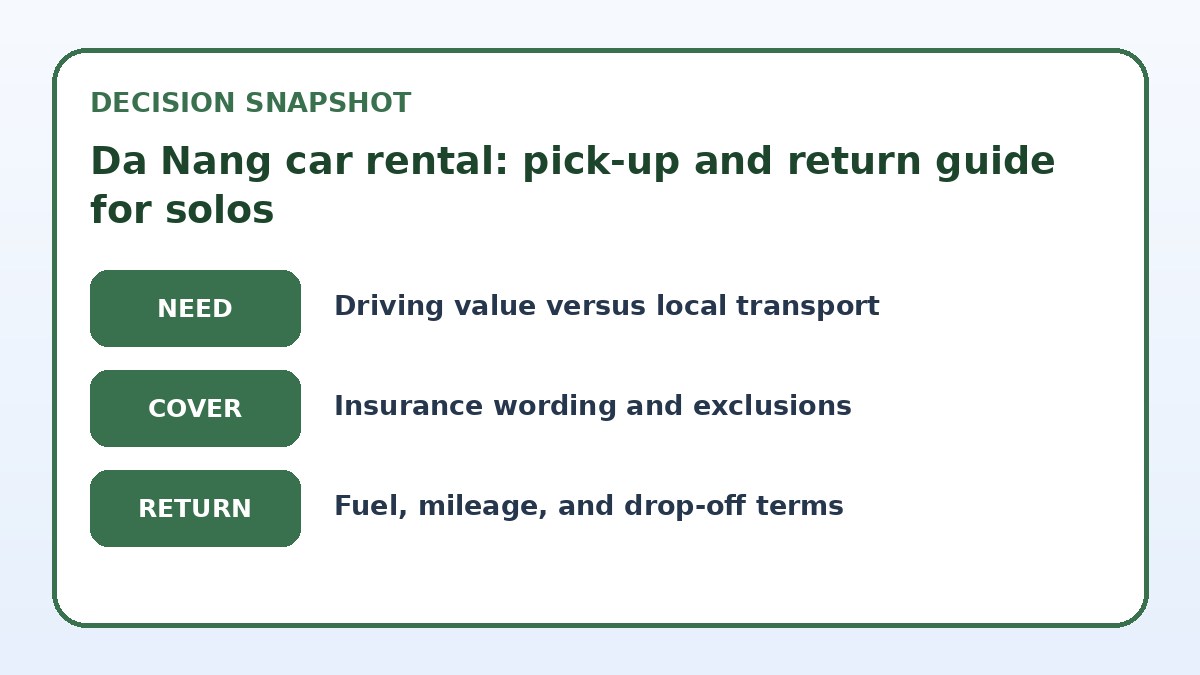
See current options before you compare the details
Availability and final conditions change. Open Trip.com now or keep reading for the practical comparison.
Where to pick up: airport, city desk, or hotel delivery
Airport pickup is the obvious convenience for many solo travelers: you claim keys and go. But convenience can come with tradeoffs. Airport desks sometimes operate limited hours, may require a shuttle from the terminal to the lot, or apply extra airport service fees. Desk staffing can be thin late at night, so if your arrival is outside normal local business hours, confirm whether there is a late pickup procedure, who will meet you, and whether ID and payment will be processed at the desk or by a third party. Always read the provider’s description of the airport process and the exact location where you will meet.
City-center desks or hotel delivery often remove airport surcharges and can be easier if you plan to spend hours exploring central Da Nang first. Hotel delivery is handy for solo travelers who prefer not to navigate an unfamiliar airport with luggage or when you want the agent to walk you through controls, insurance options, and local road tips at a relaxed pace. The tradeoff is reliance on the agent’s schedule and potential delays if traffic or staff turnover occurs. Before booking, double-check delivery windows, where the handover will happen (hotel lobby, car park, or curbside), and any extra fee for delivery or pick-up at a specific address.
Return choices and timing: one-way, same-location, and after-hours
Decide early whether you need a one-way hire (different drop-off city) or same-location return. One-way rentals offer route flexibility — handy if you plan to cross to Hoi An or head into the Central Highlands — but they commonly carry an administrative fee and limited drop-off locations. If you are returning in Da Nang same as pickup, you avoid those charges and simplify inspection logistics, yet you must plan returns to fit desk hours if after-hours procedures aren’t available. When comparing options, look for the provider’s explicit policy on fuel level, drop-off inspection, and any late-return grace period.
If your departure time is early morning or late at night, ask about after-hours returns and the process for documenting condition and keys. Some companies provide secure key drop boxes and require photos timestamped at return; others expect an inspection in person and may charge if you can’t wait for staff. For solo travelers, using a service with documented after-hours returns and a clear photo procedure reduces risk. Always verify where to leave documents, how to prove the car’s returned state, and precisely when billing stops to prevent unexpected daily charges.
| Approach | Best for | Tradeoff to check |
|---|---|---|
| Airport pickup and same-airport return | Travelers with direct flights and minimal local transfers | Higher convenience but possible airport fees, limited hours, and shuttle logistics |
| Hotel delivery and same-location return | Solo travelers prioritizing doorstep handover and a relaxed walkthrough | May incur delivery charges and depend on staff punctuality |
| City desk pickup with one-way drop-off | Those planning linear routes beyond Da Nang who want flexibility | Convenient routing but typically an administrative one-way fee and limited drop sites |
| After-hours drop with documented photo process | Travelers arriving or departing outside business hours | Requires strict adherence to photo and drop procedures to avoid disputes |
Ready to check the option that fits your plan?
Use your exact dates and traveler details so the provider page can show the current total and conditions.
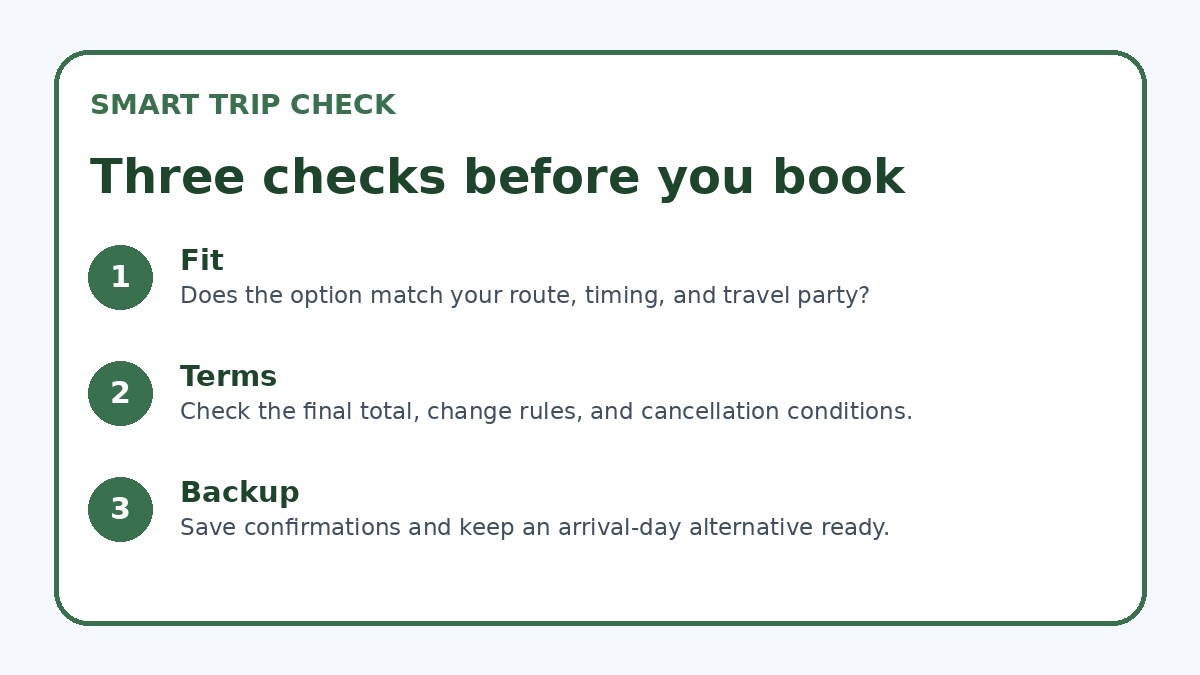
Documentation, deposits, and insurance to verify before booking
Providers vary widely on what they require at pickup: national ID versus passport, an International Driving Permit (IDP) or local license translation, credit card holds, and minimum driver age. Solo travelers should have clear copies of all required documents before arrival and a backup payment option that supports holds. Don’t assume that a debit card will be accepted for deposit — many companies require a major credit card and place a hold that is released days to weeks after return. The provider’s booking page should state accepted IDs, permitted license types, minimum ages, and the exact deposit policy.
Insurance options and excess waivers matter more for solo drivers, who bear the full responsibility for handling paperwork after any incident. Basic cover included with the rental often carries high excess amounts; purchasing a supplemental liability or zero-excess waiver reduces your out-of-pocket exposure but can be more expensive. Clarify whether collision damage waiver (CDW), third-party liability, and roadside assistance are included and whether they apply to specific locations or road conditions. Vendor terms also detail exclusions, such as driving on unpaved roads or outside the official region — check those before you finalize.
Before you book
- Confirm the exact pickup location, hours, and after-hours procedure on the provider’s booking page before you finalize.
- Verify accepted ID and license types (passport, local license, IDP) and bring originals plus clear photocopies.
- Check deposit method and amount, and ensure your payment card supports holds if required.
- Read the fuel policy and decide whether you’ll return full or pay the vendor’s fuel option; note how fuel is verified.
- Document the vehicle with time-stamped photos or video at pickup and again at return, and save the inspection report.
- Confirm roadside assistance coverage and the provider’s emergency contact procedure in case you need help alone.
Inspection, photos, and dispute prevention at pickup and return
A careful inspection process protects you from disputed damage claims. At pickup, insist on walking around the car with the agent and recording a video or taking time-stamped photos of every panel, bumper, windshield, and interior area. Make sure any existing damage is clearly noted on the rental agreement. If the agent is unwilling to sign off on documented damage or refuses to record the condition, ask for a supervisor or choose a different provider. Keep copies of the signed inspection report and the vehicle condition images until your deposit is fully released.
On return, repeat the same process: time-stamped photos, a staff-signed condition report, and a clear receipt showing final odometer and fuel readings. If returning after hours, follow the provider’s photo and key drop instructions and immediately email or upload the return photos to the contact they specify. Save confirmation emails and any digital receipt that shows the car was accepted; without accepted documentation, you may face later disputes. Verifying the exact inspection and evidence process on the booking page is essential so you can prepare your phone, power, and internet access for the handover.
Frequently asked questions
Do I need an International Driving Permit for Da Nang car rental?
Requirements vary by provider and by the type of license you hold. Some rental companies accept foreign national driving licenses; others require an International Driving Permit (IDP) or a locally recognized translation. Before booking, check the provider’s policy on accepted license documents on their booking page and verify whether the IDP must be presented at pickup. If in doubt, bring your home license, a full-color photocopy, an IDP, and your passport — that combination usually covers most requirements and prevents a declined booking at the desk.
How do after-hours returns work and how can I protect myself as a solo traveler?
After-hours returns differ between suppliers: some provide a secure key drop box and require you to upload time-stamped photos showing the car’s condition; others mandate an in-person inspection if staff are available. To protect yourself, follow the provider’s exact photo checklist, record a short video showing the odometer and fuel level, keep the emailed or uploaded confirmation, and get a digital receipt when staff process the return the next business day. Check the booking page for the formal after-hours procedure so you can prepare a spare battery, strong internet, and a reliable method to timestamp evidence.
What happens if my flight is delayed and I miss the agreed pickup window?
Policies for missed pickup windows vary: some providers offer a grace period, others charge a fee for late pickup, and a few may cancel reservations after prolonged no-shows. Rather than assuming leniency, contact the provider as soon as you can to inform them of the delay and confirm new arrival details. If contact isn’t possible, verify the provider’s late-arrival or no-show policy on the booking page and consider booking a supplier with a flexible or documented late-arrival process to avoid loss of reservation or unexpected charges.
Final planning note
For solo travelers in Da Nang, the practical core decision is less about the car and more about the pickup and return terms that fit your arrival and departure rhythm. Pickups at the airport are fast but sometimes inflexible; hotel or city delivery can be gentler but require coordination. One-way rentals extend your route options but typically bring administrative fees. Always verify pickup location, exact hours, required documents, deposit rules, inspection and after-hours procedures on the provider’s booking page before booking. If you want a quick place to compare current availability and provider terms, you can check Trip.com as one of several comparison sources, but rely on the chosen provider’s own booking page as the final authority.
Continue planning
Check current options and final conditions
Use the provider page to confirm live availability, the final total, cancellation terms, and every condition that matters to your trip.
This evergreen planning guide was created with AI-assisted drafting and a structured quality review. It does not display live prices, schedules, availability, visa guidance, or provider rankings. Verify current details before booking. Some links are affiliate links; we may earn a commission at no additional cost to you.