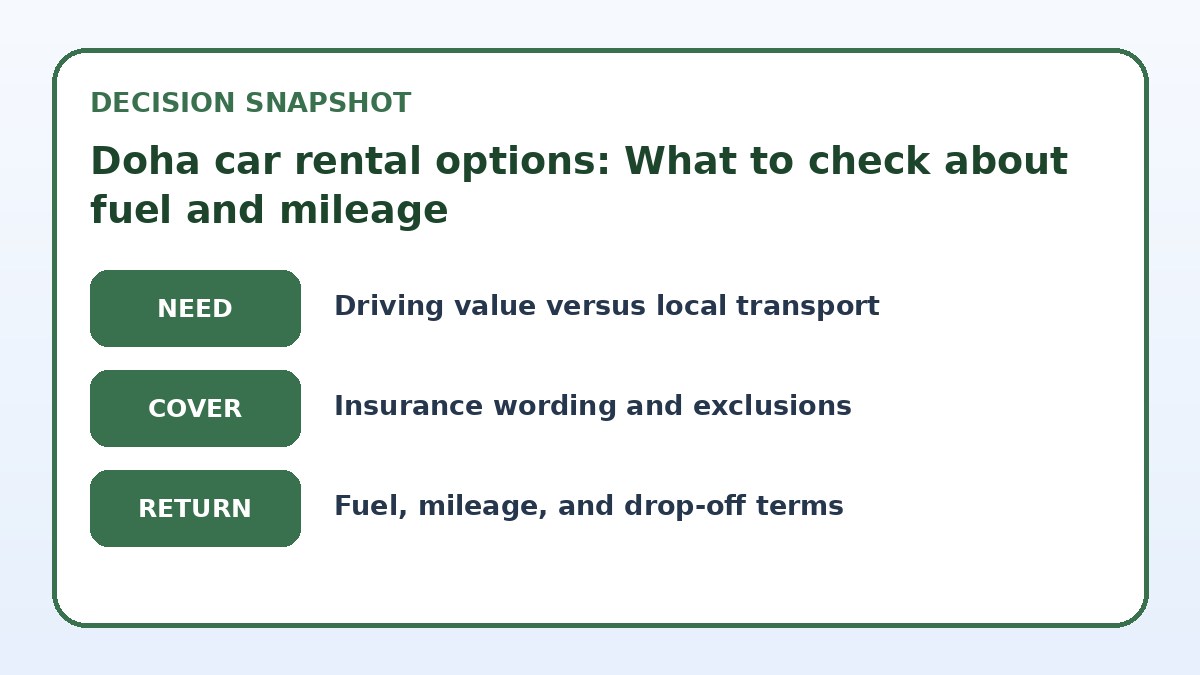
If you’re renting a car in Doha for business, the most practical thing to do before you book is read the fuel and mileage policy on the supplier’s final booking page and compare that with your planned daily driving. Fuel rules determine whether you return a full tank, prepay fuel, or accept a “same-to-same” arrangement; mileage rules can restrict daily or total kilometres and charge per excess kilometre. These items directly affect cost, convenience, and itinerary flexibility—especially if you plan airport runs, client visits across the metro area, or a longer drive outside Doha. This short guide explains the typical policy options, how to translate them into real trip costs, what to confirm on confirmation pages and receipts, and which tradeoffs business travelers commonly accept or avoid.
See current options before you compare the details
Availability and final conditions change. Open Trip.com now or keep reading for the practical comparison.
Understand the common fuel policies
Rental suppliers in Doha use a few standard approaches to fuel: full-to-full, prepay, same-to-same, or a charged refill option on return. Full-to-full means you pick up with a full tank and return full; this is straightforward but requires you to plan your final fill-up. Prepay lets you buy a tank at pick-up and return emptier; it can be convenient if you prefer no last-minute stops, but you’ll want to confirm refund or unused fuel rules on the booking page.
Same-to-same and charged refills are variations—same-to-same expects you to return at the same gauge reading as pickup, sometimes leaving small discrepancies open to interpretation. Charged refills occur when the supplier fills the car for you at a retail-plus service rate. For business travelers, the key is clarity: before finalizing a reservation, confirm how the supplier documents fuel levels at pickup, whether photos are used, and exactly how refill charges will be calculated on the invoice.
How mileage rules affect your itinerary and costs
Mileage policies usually take the form of unlimited kilometres, a daily or total kilometre allowance, or a per-kilometre charge for excess distance. Unlimited mileage suits drivers who expect frequent trips across greater Doha or short interstate drives, whereas limited allowances can be fine for fixed-location meetings. If the rental lists a kilometre allowance, convert that into likely daily totals for your schedule—airport transfers, client visits, and any planned trips outside the city—to estimate potential excess charges.
Check how mileage is measured and recorded: suppliers use the vehicle odometer at pickup and return, so photograph the meter at both times and keep a timestamped record. Also verify whether the contract distinguishes local versus cross-border mileage; if you anticipate travel beyond Qatar’s urban perimeters or into nearby regions, confirm whether special permissions, additional insurance, or different mileage rules apply, and double-check these provisions on the booking page.
| Approach | Best for | Tradeoff to check |
|---|---|---|
| Full-to-full fuel with unlimited mileage | Travelers who want maximum cost control and predictable returns. | May cost more upfront than limited-mileage deals but reduces unexpected refuel or excess charges. |
| Prepaid fuel with limited mileage | Short, time-pressed trips where skipping a final fill-up is valuable. | Convenience can come at the cost of paying for unused fuel and possible mileage penalties. |
| Same-to-same fuel with daily kilometre allowance | Planned itineraries with fixed daily distances and local site visits. | Requires careful tracking; small deviations can create disputes or extra fees. |
| Charged refill (supplier refuels after return) | Travelers who prioritize time savings over fuel pricing transparency. | Often the most expensive fuel option because retailers’ rates plus service margins apply. |
Ready to check the option that fits your plan?
Use your exact dates and traveler details so the provider page can show the current total and conditions.
Tradeoffs: convenience versus control
Prepay fuel and charged-refill options trade lower hassle for potentially higher cost. Business travelers often value time over a small extra fee and may accept prepaying to avoid detours before a flight or meeting. But if your schedule includes predictable last-minute refuelling opportunities or if you prefer cost transparency, full-to-full with photographic proof gives you control and typically avoids premium refill rates charged by suppliers.
Mileage caps can lower the base rental rate but create unpredictable add-on costs if plans change. If you want fixed per-day budgeting, an unlimited mileage option removes variability, even at a higher headline rate. Think about your tolerance for variable charges: if you may need ad-hoc client visits, airport shuttles, or logistical flexibility, choose the arrangement that minimizes the risk of per-kilometre penalties and provides clear documentation for expense claims.
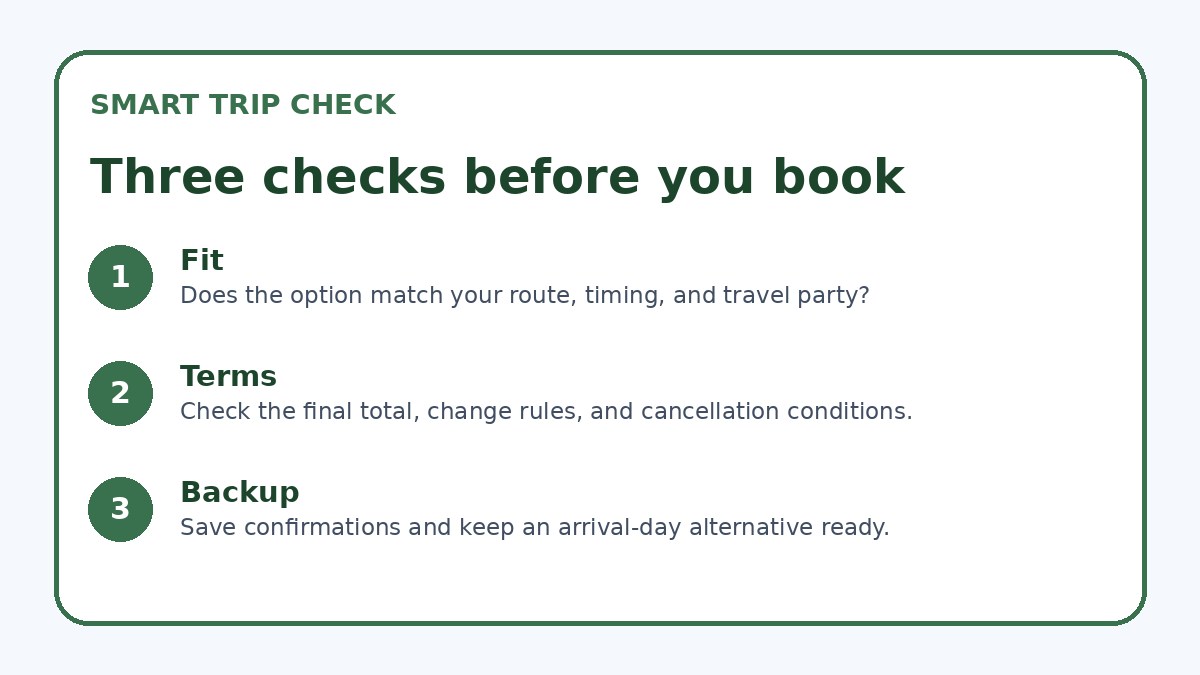
Before you book
- Read the fuel policy wording on the final booking page and note whether it is full-to-full, prepaid, same-to-same, or charged refill.
- Confirm the mileage allowance, excess-kilometre rate, and whether mileage is daily or for the whole rental period on the contract.
- Photograph the fuel gauge and odometer at pickup (two angles) and again at return; save timestamped images with the rental agreement.
- Ask the desk to write the starting fuel level and odometer reading on the rental agreement and obtain a copy signed by staff.
- If you choose prepaid fuel, verify refund rules for unused fuel and get the exact per-litre or tank estimate shown on the booking page.
- Check whether cross-border or out-of-region travel is permitted and whether it changes fuel, mileage, or insurance terms; get written confirmation if needed.
What exactly to verify on booking and at pickup
On the supplier’s final booking page, confirm the fuel policy label and read the related terms. Look for explicit wording about how the tank level is measured, whether photos are used, whether a prepayment is refundable, and the per-litre or service rate used when the supplier refills. For mileage, note the allowance, the excess-kilometre rate, and whether mileage is capped per day or for the rental period. If any wording is ambiguous, use the supplier’s contact channel to request written clarification.
At pickup, take clear photos of the fuel gauge and odometer (close-ups and wide shots) and ask staff to note the readings on the rental agreement. Keep a digital copy of that signed agreement and any verbal confirmations sent by email. On return, repeat the photo and odometer routine and request a final mileage and fuel statement before leaving the desk. These steps protect you from erroneous charges and make expense reporting straightforward for corporate reimbursement.
Frequently asked questions
Should I always choose unlimited mileage for business trips in Doha?
Unlimited mileage is useful if you expect variable or long-distance driving; it eliminates surprise per-kilometre fees and simplifies expense forecasts. However, unlimited mileage can raise the base rental cost compared with capped offers. For short, tightly scheduled city-only trips where distances are predictable, a limited-mileage agreement may be cheaper—provided you calculate likely kilometres and the excess-kilometre charge. Choose unlimited when flexibility, multiple client visits, or impromptu detours matter more than the lowest headline rate, and verify the policy on the supplier’s booking page.
How can I avoid disputes about fuel level when returning the car?
Documenting the fuel state with photos at pickup and return is the single most effective step to prevent disputes. Take close-up photos of the gauge and wider context shots showing the dashboard and vehicle, and keep timestamps. Ask the rental desk to record the pickup reading on the agreement and request a printed final statement at return. If the supplier charges a refill fee, ask them to show the calculation used and keep copies for corporate expense claims. If anything looks unclear, insist on written explanation before leaving the counter.
What if the booking page is unclear about fuel or mileage clauses?
If the booking page lacks clarity, contact the supplier directly and request written confirmation of the fuel policy and mileage terms before you finalize payment. Screenshots of the booking page that include the policy wording can be useful, but explicit confirmation from the supplier’s reservation team or a clause added to the rental agreement is better. If you use an aggregator like Trip.com to compare options, remember to verify the same clauses on the supplier’s final booking page and keep any emailed confirmations for later reference.
Final planning note
For business travelers in Doha, checking fuel and mileage rules before you book saves time, money, and stress. Decide whether convenience or strict cost control matters more for your trip, then match that preference to a fuel-and-mileage approach: full-to-full and photographic proof for control, prepaid or charged refill for time savings, or unlimited mileage if you expect heavy travel. Always verify the exact wording and rates on the supplier’s final booking page, document pickup and return with photos, and request written notes from staff. These steps streamline expense claims and reduce the chance of unexpected charges after your rental.
Continue planning
Check current options and final conditions
Use the provider page to confirm live availability, the final total, cancellation terms, and every condition that matters to your trip.
This evergreen planning guide was created with AI-assisted drafting and a structured quality review. It does not display live prices, schedules, availability, visa guidance, or provider rankings. Verify current details before booking. Some links are affiliate links; we may earn a commission at no additional cost to you.