If you’re heading to Sapporo with extra luggage, a price alert can flag a tempting package — but impulse booking can cost you in baggage fees, change penalties, or inconvenient connections. The practical answer: set controlled alerts, then compare a bundled package against separately booked flight + hotel + transfers using the same dates, number of travelers, and realistic luggage allowances. Before hitting purchase, verify baggage rules, transfer inclusions, and change/cancellation terms on the provider’s booking page. A package can reduce hassle if it clearly includes airport transfers and generous baggage allowances; a separate booking can save money and offer flexibility if you confirm the flight’s baggage allowance and ticket-change rules. Below are the tradeoffs, comparison approaches, and step-by-step checks to use price alerts as a planning tool without letting a low headline fare push you into an expensive or restrictive booking.
Test package value fairly
| Booking approach | Best for | Tradeoff to check |
|---|---|---|
| Fully bundled package (flight + hotel + transfers + baggage) | Travelers prioritizing convenience and minimal coordination with multiple bulky items | May have stricter change rules and higher upfront cost; verify exact baggage and transfer details before trusting the convenience claim |
| Flight + hotel booked separately (verified baggage on airline) | Travelers who want control over flight choice, schedule, and explicit airline baggage policies | Requires more work to match schedules and confirm transfers; possible extra cost for separate prebooked transfers |
| Flight-focused booking with add-on prepaid baggage and independent hotel | Those who find airline prepaid baggage cheaper than package inclusions or need flexible hotel options | You must manage transfers and luggage logistics yourself; check baggage add-on refund/change rules on the airline page |
| Package for one-way travel plus separate return bookings | Travelers with asymmetric needs (e.g., arriving with lots of luggage, returning lighter) | Can optimize baggage and transfer inclusions but increases complexity; compare same dates and total costs carefully |
Check current package and separate options
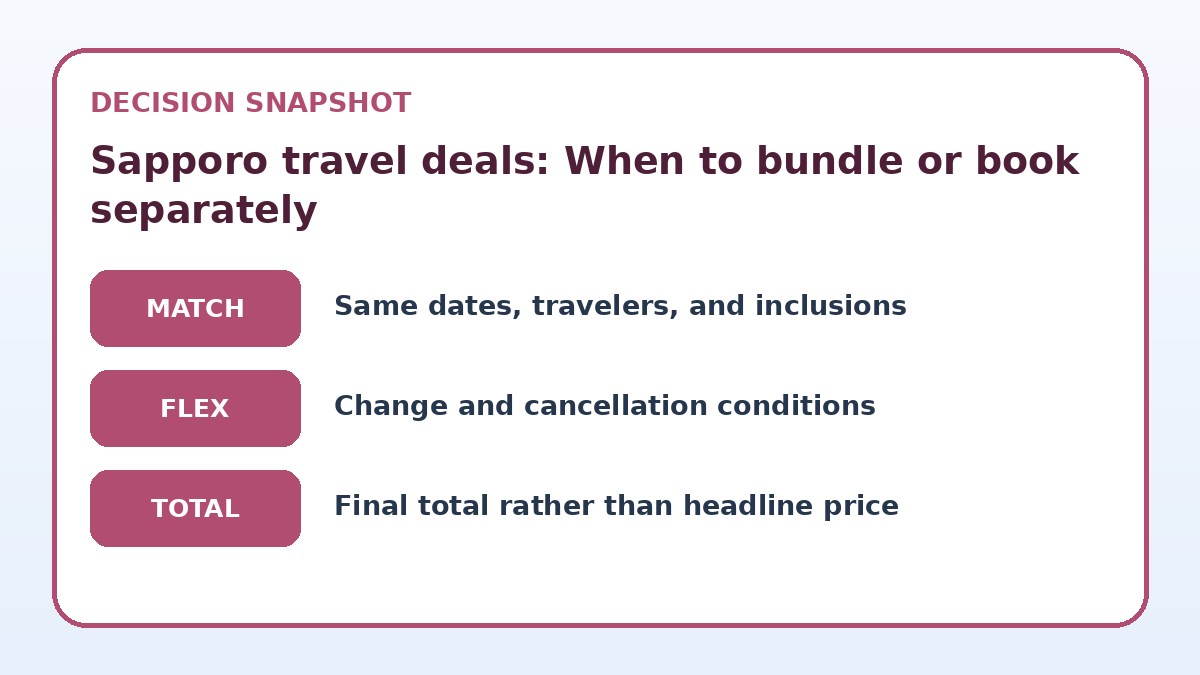
Use identical dates, travelers, room needs, baggage, and flexibility so the comparison stays meaningful.
What to compare before judging a package
Start with inclusions: list exactly what a package says it covers for your group — flight class, checked baggage per person, transfers, and hotel room type. Do not assume a phrase like “baggage included” means the allowance matches your needs; check the number of checked pieces or kilogram limits on the provider’s final booking page. Also verify whether transfers are private, shared shuttle, or a coupon for local transport; the convenience of included transfers matters more when you have bulky items that complicate public transport.
Next, verify flexibility and the final financial terms. Compare change and cancellation fees for both the package and the equivalent separate flight and hotel bookings. A low package price can be less attractive if it offers minimal ability to change dates or requires expensive change penalties. Finally, align the passenger count and identical travel dates when testing separate bookings; small differences in dates or traveler numbers can create misleading comparisons and false savings.
How to use price alerts without impulsive booking
Design alerts that only trigger for fully specified itineraries: selected departure airport, arrival in Sapporo, travel dates or acceptable date range, number of travelers, and a cabin class that suits your baggage needs. Avoid broad alerts such as “any cheap flight to Sapporo,” which encourage impulse buys that don’t match your luggage requirements. When an alert arrives, save the alert snapshot (take screenshots or note the provider and offer details) so you can compare the same offer against separate bookings without the pressure of disappearing deals.
Create a short decision checklist that you must complete before booking: verify the exact checked baggage allowance, confirm whether seat assignments are included, check transfer type, and read change and cancellation terms on the final checkout page. Wait at least 24 hours after an alert triggers to emotionally detach from the perceived urgency; many good fares reappear. If you still prefer the package after objective comparison, proceed — otherwise let the alert lapse and continue monitoring for better-matching offers.
Look past the headline total
Compare inclusions and change conditions before deciding whether a package is genuinely useful for this trip.
Deal comparison checklist
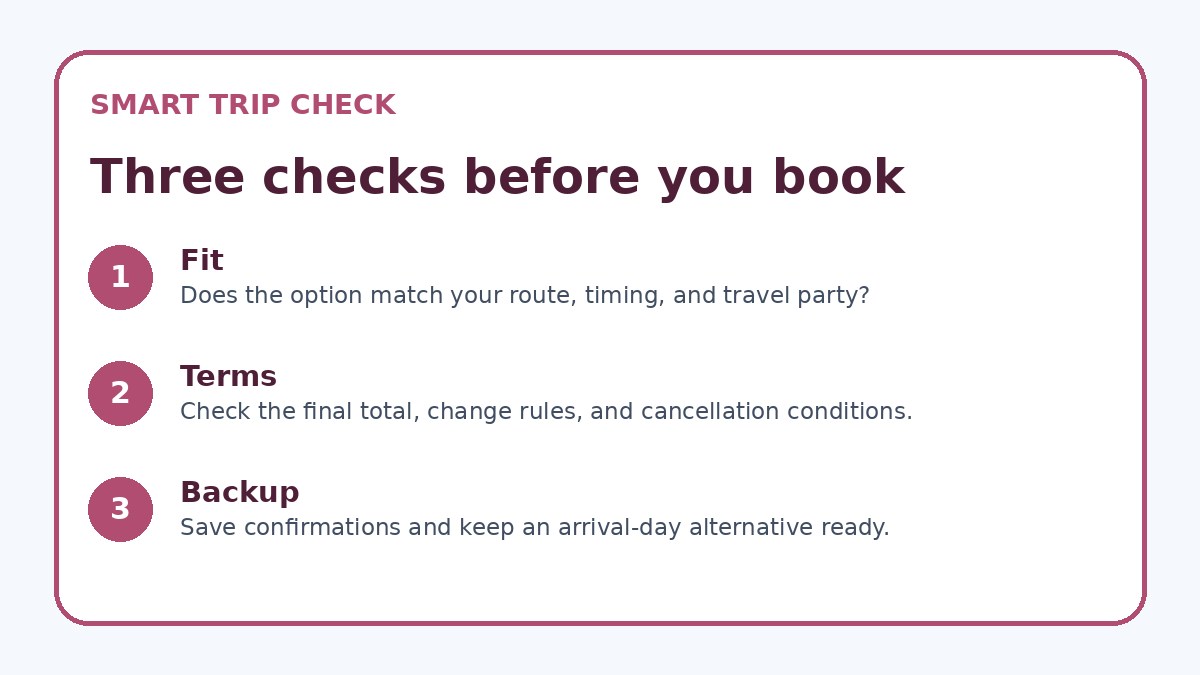
- Set price alerts specifying departure airport, dates range, number of travelers, and cabin class to ensure apples-to-apples comparisons.
- When an alert triggers, note the provider and offer details, then pause 24–48 hours before deciding to avoid impulsive purchases.
- On the booking page, verify exact checked baggage allowance (pieces and kilograms) and the cost to add baggage later.
- Confirm the transfer type (private, shared shuttle, or coupon) and whether vehicles can carry oversized or multiple suitcases.
- Compare change and cancellation penalties for both the package and equivalent separate bookings using identical traveler counts and dates.
- Save written confirmations or screenshots of baggage, transfer, and refund policies from the provider’s final checkout page before payment.
Traveler-specific value: when a package helps or hurts
Travelers with extra luggage often value door-to-door convenience and predictable baggage handling. A package that explicitly includes sufficiently generous checked baggage per person and an airport transfer suitable for large bags reduces the friction of moving between airports, stations, and hotels. If your group includes older travelers or families with equipment (strollers, skis, musical instruments), prioritize clarity around transfer type and vehicle size. Packages that bundle prepaid baggage or guaranteed seat choice can save time and stress, even if the headline fare looks similar to separate bookings.
Conversely, separate bookings can be better when you need flexibility or want to mix carriers and accommodations. If a flight’s standard fare includes a generous baggage allowance or if you can add baggage at a reasonable price on the airline’s site, separate flight + hotel may allow you to pick a more convenient flight schedule or a hotel with a real luggage-friendly room. The key decision hinge is whether the package’s inclusions match your actual needs; where they don’t, perceived savings vanish once baggage surcharges or inflexible change policies are applied.
Final terms to verify on any booking page
On the provider’s final booking page, check the exact baggage allowance (pieces and weight), the process to add or prepay extra baggage, and the timing and cost of adding baggage later. Confirm whether the transfer stated is door-to-door, a meet-and-greet, or a shared shuttle and whether vehicle size suits large suitcases. For hotels, verify room type and whether extra fees apply for large or additional items in storage or early check-in; ask the hotel directly when terms are ambiguous.
Also confirm the ticket change and cancellation policies in writing and the financial penalty for each. If the package includes third-party services (local tours or transfers), identify the cancellation/alteration rules for those components. Finally, check the currency and total payable amount, as taxes and surcharges can appear during checkout. If you need clarification, contact customer service and save the written response before finalizing the purchase; this documentation is what you’ll rely on if an issue arises.
Travel Deals & Booking Strategy questions travelers ask
How do I know if a package’s baggage allowance really covers my extra luggage?
Do not rely on general language such as “baggage included.” Look for the explicit allowance on the final booking page: number of checked pieces per passenger, maximum weight per piece, and any size limits. If the package mentions a vague allowance, contact the provider and request written confirmation of the exact allowance and the process and fee for additional pieces. Compare that information with the airline’s published baggage policy for similar fare classes, and calculate the total cost if you had to add missing weight or pieces separately.
Can I trust a cheaper package flagged by a price alert?
A lower headline price is not enough to decide. Use the alert as a prompt to compare identical scenarios: same dates, same number of travelers, same cabin class, and the same baggage needs. Check inclusions for transfers, prepaid baggage, seat selection, and change/cancellation rules on the final booking page. If the cheaper package restricts changes or lacks sufficient baggage, the apparent savings can evaporate once you factor in fees or inconvenient transfer arrangements.
What’s the safest way to book transfers when I have bulky luggage in Sapporo?
Prioritize transfers that explicitly state vehicle type or capacity, like private car or large-van shuttle, rather than vague terms such as “airport transfer.” If a package includes a shared shuttle, ask the provider whether it accommodates multiple large suitcases and whether drivers assist with loading. When booking transfers separately, consider prearranged private transfers or verified taxi services that list trunk dimensions or luggage capacity. Keep written confirmation of pickup location and luggage allowance, and allow extra time for loading during arrival.
Final decision note
Price alerts are a useful planning tool for Sapporo travel deals, but they should not force quick decisions when you’re traveling with extra luggage. Treat alerts as a trigger to run an apples-to-apples comparison: identical dates, traveler count, cabin class, and explicit baggage allowances. A package can be worth the convenience if it clearly includes adequate baggage and suitable transfers; otherwise separate bookings with confirmed airline baggage and a booked transfer may be a better, more flexible option. Always verify exact baggage terms, transfer type, and change/cancellation rules on the provider’s final booking page, save written confirmations, and give yourself a short cooling-off period before pressing purchase.
Continue planning
Check current options and final conditions
Use the provider page to confirm live availability, the final total, cancellation terms, and every condition that matters to your trip.
This evergreen planning guide was created with AI-assisted drafting and a structured quality review. It does not display live prices, schedules, availability, visa guidance, or provider rankings. Verify current details before booking. Some links are affiliate links; we may earn a commission at no additional cost to you.