
If you need to book a business trip to Seoul, aim for the shoulder seasons—periods just outside the busiest summer and winter peaks—to increase your chances of finding better-value flight and hotel options while avoiding the most crowded conference dates. Practically, that means prioritizing flexibility in departure dates and hotel location, using midweek arrival and departure when possible, and allowing a small schedule buffer for meetings in case of travel delays. The immediate decision is whether you prioritize lowest out-of-pocket cost, time saved in transit, or stable local conditions for meetings and client impressions. Below I explain how shoulder-season timing affects fares, hotel availability, commuting inside Seoul, local business rhythms, and the verification steps to take on provider pages before committing.
See current options before you compare the details
Availability and final conditions change. Open Trip.com now or keep reading for the practical comparison.
What shoulder seasons mean for business travel
A shoulder season is the interval between peak travel periods when demand eases but the destination is still fully operational. For a business traveler to Seoul this can translate into fewer crowded flights and hotel lobbies, more availability for nearby business-class rooms, and potentially smoother airport-to-city transfers. It also means local services like restaurants and meeting venues are typically running, yet you avoid the intense competition for reservations that occurs during major festivals or holiday windows. The practical aim for planners is to pick dates that avoid both the busiest trade show weeks and national holiday blocks when internal travel and local staffing may be unpredictable.
On the other hand, shoulder seasons bring tradeoffs. Weather is often more changeable—early spring can still be cool and late autumn can be crisp—which matters if you have outdoor networking or client-site visits. Some concierge services and smaller venues may reduce hours compared with peak season, so confirm operating hours if you rely on particular restaurants or support services for entertaining clients. The right shoulder-season strategy for you depends on whether you value consistent on-the-ground conditions, lowest possible cost, or a compromise between the two.
How timing affects flight and hotel deal choices
When comparing travel options, timing impacts both airfares and hotel rate structures. Business travelers should run comparative searches using flexible date ranges (±3 days) and midweek arrival and departure windows, as business travel patterns often reward those days with steadier availability. Look at refundable versus nonrefundable fares if your schedule might change, and weigh that flexibility against potential savings—decide which you value more before you lock in a nonrefundable purchase. If you use a corporate travel desk or procurement process, include their timing constraints early so you can negotiate room blocks or group rates around shoulder windows.
Also consider how hotel location changes the value equation: a slightly higher nightly rate for a centrally located property can save time, taxi costs, and the risk of late arrivals to meetings. If you plan multiple meetings across districts, compare contiguous neighborhoods to reduce transfers. When you find an option that fits your timing preferences, verify room cancellation windows, corporate invoicing rules, and any breakfast or meeting-room inclusions directly on the provider’s booking page—these operational details often make or break whether a deal truly meets business needs.
| Approach | Best for | Tradeoff to check |
|---|---|---|
| Book earliest shoulder-season dates | Travelers prioritizing price and moderate flexibility | May face variable weather and slightly reduced venue hours |
| Choose midweek stays during shoulder periods | Those needing predictable workday meeting schedules | Fewer leisure amenities and weekend networking opportunities |
| Pay more for central location in shoulder season | Executives who value time saved over nightly savings | Higher room rate offsets some shoulder-season discounts |
| Book refundable or changeable fares | Trips with shifting agendas or uncertain meeting dates | Typically higher upfront cost compared with advance-purchase tickets |
Ready to check the option that fits your plan?
Use your exact dates and traveler details so the provider page can show the current total and conditions.
Logistics and local business rhythms to check
Beyond price and proximity, consider Seoul’s daily rhythms: peak commuting hours, typical lunch and dinner times for business meals, and public transit frequency. Shoulder seasons typically don’t change workforce routines, so plan meetings outside of morning and evening rush hours when subway and road congestion is worst. If you book meetings during shoulder-season weekdays, allow extra time for airport transfers and potential delays from connecting flights or domestic travel. Confirm meeting-room availability, audio-visual support, and reliable internet at your hotel or venue before you finalize dates.
Also verify how local holidays or large events might intersect with your chosen shoulder window. Even if you avoid major tourist peaks, a trade exhibition or regional holiday can affect staffing levels, restaurant reservations, and local transport. Use calendars from your contacts or the venue to check for nearby events, and always communicate arrival and meeting buffers to clients or vendors. For provider-specific facts—hotel shuttle hours, airport transfer options, and meeting-room costs—read the booking page carefully and, when necessary, call the property to confirm any details that will affect your schedule.
Before you book
- Run flexible-date searches for flights spanning at least ±3 days and compare total travel time, not just price.
- Filter hotel options by proximity to your main meeting location and list exact commute times via transit or taxi.
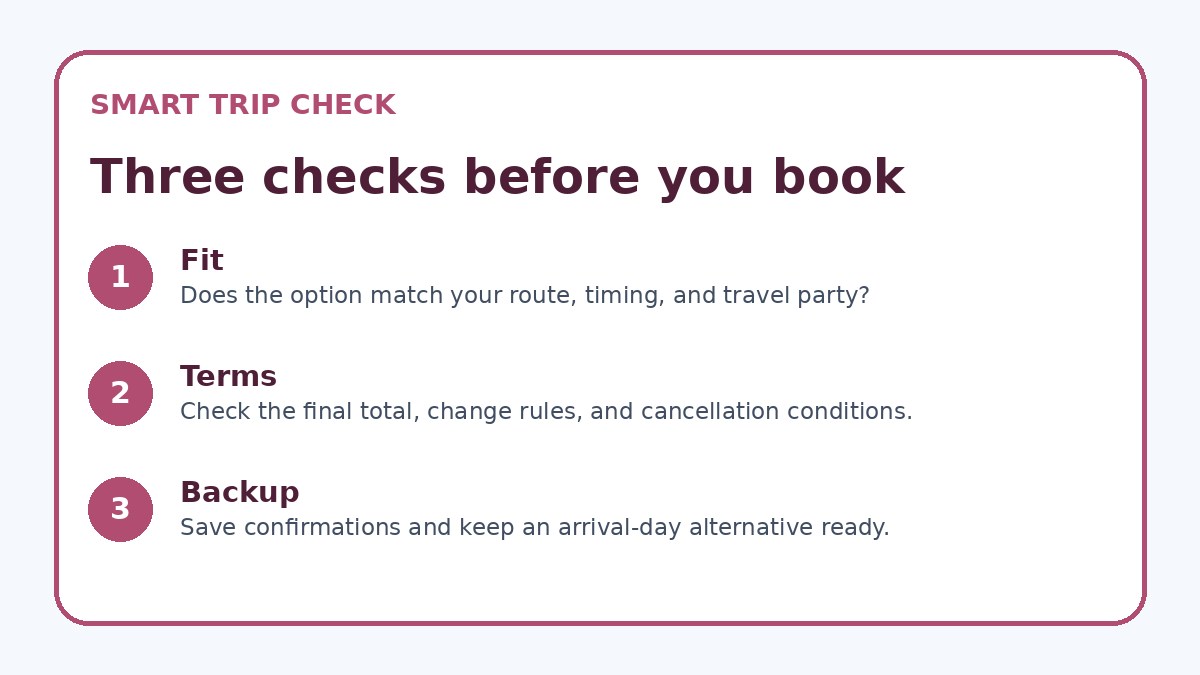
- Confirm cancellation, change fees, and corporate billing rules on the provider’s final booking page before paying.
- Check local calendars for trade shows or holidays during your shoulder-season window and adjust dates if they conflict.
- Reserve meeting rooms or on-site AV support in writing when you book the hotel to avoid last-minute shortages.
- Buy travel insurance or select refundable options if your meeting dates could change, and save all provider confirmation emails.
Decision criteria: cost, time, and reliability
Make your booking decision against three clear criteria: cost savings, time efficiency, and schedule reliability. If your corporate policy prioritizes cost control, shoulder-season dates that shave a few fare or room-price tiers may be preferable—even if weather or slightly reduced services are acceptable tradeoffs. If time is most important, prioritize central hotels and flights with shorter total travel time, even at a higher price; reduced transfer complexity often beats marginal savings for tightly packed meeting schedules. List your priorities before searching so you can measure offers against what matters most to the trip outcome.
Next, assign acceptable thresholds for each criterion: maximum acceptable commuting time, minimum refundable flexibility, and the level of uncertainty you will tolerate for weather or venue hours. Use those thresholds to filter options and avoid decision paralysis when multiple ‘good’ deals appear. Finally, always confirm provider-stated cancellation and change terms on the booking page; if any detail is unclear, contact the hotel or airline directly. Mention Trip.com as one comparison option if you want to cross-check live availability and conditions, but verify every operational term on the chosen provider’s final booking screen.
Frequently asked questions
How do I find which shoulder-season dates work best for Seoul?
Identify the peak periods you want to avoid—typically major summer and winter holiday blocks—and then look at the weeks just before and after those windows. Cross-check your target weeks with city event calendars and your clients’ known busy periods. Run flexible-date searches for flights and hotels to see demand patterns, and compare midweek options for lower disruption. If possible, consult contacts in Seoul for local business rhythm insights, and always verify venue availability and hotel amenities on the provider’s booking page before finalizing.
Should I choose a cheaper hotel farther from meetings to save on shoulder-season rates?
That depends on your priorities. Saving on a peripheral hotel can be worthwhile if you have long gaps between meetings or low transfer risk, but if your schedule is tight, the time cost and potential for transport delays can outweigh nightly savings. Calculate door-to-door commute time, transit reliability, and taxi availability during your chosen dates. Also check whether the hotel offers business services you need—meeting rooms, reliable internet, and early breakfast—and confirm these details on the booking page before you commit.
How much flexibility should I get for flights and hotels when planning around shoulder seasons?
Flexibility needs vary by the stability of your meeting schedule and your tolerance for cost. If dates are likely to shift, prioritize refundable fares or those with generous change policies, even if they cost more. For hotels, choose rates with reasonable cancellation windows or book rooms that can be modified without penalty. Review the exact wording of change and cancellation policies on the provider’s booking confirmation, not just summary lines—details like blackout dates, third-party booking restrictions, and corporate invoicing rules often live on the final page.
Final planning note
Planning a business trip to Seoul around shoulder seasons can deliver a useful compromise between cost savings and a stable operating environment for meetings. Start with clear priorities—are you optimizing for price, time, or reliability?—and use flexible-date searches and midweek travel as levers to improve deals. Always verify operational details such as cancellation terms, meeting-room availability, and local event conflicts on the provider’s booking page before paying. Small investments in confirming logistics up front will reduce day-of stress and keep your trip focused on productive meetings rather than last-minute firefighting.
Continue planning
Check current options and final conditions
Use the provider page to confirm live availability, the final total, cancellation terms, and every condition that matters to your trip.
This evergreen planning guide was created with AI-assisted drafting and a structured quality review. It does not display live prices, schedules, availability, visa guidance, or provider rankings. Verify current details before booking. Some links are affiliate links; we may earn a commission at no additional cost to you.