If you need to travel to Milan for business but want to use price alerts without booking on impulse, set alerts with clear rules and a brief cooling period before committing. Start by defining the non-negotiables — fixed meeting dates, preferred airports, required hotel amenities and proximity to your meeting location — then create alerts that match those filters only. Use alerts to gather comparisons, not to trigger immediate booking: aim to observe trends for at least 48–72 hours or until an alert meets pre-established criteria. When an alert looks attractive, verify the fare or rate on the provider’s final booking page and check change/cancellation conditions, baggage rules for flights, and whether the hotel rate is refundable. Treat Trip.com as one of several places to compare live availability and booking conditions, but always confirm details on the chosen provider’s page before completing purchase.
See current options before you compare the details
Availability and final conditions change. Open Trip.com now or keep reading for the practical comparison.
Pick precise alert filters so signals match real needs
Broad alerts produce frequent notifications and tempt impulsive decisions. For business travel to Milan, filter by the exact airport options you will accept (for example Malpensa, Linate, or Bergamo), travel-time windows that fit your schedule, and hotel neighborhoods nearest to your meetings. Narrowing to specific cabin classes, room types, or preferred chains reduces noise and ensures that alerted options are actually usable for your itinerary. Use calendar-linked alerts where possible so you only receive notices for dates you can actually travel.
Also decide whether you accept split itineraries (connecting flights) and multi-night minimums for hotels before turning alerts on. If you routinely need a same-day evening arrival for a meeting the next morning, exclude long-connection or red-eye options. When setting hotel alerts, include commuting time allowance to avoid deals that save money but cost you hours in transit. Clear, narrow filters keep alerts relevant and make it easier to apply a pre-set decision rule rather than reacting emotionally to any lower price.
Create simple decision rules and a mandatory cooling-off period
A decision rule is an explicit trigger you will honor, such as “book if roundtrip airfare is at least 15% below the typical range for these dates and refundable,” or “book the hotel if the rate is under a specified daily budget and offers free cancellation through 48 hours before arrival.” Your rule should reference measurable values—percentages, currency limits, or specific policies—so you can apply it without debating the merits in the moment. Record the rule where you see the alert so you don’t forget it under pressure.
Add a cooling-off period: wait 48–72 hours (or until a second alert confirms the price) before committing. This short delay filters out transient price dips and gives you time to confirm schedule approvals from your employer. If the price rises during the wait, reassess using your rules rather than assuming you missed the only chance. If your travel is time-sensitive and you truly cannot wait, allow a shorter rule but accept that flexibility will cost more; explicitly annotate that exception in your plan so it remains a deliberate choice, not an impulse.
| Approach | Best for | Tradeoff to check |
|---|---|---|
| Immediate booking on first alert | Travelers with fixed approvals and zero tolerance for monitoring | High chance of paying more or losing flexibility if the alert was a transient dip |
| Wait 48–72 hours to confirm alert persistence | Those who want a balance between savings and certainty | Might miss a genuine short-lived deal but avoids impulse mistakes |
| Book refundable options even if pricier | Travelers needing schedule flexibility or corporate approvals | Higher upfront cost but lower risk if plans change |
| Use alerts only for research, book after manual search | People who prefer to verify full policy and seat/room details | Requires more time but reduces the risk of booking on incomplete information |
Ready to check the option that fits your plan?
Use your exact dates and traveler details so the provider page can show the current total and conditions.
Verify final booking details and what to check on provider pages
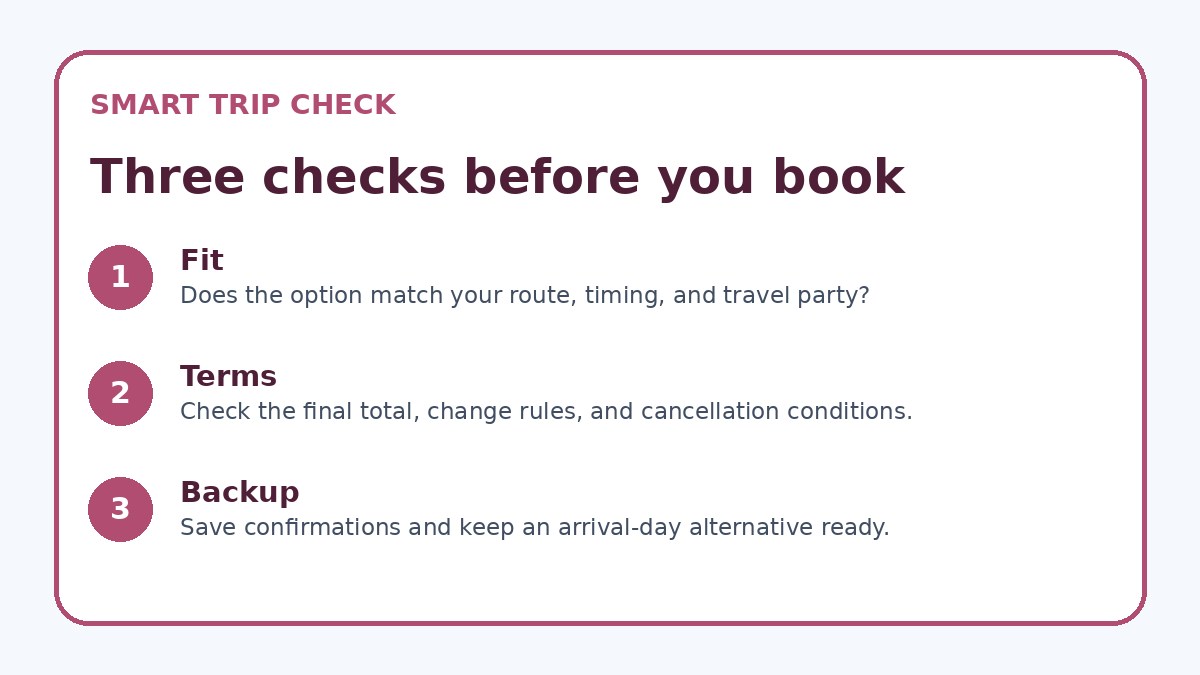
When an alert meets your rule, don’t book from the alert itself without confirmation. Open the airline or hotel booking page and verify total cost with taxes and fees included, baggage allowances and fees, seat selection rules, and any hotel service charges or city taxes that may be added at checkout or arrival. For business trips, check whether the fare or rate includes corporate discounts or company-negotiated benefits, and confirm whether loyalty program points are eligible on that fare or rate.
Also carefully read cancellation and change policies on the provider’s final page; many third-party platforms show policies that differ from the supplier’s own terms. Verify the refundable window for hotel bookings, change penalties for flights, and whether third-party booking restrictions apply. If you rely on reimbursement, capture screenshots of the booking page showing rate and policy details, and note what to confirm with your finance or travel manager before finalizing the purchase.
Before you book
- List non-negotiables: meeting times, acceptable airports, hotel neighborhood, and required amenities before creating alerts.
- Set alert filters to exact travel dates, cabin/room type, and refundable status if flexibility is important.
- Decide and write down a numeric decision rule (percentage or currency threshold) that will trigger a booking.
- Start a cooling-off timer (48–72 hours) when an alert matches your rule and wait for confirmation or a second alert.
- When ready to book, open the supplier’s booking page and verify total price, taxes, baggage, and cancellation terms.
- Screenshot the final booking page or save confirmation emails and note approval codes for expense reporting.
Manage competing priorities: price, schedule certainty, and flexibility
Business travel decisions typically balance three priorities: lowest cost, guaranteed schedule, and flexibility to change plans. Price alerts are a useful tool to lean toward lower cost, but you must weigh how much risk you accept. A non-refundable bargain can save money but may be risky if meetings shift, while a refundable rate or flexible fare costs more yet reduces disruption risk. Decide which priority dominates for this trip and adjust alert filters and decision rules accordingly.
When comparing options found by alerts, create a simple scoring rubric: give points for lower price, shorter travel time, refundable terms, and proximity to the meeting venue. This forces objective comparisons instead of emotional reactions to a single low number. Keep communication lines open with your colleagues or travel approver during the alert-watching window so that any last-minute approvals or changes are captured before you book.
Frequently asked questions
How long should business travelers monitor Milan price alerts before booking?
For most business travelers, a 48–72 hour monitoring window balances capturing meaningful price movement and avoiding impulse purchases. This period filters out one-off price glitches while still letting you act on sustained drops. If your meeting date is fixed and approvals are locked in, you can shorten the window, but accept higher risk of price volatility. Conversely, if you need maximum certainty and flexibility, prioritize refundable fares and extend the observation period while coordinating with your travel approver.
Should I prefer refundable hotel rates or cheaper non-refundable options for a Milan business trip?
Choose based on your tolerance for schedule changes and company policy: refundable rates cost more but allow last-minute changes without fees, which is valuable when meetings can move. If your travel is firm and your employer reimburses only cost-effective choices, a well-priced non-refundable rate can be appropriate. Always verify the hotel’s cancellation deadline and any taxes or service charges on the final booking page before committing—those details sometimes differ between booking platforms and the hotel’s own site.
Can I rely on alerts from one site, or should I use multiple services when planning Milan travel deals?
Use multiple alert sources to reduce the chance of missing options, because different sites may index fares and rates differently and show diverse cancellation rules. Treat Trip.com as one of the comparison points, but always confirm final terms on the supplier’s booking page. Cross-check at least one direct supplier (airline or hotel brand) and a second aggregator to ensure the total price, baggage rules, and refundability align with your decision rule before booking.
Final planning note
Price alerts are a practical tool for business travelers heading to Milan—when used with discipline. Start by defining your non-negotiables and narrow your alert filters so notifications reflect usable options. Create a numeric decision rule and impose a short cooling-off period to prevent impulse buys triggered by transient dips. Always verify total cost, baggage and room details, and cancellation terms on the provider’s final booking page before completing a purchase. Using multiple alert sources, including Trip.com as one comparison point, and favoring refundable options when your schedule is uncertain will keep costs sensible while protecting your itinerary from disruption.
Continue planning
Check current options and final conditions
Use the provider page to confirm live availability, the final total, cancellation terms, and every condition that matters to your trip.
This evergreen planning guide was created with AI-assisted drafting and a structured quality review. It does not display live prices, schedules, availability, visa guidance, or provider rankings. Verify current details before booking. Some links are affiliate links; we may earn a commission at no additional cost to you.