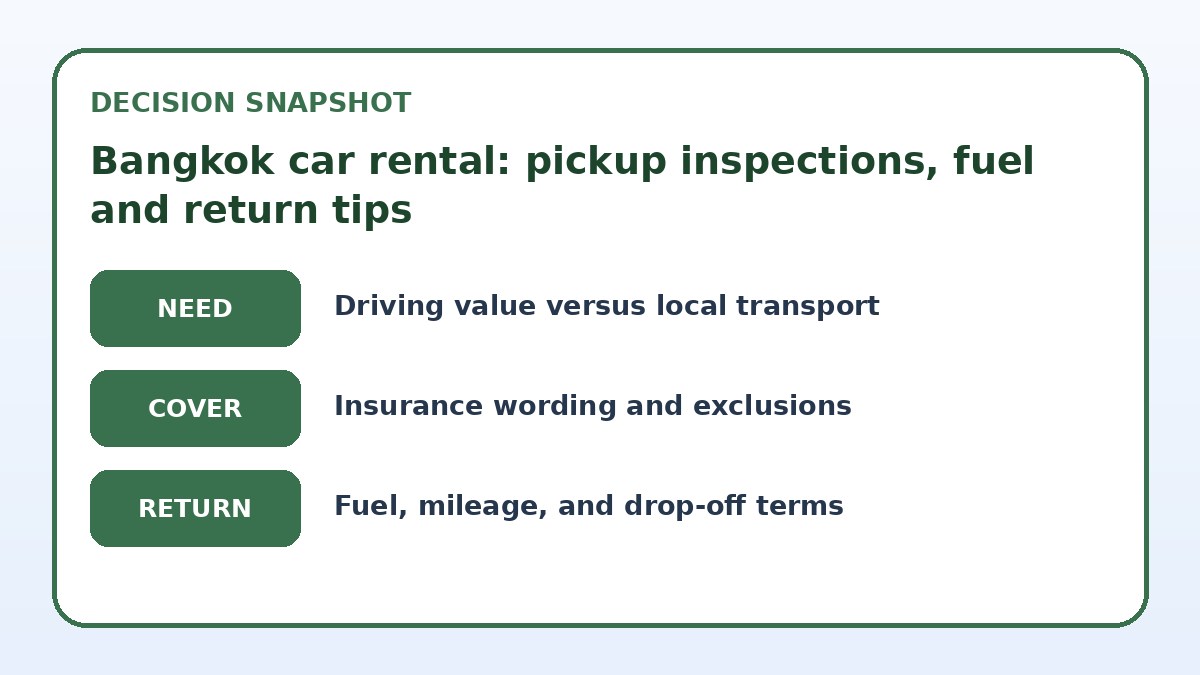
Practical answer first: when booking a Bangkok car rental as a solo traveler, prioritize pickup location accessibility, clear inspection and damage-recording procedures, transparent fuel and return policies, and 24/7 roadside support contact. These four items determine whether the rental will be convenient and low-stress during Bangkok’s traffic and when you head outside the city. You’ll also want a rental that lets you return at a different location if your itinerary requires it, and a clear policy on late returns so you aren’t surprised by fees. Read the provider’s final booking page for exact terms—especially fuel rules, inspection photos, required ID, and how after-hours returns are handled—then match those terms to your solo travel needs and comfort level.
See current options before you compare the details
Availability and final conditions change. Open Trip.com now or keep reading for the practical comparison.
Pickup location and access
Where you pick up the car shapes the first hour of your trip. For solo travelers without a local driver, choose a location you can reliably reach by public transport or a short taxi ride from your accommodation. Airport counters are convenient for immediate departures but can include shuttle waits or long queues; city-center branches might be easier to reach after you’ve dropped luggage at a hotel. Consider whether the supplier offers meeting points, deskless key handoffs, or a shuttle service—those affect how independent you can be and how much walking or waiting is involved.
Also check the branch hours and whether the company supports after-hours pickup. If you arrive late, an after-hours handoff with a set process (photo ID scan, emailed contract, or secure key box) is valuable; confirm exactly how they manage verification, and what backup contact number they provide. If you plan to use public transit to get to the desk, allow extra time for Bangkok’s variable traffic and transfer times. Finally, compare locations for parking availability if you’ll return the car to the same spot; some central offices have limited spaces and require pre-booking.
Inspection, damage claims, and documentation
The inspection at pickup is where many disputes begin. As a solo traveler, protect yourself by performing a systematic walkaround and interior check before you drive away. Photograph all exterior panels, tires, mirrors, and the interior including the odometer, fuel level, and any upholstery marks. Ask the agent to timestamped record known damage on the rental agreement or to attach their own photos; if they refuse, get their name and make a note. Keep copies of your passport, driver’s license, and the rental contract—digital photos stored in cloud or email are useful if you need to dispute a claim later.
Understand how the company handles damage claims and deposits. Find out whether there is a security hold on your card, the hold amount, and the expected timeline for release. Ask about deductible levels and if there are deductible-waiver options that fit your comfort with risk. If you plan to drive outside Bangkok, confirm geographic limits in writing and whether roadside assistance covers the routes you intend to use, because some cheaper rates restrict assistance to a narrower range.
| Approach | Best for | Tradeoff to check |
|---|---|---|
| Pickup at airport counter | Arrivals who want immediate access and luggage convenience | Long lines, shuttle waits, possible higher fees and limited nearby public transport options |
| City-center branch near BTS/MRT | Travelers staying centrally who prefer short transit to pickup | Smaller branch hours and limited parking can complicate return logistics |
| After-hours pickup/dropbox option | Late arrivals or flexible solo itineraries | Less staff verification on-site; inspect carefully and retain timestamped photos |
| One-way return between branches | Point-to-point itineraries leaving Bangkok for other destinations | Often costs extra and may require advance notice to secure availability |
Ready to check the option that fits your plan?
Use your exact dates and traveler details so the provider page can show the current total and conditions.
Fuel, mileage, and return timing
Fuel policy is straightforward but easy to overlook. Typical options include 'full-to-full', prepaid fuel, or 'same-to-same' variations; each has a tradeoff between convenience and cost. Full-to-full requires you to return the car with a tank as full as at pickup, which is fair if you plan refueling close to the return location and want to avoid markups. Prepaid fuel can spare you time but may overcharge if you don’t use the tank. Confirm the exact fuel agreement on the booking page and note whether the company charges per liter at a set rate or uses an estimated refill fee.
Return timing and grace periods matter when solo travel plans shift. Check the allowed return window and how late returns are billed—some companies charge a flat daily rate after a grace period, others bill by the hour. Also verify whether returns require a staff check-in and vehicle handover, or if there is an after-hours dropbox and photo confirmation procedure. If you’ll be returning the car to a different branch, ensure your booking explicitly permits one-way returns and ask about any additional fees or required advance notice.
Before you book
- Photograph the entire vehicle exterior and interior with timestamps before you drive away and email the images to yourself.
- Confirm fuel policy on the booking page and note the nearest reliable petrol stations near your planned return location.
- Get a written note of any pre-existing damage on the rental agreement; get the agent’s name for reference.
- Verify the security deposit amount, the block/release timing, and what triggers partial or full charges.
- Save the roadside assistance number and ask what services and languages are supported before you leave the branch.
- Confirm allowed driving areas and whether the policy covers driving outside Bangkok or across provincial borders.
Insurance, extras, and emergency support
Insurance coverage descriptions vary and the devil is in the deductible. The basic rate may include third-party liability but leave a high excess for collision damage. Consider whether additional coverages—collision damage waiver, theft protection, or supplemental liability—reduce your out-of-pocket exposure in a way that feels acceptable. If you rely on a credit card or travel policy for secondary coverage, confirm that the card’s terms apply in Thailand and that the car type and rental duration are eligible; ask the rental agent for the insurer’s name and a claims contact to keep with your documents.
Emergency support is crucial for a solo traveler. Ask for the road-assist number and confirm what services are included—towing, battery jump-starts, spare tire delivery—and typical response expectations. Note whether assistance is available in English and whether there is an emergency office in Bangkok if an in-person visit is required. Keep local SIM data or a working phone plan because calling roadside support and arranging a tow or alternative transport is easier when you can contact them directly and share your precise GPS location.
Frequently asked questions
Do I need an international driving permit to rent a car in Bangkok?
Requirements vary by rental company and your country of issue. Many Thai providers ask for a valid passport and an international driving permit (IDP) or a Thai-issued license for certain nationalities. Before you book, check the rental company’s final terms page for the exact license documents they require and any age or experience minimums. If you rely on an IDP, apply through your home country’s designated authority well before travel and carry both your domestic license and the IDP while driving.
What should I do if I find new damage after drop-off?
Immediately gather evidence: timestamped photos, the drop-off receipt if provided, and any witness contact details. Contact the rental company using the same channels they specify for returns and ask for a written damage report or confirmation that they will review exit photos. If a charge appears on your card later, request a copy of the damage assessment and invoice and dispute it through your card issuer if you have documentation proving the vehicle’s condition at return. Keep all communications and receipts until the matter is settled.
How do I compare excess reduction options and decide which to buy?
Start by comparing the deductible (excess) amount on the basic rental to the reduced-excess option’s cost. Calculate the worst-case out-of-pocket exposure versus the incremental daily cost of the waiver over your rental period. Factor in your own risk tolerance, the driving environment in Bangkok and nearby roads, and whether your credit card or travel insurance already offers secondary coverage that could apply. Verify on the booking page exactly what the waiver excludes—windshield, tyres, undercarriage, and off-road damage are common exclusions.
Final planning note
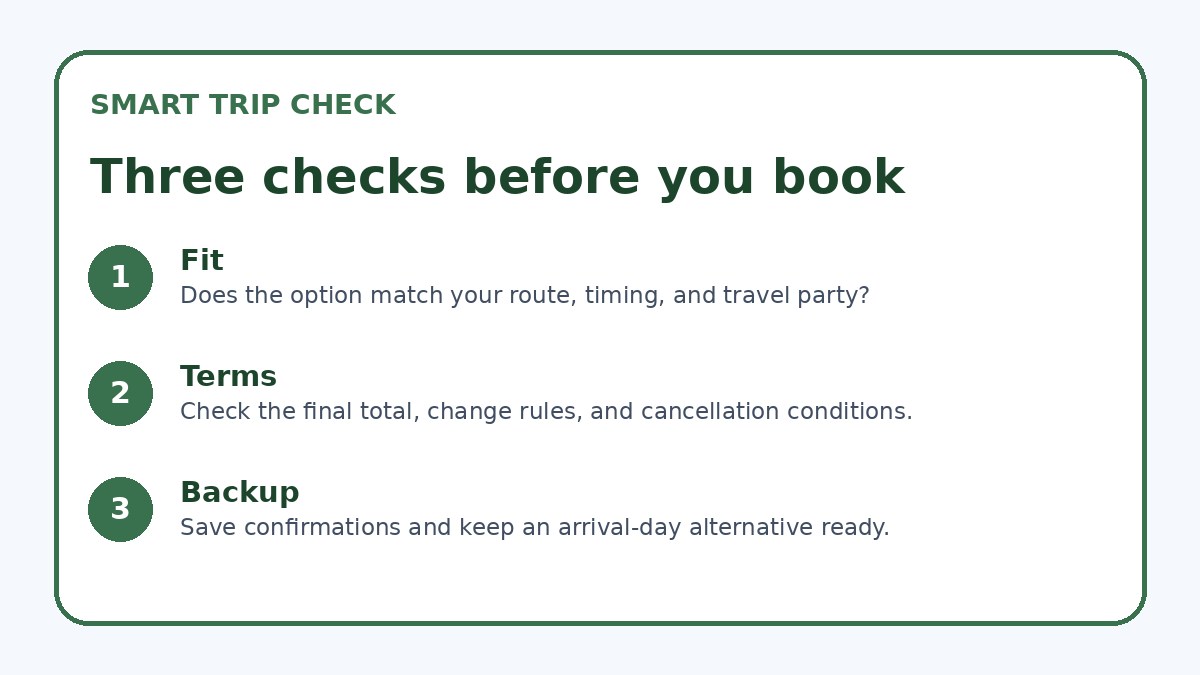
Solo travelers can keep a Bangkok car rental simple and secure by focusing on four booking-stage checks: pickup accessibility, documented inspection, clear fuel and return rules, and reliable emergency support. Before completing a reservation, read the provider’s final booking page and verify the exact fuel policy, deposit hold, deductible, permitted driving areas, and after-hours return process. Bring timestamped photos of the vehicle and copies of all documents, store roadside numbers, and plan returns around branch hours when possible. A little attention at pickup and clarity about return terms reduces stress, avoids surprise charges, and keeps the trip moving smoothly.
Continue planning
Check current options and final conditions
Use the provider page to confirm live availability, the final total, cancellation terms, and every condition that matters to your trip.
This evergreen planning guide was created with AI-assisted drafting and a structured quality review. It does not display live prices, schedules, availability, visa guidance, or provider rankings. Verify current details before booking. Some links are affiliate links; we may earn a commission at no additional cost to you.