
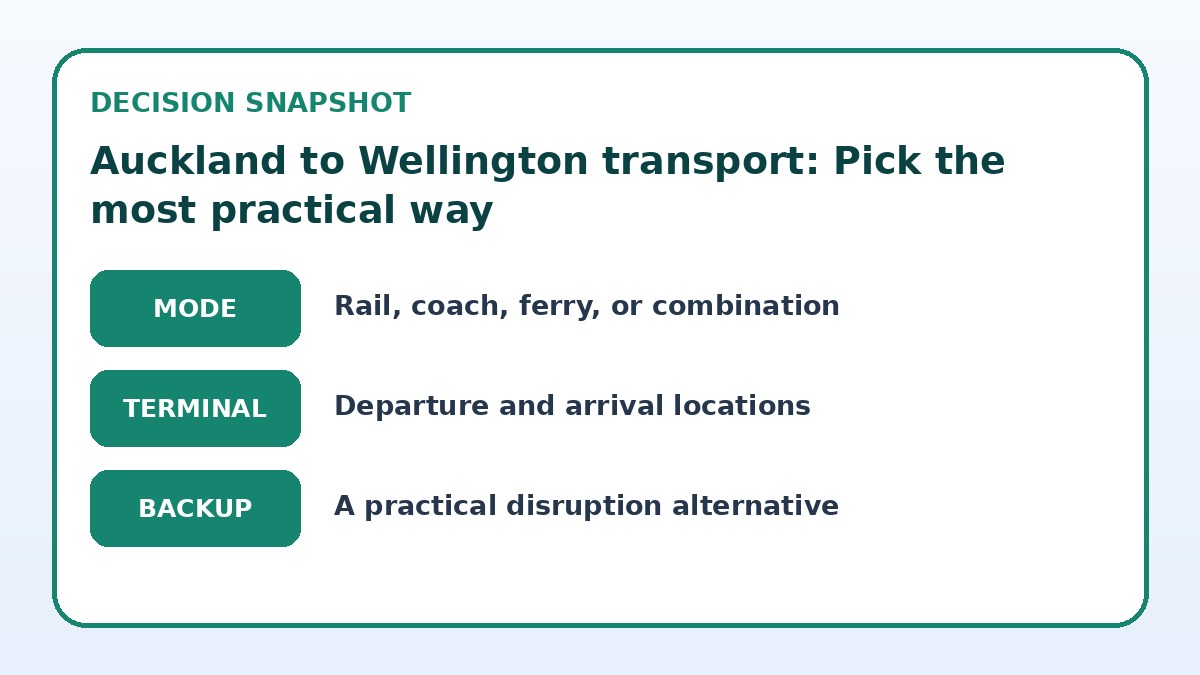
If you need a short, practical answer: for most solo travelers who prize speed and minimal planning, flying between Auckland and Wellington is the most practical option; if you want the cheapest booked-in-advance option with few transfers, coach services are usually simpler; if you value independence, scenic stops and flexible timing, driving yourself is the most practical choice. Which is best depends on your priorities—time, cost, comfort, luggage, and how much planning you want to do. This guide explains the tradeoffs, how to compare direct and connecting options, what to verify on booking pages, and the checkpoints to make your single-person trip run smoothly. Read the quick points first if you want a fast decision, then use the sections to match an option to your exact needs and to prepare sensible packing, timing, and booking checks.
See current options before you compare the details
Availability and final conditions change. Open Trip.com now or keep reading for the practical comparison.
Deciding by priorities: time, cost and comfort
Start by ranking what matters most to you. If time is the top priority, flying frequently wins for door-to-door speed but includes time for airport transfers, check-in, and security. Coaches reduce the number of moving parts—one booking, fewer tight connections—so they suit travelers who prefer a single overland transfer and don’t mind a longer seat time. Driving suits those who want complete control and scenic stops; it removes boarding queues and luggage restrictions but shifts navigation and fatigue responsibility entirely to you.
Consider comfort for a solo traveler: on planes you’ll get faster transit and predictable facilities, but small cabins and tight turnaround can be tiring. Long-distance coaches increasingly offer Wi-Fi, power points and recline, which makes work or rest doable; still, motion and shared seating can be less private. Driving offers the most private space and the freedom to pace rest breaks, but solo driving on unfamiliar roads increases fatigue risk, so plan realistic driving legs and factor in rest or an overnight stop if needed.
Comparing direct versus connecting options
Never assume a route is direct without checking the booking details. For flights, the difference between a direct nonstop and an itinerary with a connection changes total travel time and the risk of missed onward transport. For coaches, some routes advertise express runs while others stop at multiple towns; those stops affect total time and comfort. When you compare, line up total door-to-door time, number of transfers, and whether baggage is automatically transferred or you must collect and re-check it at each hop.
If multiple legs are required, factor in minimum connection times that feel comfortable to you—solo travelers often need extra margin for bathroom breaks, getting food, or reorienting at a new terminal. On the booking page, confirm whether the provider sells the itinerary as a single ticket (which often protects you if a delay forces rebooking) or as separate tickets (which increases your personal risk). If you see a cheaper multi-ticket solution, weigh the savings against the hassle of self-managing connections and potential missed legs.
| Approach | Best for | Tradeoff to check |
|---|---|---|
| Fly direct (nonstop) | Solo travelers prioritizing fastest door-to-door travel | Time saved vs airport transfer time and possible crowds |
| Coaches / Intercity bus | Those wanting minimal planning and fewer transfers | Longer onboard time but simpler single-ticket arrangements |
| Drive yourself (rental or private car) | Travelers seeking flexibility and scenic detours | Greater fatigue risk and parking/traffic responsibilities |
| Multi-leg combinations | Budget-conscious or complex itineraries needing flexibility | Lower cost potential but higher risk of missed connections |
Ready to check the option that fits your plan?
Use your exact dates and traveler details so the provider page can show the current total and conditions.
Practical prep for each option
For flights, check the final booking page for baggage allowances, carry-on size rules, and boarding procedures. Verify transport time to and from each airport and whether public transit, shuttle or a taxi is the most reliable option at your departure hour. Prepare for security and check-in by arriving early enough for any bags and online check-in requirements. Solo travelers benefit from a small carry-on with essentials and a charged phone; keep paper or digital copies of your booking reference, and a power bank for long airport waits.
For coach travel, confirm luggage limits and whether items are stored under the coach or carried on-board to your seat. Look for coach features that matter to you—Wi-Fi, toilets, seat recline—and match departure/arrival stops to your accommodation to avoid extra transfers. If driving, make a plan for driver rest, precise navigation apps, and where to refuel or stop for food. Book parking in Wellington in advance if possible and note any special parking restrictions at your destination. Whichever option you choose, check the provider’s final booking page for service-specific conditions such as change fees, inclusions, and refund rules.
Before you book
- Confirm total door-to-door travel time for each option, including transfers and waiting, before choosing which to book.
- On the provider booking page, verify baggage allowance, carry-on rules, and any extra fees for checked bags or oversized items.
- Check the pickup and drop-off locations (airport terminal, coach station bay, or exact parking address) and map the onward route to your accommodation.
- Decide your acceptable connection margin (minutes) and only choose itineraries that leave you that buffer between scheduled arrivals and departures.
- Prepare a compact day bag with essentials—chargers, medications, ID, a snack, water, and a light layer—to keep with you regardless of transport mode.
- Share your itinerary with a contact and set check-in reminders; include estimated arrival time and the provider booking reference for quick assistance.
Safety, single-traveler comfort and final checks
Solo travel adds simplicity but also responsibility for personal safety and contingency planning. If flying, keep your ID, phone, wallet and any medication on your person. If taking a coach, choose daytime departures when stations are busier and you can store luggage under supervision; if an overnight coach is considered, lock valuables in an inner bag and keep essentials with you. When driving, plan realistic shifts, stop regularly, and avoid driving late at night if you’re the only driver. Share your itinerary with someone back home and set periodic check-ins.
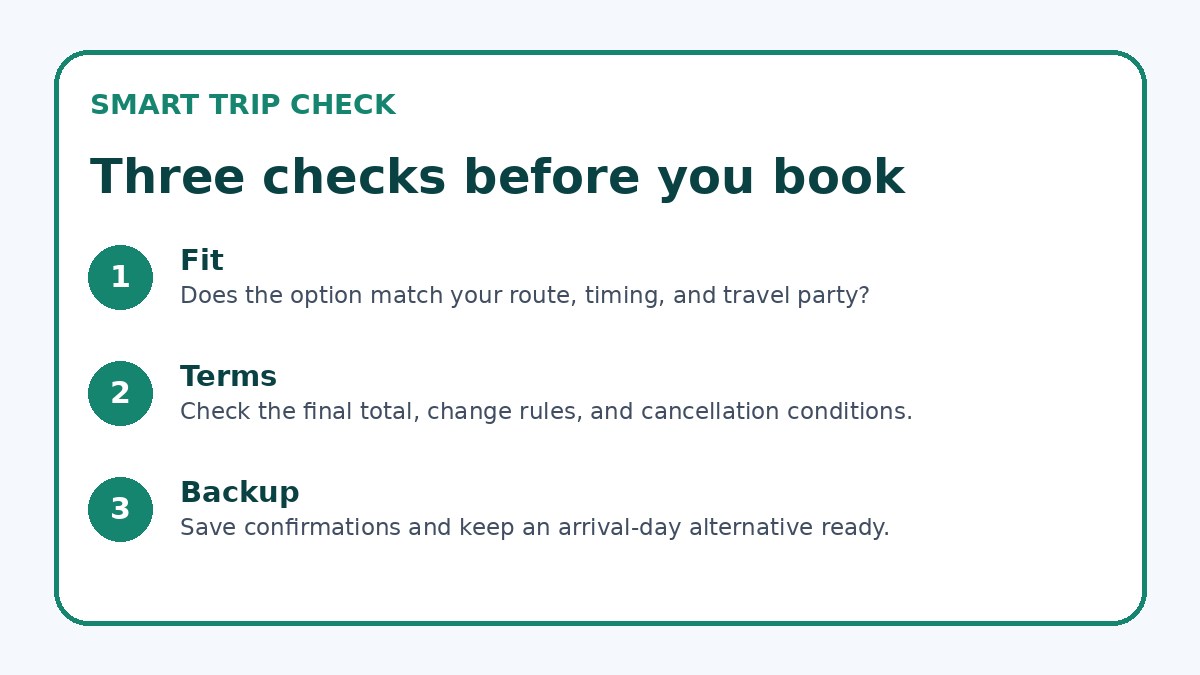
Before you press buy, verify a few essential items on the provider’s final booking page: whether the trip is direct, luggage allowances and any extra fees, cancellation or change policies, and the exact pickup/drop-off location. If anything listed is unclear—such as whether transfers are guaranteed on delayed connections—contact the provider directly to get confirmation. You can compare availability and current options on Trip.com if you want a quick side-by-side view, but always treat the specific provider’s booking page as the authoritative source for terms and service details.
Frequently asked questions
Is flying always the quickest practical choice between Auckland and Wellington?
Flying is usually the fastest option in pure air time, but the practical speed for a solo traveler depends on the total door-to-door journey. Add the time needed for travel to and from airports, security or check-in, and potential waiting time. For short-haul trips, if airport transfers are long or if you must factor in long waits, a coach that drops you closer to a central location can be competitive. Check total travel time on the provider’s booking page and compare expected transfer times to decide which is genuinely quicker in practice.
How should a solo traveler weigh comfort versus cost when choosing a coach or a flight?
Start by listing what comfort means for you: legroom, privacy, ability to sleep, onboard facilities, or predictable schedules. Coaches often offer lower fares and baggage simplicity, but longer seats and shared space. Flights reduce travel time and may feel less tiring overall, but airports and cabin constraints bring different discomforts. Balance the monetary cost against how much the travel itself affects your energy for arrival activities. Verify coach onboard features and flight cabin options on the booking page rather than relying on summary descriptions.
If I decide to drive, what single-driver safety checks should I prioritize?
Plan conservative driving legs with regular breaks—aim to stop every 90–120 minutes. Check vehicle rental terms, ensure the car has a full-size spare and emergency kit, and use a reliable navigation app with offline maps if mobile coverage may be patchy. Identify safe rest stops and fuel stations along the route before departure. Book secure parking at your Wellington destination in advance if possible. Finally, tell someone your planned route and expected arrival time, and keep a charged phone and power bank for emergencies.
Final planning note
Choosing the most practical Auckland to Wellington transport for a solo traveler means matching a trip type to your priorities: fly if you want the shortest door-to-door time and minimal planning; take a coach if you prefer a single, predictable ticket and fewer moving parts; drive if you want flexibility and scenic control. The right pick balances time, budget, comfort, and how much effort you want to manage on the road. Before booking, verify directness, baggage rules, exact pick-up/drop-off points and change or cancellation terms on the provider’s final booking page. Use those checks and the quick comparisons here to book confidently and travel with fewer surprises.
Continue planning
Check current options and final conditions
Use the provider page to confirm live availability, the final total, cancellation terms, and every condition that matters to your trip.
This evergreen planning guide was created with AI-assisted drafting and a structured quality review. It does not display live prices, schedules, availability, visa guidance, or provider rankings. Verify current details before booking. Some links are affiliate links; we may earn a commission at no additional cost to you.