Practical answer first: for most first-time visitors the KTX/high-speed train (or other express trains) and intercity coaches are the two simplest ways to move between Seoul and Gyeongju; driving is a flexible alternative if you want on-route stops, while ferries are only relevant if you combine this trip with a southern island hop. Which is right depends on your priorities: time, cost, luggage, comfort, and how you plan to use your time in Gyeongju. This article explains the tradeoffs clearly and gives decision criteria so you can choose a route that matches your itinerary, not a generic “fastest” or “cheapest” label. Check schedules and seat availability on providers’ official pages before you buy, and consider searching current options on Trip.com if you want a quick comparison of fares and times.
Trains — speed, comfort, and station locations
Trains are often the quickest and most comfortable land option for travel between Seoul and Gyeongju, and they come in different categories with varying stops and onboard services. When comparing trains, look at departure and arrival stations (Seoul has more than one major rail hub), whether the service is express or local, and whether you need to change trains. Direct services reduce transfer hassle; if a trip requires a connection, factor in minimum transfer time, platform layout, and time to move between platforms or stations. Also compare seat classes and luggage rules so you know whether you can stow suitcases easily.
Decide on train travel by matching total door-to-door time against cost and convenience. If the train drops you close to your accommodation in Gyeongju or to a central bus hub, the slightly higher fare may be worth it. If you’re traveling light and comfortable with public transit, book a direct express or high-speed seat. But if your schedule is flexible and you want to spend less, check coach options: they may depart from different Seoul terminals and require more travel time but sometimes offer simpler booking and check-in procedures for budget-minded travelers.
Coaches (intercity buses) — budget and route flexibility
Intercity coaches are typically the most straightforward budget option, with many daily departures and simple ticketing. Coaches often serve major bus terminals that are well connected to Seoul’s subway and airport lines, and they let you travel overnight or at off-peak hours without changing trains. When comparing coaches, check whether the service is express or makes multiple stops, the boarding terminal in Seoul, and the drop-off point in Gyeongju so you can plan onward transfers. Coaches are also useful for travelers with awkward itineraries where rail connections are indirect.
Tradeoffs for coaches include longer clocks on the road, possible traffic delays, and less onboard space compared with some trains. If you prize a lower fare and are comfortable with a longer seat time, coaches can be the right choice. Families and groups should check luggage allowances and whether the operator offers reserved seating. Finally, keep in mind comfort differences: some coaches have bigger seats and onboard toilets, while others are bare-bones. Compare schedules and amenities on the provider’s site prior to booking.
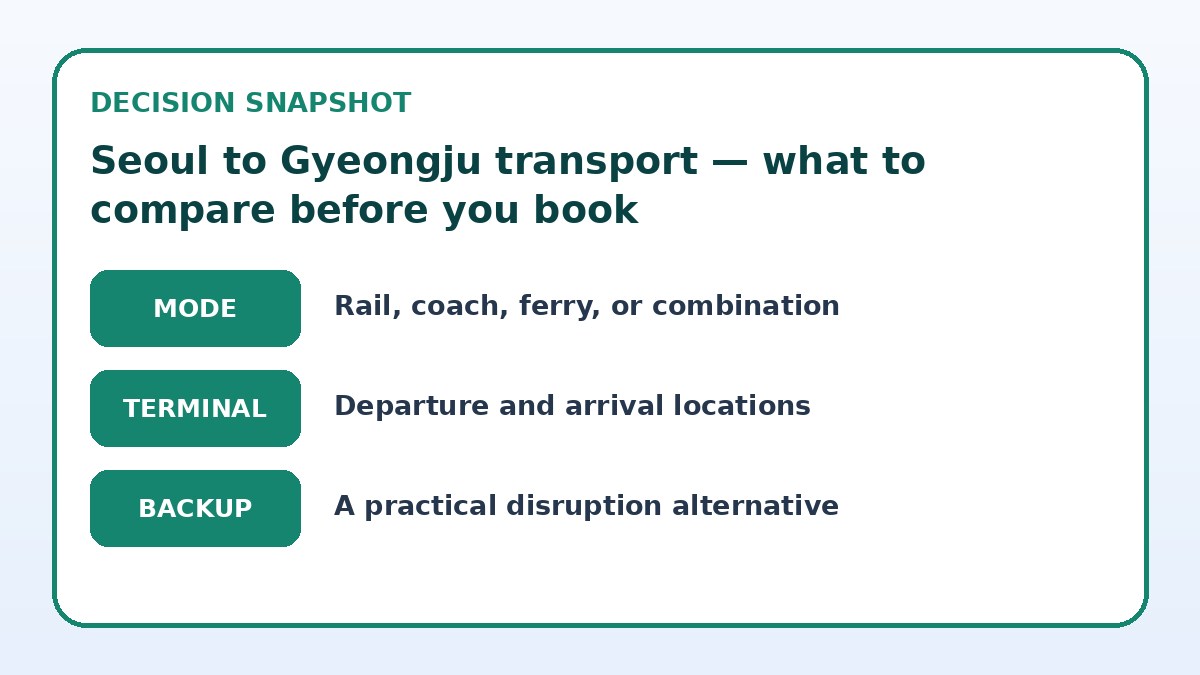
| Approach | Best for | Tradeoff to check |
|---|---|---|
| High-speed or express train | Travelers who want the fastest, most comfortable land transfer with minimal hands-on navigation. | Often higher fare and depends on proximity of stations to your accommodation. |
| Intercity coach | Budget-minded travelers and those who prefer simple, frequent departures over speed. | Longer journey times and subject to road traffic delays and fewer onboard comforts. |
| Driving / private transfer | Visitors who want flexibility to stop, carry extra luggage, or travel with a group share. | Higher cost, need to manage parking, navigation and tolls, plus local driving familiarity. |
| Ferry + land mix | Trip planners combining island or coastal stops with Gyeongju for a scenic detour. | Adds transfers and potential weather-related uncertainty; not a direct route option. |
Driving or private transfer — flexibility and sightseeing
Renting a car or hiring a private transfer gives the most control over your route and schedule, especially if you want to stop at attractions along the way, like coastal viewpoints, temples, or traditional towns. Driving lets you carry more luggage, depart at your convenience, and adjust your itinerary mid-trip. Before committing to a car, plan realistic driving segments, consider toll roads, parking options in Gyeongju, and whether you’re comfortable driving on Korean roads and following local signage and regulations. If unfamiliar with local driving customs, a private driver can take the stress out of longer road journeys.
The decision to drive hinges on how much flexibility you actually need versus the extra cost and responsibility. If you value multiple stops, rural detours, or travel with a group and shared expenses, driving can be efficient. If your visit is short and you only plan to see central Gyeongju’s main sites, public transport may save time and parking hassles. Always compare total door-to-door time, fuel and toll estimates, and the availability of secure parking at your accommodation before choosing to rent a car.
Before you book
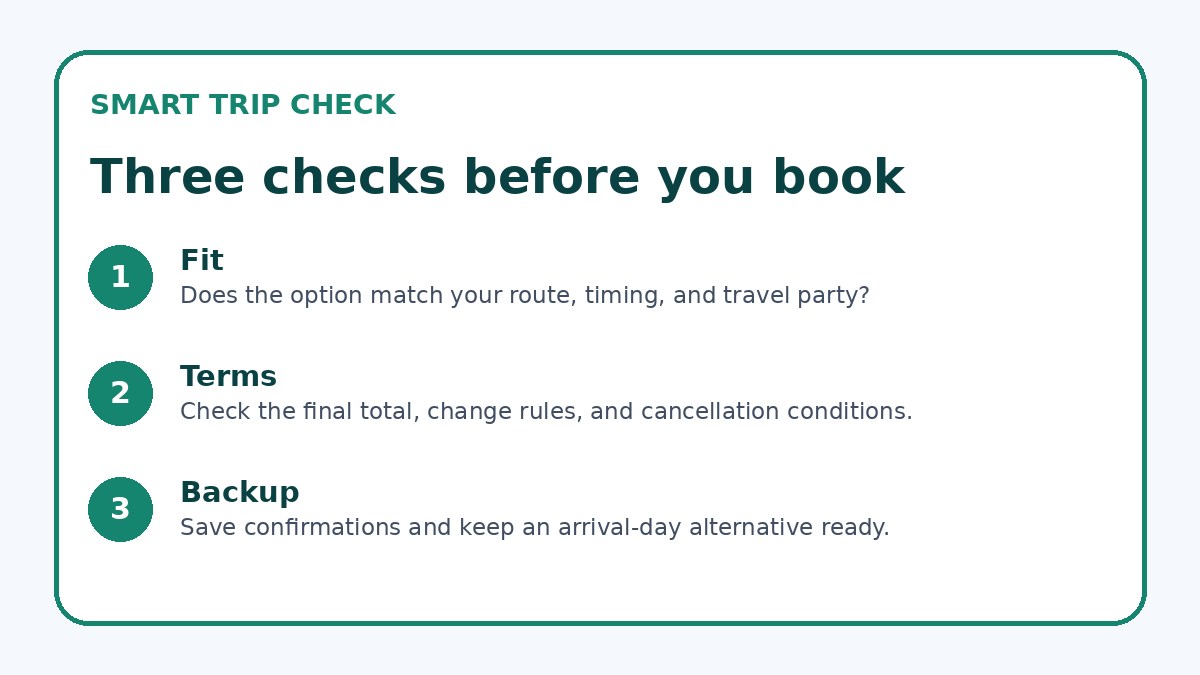
- Confirm departure and arrival stations or terminals in Seoul and Gyeongju and how much time you need to transfer between them.
- Verify current timetables, seat availability and luggage policies on the operator’s official booking page before purchasing tickets.
- Compare total door-to-door travel time, not just scheduled duration, factoring in transfers, local transit and walk times.
- If renting a car, check parking options at your Gyeongju accommodation and plan for tolls and realistic driving segments.
- Allow buffers between connections—especially when combining trains, coaches and ferries—to absorb delays or late arrivals.
- Have a backup plan (alternate departure or coach) in case your preferred service is full or schedules change on the day.
Ferry and mixed-route ideas — when to combine modes
Ferries are not a direct Seoul–Gyeongju solution, but they matter if your trip spans coastal islands or you want a scenic detour along the south coast. A common mixed approach is to take land transport partway and add a ferry to reach an island or coastal town, then continue to Gyeongju by bus or car. When building a combined itinerary, map each transfer carefully and leave buffer time between connections: ferries can be affected by weather and have different check-in procedures compared with trains and buses.
If you’re tempted by a mixed route, compare total travel time, transfer convenience, and luggage handling between options. Consider whether an overnight stop on the coast or an island stay improves your experience more than a direct land journey. Verify ferry timetables and the precise pier-to-terminal connections on the operators’ official pages, because small mismatches in departure or disembarkation points can add unexpectedly long ground transfers that offset any scenic benefit.
Frequently asked questions
Should first-time visitors choose a train or coach from Seoul to Gyeongju?
Choose based on priorities: pick an express or high-speed train if you prefer shorter travel time and more onboard comfort, especially with limited days. Coaches can make sense if you want to reduce fare and your schedule allows more travel time. For families, check luggage and seat configurations: trains often offer more space and predictable travel times, while coaches can be cheaper but slower and more affected by traffic. Always verify schedules and whether services are direct or require transfers.
Can I combine a ferry with land travel to include island stops on the way to Gyeongju?
Yes—ferries work well when your plan includes coastal islands, but they introduce extra transfers and potential weather dependency. If you consider this, map exact pier locations and how you will continue by bus or car to Gyeongju. Build generous connection time and confirm ferry departure procedures on the operator’s website. For mixed itineraries, balancing scenic value against additional logistics will determine whether the detour is worth the time lost to transfers.
How should I account for luggage and accessibility when choosing a mode of transport?
Check each provider’s luggage rules, storage space, and station accessibility in advance. Trains typically have dedicated luggage areas and easier station access; coaches vary by operator and may have limited overhead space. If mobility or large suitcases are factors, prefer direct services, choose stations with elevators and ask about assistance options. When booking, read the final booking page carefully to confirm baggage allowances, carriage rules and any special assistance services offered.
Final planning note
There’s no one-size-fits-all answer for Seoul to Gyeongju transport: trains win on speed and comfort, coaches on budget and frequency, driving on flexibility, and ferries only on scenic island-inclusive routes. Start by ranking what matters most—total travel time, convenience of station locations, luggage needs, and the desire for on-route stops. Then compare door-to-door time and the number of transfers rather than just advertised journey lengths. Before you book, verify timetables, seat availability and luggage rules on the operator’s official pages and consider a quick comparison search on Trip.com if you want a consolidated view. With those checks done, you’ll pick the mode that fits your schedule and the experience you want in Gyeongju.
Continue planning
Check current options and final conditions
Use the provider page to confirm live availability, the final total, cancellation terms, and every condition that matters to your trip.
This evergreen planning guide was created with AI-assisted drafting and a structured quality review. It does not display live prices, schedules, availability, visa guidance, or provider rankings. Verify current details before booking. Some links are affiliate links; we may earn a commission at no additional cost to you.