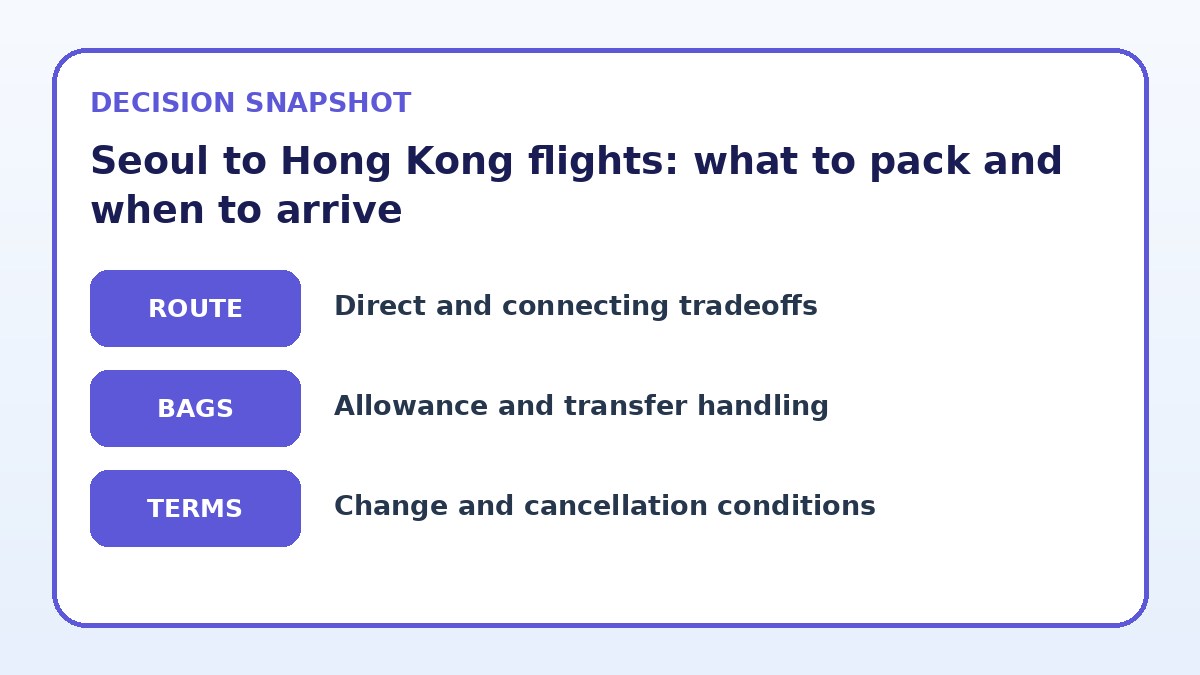
If you’re traveling for work between Seoul and Hong Kong, the two most useful decisions are simple: pack to control time in airports, and choose an arrival buffer that matches your meeting schedule. For most business travelers a single well-packed carry-on plus a laptop bag speeds transit through Seoul’s airports and Hong Kong’s arrival procedures, while checking a larger bag makes sense only if you need formal wear or extended-stay items that won’t fit in a cabin bag. Decide before booking whether you need a checked bag, then select a departure time that leaves a clear cushion for security, passport control, and any unexpected delays. Later sections explain how to weigh direct versus connecting flights, compare baggage fees and allowances, and set an arrival buffer that balances cost, risk, and productivity.
See current options before you compare the details
Availability and final conditions change. Open Trip.com now or keep reading for the practical comparison.
Decide carry-on vs checked: speed versus capacity
Carrying everything on board is the fastest option for business travelers because it eliminates baggage reclaim and reduces the chance of delay. A typical business setup—one soft-sided carry-on sized to airline limits plus a laptop or briefcase—lets you leave the airport straight for a meeting or to your hotel. Rolling shirts, using packing cubes, and carrying a compact travel steamer or wrinkle-release spray can keep professional attire presentable without checking a suitcase. Remember that airlines have diverse cabin baggage size and weight limits; before finalizing your plan, check your chosen airline’s exact cabin dimensions and permitted items on its booking page.
A checked bag makes sense when your trip requires multiple outfits, specialized equipment, or gifts that can’t fit in a carry-on. If you choose to check luggage, allow extra time at departure for drop-off and confirm the airline’s drop cut-off time to avoid last-minute stress. Checked luggage introduces variables—possible delays, misrouting, or extra fees—so factor those into a conservative arrival buffer for important meetings. When comparing itineraries, weigh the time saved by carry-on against the convenience of having more clothing and less need for professional laundry or shopping on arrival.
Timing your airport arrival in Seoul
Seoul has two main international gateways; select your departure airport and then set your airport arrival plan around peak times and your airline’s guidance. For flights to Hong Kong, morning peak hours and major holiday periods can lengthen check-in and security lines, so aim for earlier windows if your flight departs during those times. Business travelers who value certainty often add 30–60 minutes to the airline’s standard recommended arrival time to absorb unexpected delays like longer security queues or heavier traffic to the airport. If you have lounge access or priority security through your ticket class or status, you can shorten that buffer, but still leave room for passport control and possible document checks.
Factor in transit time to the airport and potential traffic or rail disruptions when planning your departure from the office or hotel. Many professionals favor early flights to arrive in Hong Kong during regular business hours, but that can shift where congestion falls—early-morning departures may face crowded check-in desks, while late-evening flights often have lighter lines but require earlier hotel check-outs. Use real-time traffic and airport status on the day of travel, and confirm cut-off times for check-in and baggage drop with your airline on its official booking page before you leave for the airport.
| Approach | Best for | Tradeoff to check |
|---|---|---|
| Carry-on only | Short business trips, tight schedules, travelers who value speed | Limited clothing and materials; may require careful packing and laundry on arrival |
| Checked bag plus carry-on | Longer stays or multiple meetings with varied dress requirements | Takes time at baggage drop and reclaim; risk of delay or misroute |
| Earlier departure with larger buffer | High-stakes meetings where on-time arrival is essential | More time spent waiting at the destination; potential extra hotel or transport costs |
| Later flight with priority services | Travelers with lounge access, frequent-flyer status, or flexible meeting times | May limit schedule options and sometimes costs more depending on fare class |
Ready to check the option that fits your plan?
Use your exact dates and traveler details so the provider page can show the current total and conditions.
Arrival process in Hong Kong and onward connections
Immigration and customs procedures in Hong Kong typically vary by time of day and arrival volume, so plan your onward timing conservatively. If you need to get to a meeting quickly after touchdown, consider flights that land well before your scheduled appointment and leave a generous buffer for passport control, baggage collection if applicable, and transfer to ground transport. Business travelers with tightly scheduled meetings sometimes use priority immigration lanes where available or pre-arranged hotel or car transfers to avoid delays. Always verify on your arrival-day whether special lanes, e-channel eligibility, or biometric checks apply to your passport to avoid surprises.
For connections in Hong Kong to other cities or domestic onward travel, you’ll need to consider whether your bags are checked through to your final destination and if you must collect and re-check them. If you have separate tickets or airlines that don’t interline, allow extra time to collect luggage and re-check through security. When booking, compare total door-to-door travel time rather than flight time alone; a later flight with a known efficient transfer might be less risky than an earlier flight with uncertain ground transport or long immigration queues. Check the final booking pages or ticket confirmations for precise transfer policies and baggage routing on your chosen itinerary.
Before you book
- Check the airline’s exact cabin baggage dimensions and weight allowance on the carrier’s booking page before packing.
- Decide whether to check luggage based on the number of full outfits and specialty items you need for meetings.
- Confirm check-in and baggage drop cut-off times on your ticket and allow extra buffer for airport traffic.
- Reserve priority immigration, lounge, or private transfer services in Hong Kong if on-time arrival is critical.
- Use online check-in and download your boarding pass to your phone to speed the airport process.
- Pack a compact business kit (wrinkle-release, spare shirt, chargers, and travel adaptors) in your carry-on.
What to verify before you book and before you go
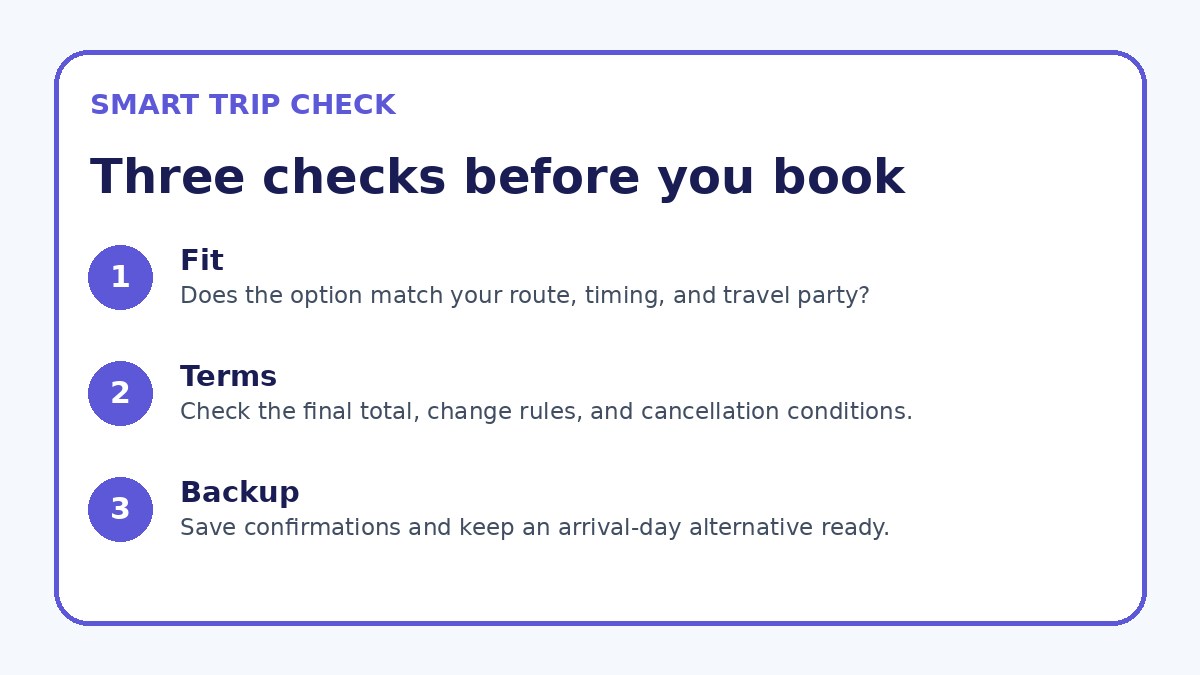
Before you commit to any Seoul to Hong Kong flights, confirm the airline’s baggage allowance, size and weight restrictions, and any fee structures for additional items. Don’t rely on general rules—airlines and fare classes differ, and a seemingly small variance in cabin dimensions or weight limits can force you to check a bag at the gate. Check whether carry-on includes laptop bags or briefcases, and whether priority boarding or business-class benefits reduce the time you’ll spend queueing. When comparing fares, also look for refundable or changeable tickets if your meeting schedule could shift.
On travel day, verify airport terminal assignments, check-in counters, and the airline’s recommended arrival time on your booking page or mobile app. Confirm whether mobile or online check-in is available and whether you can print or download a boarding pass to speed arrival processes. If you’ll rely on loyalty status or corporate travel rules, confirm those benefits—priority security, lounge access, or expedited immigration—on the carrier’s official resources. Trip.com can be a place to compare availability, but always use the airline’s final booking page to confirm baggage rules, check-in cut-offs, and boarding procedures.
Frequently asked questions
How early should I arrive at the Seoul airport for a Hong Kong flight?
Aim to arrive at least the airline’s recommended time for international departures, then add 30–60 minutes if you travel during peak hours or need to drop checked luggage. Business travelers with lounge access or priority status can safely shorten the buffer, but always confirm the airline’s official check-in and baggage drop cut-off times on the booking page. Leave additional time for road or rail connections to the airport, and check live traffic or train service updates on travel day.
Can I rely on carry-on only for a multi-day business trip to Hong Kong?
Many business travelers successfully use carry-on only for short to medium trips by packing compactly and laundering as needed. Use packing cubes, choose wrinkle-resistant fabrics, and bring a small travel steamer or wrinkle-release spray. If you need multiple formal outfits, promotional materials, or bulky samples, plan to check a bag. Verify your airline’s carry-on size and weight limits on their official booking page so you don’t face unexpected gate checks.
What should I check about baggage and transfers when booking connecting flights?
When you book connections, confirm whether your luggage is checked through to the final destination or must be re-collected and re-checked during transfer. Check the minimum connection time suggested by the carrier and factor in immigration and security if your connection requires changing terminals. If you have separate tickets, build a larger buffer to allow for delays. Always review the final booking confirmations and carrier conditions on the airline’s pages to verify baggage routing and transfer responsibilities.
Final planning note
Organizing baggage and airport time for Seoul to Hong Kong flights comes down to choosing the balance between speed and capacity that fits your meeting schedule. Carry-on only can shave significant time off arrivals and departures, but checked luggage is practical when your trip requires more clothing or equipment. Add conservative buffers to airline-recommended arrival times when traveling during peak hours or when meetings are time-critical, and verify baggage allowances, check-in cut-offs, and transfer rules on your carrier’s booking page. Thoughtful packing, early verification of airline policies, and choosing the right flight time will keep your business trip efficient and reduce day-of-travel stress.
Continue planning
Check current options and final conditions
Use the provider page to confirm live availability, the final total, cancellation terms, and every condition that matters to your trip.
This evergreen planning guide was created with AI-assisted drafting and a structured quality review. It does not display live prices, schedules, availability, visa guidance, or provider rankings. Verify current details before booking. Some links are affiliate links; we may earn a commission at no additional cost to you.