If you’re traveling solo between Seoul and Busan, the practical decision is simple: pick the option that matches how fixed your timing is and how much convenience matters to you. For some solo travelers, a tight schedule means prioritizing frequent departures and short total journey time. Others prefer the comfort of a specific airport or transport hub close to where they’ll stay, even if that means fewer flight choices or a slightly longer transfer. This article explains the tradeoffs between schedule flexibility and convenience, the criteria to use when comparing flights (including direct vs. connecting options), and the small checks to make before you hit “book.” Follow the checklist and comparison rows to make a choice that suits your energy, itinerary, and appetite for uncertainty.
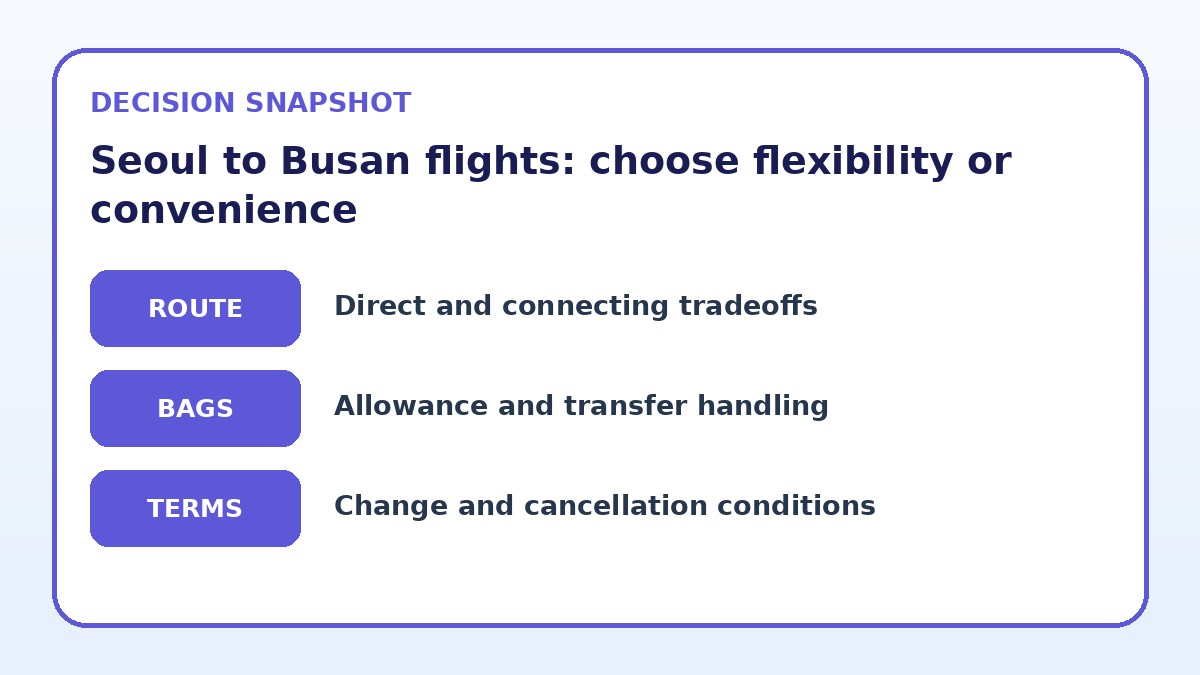
See current options before you compare the details
Availability and final conditions change. Open Trip.com now or keep reading for the practical comparison.
Decide how flexible your schedule really is
Start by mapping your fixed commitments: meetings, tours, check-in windows, or train reservations. If you have tight windows or a single important time — for example, arriving by early evening — flexibility is low. Low flexibility pushes you toward options with more departure frequency and shorter minimum connection times. Look for flights offered multiple times per day so a missed connection or delay won’t ruin your plan; when you travel alone, the ability to rebook or catch another service the same day reduces stress significantly.
If your schedule is flexible, you gain bargaining power to trade convenience for things like lower stress, quieter travel times, or a preferred airport. Flexibility lets you pick departures at off-peak hours when airports are less crowded or flights are less full. It also allows you to accept a connection that lengthens travel time but reduces cost or allows easier ground transport at one end. Solo travelers with a loose itinerary can use those choices to shape a calmer, more personal travel day.
Weigh convenience: airport access, transfers, and luggage
Convenience is often about where the airport sits relative to your origin or destination and how easy transfers are. For solo travelers, fewer transfers and shorter transfer distances are generally kinder: one train or taxi from the airport to your accommodation beats multiple buses or an awkward metro change. Consider how you’ll manage luggage on arrival—stairs, long walks, or crowded public transit matter more alone than when traveling with others who can share handling.
Also consider terminal layout and ground transport options rather than just the airport name. A flight that lands at an airport with a direct express train or a simple taxi rank may save time and decision-making. If you must change terminals or use a shuttle, add slack to your schedule. When checking convenience, verify ground transport schedules, typical transit times, and any extra steps required to reach your booked accommodation on the airline’s or operator’s final information page.
| Approach | Best for | Tradeoff to check |
|---|---|---|
| Maximize schedule flexibility (multiple daily departures) | Travelers with tight appointments or uncertain arrival times | May require less convenient airports or additional ground transfers |
| Prioritize convenience (closest airport/shortest transfer) | Those who value simple door-to-door logistics and minimal transfers | Fewer departure options and potentially longer wait times between flights |
| Choose direct flights (single-leg itineraries) | Solo travelers who prefer fewer decision points and lower transfer risk | Direct options may operate less frequently or from less central terminals |
| Accept connecting flights to broaden choices | People who want more schedule choices or specific arrival airports | Increases complexity and requires careful buffer time planning |
Ready to check the option that fits your plan?
Use your exact dates and traveler details so the provider page can show the current total and conditions.
Compare direct and connecting flight tradeoffs
Direct flights reduce the number of decision points and the chance that something goes wrong during a transfer, which is valuable when you’re traveling alone. Fewer segments can mean less hassle with boarding, security, and luggage transfers. But direct flights may operate less frequently or from a less convenient terminal, so they can cost you flexibility in departure times. Evaluate whether a longer but single-leg option is worth a later or earlier arrival at the airport compared with a connecting itinerary.
Connecting flights can increase departure options and sometimes arrive at a more convenient airport or time. The downsides are obvious: more transfers, a higher risk of missed connections, and the need to navigate an unfamiliar airport alone. When you compare routes, add realistic buffers for minimum connection time, immigration or security lines, and the time it takes to collect and re-check baggage if required. Always confirm on the airline’s booking page whether the transfer is protected (through-ticketed) or requires separate bookings, and plan accordingly.
Before you book
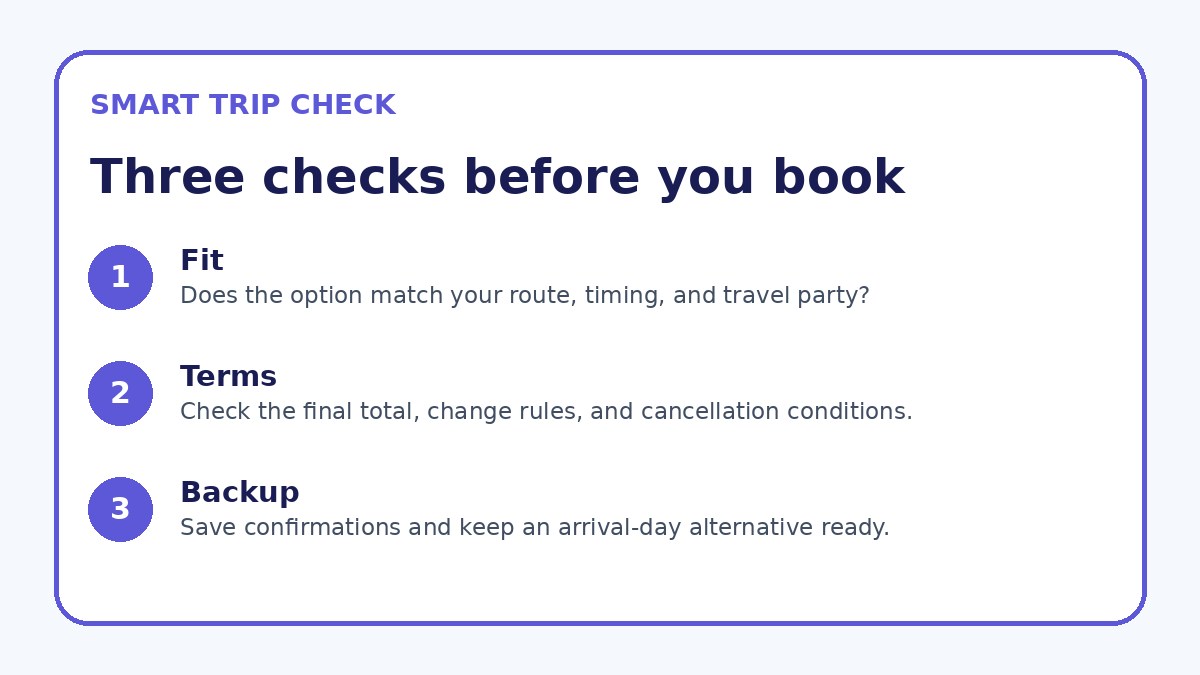
- Confirm whether the ticket is direct or connecting and whether transfers are protected through the same booking.
- Verify baggage allowance and carry-on rules on the airline’s final booking page and note fees for extra or oversized bags.
- Check terminal and ground-transport options at both ends and estimate door-to-door travel time before selecting a flight.
- Compare change and cancellation conditions so you can adjust plans without large penalties if your solo schedule shifts.
- Allow at least 60–90 minutes extra between arrival and any onward trains or reservations when booking to account for delays.
- Save digital and printed confirmations, plus a local transit map and emergency contact numbers, accessible offline during travel.
Practical booking checks and solo-traveler tips
Before you book, scan the fare conditions. Check change and cancellation policies, how much carry-on and checked baggage are allowed, and whether seat selection is included. For solo travelers, the ability to change a flight without large fees is a meaningful buffer against unexpected plan shifts. Also verify boarding gate transfer times and the terminal layout on the airline or airport site so you won’t be surprised on travel day. If a provider’s information is unclear, contact them directly before purchase.
On the day of travel, pack for self-sufficiency: portable battery, a compact lock, printed and digital confirmation copies, and a local transit app or simple map. Allow extra time at each step—arriving early reduces stress, especially if you need to rebook or rearrange on the fly. If you plan to use an express train or bus post-flight, check timetables in advance and give yourself a margin in case of delay. Use Trip.com or the airline’s site as a comparison point, but verify all final booking details with the carrier.
Frequently asked questions
Should I prefer a train or flight between Seoul and Busan when traveling alone?
Both modes have pros and cons for solo travelers. Trains often offer city-center to city-center service with predictable schedules and no baggage drop steps, which simplifies navigation. Flights might save door-to-door time depending on where you are in Seoul and where you need to be in Busan, but they add airport transfers and security. To decide, compare total door-to-door time and the number of transfer steps: if avoiding transfers is your priority, a train could be less stressful; if you need speed and multiple flight times match your schedule, flying may still be preferable.
How much connection time should I plan for when booking a connecting flight alone?
Plan conservatively: add buffer time for things that vary, like slower security lines, immigration, or luggage waits. If your itinerary is through-ticketed, the airline typically accounts for minimum connection times, but solo travelers benefit from extra margin. Consider the terminal layout—short terminal-to-terminal transfers need less extra time than connections requiring shuttle buses. Verify minimum connection recommendations with the airline, then add time based on your comfort level for navigating terminals alone.
What if I want a late check-in at my Busan accommodation after a flight?
If you expect to arrive late, confirm the accommodation’s check-in policies before booking your flight. Choose flights that reliably arrive early enough to allow for airport exit, luggage collection, and ground transport. If convenience matters most, prioritize flights that land at terminals with straightforward night-time transport or that coincide with services that run when you arrive. Communicate your arrival time to the accommodation and verify any late-check-in procedures so you won’t be stranded or stressed on arrival.
Final planning note
Balancing schedule flexibility and convenience for Seoul to Busan flights comes down to honest choices about what you’ll tolerate solo: extra transfers and more choices, or fewer departures but simpler logistics. Start by listing fixed time commitments and how much buffer you need to feel comfortable navigating airports alone. Compare door-to-door times, transfer steps, and ticket change policies on the airline’s final booking page, and use the checklist to avoid last-minute surprises. Plan with realistic buffers and pick the option that minimizes the type of stress you find hardest to manage on your own travel day.
Continue planning
Check current options and final conditions
Use the provider page to confirm live availability, the final total, cancellation terms, and every condition that matters to your trip.
This evergreen planning guide was created with AI-assisted drafting and a structured quality review. It does not display live prices, schedules, availability, visa guidance, or provider rankings. Verify current details before booking. Some links are affiliate links; we may earn a commission at no additional cost to you.