If you’re planning a solo trip to Tokyo, the practical answer is: most solo travelers find Tokyo’s public transport faster, simpler, and less stressful for central-city sightseeing, while renting a car becomes attractive only for day trips outside the metro area or itineraries that need door-to-door flexibility. Choosing between a Tokyo car rental and public transit comes down to your route, comfort with Japanese driving and parking, luggage, and how much time you’ll spend leaving central Tokyo. This guide lays out clear decision points—time, cost-in-effort, mobility, and convenience—so you can match them to your priorities. I’ll explain when driving is useful, when it’s a net negative, and exactly what to verify on rental pages, highway toll and parking policies, and train operators’ sites before you make reservations.
See current options before you compare the details
Availability and final conditions change. Open Trip.com now or keep reading for the practical comparison.
How Tokyo’s public transport serves solo travelers
Tokyo’s public transport is dense, frequent, and designed for single travelers who value predictability and speed. Trains and subways link major neighborhoods, museums, temples, and business districts with short walking connections. For solo visitors who plan a compact itinerary—concentrating on Shinjuku, Shibuya, Asakusa, Ginza, and nearby museums—public transport typically minimizes transit time between stops and removes the need to find or pay for parking. It also reduces the cognitive load: you don’t have to navigate unfamiliar streets, calculate tolls, or figure out parking rules while solo, so you can use travel time to rest, plan, or read guide notes.
Using rail and subway systems also simplifies budget and route planning: you can compare travel cards and single-ride fares, and many apps show step-by-step connections. Multimodal travel—combining trains with short taxi hops or hired bikes—gives extra reach without committing to a car. Keep in mind that trains can be busy during rush hours and that some stations have multiple exits; if you’re carrying heavy luggage or have mobility constraints, choose accommodations near a single convenient station exit and factor in extra walking time.
When a Tokyo car rental makes sense for a solo trip
Renting a car becomes sensible when your route goes beyond central Tokyo to places where public transport is infrequent or requires long transfers. If your day includes multiple rural stops, scenic coastal drives, or carrying sports equipment, a car saves you from coordinating trains and local buses. A solo driver gains flexibility to set their own schedule, stop spontaneously, and reach small towns that don’t appear on main rail lines. For early-morning photography, late-night returns, or areas with limited taxi service, a car can also be safer and more reliable than waiting for public options.
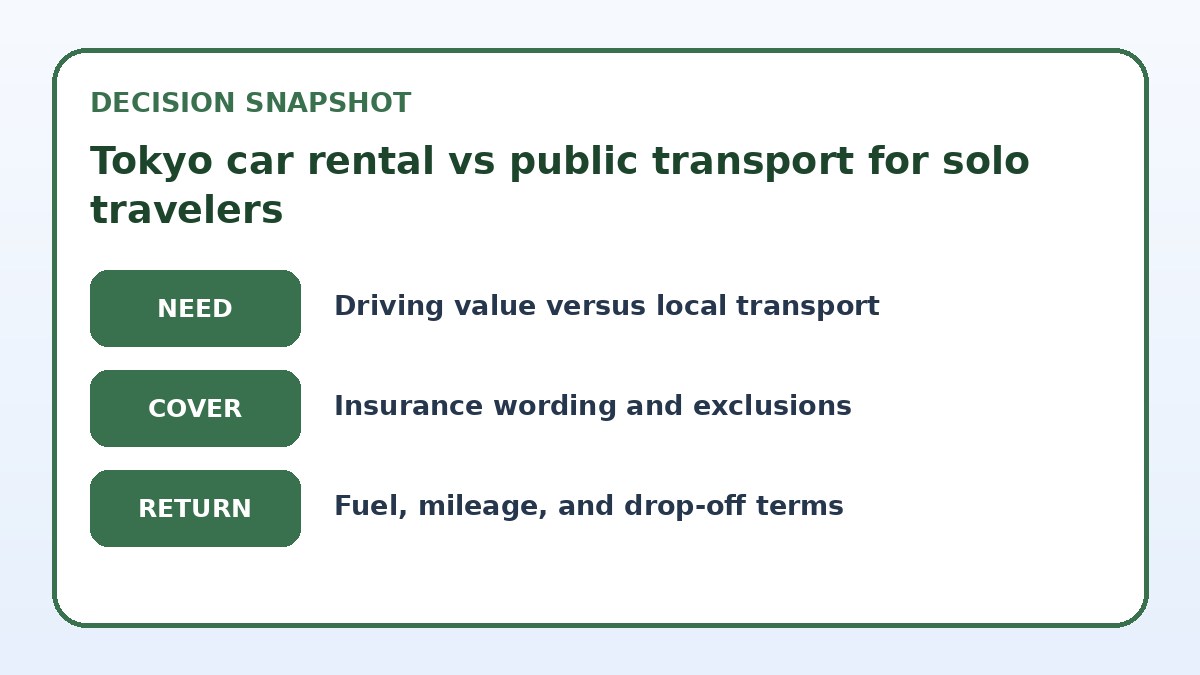
However, the benefits hinge on how comfortable you are with navigation, toll roads, and parking. Driving allows direct routes but often involves highway tolls, parking costs, and time spent searching for spaces near attractions. Before booking, check whether your chosen rental provider accepts your license (and an International Driving Permit if required), what extra insurance is available, where you can legally park overnight, and whether the route includes expressway segments with toll booths.
| Approach | Best for | Tradeoff to check |
|---|---|---|
| Public transport (trains, subways, buses) | Sightseeing within central Tokyo and short single-day trips | Less flexibility for rural detours or carrying bulky equipment |
| Tokyo car rental (self-drive) | Multi-stop day trips outside Tokyo or itineraries needing door-to-door access | Time lost to parking, tolls, and city navigation |
| Mix-and-match (public transport plus occasional car hire) | Travelers wanting city convenience with one or two rural drives | More planning to coordinate pickup times and drop-off locations |
| Rail + local taxis or rideshares | Short last-mile trips, late nights, or avoiding parking hassle | Higher per-trip cost compared with continuous driving for long rural routes |
Ready to check the option that fits your plan?
Use your exact dates and traveler details so the provider page can show the current total and conditions.
Tradeoffs: time, cost, comfort, and flexibility
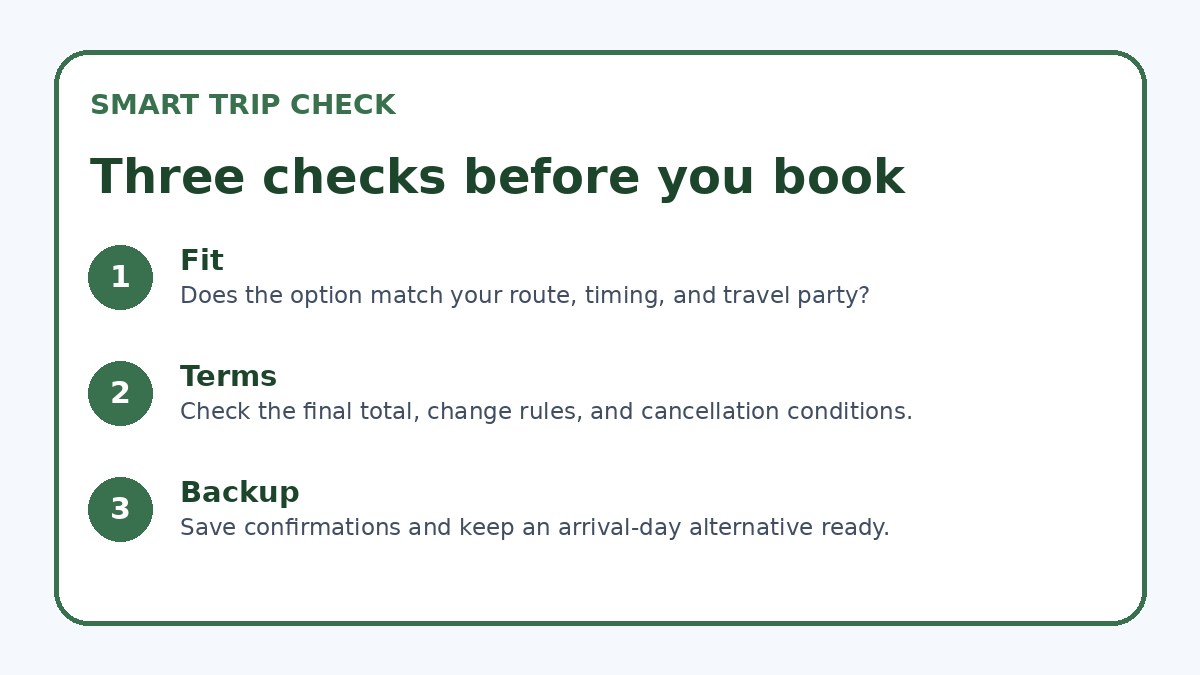
Time tradeoffs are more than just scheduled minutes: driving in Tokyo means dealing with unpredictable congestion, time spent finding parking, and slower speeds in built-up areas. Public transport provides predictable intervals and often faster point-to-point times inside the city. On the cost side, renting a car introduces base rental fees, optional insurances, fuel, tolls, and parking charges; public transport costs tend to be simpler and more transparent. Weigh these elements by estimating door-to-door travel time for key days and listing likely parking or toll costs to see which approach actually saves you time or money.
Comfort and mental effort also matter. Solo travel favors options that reduce decision fatigue and increase safety. Driving requires continuous attention to local rules, lane markings, and signage, plus managing belongings in the vehicle. Trains and buses let you rest or plan the next stop. Flexibility is the main area where cars win: they enable stops off-the-map and faster transfers between rural points. Choose based on whether you prioritize calm, low-effort travel or the independence to roam beyond public routes.
Before you book
- Map your daily itinerary and calculate door-to-door time for both driving and public transport options.
- Confirm your driver eligibility and whether an International Driving Permit is required on the rental’s final booking page.
- Research parking availability near each major stop and estimate likely parking fees for driving days.
- Identify alternative return options (train, bus, taxi) in case you change plans or face traffic delays.
- Compare insurance and roadside assistance coverages and note any exclusions or excess fees.
- Check train operating hours for early departures or late returns and plan any time-sensitive transfers.
Practical planning: what to verify before booking
If you lean toward public transport: verify station locations near your accommodation, the number of transfers required for key day trips, and whether any stations on your route have long walks or limited elevator access. Confirm whether rail lines operate the times you need, especially for early departures or late returns, and check luggage restrictions on trains or trams. If you prefer to mix modes, identify logical car-free days that concentrate activities within one neighborhood to reduce transit time.
If you plan a Tokyo car rental, verify several provider-specific facts on the rental site: accepted driver licenses (and whether an International Driving Permit is required), insurance coverage limits and exclusions, one-way drop-off policies, and fuel rules. Also check pickup and drop-off locations for proximity to train stations or airports, and map likely parking options near your stops. When comparing options, you can use Trip.com as one of several places to view current availability and provider terms, but always confirm the final booking page for exact rental conditions.
Frequently asked questions
Can I use a foreign driver’s license to rent a car in Tokyo?
Rules vary by country and rental company. Many providers accept licenses accompanied by an International Driving Permit (IDP), while others may require a translated license or different documentation. Before booking, verify the exact requirements on the rental company’s final booking page and prepare necessary documents accordingly. Also check age limits, additional driver rules, and whether your travel insurance or credit card includes rental coverage, so you know what extra options to select at pickup.
Is driving in Tokyo harder than in other big cities?
Driving in Tokyo presents familiar big-city challenges—dense traffic, complex intersections, and narrow lanes in older districts—plus different signage and local conventions you may not expect. Many solo travelers find mental workload higher than on public transport because you must navigate, watch parking rules, and handle tolls. If you’re comfortable with lane discipline and navigation apps, a short rural drive may be manageable; otherwise, central sightseeing is usually easier by train or subway to reduce stress and avoid parking hassles.
How do I decide whether to rent a car for specific day trips from Tokyo?
Compare total travel time and convenience: list the stops you want to make, check public transport connections and the number of transfers, then estimate travel and waiting time versus driving time including parking searches. Consider luggage, special equipment, and whether small towns on your route have infrequent buses. If public transport requires multiple transfers or long waits, a rental may save time and provide flexibility. Always verify road tolls, parking options, and the rental provider’s pickup/drop-off terms before confirming.
Final planning note
For most solo travelers whose plans are centered in Tokyo, public transport delivers predictable, efficient travel with far less stress than driving. A Tokyo car rental pays off mainly for multi-stop rural days, coastal routes, or itineraries requiring extensive gear or door-to-door flexibility. Decide by comparing door-to-door times, factoring in parking and tolling friction, and checking rental provider conditions—license acceptance, insurance, and drop-off rules—on the final booking page. If you value low effort and easy navigation, choose trains and subways; if you prize independence and reachable rural sights, rent a car for the specific days you need it and use public transport for the urban parts of your trip.
Continue planning
Check current options and final conditions
Use the provider page to confirm live availability, the final total, cancellation terms, and every condition that matters to your trip.
This evergreen planning guide was created with AI-assisted drafting and a structured quality review. It does not display live prices, schedules, availability, visa guidance, or provider rankings. Verify current details before booking. Some links are affiliate links; we may earn a commission at no additional cost to you.