Practical answer first: if you have a lot of luggage and value a door-to-door drop-off, book private transport; if you prefer saving money and don’t mind handling bags through transfers, use public transit. Both choices work in San Francisco, but the best pick depends on how much luggage you have, how many people you're with, the neighborhoods you need to reach, your budget flexibility, and how comfortable you are carrying or storing bags across modes. This article walks through the decision criteria—space, walking and stairs, transfers, time-of-day, and fixed vs. variable cost—so you can compare them side-by-side and pick the transfer approach that suits your trip planning stage.
See current options before you compare the details
Availability and final conditions change. Open Trip.com now or keep reading for the practical comparison.
How luggage affects the transit vs private transport choice
Volume, weight and how many items you carry change the practicality of each option. Public transit systems—buses, light rail (Muni), and regional Bay Area services—were designed for passengers with manageable luggage, not many large suitcases. Loading and unloading are usually doable but can be awkward at busy stops, during peak hours, or when elevators are out of service. If your bags are heavy or require handling assistance, factor in the physical effort and potential wait times for elevators, ramps, or station staff to help.
Private transport reduces physical strain because drivers load and unload and you go straight to your door or hotel. However, confirm vehicle capacity: not every standard sedan can take three large suitcases plus carry-ons and passengers. For multiple large bags, select a larger vehicle option (SUV, minivan, or dedicated airport shuttle) and verify luggage allowances on the booking page. Also check pickup logistics at the airport terminal—some providers meet inside arrivals, others at curbside.
Time, reliability and door-to-door convenience
Public transit can be reliable on scheduled routes, but it often requires transfers between systems (airtrain to BART or Muni, a bus or ride-share for final miles). Those transfers add handling steps for luggage and additional walking; factor in wait times and the possibility of crowded trains late at night. For predictable, timetable-driven trips, check train and bus schedules while also allowing buffer time for delays and elevator outages that could complicate baggage movements.
Private transport offers the convenience of a direct ride with predictable pickup and drop-off, which is valuable when you want to minimize transit time in the city or when arriving at odd hours. That predictability relies on confirming pickup location, the driver’s contact details, and flight tracking policies if you want the driver to adjust pickup time for late arrivals. Always verify how a private provider handles flights that change arrival times and how long they will wait curbside without extra charges.
| Approach | Best for | Tradeoff to check |
|---|---|---|
| Public transit (BART, Muni, buses) | Travelers with light, compact luggage on a budget or comfortable handling transfers | More walking, possible elevator waits, and handling bags across transfers |
| Private car or ride-hail | Solo or small groups with several large suitcases who want door-to-door service | Higher upfront cost and need to confirm vehicle luggage capacity and pickup rules |
| Shared airport shuttle | Budget-conscious groups with moderate luggage who accept extra stops | Longer door-to-door time and potential reloading of luggage at each stop |
| Pre-booked larger vehicle (van or minivan) | Families, groups, or musical/sports gear needing capacity and direct service | More expensive; requires early booking and verification of luggage policies |
Ready to check the option that fits your plan?
Use your exact dates and traveler details so the provider page can show the current total and conditions.
Cost tradeoffs and when each option makes sense
Public transit usually has the lower base cost per person, especially if you travel solo or with one suitcase. But costs add up when you include transfers, short last-mile rides, or the value of time and effort spent managing bags. If you plan to use passes or multi-ride tickets, run the numbers: sometimes a combination of BART to downtown plus a short taxi or rideshare for the final leg is the most balanced choice between cost and convenience.
Private transport often looks more expensive up front but can be competitive for small groups sharing the fare or travelers with many or oversized bags who would otherwise pay for multiple public fares plus additional time. Consider the full trip expense: vehicle type, potential luggage fees, airport curb or terminal pickup charges, and the cost of any parking or waiting time that may be billed. Verify all fees on the provider’s booking page before committing.
Before you book
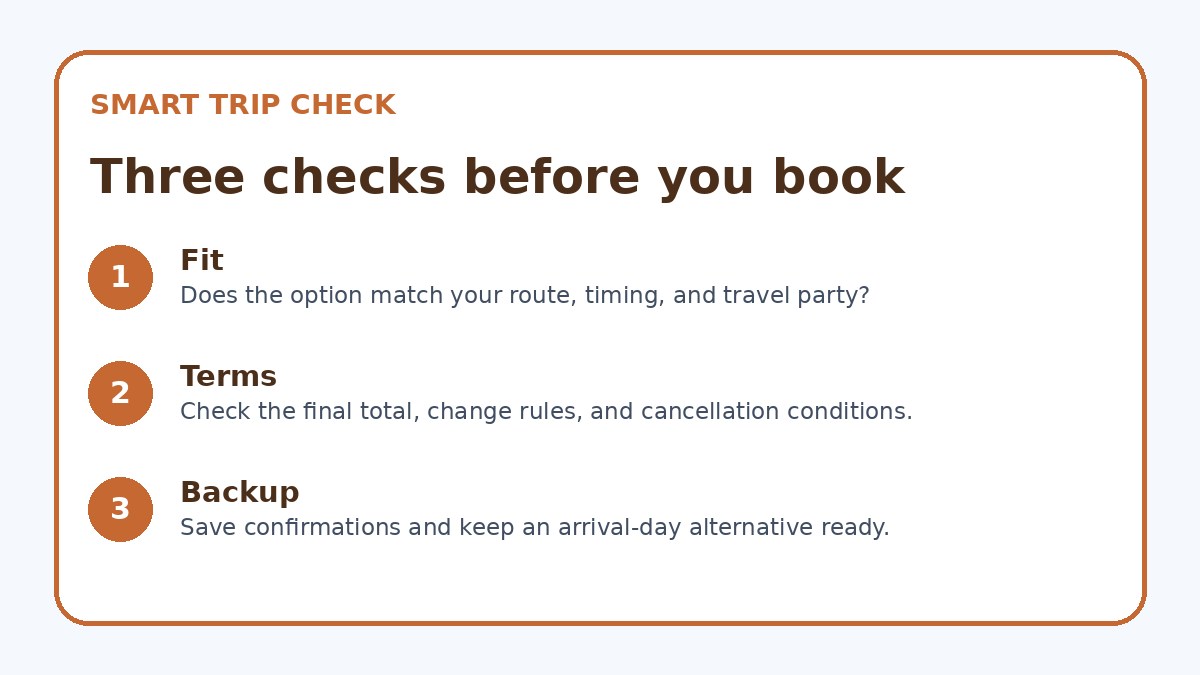
- Measure your luggage and count pieces before comparing vehicles or transit routes so you can match capacity to needs.
- If choosing public transit, map your transfer points and check elevator/escalator availability for each station before departure.
- When booking private transport, confirm vehicle type, maximum luggage dimensions, and how curbside pickup at the airport is handled on the provider’s booking page.
- Allow 30–60 extra minutes for unexpected delays when using public transit and a smaller buffer for private pickup if the provider tracks flight arrivals.
- If traveling with oversized items, call the transport provider to confirm acceptance and potential extra fees rather than relying solely on general service descriptions.
- Save driver contact details and terminal pickup instructions in two places (phone and paper) to avoid confusion upon arrival.
Safety, accessibility and special considerations
Accessibility matters if you, a travel companion, or someone in your party needs mobility assistance. Public transit has accessible vehicles and elevators at many stations, but availability varies by station and time. If an elevator is temporarily out of service, getting through with big bags can become difficult. For accessible travel, contact the transit agency ahead of time to confirm elevator status and the availability of staff assistance at the airport and stations.
Private transport can often accommodate accessibility needs more directly—vehicle choice, driver assistance with bags, and doorstep delivery. If you require specific assistance, communicate it clearly on the booking page and verify driver training or vehicle equipment. For oversized sports equipment or musical instruments, both options may work, but you should check carrier size limits for transit and double-check private operator policies and potential extra charges before booking.
Frequently asked questions
Can I bring oversized luggage or sports equipment on BART and other San Francisco public transit?
Public transit in the Bay Area generally allows luggage and common sports equipment, but oversized items can be awkward on trains and buses. Stairs, narrow doors, and crowded cars at peak times make handling large pieces more difficult, and elevator outages can force extra walking. If your item is unusually large, check the transit agency’s official rules and accessibility notices before travel. Also consider whether you can transport the item safely through stations and onto trains without blocking aisles or inconveniencing other passengers.
How do I decide between booking a rideshare versus a pre-booked private transfer from the airport?
Start by comparing party size, luggage volume, and your tolerance for uncertainty. Rideshares can be quick and flexible for small parties with carry-ons, but you may need to request a larger vehicle type and still risk multiple stops or longer wait times. A pre-booked private transfer guarantees vehicle size up front, often includes meet-and-greet options, and is preferable for odd-hour arrivals or large groups. Before you book, verify the provider’s luggage policy, pickup meeting point, and cancellation terms on their official booking page.
Are curbside pickup rules at San Francisco Airport restrictive for private transfers?
Airport curbside and terminal pickup rules change and can include specific zones, permitted wait times, or designated commercial vehicle areas. Different providers have different procedures: some meet passengers inside arrivals, others at fixed curbside zones. Confirm where your driver will meet you, how they handle flight delays, and whether extra waiting time is charged by checking the provider’s booking confirmation and the airport’s official pickup guidance. Having the driver’s contact number and a clear terminal/door reference simplifies the handoff.
Final planning note
Choosing between public transit and private transport for a San Francisco airport transfer comes down to balancing luggage volume, budget, and tolerance for handling bags across transfers. Public transit is cost-effective for compact luggage and independent travelers who can manage stairs and transfers; private transport suits those seeking door-to-door service and minimal physical handling. Verify specific things before booking—vehicle luggage capacity, pickup procedure, accessibility needs, and any extra fees—by reading the provider’s booking page and contacting them if anything is unclear. If unsure, compare options on a booking site like Trip.com for current availability, then confirm the final details directly with the carrier to ensure a smooth arrival or departure.
Continue planning
Check current options and final conditions
Use the provider page to confirm live availability, the final total, cancellation terms, and every condition that matters to your trip.
This evergreen planning guide was created with AI-assisted drafting and a structured quality review. It does not display live prices, schedules, availability, visa guidance, or provider rankings. Verify current details before booking. Some links are affiliate links; we may earn a commission at no additional cost to you.