If you’re traveling from Seoul to Osaka on business, the most practical planning decisions are how much to carry on board and when to arrive at the airport. Decide early whether you can travel with only a carry-on and a laptop bag—this reduces wait time at both ends and keeps you mobile between meetings. If your itinerary requires checked luggage, factor packing, drop-off, and baggage reclaim into your schedule. Also consider airport transfer options in both cities, and whether direct or connecting flights change your minimum arrival time. This guide gives clear rules of thumb, tradeoffs for baggage choices, and an actionable airport-time plan so you can pick the option that minimizes stress and maximizes productive time.
See current options before you compare the details
Availability and final conditions change. Open Trip.com now or keep reading for the practical comparison.
Deciding carry-on versus checked baggage for business
For a one- to three-night business trip, a carry-on plus a laptop bag is often the fastest choice. Carry-on travel eliminates the need to wait at baggage claim on arrival and removes the chance of delayed or mishandled luggage. It also lets you move quickly between airport transfers and meetings. However, the capacity limits of carry-ons vary by airline and cabin class. Before packing, inspect your airline’s published dimensions and weight limits and make a realistic list of what you truly need for the trip.
Checked baggage can be the right decision when you need formal wear, samples, bulky materials, or longer-stay clothing. If you opt to check a bag, plan extra time for drop-off at your departure airport and add the expected reclaim time at arrival. Consider using garment bags, compression packing cubes, or a smart suitcase to protect clothing and simplify organization. Also check whether your fare includes priority baggage handling—some business fares or status benefits speed up the process and reduce delay risk.
How to schedule your airport arrival in Seoul
Aim your arrival time at the airport based on baggage choices, ticket type, and whether the flight is direct or connecting. For carry-on travelers with online check-in and no additional services, a tighter arrival window works: factor time for transfer to the terminal, security screening, and a small buffer for unexpected delays. For checked-bag fares, allow additional time for the check-in counter or bag drop line. If you have ground transportation or company car arrangements, confirm drop-off points and estimated time to the terminal in advance.
If your outbound flight includes a connection or unusual routing, give yourself more slack in Seoul to absorb any early-morning traffic or longer security lines. Business travelers who need lounge time, confidential calls, or last-minute printing should budget time for those necessities too. Use live airport status tools and airlines’ check-in reminders on the day of travel; when in doubt, contact the airline’s customer service or your corporate travel desk. Verify the check-in cutoff and boarding time on the airline’s official booking page before you leave for the airport.
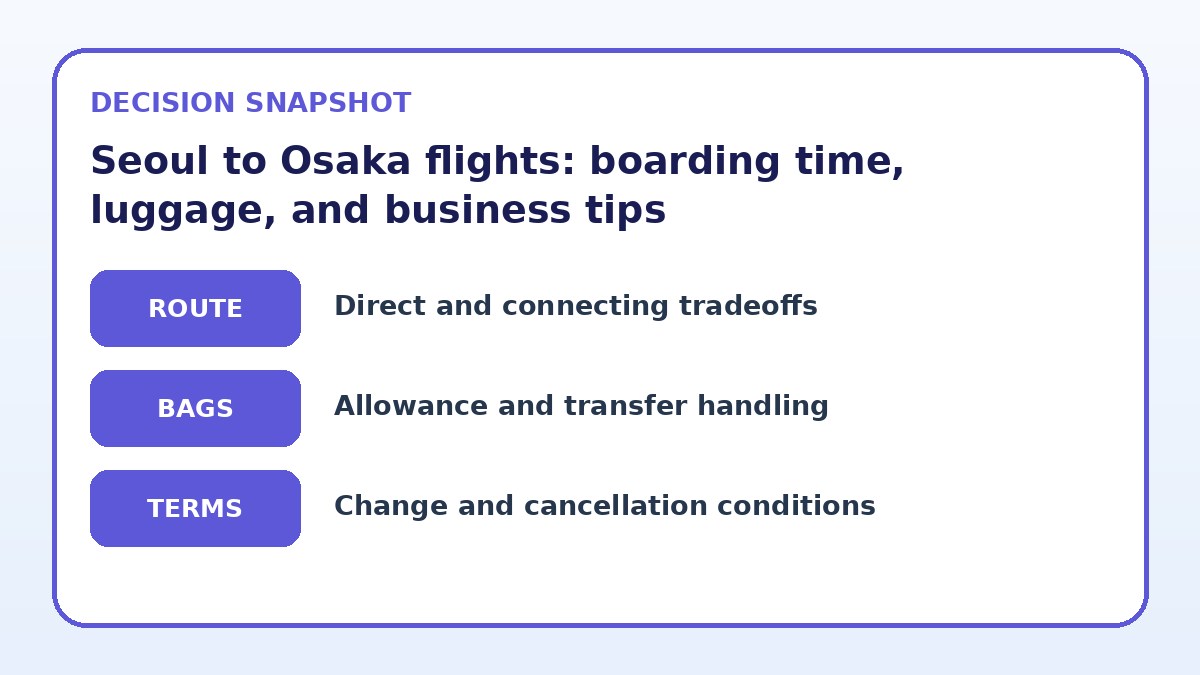
| Approach | Best for | Tradeoff to check |
|---|---|---|
| Carry-on only (single bag + personal item) | One- to three-night trips; tight schedules and multiple meetings. | Limits packing space and risks fees if dimensions exceed airline rules. |
| Checked bag plus carry-on | Longer stays, formal wear, or when carrying samples or equipment. | Adds check-in and reclaim time, and a small risk of mishandling. |
| Direct flights only | Minimizing connection risk and simplifying timing for critical meetings. | May offer fewer schedule options or require less convenient times. |
| Connecting flights (with buffer) | Accessing more departure times and potentially lower fares. | Requires more airport time and cushion in case of delays. |
Ready to check the option that fits your plan?
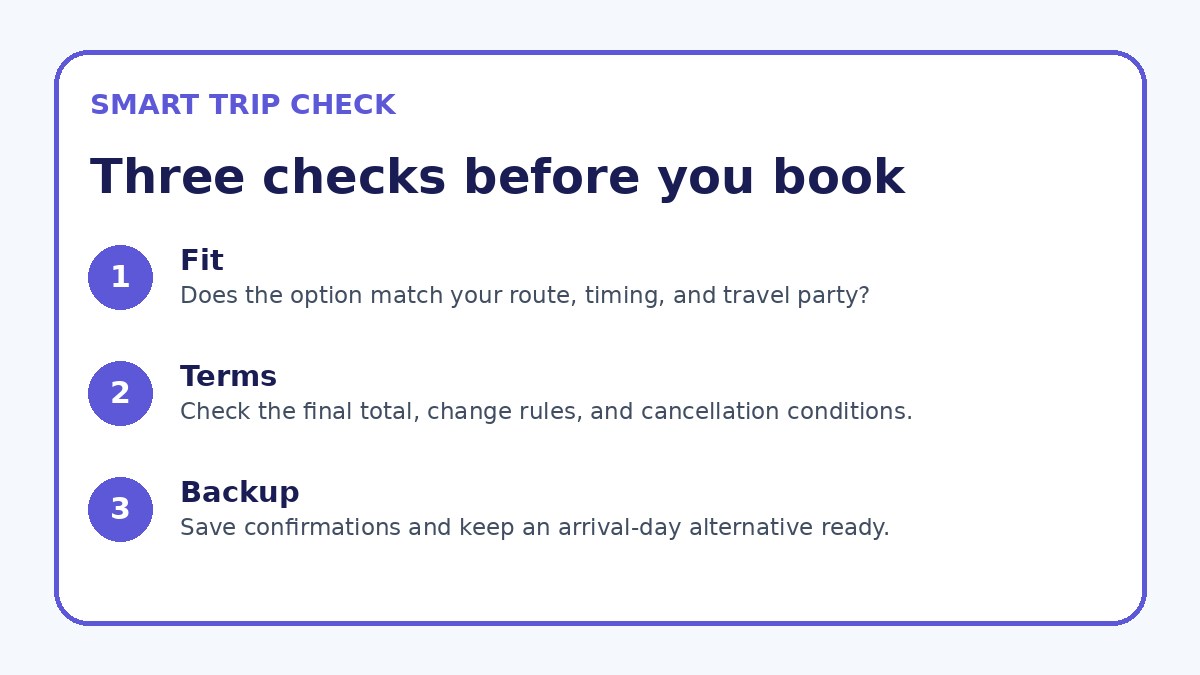
Use your exact dates and traveler details so the provider page can show the current total and conditions.
Arrival in Osaka: timing for immigration, baggage, and transfers
Upon arrival in Osaka, the time you need depends on whether you carry on only or check a bag, and on which airport you land. Immigration queues and baggage reclaim times vary; if you have carry-on only, you can typically move through customs and be heading to ground transport faster than travelers collecting baggage. For visitors needing a quick turn between airport and a downtown meeting, pre-booked airport transfer services or express train options can save time, but verify schedules and station access in advance.
If you checked baggage, expect additional reclaim time and plan for possible queueing at customs during peak arrival windows. Consider wearing business attire that can survive a brisk walk or a compact change kit in your carry-on to freshen up before meetings. If your arrival requires an onward domestic or regional connection, compare the time between arrival and next departure carefully; airlines’ published minimum connection times are guidance, but real-world queues can add variance. Always confirm baggage tracking and reclaim procedures on the airline’s final booking page.
Before you book
- Confirm the airline’s carry-on size and weight limits on the booking page and measure your luggage before packing.
- If checking a bag, add 30–60 minutes to your planned departure‑airport arrival time for drop-off and security.
- Complete online check-in and download boarding passes to your phone to shorten queue times.
- Prebook ground transport and know the terminal drop-off and pick-up points at both Seoul and Osaka airports.
- Pack a small freshen-up kit and a business outfit alternative in your carry-on to handle delays or luggage issues.
- Verify the airline’s boarding time, check-in cutoff, and any priority boarding you purchased on the carrier’s final booking screen.
Tradeoffs: speed, cost, and reliability
Choosing carry-on prioritizes speed and mobility but can constrain what you bring and risk extra fees if your bag exceeds limits. Checking baggage increases packing freedom but adds time at both airports and introduces a small chance of mishandling or delay. Cost differences between fares that include checked baggage and those that don’t can be meaningful for frequent trips; weigh the per-trip time saved by carrying on against the convenience of checked luggage. For urgent schedules, prioritize options that minimize handling and transfer time.
Direct flights reduce the variables of connecting itineraries but might have inconvenient departure or arrival times. Connecting flights can offer better timing or cost efficiency but require robust buffers for missed connections and additional security/transfer steps. For business travelers, the reliability of the schedule and the ability to arrive with belongings intact usually outweigh small cost savings. Confirm specific luggage rules, check-in deadlines, and transfer requirements on the airline’s booking page before finalizing your ticket so you can match the chosen route to your meeting schedule.
Frequently asked questions
How early should a business traveler arrive at Seoul airport for a direct Seoul to Osaka flight?
Arrival time depends on baggage and check-in status. If you only have carry-on and completed online check-in, arriving 60–90 minutes before departure often gives enough margin for transfer, security, and a small buffer. For checked baggage, allow an extra 30–45 minutes to handle the bag drop and associated lines. If you require lounge access, printing, or company travel formalities, add more time. Always confirm the airline’s stated check-in cutoff and recommended arrival guidance on the airline’s booking page before you leave.
Can I reliably make meetings faster by flying early-morning Seoul to Osaka flights?
Early flights can deliver you to Osaka with more of the business day left, but they also make you subject to morning traffic, earlier wake times, and possibly heavier check-in queues. Weigh whether the gain in daytime hours offsets the risk of reduced sleep or commuting variability to the airport. If you need guaranteed daytime arrival, prioritize direct flight schedules that match your meeting times and choose carry-on travel where feasible to reduce post-arrival delays.
What should I check about baggage rules to avoid surprises on the Seoul–Osaka route?
Review the booking confirmation and the airline’s official baggage policy for size, weight, carry-on allowances, and any fees for checked or overweight items. Confirm whether your fare class includes checked luggage and whether priority or business status affects allowances. If you booked through an agent or third-party site, double-check the airline’s final booking page for any differences. Also verify rules for batteries, presentation samples, or electronics that might need special handling or declaration.
Final planning note
For Seoul to Osaka business travel, the clearest planning lever is your luggage choice: carry-on focused travel speeds ground movement and lowers the chance of delays, while checked bags give you packing freedom at the cost of extra airport time. Match your choice to the trip length, meeting schedule, and whether you can confidently meet carry-on dimensions. Build a realistic airport arrival buffer based on whether you checked bags and whether the route includes connections. Before you finalize travel, confirm check-in cutoffs, baggage allowances, and boarding times on the airline’s booking page; consider checking live availability on Trip.com as one comparison tool. With those checks done, you can prioritize productivity and reduce travel stress on this short international corridor.
Continue planning
Check current options and final conditions
Use the provider page to confirm live availability, the final total, cancellation terms, and every condition that matters to your trip.
This evergreen planning guide was created with AI-assisted drafting and a structured quality review. It does not display live prices, schedules, availability, visa guidance, or provider rankings. Verify current details before booking. Some links are affiliate links; we may earn a commission at no additional cost to you.