If you’re planning travel from Sydney to Canberra, the practical choice comes down to a few clear trade-offs: time versus cost, door-to-door convenience versus scenery, and how much luggage or flexibility you need. Trains and coaches are the most common public options, offering set timetables and straightforward booking. Driving gives maximum flexibility for stopovers or remote access. Ferries are not a direct route—any 'ferry' option will be part of a mixed itinerary and only makes sense for a scenic detour. This guide tells first-time visitors which mode usually suits which need, how to compare direct and connecting options, and what to verify on provider pages (schedules, luggage rules, boarding points and cancellation policies). If you want to compare current availability and timings, Trip.com can be a place to view options, but always confirm details on the operator’s official site before booking.
Trains — what to expect and when they suit you
Trains between Sydney and Canberra are typically marketed as comfortable, seat-reserved services that remove the stress of traffic and navigation. For first-time visitors, trains are attractive because they drop you at stations with clear onward transport links; in Canberra this means easy access to taxis, buses and ride-shares. Before booking, check whether the service is direct or requires a connection, the boarding station in Sydney (some services depart from different terminals), and the luggage allowance. Station facilities, seat classes and onboard amenities can vary, so review the operator’s final booking page for exact details.
Trains suit travellers who value consistent journey times over flexibility and those who prefer to avoid driving after a long day of travel. If you plan to travel with compact luggage and want to work, read, or relax en route, the train is a strong option. However, if your itinerary needs frequent stops, rural access or an early morning arrival at a location outside central Canberra, consider alternatives. Compare door-to-door travel time rather than just scheduled runtime, especially if you need to travel onward from station terminals.
Coaches — the budget and frequency trade-off
Coaches often provide the widest range of departure times and sometimes more budget-friendly ticket choices. They tend to use central coach terminals that are well served by local public transport, which makes them pragmatic for travellers staying near city centres. Coaches can be slower than express trains and are affected by road traffic, but they can be direct between major hubs and sometimes include onboard comforts such as Wi-Fi and toilets. Verify coach operator terms for baggage limits, whether seat reservations are included, and exactly where the coach picks up and drops off in both cities.
For first-time visitors, coaches are useful when you prioritise cost and schedule flexibility over the predictability of rail timetables. Coaches are practical if you’re traveling light, arriving outside peak rail times, or connecting to onward coach routes. They are less suitable when you need guaranteed travel time for tight event schedules or when travelling with heavy, awkward luggage that may not be accommodated. Always estimate total journey time including transfers and potential traffic delays when comparing coach options to trains or driving.

| Approach | Best for | Tradeoff to check |
|---|---|---|
| Train | Relaxed, predictable travel with easy station access | May have fewer departures and less flexibility for rural detours |
| Coach | Budget-conscious travellers seeking frequent departures | Affected by road traffic and possibly longer journey times |
| Driving | Maximum flexibility for stops, schedules and luggage | Requires navigation, parking and potential extra costs |
| Ferry or mixed | Scenic detours and travellers making the journey part of the trip | Adds transfers and significant extra travel time |
Driving — flexibility, stops and extra planning
Driving between Sydney and Canberra gives you the freedom to set your schedule and make detours to lookouts, wineries or small towns along the way. For first-time visitors who want to explore the region beyond Canberra’s centre or carry bulky equipment, a car may be the most sensible choice. Driving requires planning: check rental or vehicle insurance options, parking availability in Canberra, and whether any road conditions or work are reported on your intended route. When comparing driving to public transport, calculate realistic door-to-door times that include rest breaks and urban traffic.
Consider fuel, tolls, and parking as part of total cost, and remember that city parking can be limited in central Canberra depending on where you stay. If you are traveling with multiple people, splitting the cost of a hire car or fuel might make driving more economical than individual public transport fares. For those unfamiliar with Australian roads or who want to avoid driving on long rural stretches, combining driving with a train or coach for parts of the journey is a workable hybrid approach.
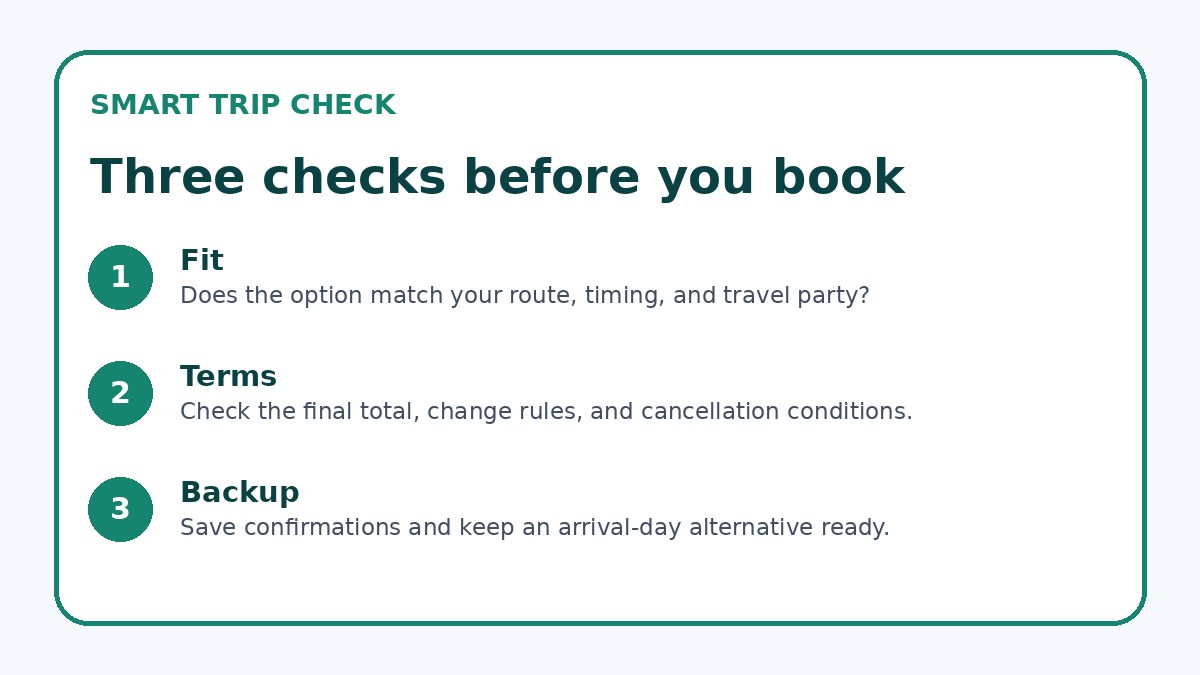
Before you book
- Confirm whether the service is direct or requires connections and map out transfer locations and minimum connection times.
- Check the operator’s luggage allowances and any restrictions so your baggage fits permitted limits.
- Verify exact boarding and drop-off points in Sydney and Canberra and plan local transfers to your accommodation.
- Review cancellation, change and refund policies on the operator’s final booking page before paying.
- Estimate door-to-door time including transfers, possible traffic or delays, and allow buffers for unexpected holdups.
- Compare total trip costs including tolls, parking, baggage fees and local transport rather than ticket price alone.
Ferry and mixed itineraries — for scenic travellers only
There is no direct ferry route that completes the Sydney to Canberra journey end-to-end; any ferry element requires combining boat segments with road or rail. Travellers who prize scenery might include a ferry across Sydney Harbour or coastal trips as part of a broader Sydney-to-Canberra plan, but this adds transfers and extra travel time. Mixed itineraries can be rewarding for leisurely trips where the journey itself is part of the holiday, but they require more careful coordination of connections. Confirm ferry terminals, boarding times, and how transfers align with your onward coach or train reservations on each operator’s official booking pages.
Mixed routes suit travellers who have flexible schedules and want to immerse themselves in coastal or harbour scenery on the way to Canberra. They are not recommended for visitors with tight arrival times or those who need a straightforward, single-transaction booking. When considering mixed options, map each leg on a single timeline and allow generous buffer time for delays and boarding, and check luggage policies for ferries as they often differ from land carriers.
Frequently asked questions
Is the train faster than the coach between Sydney and Canberra?
Speed depends on the service type and route; some trains are express while coaches may take longer on congested roads. Compare scheduled runtimes and then add realistic transfer times to get a door-to-door estimate. If punctual arrival is critical, check recent operator reliability reports and allow extra buffer time. Remember that actual travel time can vary with traffic for coaches and cars, while train journeys are generally less affected by road conditions but can still be subject to delays or scheduled stops.
Can I combine a ferry with land travel to reach Canberra from Sydney?
Yes, a ferry can form part of a scenic mixed itinerary but there is no single ferry that completes the route. You would combine a harbour or coastal ferry with a coach, train or drive segment to reach Canberra. Such itineraries require careful coordination: check each operator’s timetable and luggage rules, and allow generous transfer windows. Mixed trips are best for flexible travellers prioritising experience over speed and are not recommended if you need a straightforward, quick transfer to Canberra.
What should I check about luggage and accessibility before I book?
Check the operator’s specific luggage size, weight and quantity limits since rail, coach and ferry providers differ in policy. Look for accessibility information on station or terminal facilities, assistance for boarding, and whether advance notice is required for mobility needs. Verify these details on the provider’s official booking page and, if necessary, call their customer service to confirm arrangements. Also check how luggage is stored during travel—some services provide overhead racks while others may require gate-checked items.
Final planning note
Choosing between train, coach, ferry (as part of a mixed route) or driving from Sydney to Canberra comes down to priorities: if you want predictable, relaxed travel with easy station access, the train often fits; if cost and frequent departures matter, the coach is worth considering; driving gives control and local access but requires planning; and ferry-inclusive itineraries suit those who prioritise scenic experience. For first-time visitors, compare door-to-door time, luggage rules, exact boarding points and change/cancellation terms on operator pages before booking. Use a comparison platform such as Trip.com to view current options, but always verify critical details on the operator’s official site to avoid surprises.
Continue planning
Check current options and final conditions
Use the provider page to confirm live availability, the final total, cancellation terms, and every condition that matters to your trip.
This evergreen planning guide was created with AI-assisted drafting and a structured quality review. It does not display live prices, schedules, availability, visa guidance, or provider rankings. Verify current details before booking. Some links are affiliate links; we may earn a commission at no additional cost to you.