If you’re traveling from Kuala Lumpur to Singapore on business, the travel day is where productivity and stress collide. The practical answer: pick the transport mode that matches your meeting times, risk tolerance for delays and border processing, and need for onboard work space, then build a timeline with buffer zones for immigration and unexpected hold-ups. This article walks through how to choose between high-speed rail, coach, flight, or private car, what to pack in your carry-on for productivity, and which checkpoints to verify before you leave—policy notices, check-in windows, and border crossing rules. You’ll get a clear set of decisions to make before booking and a short, actionable checklist to use the morning of travel so you arrive relaxed, charged, and ready to work.
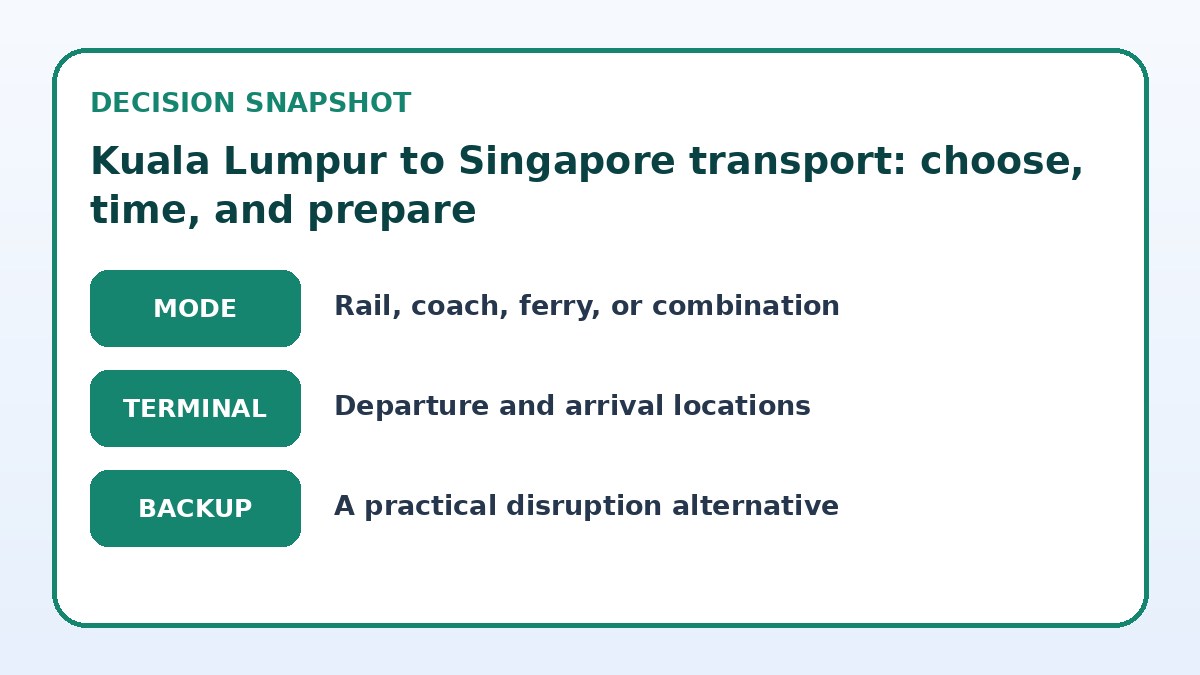
See current options before you compare the details
Availability and final conditions change. Open Trip.com now or keep reading for the practical comparison.
Choosing the right transport for your schedule
Start by mapping your fixed commitments: meeting start times, check-in or presentation deadlines, and local transit times at both ends. Flights are typically fastest door-to-door if you’re near Kuala Lumpur International Airport and your Singapore destination is far from Changi; however, airport transfers, check-in, security, and immigration add unpredictability. Road or private car travel gives direct pick-up and drop-off and can be easier with heavy luggage, but land border crossing time can vary. Trains or high-quality coaches may offer a smoother work environment, more predictable seat space, and fewer device restrictions—if available on your route—so weigh whether uninterrupted work time or absolute fastest transit matters more.
Compare options not just by advertised travel time but by total door-to-door time including transfers, security, and immigration. For flights, verify check-in and boarding cutoffs and allow at least the recommended arrival time for business travelers to use lounges or do final prep. For land services, estimate worst-case queue times at the border crossing and local traffic congestion. If your schedule is tight, book a slightly earlier departure and communicate a later meeting time if possible; that small margin beats needing to reschedule under pressure.
Documents, immigration, and verification steps
Before booking, confirm passport validity, any entry permits, or e-endorsements required for Singapore and Malaysia for your nationality. Even if you have previous visas or approvals, re-check any transit or multiple-entry conditions and whether you need physical or digital copies. For business travel, carry printed copies of your meeting invite, company letter, and hotel reservation to speed up border queries. Make a single folder—physical or digital—containing your passport, boarding pass, itinerary, and emergency contacts to avoid fumbling through multiple apps at checkpoints.
On travel day, open the necessary documents on your device and make them easily accessible; keep relevant tabs logged in if you must show electronic confirmations. If you use frequent-traveler lanes or immigration pre-clearance programs, verify eligibility and that your profiles are current. When provider-specific facts matter—such as check-in windows, lounge access, or changes to immigration kiosks—confirm those details on the provider’s official booking page or the arrival/departure airport site before you leave for the transfer.
| Approach | Best for | Tradeoff to check |
|---|---|---|
| Flight (commercial) | Travelers prioritizing speed over continuous working time | Fastest airborne segment but adds time for airport transfers, check-in, security, and possible delays. |
| Private car/driver | Door-to-door convenience and working privately en route | Risk of variable border queue times and road congestion; less predictable overall duration. |
| High-quality coach or train | Steady work environment and lower device restrictions | May take longer than flying but gives more uninterrupted on-board productivity. |
| Hybrid (flight plus local transfer) | Balancing flight speed with reliable final-mile transit | Extra handoffs increase points of delay; requires tight coordination of timings. |
Ready to check the option that fits your plan?
Use your exact dates and traveler details so the provider page can show the current total and conditions.
Packing and onboard productivity for a business traveler
Curate a carry-on that keeps you ready to work: a slim laptop or tablet, compact charger and international adaptor, a high-capacity power bank, noise-cancelling headphones, and a small hard copy pack of essential documents. Include an easily accessible pen and a few business cards. Keep sensitive electronics and paperwork in a secure but reachable compartment for quick removal at security or border inspection. Consider a lightweight blazer or scarf that you can put on to look meeting-ready after travel.
Plan for connectivity: download offline copies of key files, enable offline email access, and pre-load video meetings or presentations to avoid relying on unpredictable onboard Wi-Fi. If you need to make important calls, choose seating with lower foot traffic or use noise-cancelling earbuds. Also prepare small comfort items—hydration, a toothbrush or facial wipe, and medication—to freshen up before arrival so you can step directly from transport into a meeting with minimal delay.
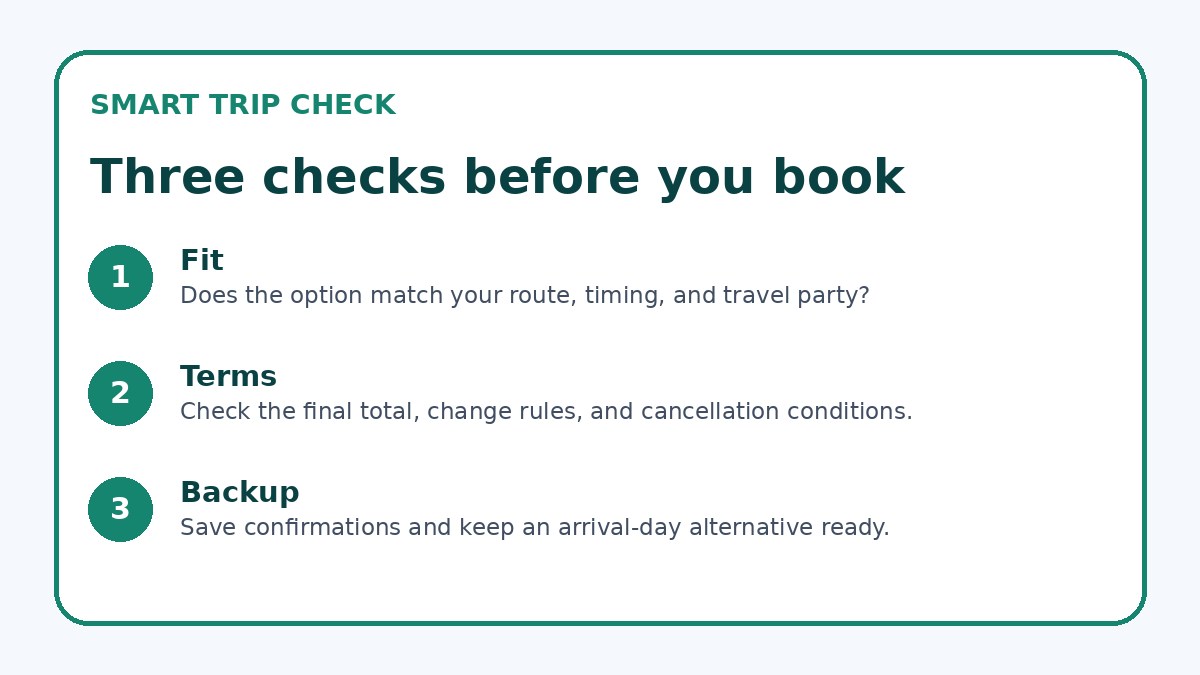
Before you book
- Verify passport validity and any entry permits for Singapore and Malaysia; place digital and printed copies in an easy-access folder.
- Choose transport by comparing total door-to-door time, not just in-vehicle duration; confirm transfer times to and from terminals.
- Pack a compact business carry-on with chargers, power bank, headphones, essential documents, and a change of shirt or scarf.
- Download offline copies of presentations and emails; sign into critical accounts ahead of time and save local contact numbers.
- Confirm check-in and border processing windows on the provider’s official booking page or airport website before leaving for transfer.
- Set meeting times with at least a 90-minute buffer from your planned arrival and identify a backup meeting option or representative.
Timing, transfers, and contingency plans
Work backward from your first commitment in Singapore. Build a timeline that includes transfer time to departure point, recommended airport or station arrival buffer, likely border processing time, and transfer from arrival to your final destination. If you must guarantee arrival before a given time, schedule travel earlier and plan to use time at the destination lounge or a rented workspace rather than risk being late. For multi-leg journeys, factor in time to re-check bags or clear customs; never assume immediate connections unless explicitly marketed as a through-checked service.
Have contingency options ready: a later flight or coach, an alternate meeting time, or a local contact who can represent you. Save local taxi or ride-hailing apps and a list of trusted transfer providers to your phone before travel. If weather, strikes, or technical issues arise, a clear decision rule helps: proceed with the earliest reliable alternative that preserves your meeting's core objective, or postpone only if essential resources or personnel cannot be substituted.
Frequently asked questions
How far in advance should I leave Kuala Lumpur to reliably reach a morning meeting in Singapore?
Leave enough time to cover transfer to your departure point, provider-recommended check-in or boarding windows, border processing, and transit from arrival to your meeting location. For crucial morning meetings, plan backwards from the meeting time and add conservative buffers for each segment; aim to arrive in Singapore earlier than strictly necessary so you can recover from delays, freshen up, and test connectivity. If choosing flights, confirm the specific airline check-in and boarding cutoffs on the airline’s booking page; if driving or using a coach, check seasonal traffic patterns and border wait-time reports before you leave.
Can I work effectively while crossing the land border between Malaysia and Singapore?
You can work during portions of the journey, but expect interruptions at immigration and security checkpoints when devices may need to be stowed or inspected. For uninterrupted blocks of work, choose transport that offers stable seating and accessible power—some coaches or train services are better suited than cars or packed flights. Always keep critical files cached offline and save calls or heavy video meetings for segments with reliable connectivity. Bring noise-cancelling headphones and a portable battery to extend device uptime; have a quick plan to resume work after each checkpoint to minimize productivity loss.
What should I verify on booking pages before I commit to a transport option?
On the provider’s official booking page, confirm the exact departure and arrival locations, refund and change policies, check-in or boarding windows, baggage allowance, and any notes about immigration or through-checking of luggage. If the option involves a transfer service, verify where the vehicle will meet you and how long pickup windows are. For flights or combined itineraries, check whether connections are protected by the carrier and whether you need to recheck baggage or clear immigration between legs. When in doubt, contact the provider or compare availability on a platform like Trip.com for current schedules, then verify details on the provider’s final booking page.
Final planning note
Preparing the travel day for a Kuala Lumpur to Singapore business trip is largely about decisions before you leave: pick the transport mode that matches your timetable and working needs, verify documents and provider rules, and pack to maintain productivity after every checkpoint. Build realistic buffers into your itinerary and choose contingency options so a single delay won’t derail your core commitments. With a compact, well-organized carry-on and clear pre-travel checks, you can turn potentially stressful transit into productive time and arrive ready to work—calm, on schedule, and prepared for the day ahead.
Continue planning
Check current options and final conditions
Use the provider page to confirm live availability, the final total, cancellation terms, and every condition that matters to your trip.
This evergreen planning guide was created with AI-assisted drafting and a structured quality review. It does not display live prices, schedules, availability, visa guidance, or provider rankings. Verify current details before booking. Some links are affiliate links; we may earn a commission at no additional cost to you.