If you're arriving in Rome with a small group (2–6 people) and want smooth, stress-free onward travel, pick the transfer type that best matches your priorities: cost, comfort, luggage handling, or scheduling flexibility. For door-to-door convenience and minimal waiting, a pre-booked private transfer or a reputable taxi can be simplest. If you want lower costs and are willing to handle luggage and possible stops, a shared shuttle or public train plus a short taxi might be smarter. Before you book, confirm passenger count, luggage size, pickup location inside the terminal, meeting point details, and any curbside restrictions. This article lays out the practical tradeoffs, the checks to make on provider pages, and a quick process to decide which Rome airport transfer option will get your group into the city relaxed and ready to explore.
See current options before you compare the details
Availability and final conditions change. Open Trip.com now or keep reading for the practical comparison.
Deciding what matters: speed, cost, comfort, or control
Start by ranking what matters most to your group. Is minimizing transit time the top priority, or are you focused on keeping the cost down? Comfort covers seat space and luggage handling, while control means a guaranteed pickup time and door-to-door service. For first-timers, the unpredictable part of arriving in Rome is how tired the group will be, whether luggage needs special handling, and how confident you are reading local signs or finding a meeting point. Discuss those three or four priorities together so the choice becomes a tradeoff between time saved and money spent.
Also consider where you’re staying: hotels in the historic center, near Termini station, or in suburban neighborhoods change which option makes sense. If you need a driver to navigate narrow cobbled streets or to drop you directly at a small guesthouse, private transfers or taxis beat trains and shuttles. Conversely, if you’re staying next to a major station, the train can be simpler and avoids street congestion. Matching the transfer to your final address often saves time and the small frustrations that derail group plans.
Private transfers and taxis: straightforward door-to-door choices
Private transfers mean one vehicle assigned to your booking and the driver meets you at an agreed terminal point. This removes the stress of finding taxis or navigating platforms with suitcases after a long flight. For a small group carrying multiple bags, a private car or minivan provides space for both people and luggage and usually includes assistance to the vehicle. When booking, check the provider’s pickup instructions, allowed passenger and luggage counts, whether waiting time is included, and the exact meeting point inside or outside the terminal.
Taxis from official ranks are immediate when you exit the arrivals hall and often cost less for smaller groups with light luggage. Verify the taxi policy for groups and oversized baggage if your party exceeds typical limits; some taxis only seat four plus luggage. On the provider or municipal taxi pages, confirm where licensed taxis line up, any fixed routes or fare zones that must be used, and if credit cards are accepted. For private transfers and taxis both, check recent provider booking pages for vehicle size, cancellation terms, and whether the driver will help with luggage to the door.
| Approach | Best for | Tradeoff to check |
|---|---|---|
| Private transfer | Groups needing direct door-to-door service and luggage help | Higher cost for guaranteed pickup and convenience |
| Taxi from the official rank | Smaller groups wanting immediate departure from the terminal | Vehicle size limits and variable street delays |
| Shared shuttle | Budget-conscious groups staying on shuttle routes | Longer travel times and multiple stops |
| Train or public transit | Groups comfortable handling luggage and reaching central stations | Requires short transfers and walking with bags |
Ready to check the option that fits your plan?
Use your exact dates and traveler details so the provider page can show the current total and conditions.
Shared shuttles and public transit: balancing budget and convenience
Shared airport shuttles reduce per-person cost by collecting multiple passengers and stopping at hotels or central points. They work well when you have moderate flexibility, light luggage, and a hotel on a shuttle route. The tradeoff is potentially longer door-to-door time and multiple stops, plus the need to coordinate pickup windows. When checking a shuttle provider, confirm the expected number of stops, how they assign seats, luggage allowances, meeting point inside arrivals, and how they notify drivers about delays or flight changes.
Public transit—regional trains or buses—can be the lowest-cost and fastest option into the city depending on your arrival airport and final destination. Trains are reliable for reaching major hubs like Termini or Tiburtina but require handling luggage across platforms and possibly short onward transfers. If your group is comfortable with stairs, escalators, and carrying suitcases, and your hotel is near a station, public transit is efficient. On provider or operator pages verify schedules for the specific airport rail link, where to buy tickets, and whether machines accept cards or cash.
Before you book
- Confirm the exact pickup point (terminal, exit door, or platform) and how the driver will identify you.
- Count passengers and measure luggage to ensure the booked vehicle fits everyone and all bags.
- Check the provider’s flight-delay policy and whether waiting time is included or charged extra.
- Verify payment methods accepted and who in your group will pay or reimburse the booking.
- Request and confirm child seats or special assistance before arrival if anyone needs them.
- Save local emergency contacts, the provider’s phone, and the hotel address in both local language and English.
Practical checks before you book any Rome airport transfer
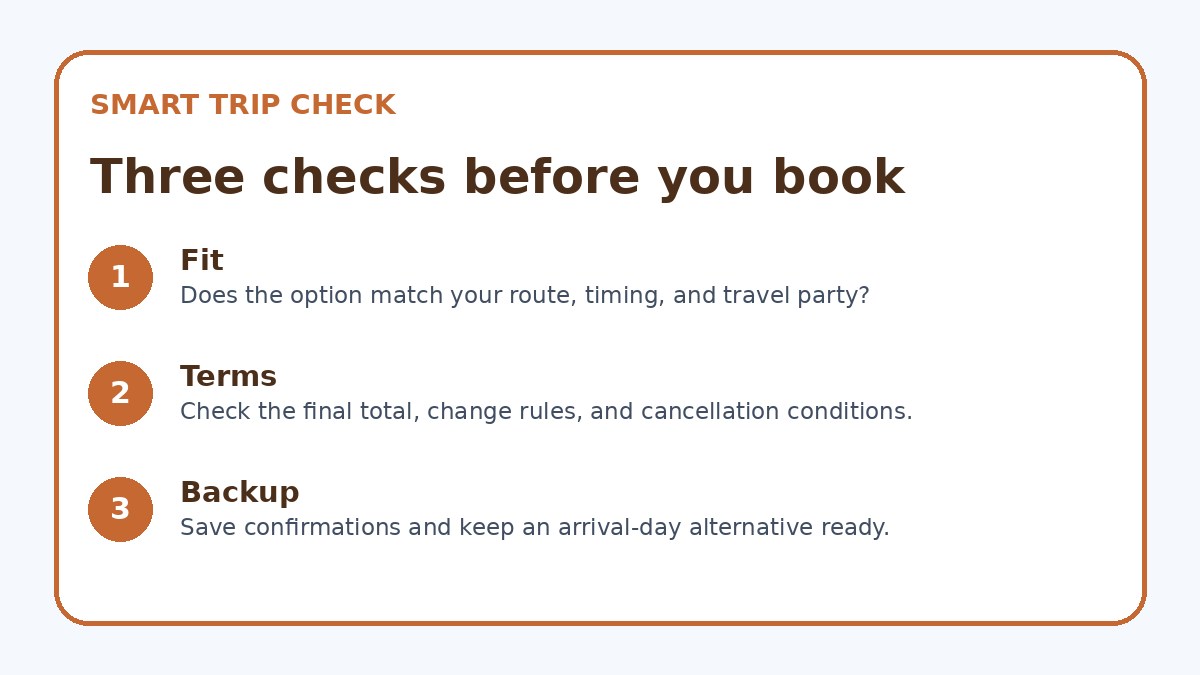
Always verify these details on the actual booking page before you commit: the maximum passenger and luggage capacity for the vehicle, clearly stated pickup or meeting points, whether the price includes tolls or baggage fees, and the provider’s policy for flight delays. If you reserve a private transfer, confirm how the driver will contact you and what phone number to provide. For shuttles and shared services, look for the guaranteed latest pickup window and how they handle late flights or long immigration queues.
Also confirm payment options and cancellation rules. Some providers require prepayment while others allow pay-on-arrival; ensure your group agrees on how to settle the bill. Check whether child seats are available and if you must request them in advance. If using local taxis, double-check whether the meter or a fixed zone fare applies and where the official ranks are located in each airport terminal. Lastly, read recent customer notes on the provider page regarding meeting points and real-world wait times to avoid surprises.
Frequently asked questions
Is a private transfer worth it for a small group arriving in Rome?
A private transfer is worth choosing when your group values a guaranteed pickup, door-to-door drop off, and help with luggage. It removes the uncertainty of finding taxis or navigating stations with suitcases, which can be especially helpful after a long international flight. Consider whether the time saved and reduced stress balance the higher cost. If you have early or late flights, heavy bags, or elderly travelers, the predictability often justifies the expense. Always check the booking page for exact vehicle capacity, meeting point instructions, and included waiting time.
Can my group use public transit from Rome’s airports with luggage?
Yes, public transit options connect Rome’s airports to central stations, and they can be efficient if your group can manage suitcases on platforms and short transfers. Trains often serve the main stations and avoid road congestion, but expect to carry luggage across platforms or up short staircases. Buses run to various city points; some stop closer to hotels but may be slower in traffic. Review the operator’s site to confirm where to buy tickets, luggage rules, and the best station to reach your accommodation. If your hotel is far from a main station, add a short taxi at the end.
How do I choose between a taxi and a shared shuttle for our group?
Decide by weighing convenience versus cost and timing. A taxi from the official rank can depart immediately and take you straight to your door, but may not fit larger groups or many suitcases. A shared shuttle lowers cost but includes stops and a scheduled pickup window, which can extend travel time. If everyone in your group prefers minimal walking and immediate departure, a taxi or private transfer is preferable. If keeping expenses lower matters most and the hotel is on a shuttle route, a shuttle is sensible—just confirm luggage limits and expected stop count.
Final planning note
Organizing a Rome airport transfer for a small group comes down to clear priorities: speed and convenience, cost, luggage handling, and how close your accommodation is to a major station. Pick a private transfer or taxi when you want a single vehicle, door-to-door help, and minimal coordination; pick a shuttle or public transit if you want to save money and don’t mind sharing stops or carrying bags. Before booking, verify passenger and luggage capacity, pickup points, the provider’s flight-delay and waiting policies, and payment options on the booking page. Bringing these checks together will help your group arrive in Rome calm, together, and ready to explore.
Continue planning
Check current options and final conditions
Use the provider page to confirm live availability, the final total, cancellation terms, and every condition that matters to your trip.
This evergreen planning guide was created with AI-assisted drafting and a structured quality review. It does not display live prices, schedules, availability, visa guidance, or provider rankings. Verify current details before booking. Some links are affiliate links; we may earn a commission at no additional cost to you.