Practical decision first: if you can travel with a carry-on only, you'll typically save time at both ends of an Osaka to Taipei trip — faster check-in, no wait at baggage claim, and fewer rules to juggle. If you must check a suitcase because of length of stay, shopping plans, or equipment, factor in extra time for check-in, security and baggage claim, and accept a slightly longer buffer at each airport. This guide gives clear rules of thumb for solo travelers, explains trade-offs between speed and convenience, and lists what to verify on booking pages and at airports. Use the short checklist to finish your plan quickly, then read the sections that match your choice: carry-on minimalist, checked luggage, or a hybrid. Practical tips cover arrival windows, security, connections, and what to confirm with carriers and airports before you leave home.
See current options before you compare the details
Availability and final conditions change. Open Trip.com now or keep reading for the practical comparison.
Deciding carry-on only versus checked baggage
Start by listing what you absolutely need on the trip: documents, medication, electronics, one set of clothes per day, and any work items. If that inventory fits within a single airline-compliant carry-on and a small personal item, carry-on only often reduces overall travel time. You avoid early morning luggage drop counters, skip baggage reclaim waits on arrival, and reduce the risk of lost or delayed bags. Many solo travelers prefer the simplicity: one bag to manage when using public transport or taxis in Osaka and Taipei.
However, checked luggage has clear benefits when you plan to bring bulky items, shop, or need formal clothing for events. Checked bags let you move through the airport more lightly and might let you pack extras you’d otherwise leave behind. The trade-off is time: factor in longer check-in, potential fees, and the need to wait at baggage claim after landing. Decide by matching your packing list to the airline’s published size and weight limits and by considering how you will move between airports and accommodations.
How long to arrive before your Osaka departure
Solo travelers heading from Osaka should build a buffer reflecting whether they check bags and whether they need to buy tickets or get special services. If you travel with only carry-on items and have a mobile boarding pass, many airlines accept you as late as 60–90 minutes before an international departure; still, arriving earlier reduces stress. With carry-on only, allow at least 90 minutes at a moderately busy airport to account for queue variability, security screening, and any unexpected holds.
If you are checking bags, especially during peak periods or holidays, aim to arrive with at least 120–150 minutes before scheduled departure. Checking luggage can add time at the airline counter, and some airlines close check-in earlier for international flights. Factor in transit time to the airport, potential delays on trains or roads, and extra time if you need to buy a visa-on-arrival, currency, or SIM. Always verify the airline’s stated check-in and baggage drop deadlines on your final booking page.
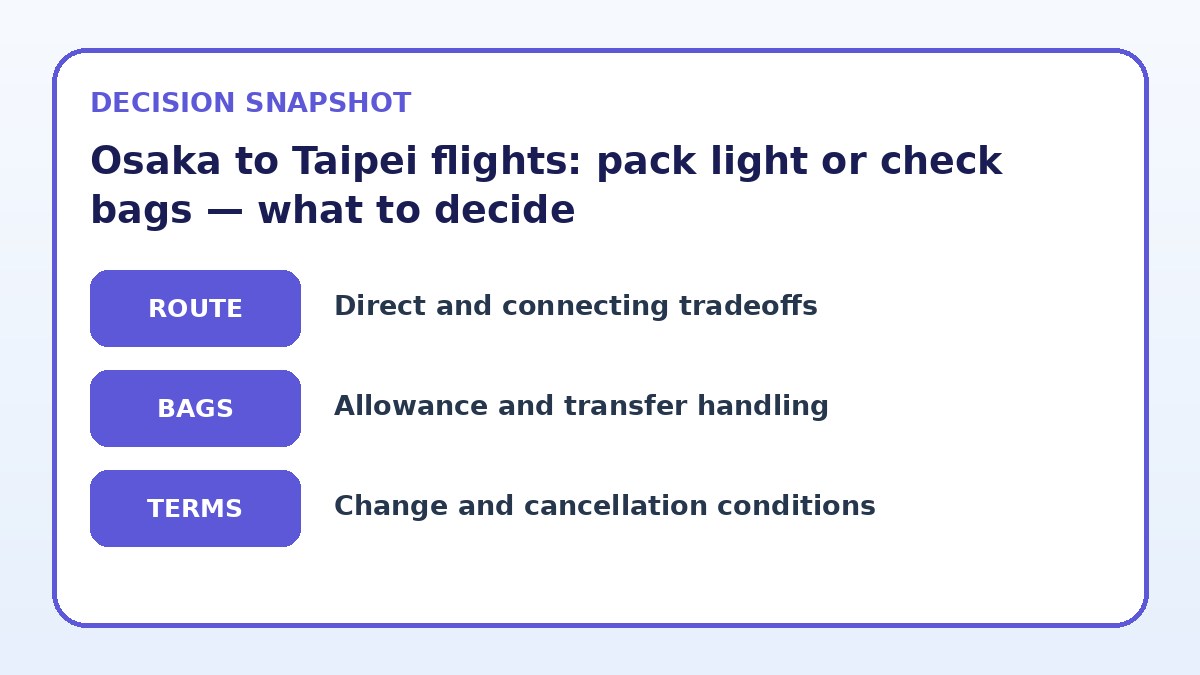
| Approach | Best for | Tradeoff to check |
|---|---|---|
| Carry-on only | Short trips, solo travelers wanting speed and fewer transfer hassles | Limited clothing and shopping capacity; strict size and liquid restrictions |
| Checked baggage | Longer stays, bulky equipment, or shopping plans | More time at check-in and baggage claim; possible extra fees and risk of delay |
| Hybrid (carry-on + checked on return) | Travelers who plan to buy items or return with more luggage | Extra planning to manage outbound speed and inbound baggage needs |
| Pre-paid baggage and online check-in | Travelers wanting to streamline airport time while bringing checked luggage | Requires accurate planning; changes or cancellations may affect fees |
Ready to check the option that fits your plan?
Use your exact dates and traveler details so the provider page can show the current total and conditions.
Planning arrival time in Taipei and baggage collection
If you arrive with carry-on only, you can generally leave the airport faster and head straight to public transit or a taxi. That makes choosing an accommodation farther from the airport easier if you prioritize lower cost or a particular neighborhood. Still, plan conservatively for immigration queues, which can vary widely with flight traffic and staffing. Build an extra 20–40 minutes beyond the airline’s published arrival time to cover passport checks and any health or customs procedures in effect at the time of travel.
For checked luggage, plan additional time for baggage claim and customs processing. Baggage can take anywhere from a few minutes to longer if many flights arrive together or if handling is slow. If you have a tight onward connection or ground transport reservation, consider flights that land earlier to give yourself slack. Check whether your arrival terminal has efficient public transport links or if a taxi or rideshare will be significantly faster — and verify where baggage reclaim and customs are located in your arrival terminal on the airport map provided by the authority.
Before you book
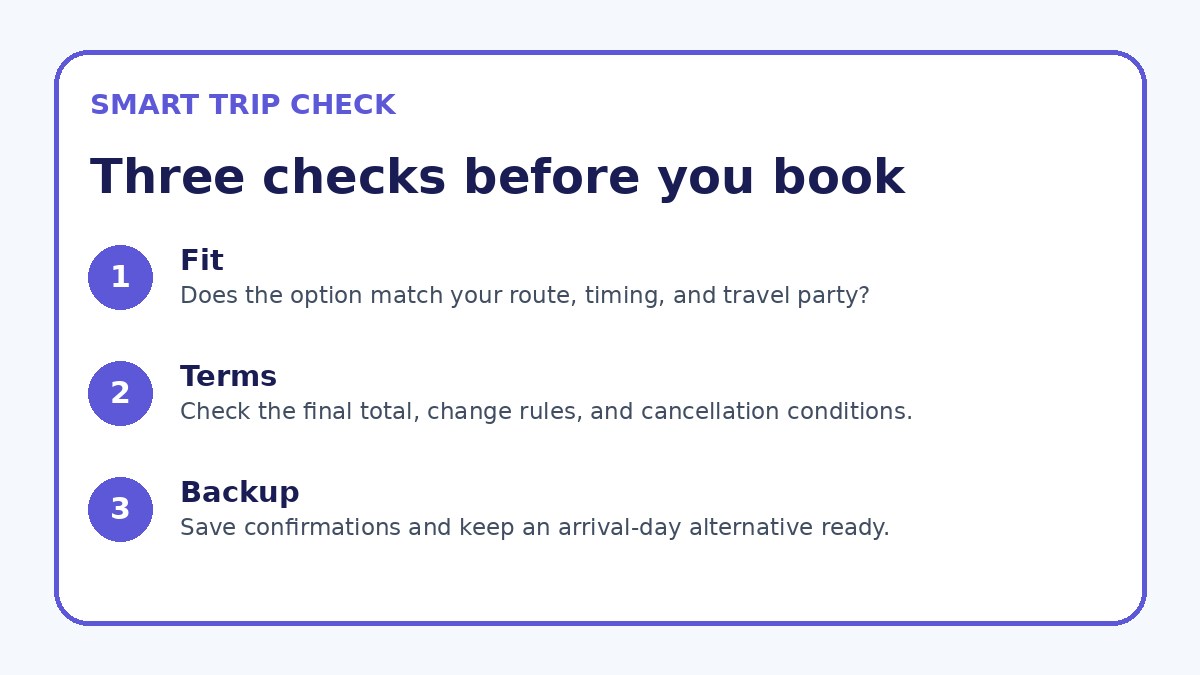
- Compare carry-on and checked baggage size and weight limits on the airline’s final booking page before you commit to a fare.
- Decide whether to pre-pay checked baggage and confirm the drop-off deadline printed on your booking confirmation.
- Pack a small essentials kit in your carry-on with medication, a change of clothes, and chargers in case checked luggage is delayed.
- Allow 90 minutes minimum at the departure airport for carry-on only, or 120–150 minutes when checking bags or traveling at peak times.
- Photograph and label checked luggage, and keep a digital and paper copy of your booking reference and contact details with you.
- Check the arrival terminal map and public transit options from Taipei’s airport to your first-night accommodation before you land.
Packing and transit tips to save time and reduce stress
Organize your carry-on to pass security quickly: place liquids in a clear bag, pack electronics near the top for easy removal, and use packing cubes to compress clothing and find items fast. Keep travel documents, boarding pass, and passport in a single, easily accessible pocket. Wearing shoes that are easy to remove speeds through security lines where required, and a lightweight daypack can be a practical personal item that keeps essentials handy without opening your main bag repeatedly.
If you must check baggage, prepare for faster reclaim: attach a bright tag and include a contact card inside with your phone number and accommodation details. Photograph the suitcase and its contents before you hand it over. Consider a compact essentials pouch in your carry-on with one set of clothing, toiletries, and medication in case of delays. Always verify on the airline's final booking page the maximum checked weight, oversize rules, and fees, because exceeding limits will affect time and cost at the airport counter.
Frequently asked questions
How do I check whether my carry-on is allowed on Osaka to Taipei flights?
Always check the airline’s baggage policy on the final booking or carrier website: size, weight, and allowed personal items vary. Measure and weigh your bag at home with typical contents; most airlines list dimensions and a weight limit. Remember that codeshare flights may follow the operating carrier’s rules, which can differ from the ticketing airline. If you’re unsure, allow a small safety margin under published limits or call the airline. Carry-on policies are the one place where last-minute verification prevents a costly gate decision.
What if my flight to Taipei has a connection — how should I plan baggage and time?
For connections, determine whether bags are checked through to the final destination or if you must re-check between flights; this affects required transfer time. If your itinerary requires changing airports or re-clearing security and immigration, allow substantial extra time and prefer longer layovers. When booking, compare total transit time and minimum connection times recommended by the operating airports and carriers. If you value flexibility, choose an itinerary with a longer connection and verify transfer procedures on the airline’s booking page before you finalize.
Can I speed up airport processes as a solo traveler between Osaka and Taipei?
Yes. Use online check-in and a mobile boarding pass to skip counter lines when possible, and pre-pay baggage to use drop-off lanes that move faster. Enroll in any trusted traveler or fast-track schemes offered by the airports or carriers if you travel frequently and they apply. Arrive outside peak hours when possible, pack security-friendly carry-on layouts, and have documents ready in a single place. Confirm exactly where to drop bags and the latest check-in cutoff times on the airline’s final booking page to avoid surprises.
Final planning note
For most solo travelers on Osaka to Taipei flights, the simplest rule is to travel with a compliant carry-on if your itinerary and shopping plans allow — it reduces airport time and stress. If checked luggage is necessary, plan extra time at both departure and arrival, pre-pay and verify limits, and pack an essentials kit in your carry-on. Always confirm baggage rules, check-in deadlines, and connection procedures on the airline’s final booking page before leaving home. With a clear packing list and conservative time buffers, you’ll turn what could be a logistical headache into a smooth and manageable trip.
Continue planning
Check current options and final conditions
Use the provider page to confirm live availability, the final total, cancellation terms, and every condition that matters to your trip.
This evergreen planning guide was created with AI-assisted drafting and a structured quality review. It does not display live prices, schedules, availability, visa guidance, or provider rankings. Verify current details before booking. Some links are affiliate links; we may earn a commission at no additional cost to you.