If you need to book Dubai to Auckland flights for business, start with a focused pre-booking checklist that narrows choices and saves time. The practical core: confirm your travel window and meeting flexibility, compare direct versus connecting routings, verify visa and entry requirements, and align reimbursement or corporate policy constraints. Next, layer in schedule reliability, seat and baggage needs for work productivity, and options for frequent flyer credit. This article gives a compact checklist you can follow before you open any booking site, then expands on tradeoffs and decision criteria so you can choose the option that best balances cost, time, and business priorities.
See current options before you compare the details
Availability and final conditions change. Open Trip.com now or keep reading for the practical comparison.
Set core travel constraints before searching
Begin every booking by defining the non-negotiables: exact departure and return dates, earliest acceptable arrival time in Auckland, and whether a late arrival that misses morning meetings is tolerable. Note any mandatory stopovers for rest if the itinerary spans more than one long-haul segment, and whether you require a daytime arrival for immediate meetings. Also record who pays—company card, personal with reimbursement, or third-party travel desk—because payment method can impact refundable options and fare classes you should consider.
Next, lock in seat and baggage needs tied to your work. Decide whether you require a specific seat type (aisle for frequent stand-ups, bulkhead for laptop space) or additional checked baggage for samples or equipment. If inflight Wi-Fi, power outlets, or latency for video calls are essential, mark those requirements up front. With these constraints captured, you can filter flight search results to realistic options and avoid wasting time on fares that don’t meet the business’s operational needs.
Compare routings and decide on direct versus connecting
Routings from Dubai to Auckland may involve direct long-haul flights where available or one- and two-stop connections through hubs. When comparing, prioritize total travel time and door-to-door convenience rather than just airborne time—layover length, terminal transfers, and possible overnight stops affect recovery and meeting readiness. For connecting itineraries, consider the risk of missed connections and how the airline handles re-accommodation, which matters if you must arrive on a strict schedule.
Weigh cost savings against the impact of extra connections on productivity and fatigue. A cheaper one-stop ticket that adds four to six hours of transit and an overnight may save money but could force additional hotel nights or reduce effective meeting time. Conversely, a direct flight tends to reduce risk and recovery time but may be pricier or have fewer schedule options. Use the checklist items for reliability and protection clauses to decide which tradeoff works for your meeting agenda and company policy.
| Approach | Best for | Tradeoff to check |
|---|---|---|
| Direct long-haul flight | Minimizing travel time and reducing connection risk | Often higher fares and fewer schedule options |
| One-stop connection with short layover | Balancing cost and speed when direct options are limited | Higher risk of tight connections and missed meetings |
| One- or two-stop itinerary with overnight layover | Saving cost and possibly better sleep/rest scheduling | Longer door-to-door time and potential extra hotel/night costs |
| Split-ticketing (separate carriers) | Potentially lower fares or better timing when alliances don’t align | Airline won’t protect you for missed connections without insurance |
Ready to check the option that fits your plan?
Use your exact dates and traveler details so the provider page can show the current total and conditions.
Verify entry, transit and documentation requirements
Before you book, confirm New Zealand entry conditions for your passport nationality and check any transit visa rules for countries used in connections. Rules can differ for airside transits versus those requiring a transfer between terminals or immigration. Also verify the documents the airline will require at check-in—return or onward tickets, evidence of accommodation, or proof of business purpose—especially for travelers who hold multiple residencies or use second passports.
For business travel, ensure corporate letters, invitation notes, or mission statements are prepared when needed and confirm whether the company or host will provide letters of support. If you carry samples, equipment, or sensitive materials, check customs and quarantine restrictions for New Zealand and for transit countries. Where immigration and customs requirements are unclear, call the airline or check the official government source and record the verification step you used so your travel approval can reference it.
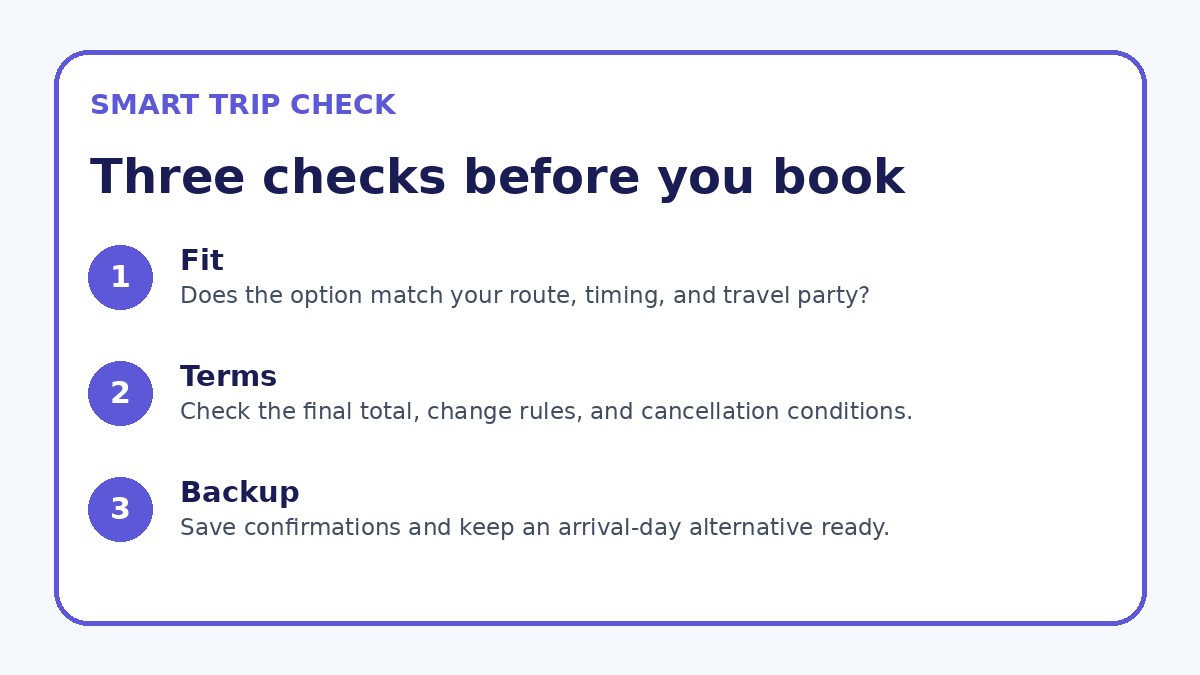
Before you book
- Confirm exact business dates, earliest required arrival time in Auckland, and any firm meeting times or events that constrain routing choices.
- Decide whether you need a direct flight for time savings or are willing to accept one or more connections to reduce cost or expand schedule options.
- Verify New Zealand entry and transit visa requirements for your passport(s) and check carrier check-in documentation rules before booking.
- Align fare class, baggage allowance, seat selection, and inflight connectivity with company expense policy and working needs during flight.
- Review change, cancellation, and rebooking rules on the booking page and note how to contact the airline or travel desk quickly if plans shift.
- Record whether the itinerary is ticketed on a single ticket or multiple tickets; if separate tickets, purchase protection or add buffer time for connections.
Protect schedule with reliability and flexibility options
Check fare rules for cancellation, change fees, and reissue policies before booking because business plans can change. If your company reimburses flexible fares or permits premium cabin upgrades for schedule certainty, factor those options in early. Consider refundable or changeable fares for critical trips and evaluate the value of paid seat selection and priority boarding that can speed connections and reduce stress. Also investigate trip protection or corporate travel insurance that covers missed connections and last-minute changes.
Look at schedule reliability indicators such as typical on-time performance for chosen routings and hub airports, but verify these with up-to-date sources before booking. If booking through a travel manager or agent, confirm their contingency procedures and rebooking authority. For DIY bookings, note the contact procedures to rebook on short notice, and if using separate tickets for legs, recognize the higher risk and plan buffer time or protective insurance accordingly.
Frequently asked questions
Should I always pick the shortest total travel time for a Dubai to Auckland business trip?
Not necessarily. Shortest total travel time reduces fatigue and risk of missing meetings, but it can be significantly more expensive or restrict schedule options. Consider the meeting schedule, whether you can shift meetings to accommodate a slightly later arrival, and company policy on fare class. If the shorter option is a direct flight that greatly reduces connection risk, it may be worth the premium. If cost control is crucial and meetings are flexible, a slightly longer one-stop routing may be acceptable—just account for potential delays and added rest needs.
How far in advance should I book Dubai to Auckland flights for business travel?
Booking lead time depends on travel flexibility, internal approval processes, and how fixed your meeting dates are. For firm, non-negotiable dates, start searching as soon as meetings are confirmed so you can compare routings and fare rules. If your company requires approvals or travel desk involvement, factor that time into the planning. Avoid last-minute purchases only when possible, but if you must book close to departure, focus on flexibility in change policies and verify seat and baggage availability before purchasing.
What documentation should I bring for seamless transit and entry to New Zealand?
Carry passport(s) with minimum validity recommended by authorities, printed or digital proof of return or onward travel, and any paperwork your employer or host provided such as invitations or meeting schedules. If you transit through another country, bring copies of visas or transit authorizations if required. Also bring digital copies of vaccination or health records if applicable and any customs declarations for business samples or equipment. Before departure, check both airline check-in requirements and official government guidance, and keep screenshots or confirmation emails from those sources.
Final planning note
A systematic pre-booking checklist makes booking Dubai to Auckland flights quicker and reduces surprises on travel day. Start by fixing dates, arrival timing, and firm business constraints, then match those to routing options and fare rules. Verify entry and transit documentation, align baggage and connectivity needs with company policy, and factor in reliability and rebooking protections for peace of mind. Completing the checklist before you compare fares helps you evaluate options on an equal footing—time versus cost, directness versus flexibility—and leaves you prepared to make a booking that serves both your business objectives and personal resilience.
Continue planning
Check current options and final conditions
Use the provider page to confirm live availability, the final total, cancellation terms, and every condition that matters to your trip.
This evergreen planning guide was created with AI-assisted drafting and a structured quality review. It does not display live prices, schedules, availability, visa guidance, or provider rankings. Verify current details before booking. Some links are affiliate links; we may earn a commission at no additional cost to you.