
Practical answer first: pick a rail or express bus option that accepts your sized luggage and matches your meeting schedule, then arrange a station-to-office transfer that fits your required arrival time and luggage handling needs. For many business travelers, the fastest door-to-door solution balances a comfortable seat for working en route, generous luggage space or storage options, and a short, dependable ground transfer at the Jeonju end. If you must bring a rolling suitcase and a garment bag, prioritize services that allow larger items onboard or provide staffed luggage check. Before booking, compare schedules, luggage rules, and transfer options; confirm baggage allowances on the supplier’s final reservation page and consider a professional porter or hotel pickup where available.
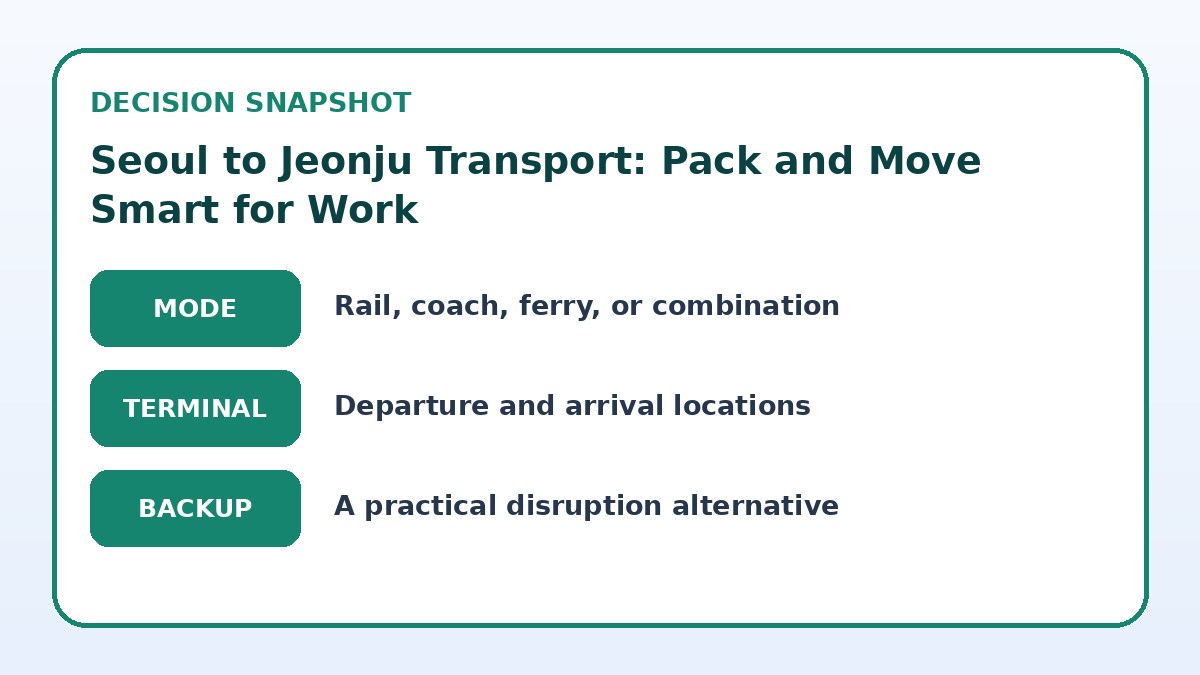
See current options before you compare the details
Availability and final conditions change. Open Trip.com now or keep reading for the practical comparison.
Choosing the transport mode when luggage matters
Decide first how many and what types of bags you’ll carry. A single rolling suitcase and a briefcase fit comfortably on many trains and some express buses; two or more large hard cases change your best option. Trains often have dedicated luggage areas, overhead racks, and wider aisles that make it easier to store and retrieve items without blocking other passengers. Buses can be efficient for direct city-center to city-center runs, but luggage goes in an underfloor hold and is only accessible at scheduled stops, which matters if you need items mid-journey.
Also factor in your work needs. If you must use a laptop or take calls, trains usually provide more stable seating and room to set up a mobile workspace. For short trips where incubation of luggage is acceptable and minimal transfers are preferable, a bus might shorten walking at either end. Evaluate connection logistics in Seoul and Jeonju: how far are the stations from your meeting venues, and is a taxi or hotel transfer readily available to bridge that gap without multiple luggage moves.
Packing and luggage handling strategies
Use one guarded principle: minimize handover points. Each transfer—walking from a station platform to a taxi rank, moving luggage into a hold, or switching modes—adds time and risk. Choose luggage-friendly pieces: wheeled suitcases with durable wheels and a dedicated garment bag for shirts prevent repeated folding. Use packing cubes and a compact toiletry kit so you can retrieve essentials quickly if your checked luggage is delayed or placed in a hold.
Prepare for station handling: label bags clearly with your mobile number and destination, and keep a small, accessible carry-on with meeting essentials and electronics. If your itinerary includes a short stop in Jeonju before a meeting, make sure you can get bags from a luggage hold without missing connections. Consider service add-ons where available—hotel pickup, porter assistance at major stations, or paid station lockers if you need temporary storage between meetings.
| Approach | Best for | Tradeoff to check |
|---|---|---|
| Take the train and handle luggage yourself | Business travelers needing workspace and frequent access to luggage | Requires carrying bags to/from platforms and managing storage in busy carriages |
| Use an express/intercity bus with checked hold | Those wanting fewer walking legs and direct city-center links | Luggage is inaccessible during the trip and may need fragile handling in hold areas |
| Book train plus hotel or private transfer | Tight schedules requiring reliable door-to-door timing and minimal handling | Higher complexity and possible extra cost for the transfer leg |
| Send excess baggage ahead or use porter services | Travelers with oversized or multiple hard cases who need light hand-carry | Requires coordination, lead time, and trust in third-party handling |
Ready to check the option that fits your plan?
Use your exact dates and traveler details so the provider page can show the current total and conditions.
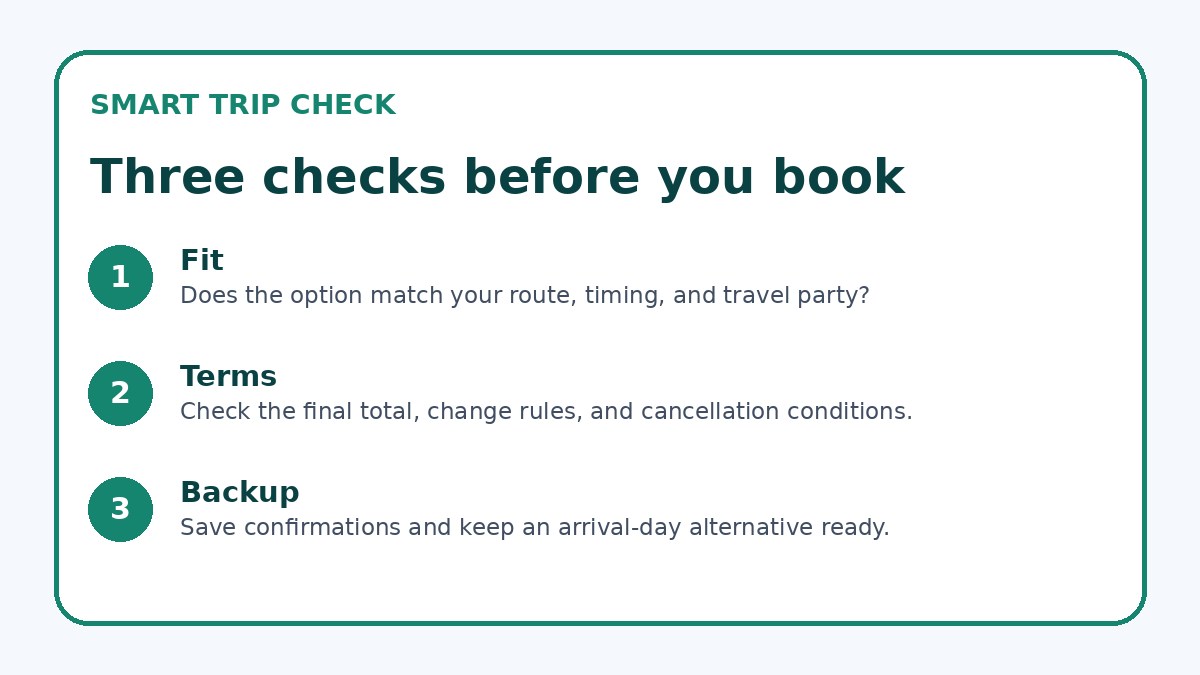
Comparing door-to-door time and convenience
Door-to-door time is what matters for business travelers, not just the in-vehicle duration. Calculate walking, waiting, check-in, luggage loading, and the time to reach your final meeting point. A slightly longer train that drops you at a central station with easy taxi access can beat a faster bus that stops on the city edge where you’ll need an additional transfer. When comparing options, map the complete route from your Seoul office or hotel to the meeting address in Jeonju and include realistic transfer buffers.
Also weigh predictability against marginal speed gains. If your schedule is tight and you can’t risk delays, prefer choices with consistent frequency and straightforward luggage handling. For flexible itineraries where minimizing cost or single-vehicle travel matters, you might accept a transfer or two. Whatever you select, verify the luggage policy and station access information on the provider’s booking or customer information page; Trip.com can be used to compare availability but always confirm details on the transport operator’s official page before finalizing.
Before you book
- Confirm the transport operator’s luggage size and item limits on their final booking page before purchasing tickets.
- Measure and weigh each bag so you can match them to the allowed categories and avoid surprises at boarding.
- Reserve a seat or carriage space when the option exists to increase the chance of dedicated luggage room.
- Arrange a Jeonju pickup (hotel transfer or taxi) and confirm pickup time and vehicle capacity for your baggage count.
- Pack a meeting-ready carry-on with chargers, documents, a shirt, and essential toiletries for immediate access.
- Label every bag with your mobile number, destination, and backup contact, and photograph bags in case you need to report loss or damage.
Booking checklist and on-trip behavior
When booking, look for explicit luggage allowances and any requirements for oversized items. Don’t assume standard carry-on rules apply on intercity services—providers sometimes restrict large suitcases or charge extra for bulky loads. Reserve a seat or a specific carriage if the booking system allows it, and indicate if you need space for a garment bag or bicycle-sized item. If you rely on hotel collection, contact the hotel to confirm pickup details and specify the number of pieces so they can arrange an appropriate vehicle.
On travel day, arrive at the departure point early enough to load luggage without rushing; this reduces the chance of last-minute mishaps and gives time to buy coffee or confirm the return transfer. Keep charging cables, portable battery, and any urgent documents in your carry-on. If something changes—delays, a redirected stop, or lost items—contact your booking provider immediately and document what happened for recovery or claims. Maintain polite but firm labeling and verbal confirmation when handing over bags to staff or porters.
Frequently asked questions
Can I bring large suitcases on trains or buses between Seoul and Jeonju?
Policies vary by operator and vehicle type. Many trains provide overhead racks and designated luggage areas, while buses usually place large suitcases in an underfloor hold. Before you finalize any booking, check the operator’s baggage rules—size, weight, and the number of pieces permitted—on their official booking confirmation page. If you rely on space for a garment bag or need quick access to an item during the journey, contact customer service or choose a service that explicitly states accessible luggage arrangements.
What’s the fastest way to get from the station to a downtown Jeonju meeting with heavy luggage?
Fastest door-to-door options usually combine a central arrival point with an immediate taxi or hotel transfer to your meeting. Choose a service that arrives at a station close to the city center to minimize ground travel. If your luggage is bulky, book a private car or arrange hotel pickup in advance to ensure adequate trunk space and avoid waiting to load and unload multiple bags. Always allow extra time for traffic and the physical process of loading luggage into a vehicle.
Should I ship extra baggage ahead or use a porter at the station?
Shipping baggage or using a porter can simplify your transit when you have multiple hard cases, but both require coordination. Shipping gives you hands-free travel but needs advance lead time and reliable pickup at the destination; confirm delivery windows and liability terms. Porters at major stations can move luggage quickly and remove the physical burden, though availability and cost vary. Verify porter services with your train station or hotel concierge in Seoul and Jeonju before relying on them for tight schedules.
Final planning note
For business travelers moving between Seoul and Jeonju with luggage, the practical choice balances your bag count, need to work en route, and tolerance for handling. Trains often provide a better platform for working and more accessible luggage arrangements, while buses can offer direct links if you accept hold-only baggage storage. Wherever you book, double-check luggage rules, seat/space options, and the logistics of your final ground transfer on the provider’s booking page. Prepare by packing a meeting-ready carry-on, arranging pickup where needed, and labeling everything clearly—those steps reduce stress and keep your schedule on track.
Continue planning
Check current options and final conditions
Use the provider page to confirm live availability, the final total, cancellation terms, and every condition that matters to your trip.
This evergreen planning guide was created with AI-assisted drafting and a structured quality review. It does not display live prices, schedules, availability, visa guidance, or provider rankings. Verify current details before booking. Some links are affiliate links; we may earn a commission at no additional cost to you.