If you’re a couple arriving in Tokyo with children and a lot of luggage, pick a transfer that minimizes walking, transfers, and luggage handling. For many families that means a single-vehicle option from the airport to your neighborhood hotel or apartment; for others, a rail-heavy route with reserved seating and luggage delivery can be smoother and cheaper. Decide by balancing door-to-door convenience, how much you’ll pay attention to managing strollers and suitcases, and whether you prefer to avoid busy trains during peak hours. This guide walks through the practical tradeoffs, what to check before you book, and how to plan arrivals and departures to keep the kids comfortable and luggage controlled.
See current options before you compare the details
Availability and final conditions change. Open Trip.com now or keep reading for the practical comparison.
Choose the transfer style that fits your energy
Couples traveling with children commonly choose among private cars, scheduled airport shuttles, trains, and luggage-forward services. Private cars give the fewest touchpoints: a driver meets you at arrivals, loads luggage, and drops you at your door. Scheduled buses or airport limousines follow fixed routes that serve major hotel clusters and can be easier than trains because you don’t manage frequent platform changes. Trains are usually the fastest in city-center travel time but require managing stairs, escalators, and crowded cars.
When deciding, think about how tired the kids will be, how many suitcases and strollers you have, and how confident you are with local signs and elevators. If your accommodation is close to a major station and you can limit luggage to what you can wheel, the rail can be efficient. If you’re carrying more than two large suitcases or want minimal transfers, a private door-to-door option or a pre-arranged meet-and-greet service reduces stress—just verify vehicle capacity and car seat policies before booking.
Comparing comfort: car seats, strollers, and luggage handling
If a car seat is essential for very young children, contact the transfer provider to confirm availability and any installation procedures. Some private transfer firms and taxi services can supply child seats for a fee, while buses and trains do not. For strollers, a lightweight foldable model saves effort since many stations and buses require collapsing them for busy platforms. Make sure you can physically lift stroller and luggage into the vehicle you choose, or plan for additional assistance where needed.
Luggage handling is often the decisive factor for couples. Private transfers typically include loading and unloading, while trains require carrying bags through gates and across platforms. Airport luggage delivery services can send suitcases ahead to many central hotels, letting you travel with only carry-on items and children’s essentials. Verify time windows, delivery locations, and any size limits on the provider’s booking page before relying on this option for arrival or departure logistics.
| Approach | Best for | Tradeoff to check |
|---|---|---|
| Private door-to-door car | Couples who prioritize convenience, minimal walking, and hands-free luggage handling. | Higher cost and need to confirm child-seat availability and vehicle size in advance. |
| Airport limousine bus | Families staying at major hotels on the bus route wanting simple, no-transfer travel. | Fixed stops may require a short walk; less flexible schedule than private cars. |
| Train with reserved seats | Couples comfortable with elevators who want faster city-center travel and lower base cost. | Managing luggage through stations and potential crowding during peak times. |
| Luggage delivery + light public transit | Travelers wanting to move through the city with children only and minimal baggage. | Requires planning delivery windows and trusting a third-party carrier for timely handoff. |
Ready to check the option that fits your plan?
Use your exact dates and traveler details so the provider page can show the current total and conditions.
Practical timing and route choices for less chaos
Avoid arriving or departing during regional rush hours if you can, because trains and station corridors fill rapidly and even brief transfers become stressful with kids. If your flight schedule is fixed, plan buffers: aim to clear immigration and collect bags with time to spare, and choose arrivals that reduce walking and queue time. For departures, leaving extra time at the airport makes security and check-in less pressured when you’re managing children and luggage together.
When you compare options, look at total door-to-door time and the number of times you must handle luggage. A slightly longer but single-leg transfer is often better than a faster route that requires two or three platform changes. If you use a train, book reserved seats where possible and check whether priority seating or family cars are available. Always check the provider’s final booking page for seat reservation rules, luggage size policies, and whether strollers count as carry-on items.
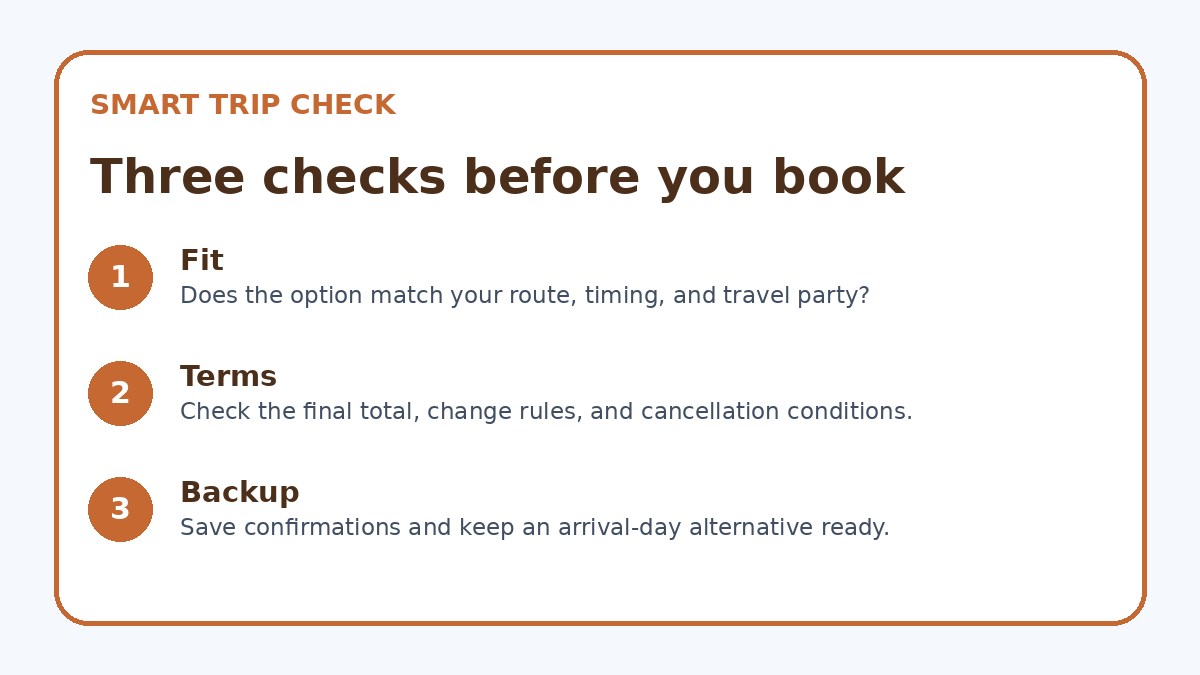
Before you book
- Confirm vehicle capacity for all suitcases and the stroller, and request a larger vehicle if needed before you book.
- Ask the transfer provider about child-seat options, exact installation procedures, and any extra fees.
- Check elevator locations and step-free routes for your arrival station on the rail operator’s official station map.
- If using luggage delivery, book pickup on the day you land and confirm the hotel’s acceptance policy and delivery window.
- Plan arrival and departure times outside local peak commuting hours to reduce crowding with children and bags.
- Save the transfer provider’s meeting-point photo or map and the driver’s contact number to ease the handoff at arrivals.
Booking checklist and what to verify before you confirm
Before you book any transfer, confirm vehicle capacity for suitcases and strollers, child-seat availability and costs, and the exact meeting point at the airport arrivals area. If you choose a public bus or limousine service, verify which hotels are served and whether the drop-off point is curbside or requires a short walk. For trains, review station layouts and elevator availability for your lines; many stations list elevator locations on official maps but check the operator’s site when you book.
If you plan to use luggage delivery, verify pickup times and where the carrier will deliver within Tokyo. Check cancellation and change policies on the provider’s booking page, especially if your flight time could shift. Trip.com can be a place to compare current availability and schedules, but always confirm details like meeting points, seat reservations, and luggage limits directly with the transfer provider before finalizing.
Frequently asked questions
Is it easier to take a taxi or the train from Tokyo’s airports when traveling with kids?
Taxis and private transfers are easier in terms of door-to-door convenience and luggage handling because the driver loads and unloads your bags and you avoid stairs and crowded platforms. Trains can be quicker into central Tokyo and cheaper, particularly if you can reserve seats and the station at your destination has elevator access. For families, weigh the number and size of your suitcases, whether you have a stroller, and how well your children tolerate crowds. If you consider a taxi or private car, confirm child-seat availability and vehicle size on the provider’s booking page before committing.
How can I make a rail transfer manageable with children and multiple suitcases?
Travel light where possible—use a foldable stroller and consolidate luggage into a few wheeled cases so one partner can manage bags while the other steers children. Look for stations with step-free routes and elevators; many operators publish station maps showing these facilities. Book reserved seats to guarantee a place to sit and space to store bags, and travel outside morning and evening commuter peaks to avoid crush crowds. If heavy suitcases are unavoidable, consider sending them ahead with a luggage delivery service so you ride train-only with kids and essentials.
Can I rely on luggage delivery for day-of airport transfers in Tokyo?
Luggage delivery is commonly used and can make transfers much smoother, but it requires attention to scheduling windows, delivery location rules, and size or weight limits. If you plan to use this service, book it with a verified provider and select a delivery time that allows for possible customs or processing delays on arrival. Confirm the hotel or accommodation will accept delivery before you rely on it. Always double-check the provider’s terms on their booking page—particularly pickup cutoffs and any extra fees—so you’re prepared if you need to carry items yourself.
Final planning note
For couples traveling to Tokyo with children and luggage, the best transfer choice depends on how much you value door-to-door simplicity versus cost and speed. Private transfers reduce handling and stress but require advance confirmation of vehicle size and child-seat options. Trains offer efficient city travel but demand more hands-on luggage management and good station access. Combining luggage delivery with light, reserved-seat transit often hits a middle ground: you move through Tokyo with the kids only, and your suitcases arrive separately. Before booking, verify meeting points, capacity, and seat reservation rules on the provider’s final booking page so your arrival and departure run as smoothly as possible.
Continue planning
Check current options and final conditions
Use the provider page to confirm live availability, the final total, cancellation terms, and every condition that matters to your trip.
This evergreen planning guide was created with AI-assisted drafting and a structured quality review. It does not display live prices, schedules, availability, visa guidance, or provider rankings. Verify current details before booking. Some links are affiliate links; we may earn a commission at no additional cost to you.