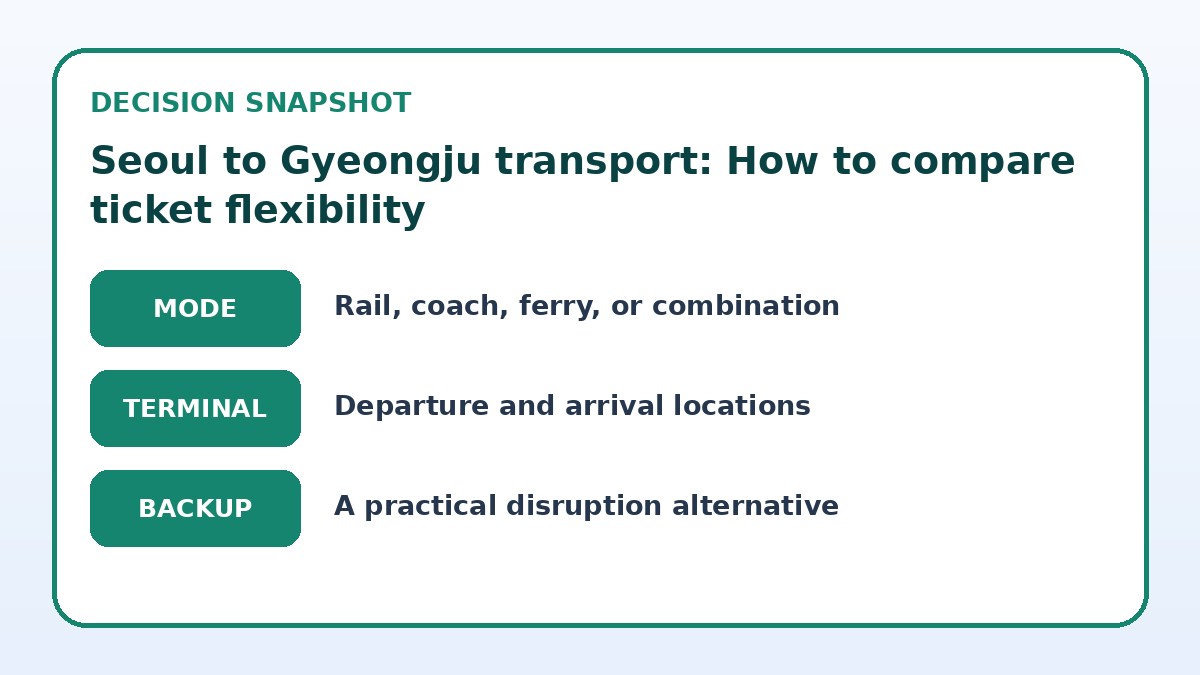
If you’re a solo traveler deciding between flexible and fixed tickets for Seoul to Gyeongju transport, choose the ticket flexibility that matches how firmly your itinerary is set and how much risk or fuss you want at the station. For a fixed plan with set travel times and no changes likely, a non‑refundable or restricted ticket can simplify the booking and ensure a seat. If you value last‑minute freedom, unpredictable plans, or want to accommodate festival dates or unexpected weather, pick a refundable or changeable ticket with a reasonable penalty. When comparing options, focus on three things: the allowed change window and fees, whether refunds are offered and how long they take, and whether seat reservations are tied to the fare. Verify those specifics on the provider’s final booking page—this article explains how to weigh the tradeoffs and what to check before you pay.
See current options before you compare the details
Availability and final conditions change. Open Trip.com now or keep reading for the practical comparison.
Understanding the flexibility spectrum
Ticket flexibility usually falls on a spectrum from fully refundable with free changes down to non‑refundable, no‑change fares. Fully refundable options typically allow cancellations and changes up to a specified cutoff, often with an online self‑service option; these work best for travelers who value certainty that they can adjust without a long support call. Mid‑tier flexible fares may permit changes for a fee or refund only as travel credit. At the restricted end, discounted fares may lock you to a service and seat with little recourse if plans change. For solo travelers, the choice hinges on how often you expect your itinerary to shift and how much administrative hassle you’re willing to accept if you need to alter your booking.
When comparing providers, remember that the headline label—'flexible' or 'refundable'—doesn’t capture the details that matter. Pay attention to the allowed time before departure to request a change, whether changes are free or charged as a percentage, if refunds are processed back to the original payment method or issued as travel credit, and whether any administrative or service fees apply. Also check whether changing your ticket requires visiting a ticket counter, calling a service line, or can be done instantly via the website or app. These procedural differences often determine how usable the flexibility actually is for a solo traveler juggling plans.
Practical tradeoffs: cost versus convenience
Accepting more flexibility normally means paying a premium, but that premium buys convenience and reduces stress if something unexpected arises. For example, paying extra for a changeable ticket can save time and avoid a rushed trip to a station counter when your schedule shifts. Conversely, if you are certain of travel dates and want the simplest booking process, a restricted fare can be the right choice—less time spent comparing fine print, and fewer steps at purchase. Think through likely scenarios: missed connections, overnight changes, or local events that could require shifting your travel by hours or a day.
Solo travelers should quantify their tolerance for uncertainty. If missing a booked seat would cause a domino effect—lost accommodation, extra transport costs, or a missed tour—lean toward more flexible options. If your local plans are firm and alternatives are readily available (multiple departures per day, easy transfers), a lower‑flex ticket may be acceptable. Also consider the effort cost: do you prefer to handle potential changes yourself via an app, or do you want the option to speak with an agent? The less comfortable you are managing last‑minute logistics, the more value flexibility will provide.
| Approach | Best for | Tradeoff to check |
|---|---|---|
| Fully refundable/changeable ticket | Travelers with uncertain dates or who prefer minimal risk and hassle when plans shift. | Higher upfront cost and sometimes stricter fare conditions for confirmed seat types. |
| Semi‑flexible ticket (changes with fee or credit) | Those who want a balance: lower cost but ability to adjust if needed for a reasonable charge. | You may incur fees or receive travel credit instead of a cash refund; change rules vary by provider. |
| Restricted/non‑refundable ticket | Travelers with fixed, confirmed plans who prioritize lower purchase effort and securing a seat cheaply. | Little to no recourse if plans change; potential loss of fare or extra expense to rebook. |
| Pay‑as‑you‑go (buy later/standby strategy) | Very flexible solo travelers comfortable buying last‑minute or taking standby for lower predictable spend. | Risk of no available seats during busy periods and possible added stress on travel day. |
Ready to check the option that fits your plan?
Use your exact dates and traveler details so the provider page can show the current total and conditions.
How to compare specific booking details
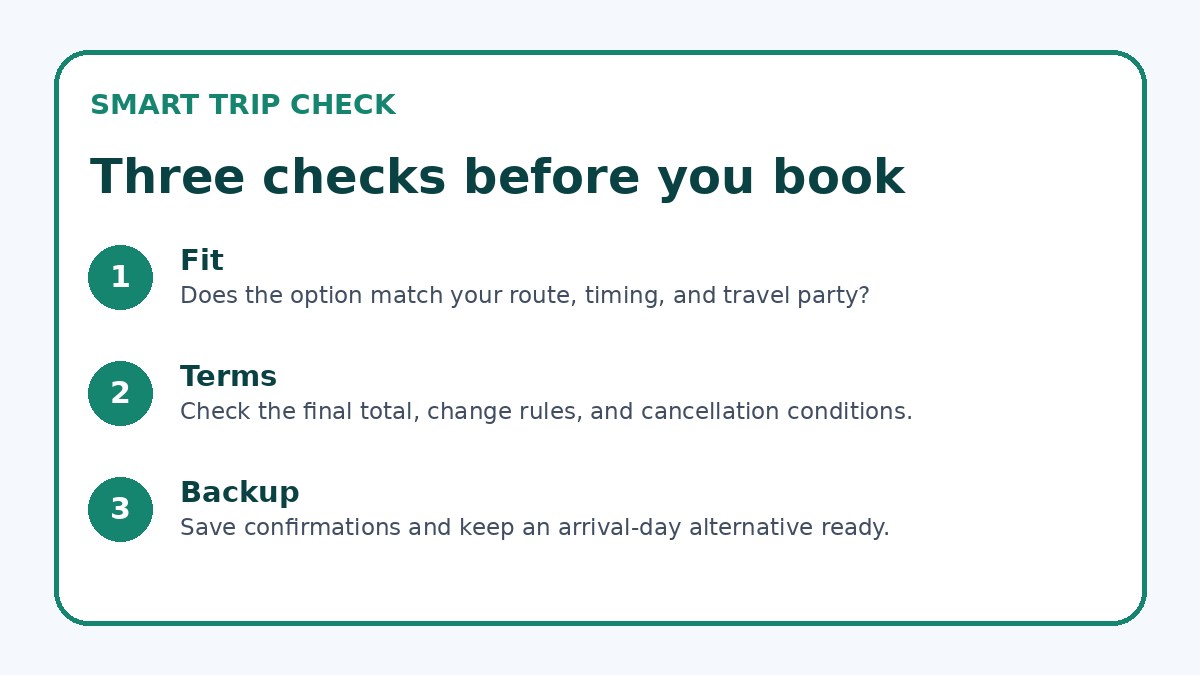
When you reach a provider’s booking page, compare three concrete items: change and cancellation rules, seat assignment policies, and the mechanics of refunds or exchanges. Look for explicit deadlines (for example, how many hours before departure you must request a change), the exact fee structure (flat fee or percentage), and whether the fare class allows same‑day swaps. For seat assignments, verify whether changes preserve your original seat or require rebooking; on busy routes, losing a seat assignment can be a meaningful downside. These are the practical knobs that determine whether a fare labeled 'flexible' actually fits your needs.
Also check the interaction between ticket type and fare add‑ons. Some platforms require you to buy a flexible fare plus additional options (insurance, reserved seating) to achieve the level of protection you need. Confirm whether the platform permits online self‑servicing of changes and whether refunds return to your card or as travel credit with an expiry. If you’re comparing multiple sellers or platforms, make a checklist of identical criteria for each option so you can compare apples to apples—don’t rely on the fare name alone. Trip.com can be used once as a place to compare current availability, but always verify the final terms on the official provider’s booking page.
Before you book
- Read the ticket’s change and cancellation policy line by line on the provider’s final booking page before completing payment.
- Note the exact cutoff times for changes or refunds and save them with your booking confirmation.
- Verify whether refunds go back to your original payment method or issue as travel credit and check any expiry terms.
- Confirm whether seat assignments are included in the fare and whether changing the ticket affects your seat.
- Check whether changes can be made online or require phone calls or in‑person visits to a ticket counter.
- If you rely on same‑day flexibility, identify the next available departures and how switching affects cost or seat availability.
Day‑of travel and solo traveler tips
On travel day, having clearer flexibility can reduce anxiety. If your fare allows free same‑day changes or standby on later services, you’ll have more options if delays occur. For solo travelers carrying luggage or with tight onward connections, securing a guaranteed seat often outweighs the marginal savings of a restricted fare. If you expect to arrive at the station close to departure, ensure your ticket’s change policy covers on‑the‑day adjustments and research whether the provider offers an express counter or mobile check‑in. Practical preparations—like documenting change deadlines and saving confirmation emails—make handling issues faster.
Prepare a fallback plan: know the next two departures, the cost or conditions to switch to them, and the location of service counters at your boarding station. Carry any required identification and the booking reference in multiple formats (email screenshot, app, paper). If your ticket can only be changed by a phone call, note the provider’s customer service contact and typical response channels. Finally, consider travel insurance that specifically covers missed departures for an additional layer of protection if your schedule is tight and consequences of missing a service are significant.
Frequently asked questions
Can I change a train ticket from Seoul to Gyeongju on the day of travel?
That depends on the fare class you purchased. Some fares permit same‑day changes or standby on later departures; others require changes before a specific cutoff, and restricted tickets may not allow any changes. Before booking, check the provider’s change window and whether same‑day exchanges are supported. If same‑day changes are important to you, verify whether changes can be made online or require speaking to customer service at a counter, and factor any fee structure into your decision.
Are refunds issued as cash or travel credit if I cancel my Seoul to Gyeongju ticket?
Refund methods vary by provider and fare. Fully refundable tickets often return money to the original payment method, but some options issue travel credit that may expire. Semi‑flexible fares might combine partial refunds with credit vouchers. Always read the refund policy on the booking page to confirm whether you’ll receive a cash refund or credit, what administrative fees apply, and the expected processing time. If uncertain, contact the provider’s support before finalizing your purchase.
How should a solo traveler decide between saving money and buying flexibility?
Start by assessing how likely your plans are to change and what the consequences would be if you missed the booked service. If changes would be costly or disruptive, paying more for a changeable or refundable ticket reduces risk. If your schedule is fixed, alternatives are frequent, and you’re comfortable managing last‑minute logistics, a restricted fare can be reasonable. Factor in the ease of making changes (online versus phone), whether seat guarantees matter, and whether any savings justify the potential stress and extra cost of rebooking.
Final planning note
Choosing ticket flexibility for Seoul to Gyeongju transport comes down to balancing uncertainty and effort against cost. Solo travelers who prioritize peace of mind and minimal on‑trip hassle should lean toward refundable or changeable fares, especially when schedules are fluid or consequences of missing a departure are heavy. If your itinerary is locked and you prefer a straightforward purchase, a restricted fare can work, but only after you’ve confirmed change and refund mechanics. Before you book, check change deadlines, refund procedures, seat assignments, and whether changes can be handled online; verify these specifics on the provider’s final booking page so there are no surprises later.
Continue planning
Check current options and final conditions
Use the provider page to confirm live availability, the final total, cancellation terms, and every condition that matters to your trip.
This evergreen planning guide was created with AI-assisted drafting and a structured quality review. It does not display live prices, schedules, availability, visa guidance, or provider rankings. Verify current details before booking. Some links are affiliate links; we may earn a commission at no additional cost to you.