
If you and your partner are deciding between schedule flexibility and door-to-door convenience for Melbourne to Queenstown flights, start by prioritising what matters most: saving time in transit or reducing the risk from last-minute changes. For many couples a late-afternoon direct or single-connection routing that lands early evening in Queenstown gives the most convenient balance—less airport churn and easier transfers to accommodation—while flexible tickets let you shift plans if weather or work changes. Before you book, compare full trip times, total airport-to-hotel transfers, and change/cancellation rules. Check baggage allowances, how seat selection works for couples, and whether the fare permits same-day changes without high fees. Use provider booking pages to confirm exact terms, and check a live aggregator such as Trip.com to compare availability, but always confirm final rules on the airline’s or travel agent’s page before paying.
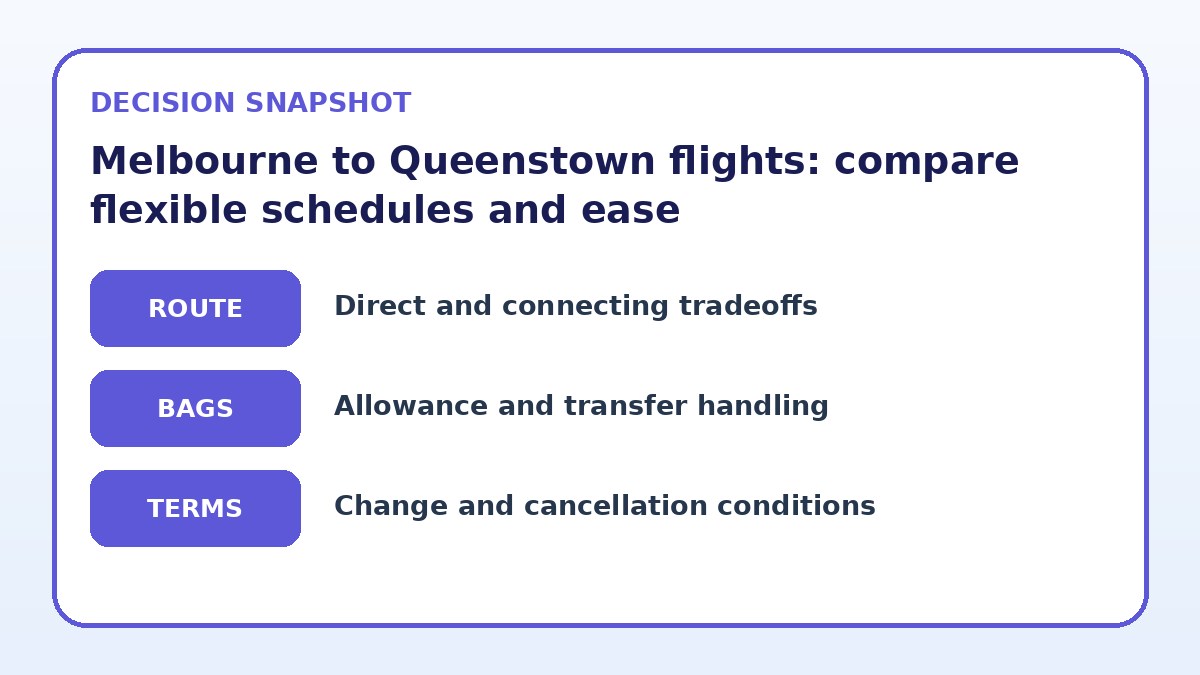
See current options before you compare the details
Availability and final conditions change. Open Trip.com now or keep reading for the practical comparison.
What “flexibility” and “convenience” mean for couples
Flexibility usually means the ability to change dates, times, or passengers with minimal penalty and to absorb disruptions like weather or work changes. For couples that prefer keeping plans fluid, refundable fares or tickets with low change fees let you shift travel without complex rebooking. Flexibility also includes flight frequency: routes with multiple daily departures or easy rebooking options reduce risk if you need to move forward or back a day. When considering flexible fares, confirm whether changes can be made online, whether the fare difference applies, and how seat assignments are handled for two passengers travelling together.
Convenience, by contrast, focuses on minimizing total trip effort: fewer connections, shorter transfer times, and smooth ground transport at both ends. For couples this often translates to selecting itineraries with one logical connection or a single overnight leg that lands at a reasonable hour for checking in and enjoying arrival time. Convenience also includes airport terminals and transfer simplicity, for example avoiding an extra bus or long shuttle. Remember that what looks convenient on schedule can be inconvenient if it means tight connections or arriving very late, so balance itinerary simplicity with realistic buffers.
How to compare direct versus connecting options
Start by listing total door-to-door travel time: include scheduled flight time, typical check-in and security time at Melbourne, and transfer time from Queenstown airport to your accommodation. A direct flight or one with a single, comfortable connection reduces the number of times you and your partner manage luggage, security, and boarding, which usually increases convenience. If a direct option is available, confirm it’s truly nonstop on the provider’s booking page rather than an itinerary marketed as nonstop but operated by multiple legs; the route can affect missed-connection protections and rebooking rules.
Connections add flexibility because multiple carriers or departure times can increase options if you need to move dates, but they also introduce more points of failure—delays on the first leg can cascade and change ground plans in Queenstown. When comparing connecting itineraries, check minimum connection times and whether the same ticket covers both legs; single-ticket connections generally provide more protection for rebooking. For couples, assess whether you’ll need to collect and re-check bags between legs, and factor in the extra time and stress that can add to the trip.
| Approach | Best for | Tradeoff to check |
|---|---|---|
| Prioritise direct or single-connection convenience | Couples valuing shorter transfer times and simpler logistics | May pay more or have fewer same-day rebooking options |
| Prioritise flexible refundable fares | Couples with uncertain dates or a high chance of change | Higher upfront cost and often fewer included extras like seat selection |
| Mix: pick a convenient itinerary with flexible add-ons | Couples who want comfort but need some leeway to change | Requires careful rule-checking; add-ons can erase apparent savings |
| Choose several similar departure options across the day | Couples who want backup same-day alternatives without full refunds | More time spent researching and managing multiple potential bookings |
Ready to check the option that fits your plan?
Use your exact dates and traveler details so the provider page can show the current total and conditions.
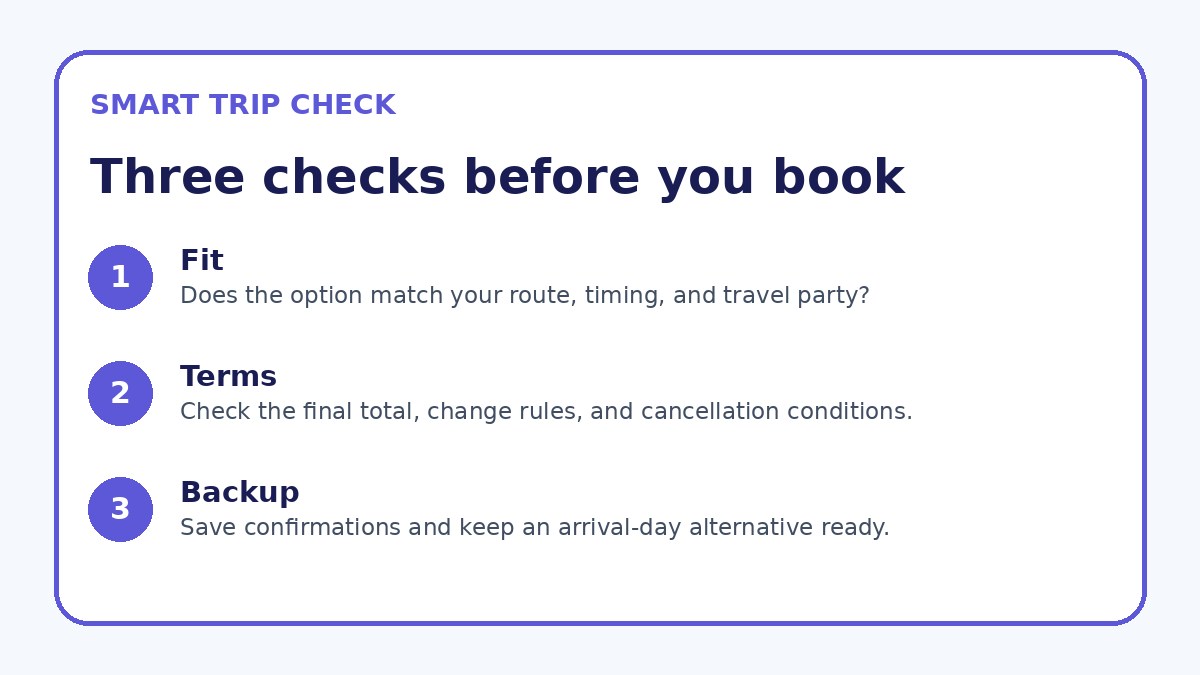
Choosing fares and policies that suit a couple’s plans
Look beyond headline fare amounts and examine the rules: how cancellations, date changes, name corrections, and refunds are handled. Couples who might adjust travel for events like weddings or work should consider fares that permit free or low-cost changes, or add travel insurance that covers change-of-plan reasons important to you. Seat selection rules matter too—confirm whether fares include advance seat assignment for both passengers so you can sit together, and if not, calculate the cost to select seats for the pair. Also check baggage allowances per passenger and whether carry-on plus checked luggage is included to avoid surprises at check-in.
When a fare looks attractive but restrictive, compare the net cost after you add change fees, seat selection, and extra baggage to the cost of a more flexible ticket. For many couples convenience of being able to sit together and keep plans flexible outweighs a lower headline price. Finally, check provider pages for partner airline rebooking rules if your itinerary involves codeshares or interline connections; policy differences can affect how easy it is to change both segments on a reservation made through one carrier.
Before you book
- Confirm whether your chosen fare permits free or low-cost changes and whether those terms apply to both passengers on one reservation.
- Verify baggage allowances and whether seat selection for two passengers is included or must be purchased separately.
- Compare total door-to-door time (including likely transfer and hotel check-in times) for each itinerary.
- Check connection protections and whether a single-ticket booking covers rebooking in case of missed connections.
- Note the airline’s official contact and onboard/airport assistance options on the booking page for weather or schedule disruptions.
- Set calendar alerts to re-check flight status 24 and 6 hours before departure and agree on a contingency plan together.
Practical tips for booking and travel day logistics
Once you know whether flexibility or convenience is higher priority, set search filters accordingly: use non-stop or single-connection filters for convenience, and refundable/changeable fare filters for flexibility. Book both seats on the same reservation so changes affect both passengers equally and you can manage seating and special requests together. If you need a guaranteed buffer, choose flights that leave extra time between connections and avoid itineraries with tight turns. Before booking, verify baggage rules, seat selection, and rebooking terms on the airline’s final checkout page; these specifics can differ from third-party listings.
On travel day, arrive early enough to handle extra steps as a couple—checking bags, confirming seats, and resolving any last-minute issues as a team. Keep important documents handy and photograph reservations, boarding passes, and any change confirmations. If weather or short-notice work changes are likely, use reminders to check flight status and contact options for your booking channel. Finally, agree on a simple contingency plan: which later flight you’d prefer, whether to wait for rebooking options together, and how you want to handle unexpected costs so decisions at the airport are less stressful.
Frequently asked questions
Is it better for couples to book refundable fares or to buy travel insurance?
Refundable fares give immediate control on changing dates and usually mean the airline handles the rebooking directly; they can be simpler if you expect to adjust travel. Travel insurance can cover specified reasons for cancellation or interruption and may reimburse non-refundable costs, but policy terms and covered reasons differ widely. For couples, weigh whether you need open-ended flexibility (refundables) or risk-specific protection (insurance). Always read the airline’s final booking page for change rules and the insurer’s policy for covered scenarios before deciding.
How do I ensure my partner and I can sit together without paying excessive fees?
The simplest approach is to book both seats on one reservation and check seat assignment policies during booking—some fares include free advance seats, others do not. If seats are not included, compare the cost of seat selection for both passengers versus upgrading to a fare that includes seating. At check-in, airlines sometimes release additional contiguous seats, but this is not reliable. Verify seating rules on the airline’s checkout page and decide whether paying to reserve seats in advance is worth the peace of mind for your trip.
What should couples check about connections when booking Melbourne to Queenstown flights?
Check whether connections are on the same ticket and whether minimum connection times are realistic for returning through security, transferring terminals, and re-checking baggage if required. Single-ticket connections normally offer more rebooking protection if the first leg is delayed, while separate tickets can require you to collect bags and rebook independently. Also review the layover length—short layovers risk missed connections, long layovers add waiting time—and confirm these specifics on the airline or provider checkout pages before finalising the booking.
Final planning note
Balancing flexibility and convenience for Melbourne to Queenstown flights as a couple comes down to an honest look at your tolerance for change versus your desire for a smooth, simple travel day. If unexpected schedule shifts are likely, choose fares or protections that allow changes with limited cost; if you prefer minimal airport time and fewer transfers, prioritise direct or single-connection itineraries and accept the potential higher cost. Whatever you pick, book both passengers on the same reservation, verify baggage and seating rules on the airline’s final booking page, and set clear contingency decisions together. That preparation reduces stress, keeps both partners aligned, and makes the actual journey to Queenstown more enjoyable.
Continue planning
Check current options and final conditions
Use the provider page to confirm live availability, the final total, cancellation terms, and every condition that matters to your trip.
This evergreen planning guide was created with AI-assisted drafting and a structured quality review. It does not display live prices, schedules, availability, visa guidance, or provider rankings. Verify current details before booking. Some links are affiliate links; we may earn a commission at no additional cost to you.