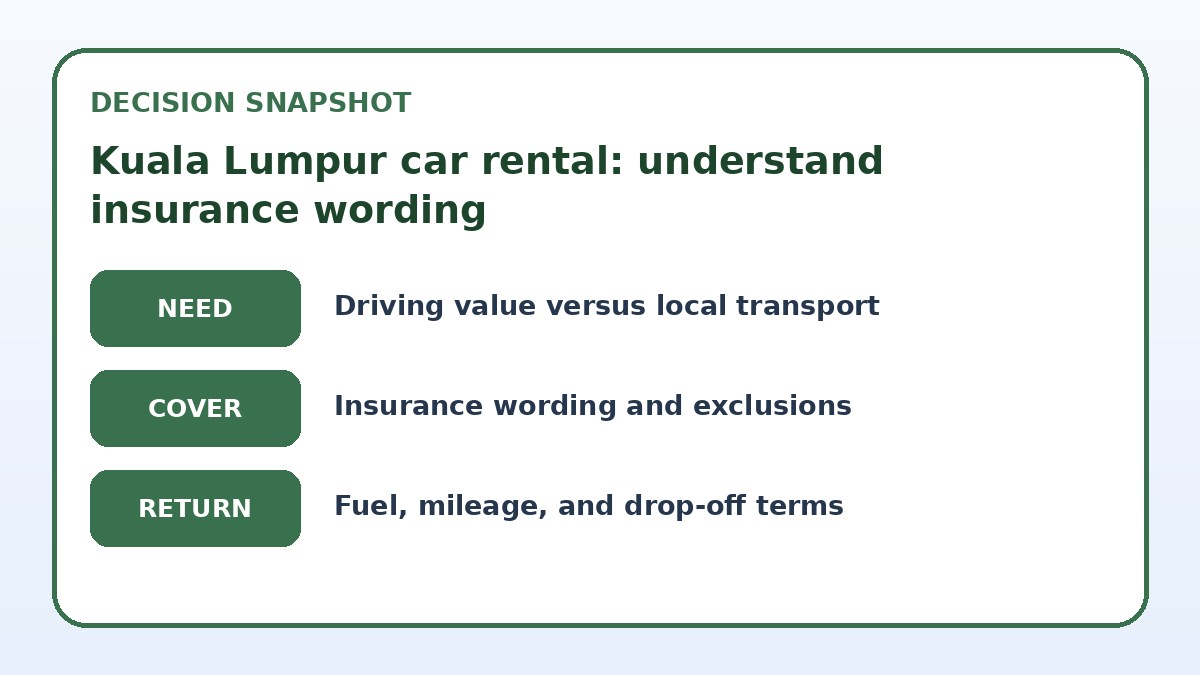
When planning family drives around Kuala Lumpur, the fastest way to avoid stress is to understand exactly what the rental insurer means by terms such as collision damage waiver, excess, third-party liability, and personal accident cover. Practically: always read the policy summary and the rental contract side-by-side; know the excess amount and whether you can reduce it with an add-on; check which drivers are covered and how roadside assistance works. This article lays out the key insurance phrases you will see when booking a Kuala Lumpur car rental, explains typical tradeoffs families face, and gives clear decision criteria so you can choose coverage that matches your comfort level and budget. I’ll also point out the exact provider details you must verify on the final booking page before you confirm.
See current options before you compare the details
Availability and final conditions change. Open Trip.com now or keep reading for the practical comparison.
Key insurance terms families must know
Start by flagging the few terms that appear on every rental quote. Collision Damage Waiver (CDW) and Loss Damage Waiver (LDW) often get used interchangeably; they relate to damage or theft of the vehicle and typically limit your liability to a stated excess. The excess (also called deductible) is the sum you must pay if the car is damaged or stolen. Separate from CDW, Third-Party Liability covers damage you cause to other people, vehicles, or property. Personal Accident Insurance (PAI) or occupant protection covers medical costs for driver and passengers; check whether this overlaps with your travel or family health insurance.
Also watch for exclusions and conditions that make a policy void: driving off-road, using an unapproved driver, driving under the influence, or parking in unauthorized zones are common triggers. Some policies exclude damage to tyres, windshields, undercarriage, and interior; these items are often offered as separate cover. Another frequent point of confusion is who counts as an authorised driver—many family scenarios include grandparents or teens as secondary drivers, but they must be listed on the rental agreement to be insured. Keep these definitions in mind when weighing options.
How to compare quoted coverages and limits
Treat each quoted coverage as a standalone decision and compare like-with-like. Don’t be distracted by marketing names—compare the actual excess amount, the per-incident limit for third-party liability, whether theft is included, and whether roadside assistance is part of the package. If the rental quote lists a zero or very low excess with a high daily supplement, calculate the total expected cost for your rental duration versus self-insuring by taking the higher excess and keeping the money in reserve. For families, consistency matters: a slightly higher daily fee might be worth it when travelling with children and luggage if it removes large out-of-pocket risks.
Ask how claims are handled. Some providers require you to pay the full repair bill up front and claim reimbursement later; others take payment only up to the excess. Reimbursement timelines, required documentation, and whether local police accident reports are accepted can dramatically affect how burdensome a claim will be. On the booking page, verify the process for authorising secondary drivers, the presence of temporary or young driver surcharges, and whether the insurer requires specific security deposits or holds on your credit card.
| Approach | Best for | Tradeoff to check |
|---|---|---|
| Lowest daily rate, higher excess | Families confident driving short urban trips without excessing wear, comfortable self-insuring smaller accidents | Lower upfront cost but higher potential out-of-pocket expense after damage or theft |
| Moderate daily cost with reduced excess | Families who want a balance of affordability and financial protection for typical city or short highway use | Pays a steady premium to limit unexpected large bills, may still leave gaps like windscreen cover |
| Full coverage add-ons (super CDW, tyre/windscreen cover) | Families taking long drives, rural routes, or travelling with less experienced drivers | Higher daily cost but minimizes hassle and large claims; can be redundant with other insurance |
| Rely on third-party travel/credit-card insurance | Families whose existing policies already offer comprehensive rental car protection and want to avoid double-paying | Requires careful verification of terms and provider acceptance; may involve slower reimbursements |
Ready to check the option that fits your plan?
Use your exact dates and traveler details so the provider page can show the current total and conditions.
Practical tradeoffs for family travellers
Families typically balance three priorities: limiting large unexpected charges, keeping daily rental costs reasonable, and making the rental process simple when managing children and luggage. Choosing a low excess with a higher daily premium reduces immediate worry and speeds up post-accident resolution; however, that premium accumulates on longer trips. Opting for a higher excess lowers the daily rate but increases financial risk, which can be painful if the car is used in busy urban areas or narrow kampung roads where minor dings are more likely.
Another tradeoff concerns add-ons like tyre and windshield cover. These can be valuable if you plan to drive rural or mountain routes, but for short city-only hires they may be unnecessary. Consider your route, driver experience, and the age of the driver. If a grandparent or a newly licensed driver will be at the wheel, favour lower excess and clearer claim procedures. For families, administrative simplicity—such as inclusive roadside assistance and fast replacement vehicles—can be worth a moderate premium because it reduces stress and lost time.
Before you book
- Read the rental contract’s insurance summary and note the exact excess amounts for CDW and theft protection.
- Confirm which drivers are authorised and add every regular driver to the booking before pickup.
- Verify exclusions for tyres, windscreen, underbody, and interior damage and buy supplemental cover only if needed.
- Check the deposit/hold amount on your payment card and the provider’s release policy after vehicle return.
- Ask the provider how claims are processed and whether you must pay repair costs up front or are reimbursed.
- If using separate insurance (credit card or travel policy), save proof of coverage and confirm the rental company accepts it.
What to verify on the provider’s final booking page
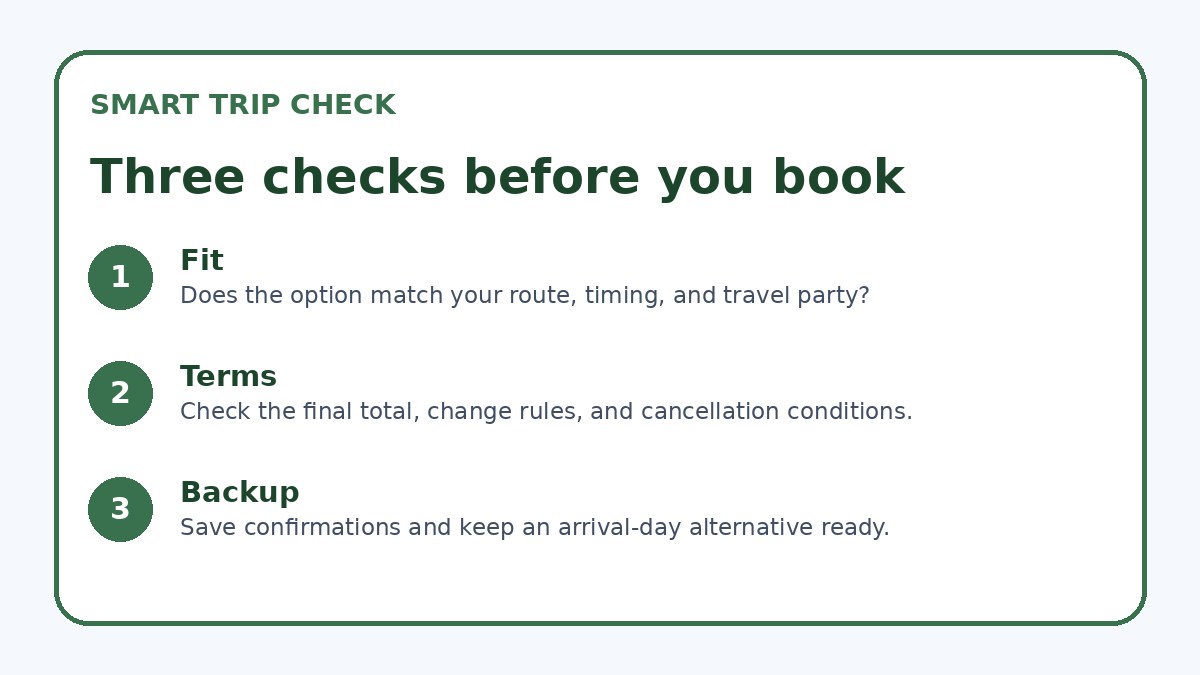
Before you complete a Kuala Lumpur car rental booking, verify these exact items on the provider’s final page: the precise excess amount and whether any reductions are automatic or require a paid supplement; a full list of exclusions (tyres, windscreen, underbody, drivers under a certain age); who counts as an authorised driver and any extra fees per additional driver; and whether theft protection includes keys and personal belongings. If the policy refers to partner insurers or third-party administrators, note their contact details for claims.
Also confirm payment and deposit mechanics: is there a hold on your card, how large is it, and will it be released immediately after a clean return or held for several days? Check the claim process description—some companies require local police reports, photographs, and signed statements; others allow faster in-office settlements. Finally, if you bought extra coverage from a separate insurer (credit card or third-party policy), make sure the rental company accepts that coverage and that you understand which policy responds first in the event of a claim. If unclear, call or message the provider and save screenshots of the booking page.
Frequently asked questions
Do I need personal accident insurance when renting a car in Kuala Lumpur?
Personal accident insurance (PAI) covers medical costs for vehicle occupants after a crash. For families, PAI can provide a quick payout in minor injuries, but it often duplicates existing travel insurance or your national health coverage. Before purchasing PAI from the rental company, compare its limits, exclusions, and whether it covers passengers of all ages against your family’s existing medical insurance. If your travel insurance already offers strong medical limits and fast hospital support in Malaysia, PAI may be redundant; if not, it can be a useful short-term safety net.
How does excess reduction work and is it worth it for family trips?
Excess reduction lowers the amount you must pay if the rental car is damaged or stolen. Rental companies typically offer tiered options: a basic CDW with a higher excess, and paid super CDW or excess-lowering add-ons that reduce or eliminate that amount. For families, the decision depends on your risk tolerance and trip profile: on short urban hires with careful parking, you might accept a higher excess. On longer drives, trips with luggage and child seats, or when multiple drivers share responsibility, reducing the excess often provides valuable peace of mind and predictable potential losses.
Will my credit card or home insurance cover car rental insurance in Malaysia?
Some credit cards and home/travel insurance policies include rental car coverage, but terms vary widely. Key things to verify are whether coverage applies in Malaysia, whether it covers third-party liability, damage to the rental vehicle, theft, and whether it requires you to decline the rental company’s CDW. Also check driver age limits, permitted vehicle types, and how claims are reimbursed. On the provider’s final booking page, confirm acceptance of third-party coverage and save any required proof or claim forms so you can present them quickly if needed.
Final planning note
Families renting cars in Kuala Lumpur can avoid most surprises by focusing on a few concrete checks: the exact excess, listed exclusions, who is an authorised driver, and the claims process. A lower excess or full cover add-ons reduce immediate worry but raise your daily cost; relying on existing travel or credit-card insurance can save money only if you confirm coverage details and provider acceptance first. Before you click confirm, compare the total expected cost for your trip length, photograph the car at pick-up and drop-off, and save screenshots of the booking page and any insurance documents. With those steps, you’ll be prepared to focus on the journey, not the paperwork.
Continue planning
Check current options and final conditions
Use the provider page to confirm live availability, the final total, cancellation terms, and every condition that matters to your trip.
This evergreen planning guide was created with AI-assisted drafting and a structured quality review. It does not display live prices, schedules, availability, visa guidance, or provider rankings. Verify current details before booking. Some links are affiliate links; we may earn a commission at no additional cost to you.