
If you and your partner are planning travel from Auckland to Wellington, the practical choice is to prioritise the ticket flexibility that matches how fixed your schedule is and how much risk you’re prepared to share. For couples who need freedom to change dates, look first for tickets that allow low-cost name changes or free date amendments; if you both have fixed commitments, a lower-flex economy fare may make sense. Decide which matters more: the ability to move both passengers together without fees, separate change options so one traveller can adjust without affecting the other, or refundable coverage for unexpected cancellations. Read the provider’s booking page for exact change and refund rules, including whether fees apply per passenger, how quickly refunds are processed, and whether vouchers are offered instead of cash refunds. Trip.com can be used to compare current availability, but always verify final terms on the operator’s official checkout page.
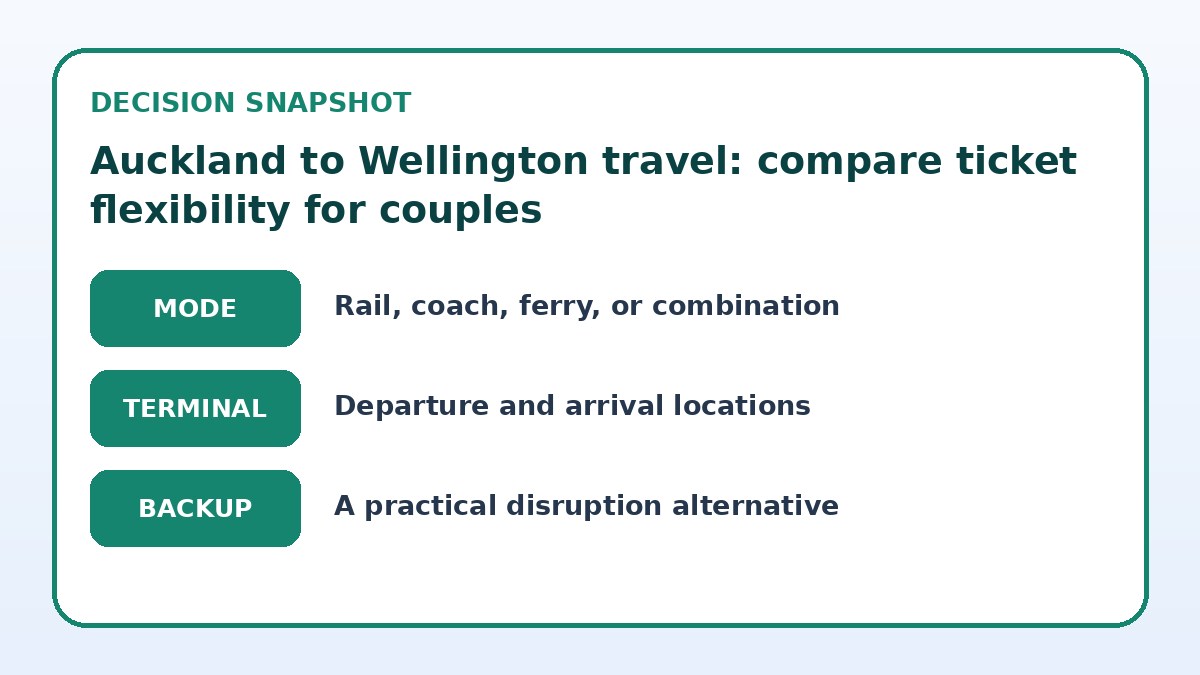
See current options before you compare the details
Availability and final conditions change. Open Trip.com now or keep reading for the practical comparison.
How ticket flexibility differs for couples
Ticket flexibility is not a single feature; it’s a bundle of policies covering changes, refunds, name edits, and how those rules apply if multiple passengers are on the same booking. For couples, the key distinction is whether the provider treats tickets individually or as a single booking. An individual-ticket policy lets one partner change their travel without automatically forcing a change for the other. A single-booking policy may require both passengers to be moved together or to face fees calculated on the combined fare. When comparing options, always check whether change fees are per passenger and whether administrative or fare-difference charges apply.
Another important difference is the form of compensation. Some providers issue cash refunds, others offer travel credit or vouchers that must be used within a specified window. Vouchers can be useful for rebooking with the same operator, but they carry the risk of expiring before your next trip or being restricted to certain fare classes. Couples should ask whether the ticket type they’re considering converts to a voucher automatically for cancellations, or if a cash refund is available upon request and under what conditions. Always verify these specifics on the operator’s final booking page.
When to prioritise joint-change versus individual flexibility
Choose joint-change flexibility if you and your partner plan to travel as a pair and want to keep itineraries identical—this ensures seat assignments, outbound and return dates, and ancillary services stay synced. Joint-change fares reduce the administrative hassle of coordinating separate amendments and avoid the risk that one partner’s change will strand the other on a different schedule. This is often best for romantic getaways, short city breaks, or when both travellers’ calendars are equally uncertain in the same way. Check whether the joint-change option allows partial changes (one passenger only) and whether extra fees apply for splitting a booking later.
Opt for individual-ticket flexibility when either partner may need to change independently—work commitments, family obligations, or differing travel plans make this appealing. With per-person flexibility, one traveller can delay or cancel without affecting the companion’s ticket, avoiding unnecessary rebooking or combined penalties. This approach can be more cost-effective if only one person’s plans are uncertain. Verify on the booking page whether seats and ancillaries like baggage or priority boarding are linked and whether splitting the booking later will create additional charges or seat reassignment costs.
| Approach | Best for | Tradeoff to check |
|---|---|---|
| Joint-change flexible fare | Couples travelling together with the same uncertain schedule | Higher upfront cost but fewer coordination hassles; both passengers usually must change together |
| Per-passenger flexible fare | Couples with independent work or family obligations | More flexible for one traveller; may cost more than a single low-cost combined booking |
| Non-refundable low-cost fare with add-on flexibility | Couples confident in dates but wanting cheaper headline fares | Low base fare but potentially high fees or voucher-only refunds if plans change |
| Refundable premium fare | Couples needing maximum cancellation protection and peace of mind | Highest price but usually offers cash refunds and simpler cancellations; check refund method |
Ready to check the option that fits your plan?
Use your exact dates and traveler details so the provider page can show the current total and conditions.
Tradeoffs between low-cost fares and refundability
Low-cost fares commonly offer the lowest headline price but restrict changes and refunds, often leaving cancellations without cash refunds or with high fees. For couples where both calendars are locked in—wedding guests, conference attendees, or parties with set leave dates—these fares can be a rational choice. Yet you must weigh potential add-ons: flexible ticket upgrades, travel insurance, and refundable ancillaries can erode any initial savings. Read the final booking conditions to see whether a paid upgrade to a flexible fare is available at purchase and how that compares to buying a refundable ticket directly.
Refundable fares provide peace of mind at a higher upfront cost, but the value depends on the likelihood and cost of last-minute changes. Refundable tickets are typically better for couples dealing with unpredictable factors such as medical care, uncertain event dates, or work commitments that may shift. Check exactly how refunds are processed—some operators refund to the original payment method, while others may issue vouchers or take time to complete refunds. Confirm processing times, documentation requirements, and any cancellation windows specified on the provider’s cancellation policy page.
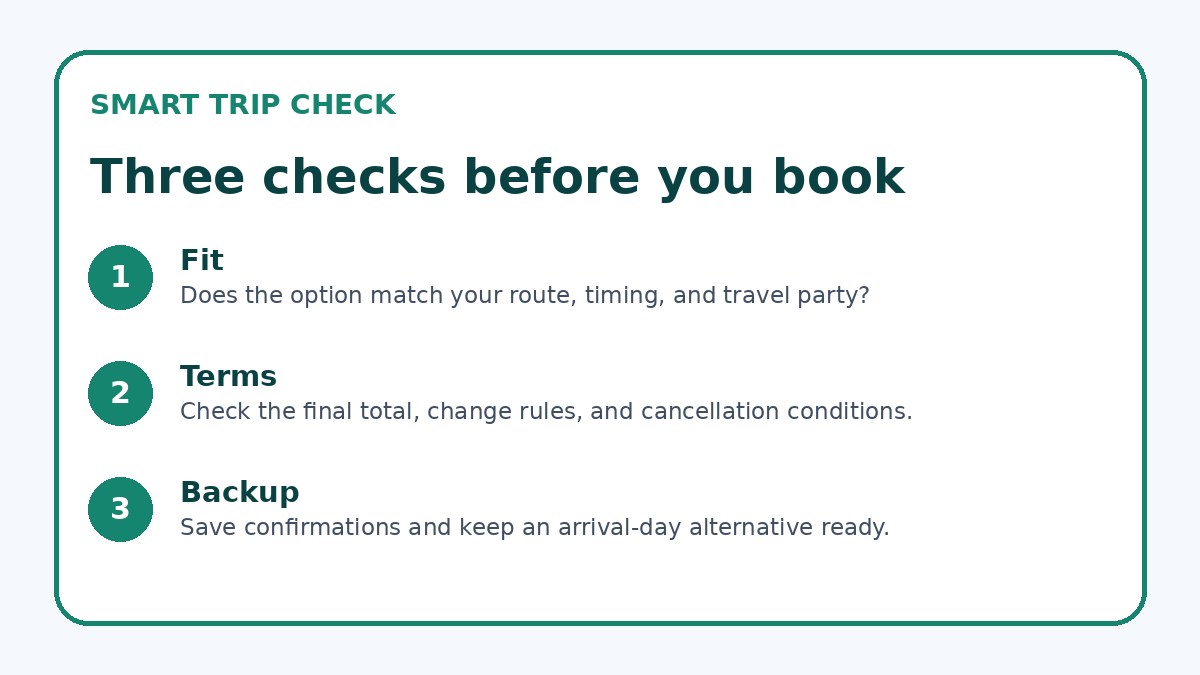
Before you book
- Read the final fare rules on the operator’s checkout page and note whether fees are charged per passenger or per booking.
- Confirm whether name changes, date changes, and partial-ticket changes are permitted and what fees or fare differences apply.
- Check whether cancellations result in cash refunds or vouchers and record the refund processing time and any expiry dates.
- Verify whether ancillaries (baggage, seats, priority boarding) are refundable or transferable after a ticket change.
- If using a comparison site like Trip.com, click through to the operator’s official booking page before entering payment details.
- Save screenshots or written confirmation of the fare rules and any customer-service statements about change or refund permissions.
Practical booking checklist and how to verify fine print
Before you complete a booking, read the fare rules on the checkout page line by line: who pays change fees, whether name changes are allowed, what counts as a valid reason for a refund, and whether refunds become vouchers. Look for phrases like 'per passenger fee' or 'per booking fee' and note whether ancillary purchases (baggage, seats, meals) are refundable or transferrable. If the provider’s booking summary doesn’t clearly show this, use customer support or the provider’s FAQ to get confirmation in writing—screenshot or save the exchange so you have proof of the stated policy.
Also compare how the provider handles partial changes: can one ticket on a two-person booking be altered without reissuing both tickets? If you use a third-party site for comparison (Trip.com can help you view options), always click through to the operator’s official checkout before paying. Confirm whether seat selection, loyalty points, and baggage allowances are preserved after a change, and check time limits for using vouchers. These specifics often make the difference between a slightly pricier ticket that saves headaches and a cheap fare that becomes costly if plans shift.
Frequently asked questions
Can one partner change their ticket without affecting the other on the same booking?
It depends on the provider’s policy. Some operators treat each passenger’s ticket independently, allowing one person to change dates or names without reissuing the other traveller’s ticket. Other providers require any amendments to be made to the whole booking, which can mean both tickets are reissued or incur combined fees. Before you book, inspect the provider’s change policy for language about 'per passenger' versus 'per booking' fees, and ask customer service to confirm whether partial changes are possible and how ancillaries are handled during the amendment.
Is it better for couples to buy separate tickets or book together?
There’s no one-size-fits-all answer. Booking together simplifies seat pairing, combined services, and sometimes price, but it can tie both travellers to the same change rules. Buying separate tickets increases individual flexibility—one partner can alter plans without affecting the other—but may complicate seating next to each other and can result in higher combined fares. Weigh the likelihood of independent changes, the value of sitting together, and whether the operator charges per-booking or per-ticket fees; your priorities will determine which approach is more practical.
How should couples verify voucher versus cash refund policies before purchasing?
Check the provider’s cancellation and refund sections on the final checkout page, not just the marketing copy. Look for explicit statements that cancellations will result in 'cash refund to original payment method' versus 'travel credit or voucher' and note any expiry or usage restrictions. If the wording is unclear, contact customer service and request clarification in writing, then save the response. Remember that voucher-only refunds can limit future choices, so factor in how likely you are to reuse the same provider before accepting a voucher-based policy.
Final planning note
For couples travelling Auckland to Wellington, ticket flexibility is a planning decision that balances cost against the likelihood of change and how you want changes handled between partners. If you expect both schedules to shift together, a joint-change flexible fare reduces coordination friction; if only one person is likely to move plans, choose per-passenger flexibility to avoid penalising the other. Low-cost, non-refundable tickets can be sensible when dates are fixed, but verify whether refunds become vouchers and whether ancillaries remain transferable. Use a comparison tool like Trip.com to scan options, but always confirm the operator’s exact change and refund terms on their official booking page and save written confirmation. That practice will protect both partners and keep your travel plans resilient.
Continue planning
Check current options and final conditions
Use the provider page to confirm live availability, the final total, cancellation terms, and every condition that matters to your trip.
This evergreen planning guide was created with AI-assisted drafting and a structured quality review. It does not display live prices, schedules, availability, visa guidance, or provider rankings. Verify current details before booking. Some links are affiliate links; we may earn a commission at no additional cost to you.