
If your workday depends on arriving on time and ready, decide your mode of travel the day before and prepare everything the night before. For Bangkok to Chiang Mai transport you’ll weigh speed versus predictability: flights are usually fastest but involve airport transfers and security steps, while trains and long-distance buses let you keep devices at hand and work en route. The practical answer for a business traveler is to choose the option that minimizes total door-to-door time variability and maximizes your ability to do focused work or rest. Confirm departure points, transfer times, luggage policies, and the provider’s check-in or boarding windows. On the morning of travel, follow a simple routine: final confirmations, portable power and connectivity ready, printed or screenshot boarding evidence, and a contingency plan if connections change.
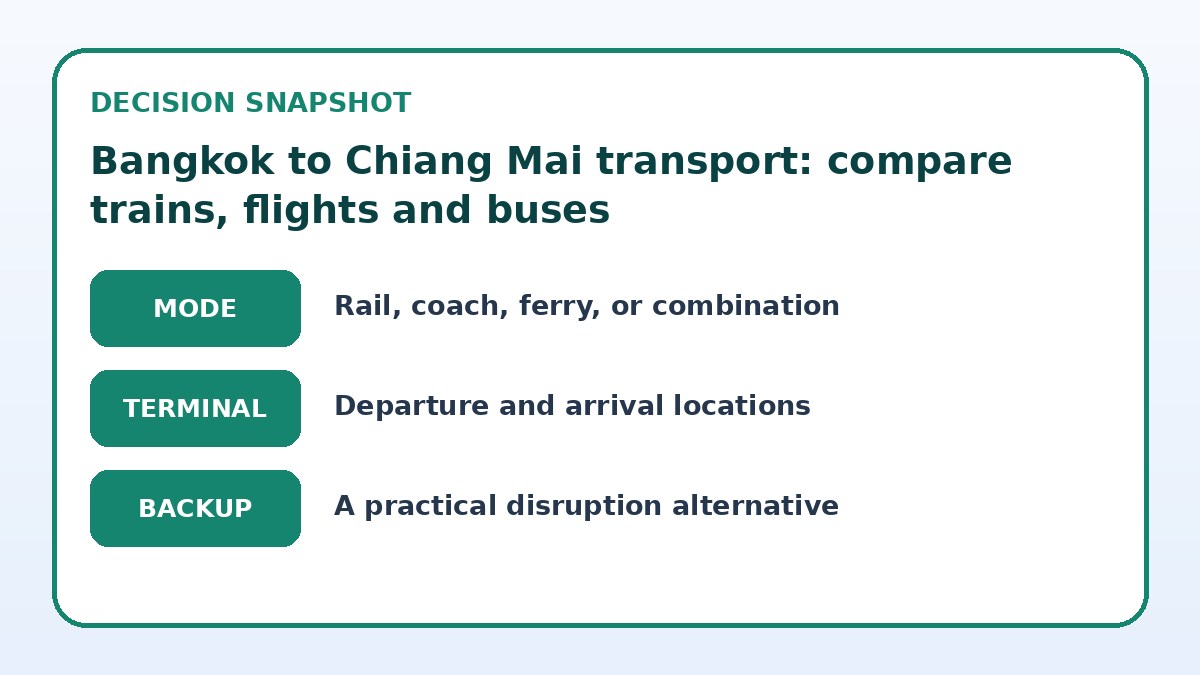
See current options before you compare the details
Availability and final conditions change. Open Trip.com now or keep reading for the practical comparison.
Choosing the right mode: speed, predictability, or workspace
When selecting Bangkok to Chiang Mai transport, start with your primary objective for the day: arrive fastest, guarantee a fixed arrival window, or work en route. Flights can be the fastest in air time, but total travel time depends on checking in, security, and airport transfers at both ends. Trains and buses remove the airport transfer variable and often have longer, more predictable boarding windows, but they can have slower journey times and different comfort levels. For business travelers who need to present or sleep immediately on arrival, consider which option reduces unpredictable delays rather than just shortest scheduled duration.
Also consider where you will be productive. Trains sometimes offer tables, more legroom, and fewer device restrictions, making them a good choice for focused work. Buses vary widely in comfort and Wi-Fi reliability; they might be useful for overnight travel that preserves daytime hours. If your priority is minimizing variability, factor in local traffic in Bangkok for transfers: a short flight may still take longer door-to-door than a direct daytime train if peak-hour taxi time is long. Compare complete door-to-door times, not only in-air or in-motion time.
Preparing documents, tech, and meeting logistics
Before the travel day, gather all documentation—tickets (mobile and screenshot), passport or ID, company approvals, and any meeting materials you’ll need on arrival. Since provider details can change, verify baggage allowances, refundable/change policies, and the exact boarding window on the booking page before you finalize. If you’re connecting to a local taxi or rideshare at arrival, pre-booking or identifying preferred options can save time and reduce stress. Communicate realistic arrival expectations to colleagues or clients, and have a calendar entry with the travel itinerary and contact numbers.
Set up your tech to avoid surprises: fully charge laptops and phones, carry at least one power bank that meets airline rules, and pack charging cables and a travel adapter. For uninterrupted work, bring noise-cancelling headphones and a compact hotspot or a local SIM with data; verify whether the mode of transport offers reliable onboard Wi-Fi and whether it supports video calls. Download critical files for offline access, turn off non-essential background updates, and test that VPNs and conferencing apps open on battery power. A short pre-flight or pre-departure checklist can prevent a last-minute scramble.
| Approach | Best for | Tradeoff to check |
|---|---|---|
| Flight (including airport transfers) | Travelers prioritizing the shortest in-air time and early afternoon or evening business starts. | More time and variability in transfers, check-in, and security; airport locations add unpredictability for door-to-door planning. |
| Day train (reserved seat or sleeper day coach) | Those needing a predictable schedule and a workspace with outlets and more room to spread documents. | Longer total travel time than flying; comfort and Wi-Fi quality vary by service and carriage class. |
| Overnight train or sleeper | Business travelers who want to recover en route and avoid losing a daytime meeting slot. | Sleeping comfort and privacy differ by carriage; arriving after a night in transit may still require brief recovery time. |
| Long-distance bus or VIP coach | Budget-conscious travelers who can work from a compact seat and want direct terminal-to-terminal service. | Variable comfort and connectivity; road traffic can add significant schedule uncertainty compared with rail. |
Ready to check the option that fits your plan?
Use your exact dates and traveler details so the provider page can show the current total and conditions.
Morning-of routine and station/airport navigation
On the travel morning, run a compact routine: check the provider’s latest service status, reconfirm your check-in or boarding window, and re-download digital tickets. Give yourself buffer time for Bangkok traffic or unexpected delays—build in an extra margin beyond typical journey estimates. If taking a flight, confirm which terminal and whether mobile check-in is possible; for trains and long-distance buses, verify whether seats are assigned or open. Map the precise drop-off and pick-up points and save ride instructions or terminal photos to avoid confusion upon arrival.
At the station or airport, prioritize a calm, efficient arrival: keep documents accessible, use express lanes where available, and follow signage for priority or business-class boarding if you have access. If you have meetings shortly after arrival, use the travel time to change into meeting-ready clothes, refresh, and rehearse key points. When possible, book a seat near a power outlet. If delays occur, notify stakeholders immediately with an updated arrival estimate and an alternate plan for the meeting if required.
Before you book
- Confirm the exact departure location in Bangkok and expected transfer time from your hotel during peak traffic hours.
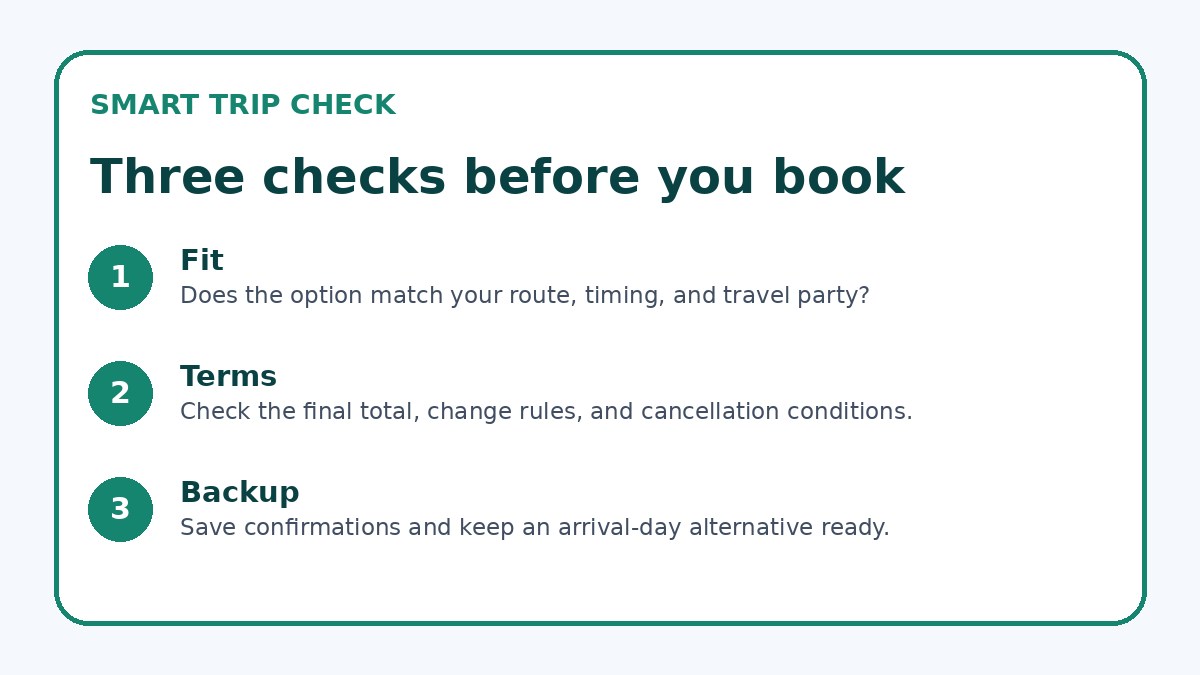
- Verify boarding windows, baggage rules, and seat assignment policy on the final booking page before you finalize or print tickets.
- Charge devices, pack a power bank, bring noise-cancelling earbuds, and test offline access to key documents and apps.
- Save screenshots or PDF copies of tickets and ID, and place physical copies where they are quickly accessible in transit.
- Pre-arrange or note reliable onward transfer options at Chiang Mai station or airport, and share arrival details with contacts.
- Record all travel receipts and any service disruption notes for company expense reporting and post-trip review.
Contingencies, returns, and expense reporting
Prepare simple contingencies: a later train or flight option, an alternative coach route, and a standby taxi or rideshare in case scheduled ground transfers are delayed. Keep copies of receipts, proof of changes or delays, and notes about any service disruptions for expense reporting or travel claims. If your schedule is tight, avoid last-minute changes that could ripple through the day; instead, pick the option that allows a modest buffer and clear backup arrangements. Discuss flexible booking terms with your travel manager before finalizing if you expect possible itinerary changes.
After travel, reconcile time spent in transit against meeting outcomes and report expenses with clear notes on why a particular mode was selected if it differed from policy. Evaluate whether the chosen transport met your priority (speed, predictability, workspace), so you can refine choices for future trips. A quick debrief—what worked, what didn’t, and what to change—helps optimize future Bangkok to Chiang Mai transport decisions and keeps your travel routine lean and reliable.
Frequently asked questions
How do I compare door-to-door travel time for Bangkok to Chiang Mai transport?
Add the time required for transfers at both ends to the scheduled journey time. For flights include hotel-to-airport travel, recommended pre-departure arrival buffer, security and baggage claim time, and airport-to-destination transfer. For trains or buses include transfer time to the station or terminal and typical station arrival recommendations. Compare based on the total time from your door in Bangkok to the door of your Chiang Mai meeting or hotel, and choose the option with the lowest variability for your schedule needs.
Can I work reliably on trains or buses between Bangkok and Chiang Mai?
Many trains offer more space, tables, and power outlets than buses, making them better suited for focused work. However, onboard Wi-Fi availability and reliability vary by operator and carriage class, so assume limited connectivity unless confirmed on the booking page. Bring offline copies of essential files, a charged device and power bank, and noise-cancelling headphones to concentrate amid motion and announcements. If you must join video calls, test connectivity early and have a mobile hotspot or local SIM as backup.
What should I tell clients or colleagues about my arrival to manage expectations?
Provide a realistic arrival window based on door-to-door calculations rather than scheduled runtime only. Mention the transport mode and any probable transfer points so they understand where potential delays may occur—rush-hour traffic in Bangkok or baggage claim time at the airport, for instance. Offer a backup contact method and a contingency plan such as a later meeting slot or a colleague to start if you are delayed. Clear advance communication reduces pressure if changes occur en route.
Final planning note
Preparing for Bangkok to Chiang Mai transport as a business traveler is about minimizing unpredictability and keeping productivity intact. Choose a mode that fits your highest priority—speed, a reliable schedule, or a usable workspace—and verify the details that affect door-to-door time: departure points, boarding windows, baggage rules, and transfer logistics. Pack and charge devices, secure offline copies of crucial documents, and set realistic arrival expectations with colleagues. Finally, plan a simple contingency so a delayed connection doesn’t derail your workday. With a short checklist and a clear decision criterion, your travel day can be calm and productive.
Continue planning
Check current options and final conditions
Use the provider page to confirm live availability, the final total, cancellation terms, and every condition that matters to your trip.
This evergreen planning guide was created with AI-assisted drafting and a structured quality review. It does not display live prices, schedules, availability, visa guidance, or provider rankings. Verify current details before booking. Some links are affiliate links; we may earn a commission at no additional cost to you.