If you’re a solo traveler booking Seoul to Hong Kong, check change and cancellation rules before you commit. The practical answer: prioritize fares that permit free or low-fee date changes, give a reasonable refund window, and clearly state how refunds are processed (airline credit, card refund, or travel voucher). Also compare how changes are handled for involuntary disruptions, plus whether the fare allows name corrections or reissue fees. Decide which protections matter most—flexibility for schedule shifts, the ability to cancel for any reason, or a low upfront cost with strict rules—and then cross-check fees and timelines on the airline’s final booking page. If you use an online agency, verify identical change/cancellation language there; Trip.com can be one place to compare but always confirm on the carrier’s own terms.
See current options before you compare the details
Availability and final conditions change. Open Trip.com now or keep reading for the practical comparison.
Understand the basic types of fare rules
Airlines typically sell a range of fares from restrictive to flexible: basic or economy saver, standard economy, premium economy, and business class. Each fare bucket carries its own change and cancellation framework—some permit date changes for a fee, others allow only travel-credit vouchers, and the most flexible fares may waive fees entirely. For solo travelers, a lower fare can be attractive, but the savings vanish if you must pay high change fees or accept a nonrefundable voucher. The key is to read the fare conditions that are linked at checkout; those short clauses spell out deadlines, charge amounts, and whether the fare is refundable or rebookable.
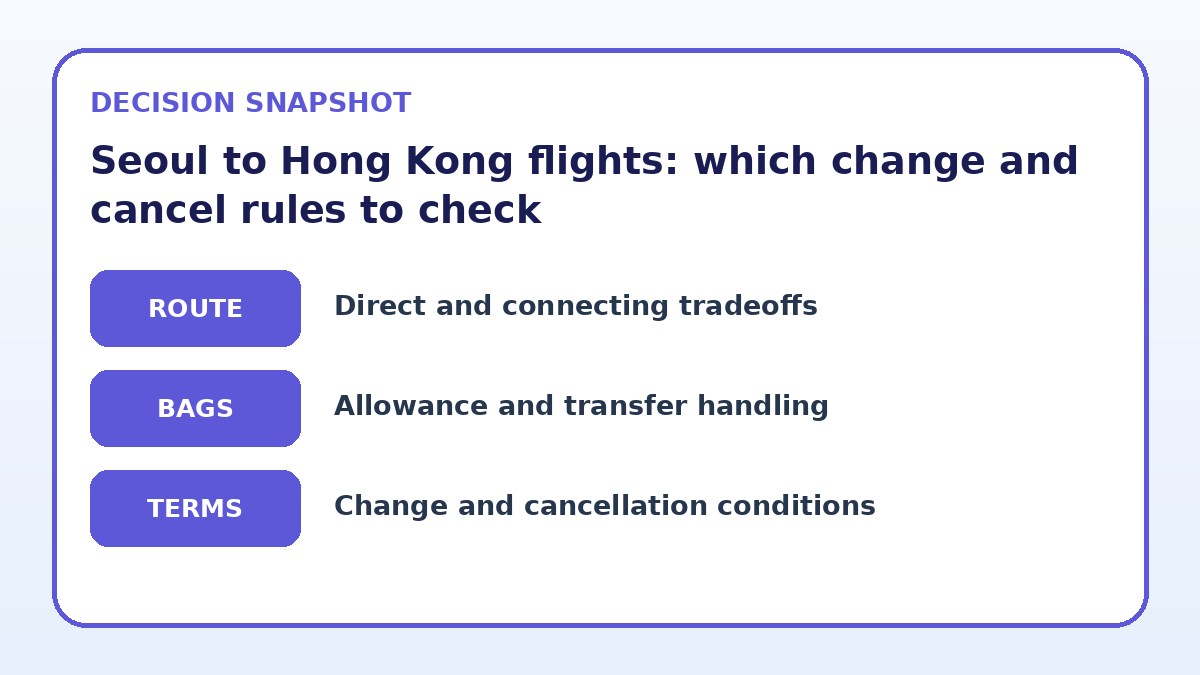
When comparing routes between Seoul and Hong Kong, remember you might see direct and connecting itineraries. If a connection is included, check whether the entire itinerary is operated under a single fare and how changes to one segment affect the whole ticket. Codeshares can complicate matters because the operating carrier’s rules might differ from the marketing carrier’s published policy; always verify which airline’s contract governs your ticket. Finally, identify whether the fare allows partial refunds or only vouchers—this affects how easily you can recover funds if you cancel before departure.
Fees, waivers, and what airlines commonly waive
Change and cancellation fees are often a fixed amount plus any fare difference; the amount varies by carrier and fare class. Some airlines publish temporary waivers for events (strikes, severe weather, or public health changes), but these waivers are time-limited and condition-specific. For solo travelers, the practical approach is to note both the standard fee and any published fee waiver language at booking; if a waiver exists for schedule changes within a certain window, it can be worth booking a slightly cheaper but normally restricted fare and relying on the waiver if needed. Always capture screenshots of waiver text and your booking-confirmation page for later reference.
Also check who pays for differences in fare when rebooking: many airlines require the traveler to pay any increase in fare on top of a change fee, while offering refunds for price drops only if explicitly stated. Some carriers offer ‘flex’ add-ons at purchase—paid options that reduce or eliminate change fees; these can be more economical than full refundable fares if you only need the one protection. Confirm whether the add-on covers same-day changes, date-only moves, or full cancellations because product definitions vary and can influence the best purchase for your trip.
| Approach | Best for | Tradeoff to check |
|---|---|---|
| Buy the flexible fare | Travelers prioritizing low change fees and refunds to the original payment method | Higher upfront cost but simpler rebooking and fewer surprises |
| Buy a low-cost fare with an add-on flex option | Those seeking middle ground between cost and protection | Lower base fare but pay extra for specific protections; check exact coverage |
| Buy the cheapest fare and rely on travel insurance | Travelers willing to manage post-booking claims for defined covered reasons | Insurance may not cover voluntary changes; claims process can be slow |
| Book via an online agency and confirm carrier rules | Travelers who want a single point of contact for changes | Agency may charge amendment fees and carrier policies still govern refunds |
Ready to check the option that fits your plan?
Use your exact dates and traveler details so the provider page can show the current total and conditions.
Practical checks for solo travelers before you book
Don’t rely on summary labels like “flexible” or “refundable” without reading the caveats. Look for explicit answers to: how much is the change fee, is the ticket refundable to the original payment method, and how long before departure you can cancel for a refund or credit. Check the carrier’s pages for information about reissue deadlines, contact methods for changes (online versus phone), and whether refunds take weeks to process. If you plan to return home via a different carrier or route, verify whether open-jaw or multi-carrier itineraries combine rules or treat each segment independently.
Consider ancillary protections that apply to solo travelers: whether the airline allows same-day standby for an earlier flight, how name-change corrections are handled, and whether the fare covers unexpected disruptions like operational delays. If you’ll be making plans in Hong Kong (tours, hotels), prefer tickets that minimize uncertainty around date changes. When booking via an online travel agency, compare the agency’s amendment fees with the airline’s rules and confirm which entity issues refunds—ticketing agent or carrier—so you know where to escalate problems.
Before you book
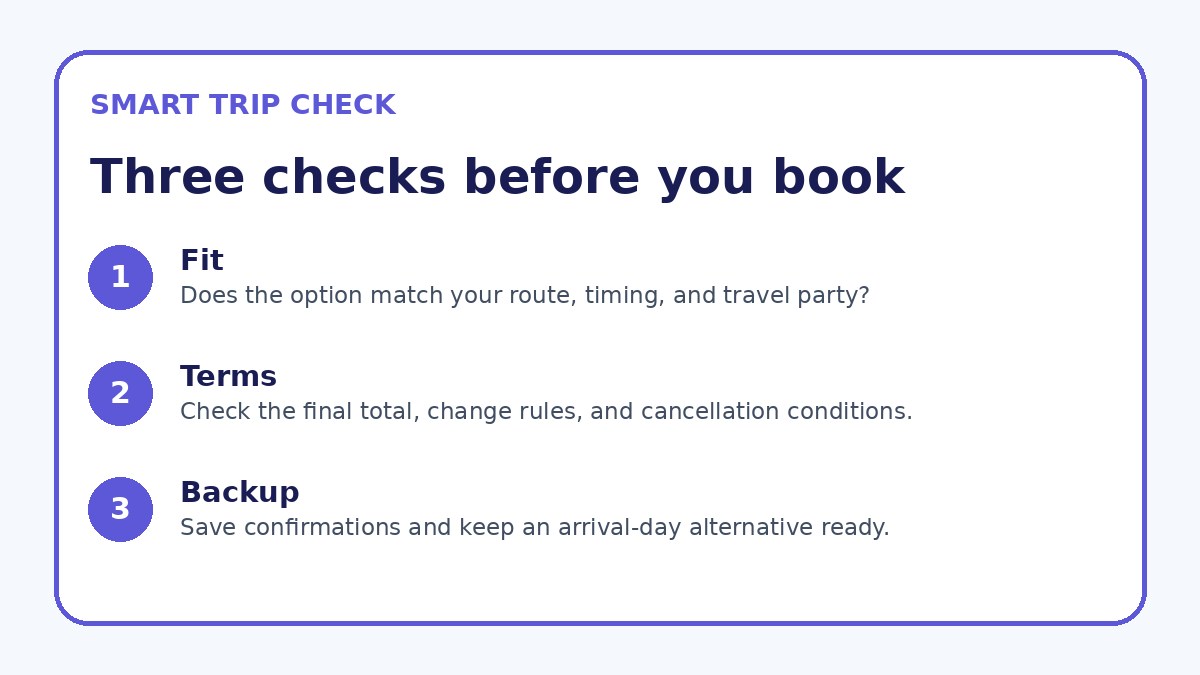
- Open the fare rules linked at checkout and screenshot the change and cancellation section for your records.
- Confirm whether refunds are issued to the original payment method or only as travel credit or vouchers.
- Note the exact change fee amount and any required fare difference payment on rebooking.
- If booking a codeshare, identify which airline’s contract of carriage governs your ticket.
- Compare the carrier’s waiver language for schedule disruptions and save any relevant notices.
- If using an OTA, verify the agency’s amendment fees and that the airline’s refund policy applies to your booking.
How to decide between flexible and low-cost options
Start with the probability your plans will change. If your itinerary is fixed—business meetings with set dates or non-refundable local reservations—a more flexible fare or a cancellation-protecting add-on can save money and hassle if something shifts. If your schedule is tentative or you expect potential date changes, prioritize a fare that either waives change fees or provides refunds to the original payment method. Factor in the total likely cost: compare the price difference between a flexible and a restrictive fare against the historical or plausible cost of one change.
Also weigh non-financial considerations: how comfortable are you managing rebooking processes solo, including phone calls across time zones and submitting refund requests? If you prefer self-service online tools, check that the carrier’s website and app allow free or simple changes for your fare class. Finally, if you purchase travel insurance, read the policy’s coverage for cancellations and missed connections and make sure it complements, rather than duplicates or contradicts, the airline’s own rules.
Frequently asked questions
Can I rely on an airline’s “flex” label when booking Seoul to Hong Kong flights?
Labels like “flex” or “flexible” are shorthand and can mean different things between airlines. Always open the fare conditions to see what flexibility covers: whether it waives change fees entirely, only for certain time windows, or permits refunds to the original payment method. Also check if the flex option is an add-on bought at checkout or built into the fare. For connecting itineraries or codeshares, confirm which carrier’s definition of “flex” applies to your ticket—this is critical for knowing what protections you actually have.
If the airline changes my Seoul to Hong Kong schedule, will I avoid change fees?
Many carriers waive change fees when they significantly alter departure times or cancel flights, but waivers vary by airline and situation. Read the carrier’s schedule-change policy at booking and note the definition of “significant” change. Also check remedies offered—free rebooking on a similar flight, a full refund, or a travel credit—and whether rebooking must occur within a set period. Keep booking confirmation screens and any email notices from the airline, as those communications may include the specific options available to you.
Should I buy travel insurance or rely on airline rules for flexibility?
Travel insurance and airline policies serve different roles. Airline rules govern changes and refunds to your ticket; insurance covers unexpected events listed in the policy (medical emergencies, certain travel disruptions, or trip cancellation for covered reasons). If you need protection for reasons airlines don’t cover—like personal illness or certain family emergencies—insurance may be necessary. Read policy exclusions and how it coordinates with airline refunds; in some cases, insurers require you to claim any available airline refund first before they reimburse remaining losses.
Final planning note
For solo travelers on the Seoul to Hong Kong route, the right booking choice depends on how likely your plans are to change and how you want to receive any refunded funds. Start by reading the fare rules at the carrier’s final booking page and recording the change fee, refund method, and any waiver language. Compare the extra cost of a flexible fare or add-on against the potential cost of a single change, and verify any agency fees if you do not book directly. Keep copies of all booking screens and waiver notices; that documentation speeds resolution if you need to change or cancel. Thoughtful comparison upfront reduces stress later and helps you travel with confidence.
Continue planning
Check current options and final conditions
Use the provider page to confirm live availability, the final total, cancellation terms, and every condition that matters to your trip.
This evergreen planning guide was created with AI-assisted drafting and a structured quality review. It does not display live prices, schedules, availability, visa guidance, or provider rankings. Verify current details before booking. Some links are affiliate links; we may earn a commission at no additional cost to you.