
Practical answer first: when you have extra or bulky luggage, the single most effective strategy is to compare travel dates across a range (±3–7 days) for both flights and hotels, and choose the date combination that reduces transfer complexity and excess-baggage penalties. Wide-date searches reveal cheaper connection options with longer minimum connection times that let you avoid tight transfers, allow you to pick airlines or fare classes with higher baggage allowances, and expose hotel nights with larger rooms or easier arrival windows. After you pick candidate dates, confirm baggage allowances, carry-on size rules, checked-bag weight and fees, and connection minimums on the airline’s final booking page — and check hotel room size, elevator access, early/late arrival policies, and whether the property can hold oversized items. Tradeoffs include higher nightly rates on some dates, longer travel times, or extra overnight storage steps; the following sections walk through how to evaluate those choices and what to verify before you book.
See current options before you compare the details
Availability and final conditions change. Open Trip.com now or keep reading for the practical comparison.
How flexible dates directly lower luggage hassles
Changing your travel dates by a few days can affect the entire logistics chain: different flights may include free checked bags, different connections can eliminate tight transfers, and some days show hotels with larger room types available. Airlines and fare classes often vary by departure day and demand; shifting to a less-busy travel day can move you into a fare that includes at least one checked bag or allows a heavier carry-on. For multi-leg itineraries, a slightly longer connection reduces the chance you’ll be sprinting between gates or missing a shuttle with a suitcase.
Hotels and short-term rentals follow similar patterns. Weekday arrivals, shoulder-season dates, or mid-week check-ins sometimes expose larger or ground-floor rooms at the same or slightly higher rate than small rooms on peak dates. That can save you the cost and inconvenience of paying airline oversize or overweight fees or booking separate luggage shipment. Use flexible-date searches to surface these alternatives, then confirm room layouts, elevator access, and whether the property offers luggage storage on the provider’s final booking page.
Comparing flight options when you carry more baggage
When you run a flexible-date flight search, compare far more than price: look at fare inclusions, number and length of connections, and the minimum connection times the itinerary requires. Direct flights reduce handling ambiguity but may come at a premium; connecting itineraries sometimes offer cheaper fare classes that include checked bags or are amenable to purchasing a single higher-allowance checked bag rather than two separate fees. If a connection is necessary, prefer one with a comfortable layover and same-airline or interline-checked baggage policies so you can check luggage through to Rome without re-clearing security between segments.
Also verify carry-on size and weight rules, not just checked baggage. Some low-fare carriers restrict carry-on to a small personal item unless you buy a higher bundle. When searching flexible dates, flag itineraries where the airline’s baggage policy at the final booking page shows a generous allowance or a simple bundle for extra weight — that can be cheaper and less stressful than adding multiple pay-at-gate charges. If an itinerary shows mixed carriers, double-check who handles the checked bags and whether a connection requires bag re-check or customs collection.
| Approach | Best for | Tradeoff to check |
|---|---|---|
| Shift dates ±3 days for the same route | Finding cheaper fare classes that include checked bags or better connections | May require a longer stay or different arrival weekday; hotel rates and local events can still vary |
| Pick a flight with a longer connection | Reducing missed-connection risk and easing transfer with heavy luggage | Adds travel time and may require planning for lounge or airport comfort during layover |
| Choose a different arrival airport or train station day | Accessing carriers or routes with friendlier baggage rules or simpler ground transfers | Could increase overland transfer cost or time to central Rome |
| Book a room with confirmed elevator/ground-floor access | Avoiding stairs and simplifying arrival or departure with big suitcases | Such rooms can be limited on peak dates or at historic properties, requiring flexible scheduling |
Ready to check the option that fits your plan?
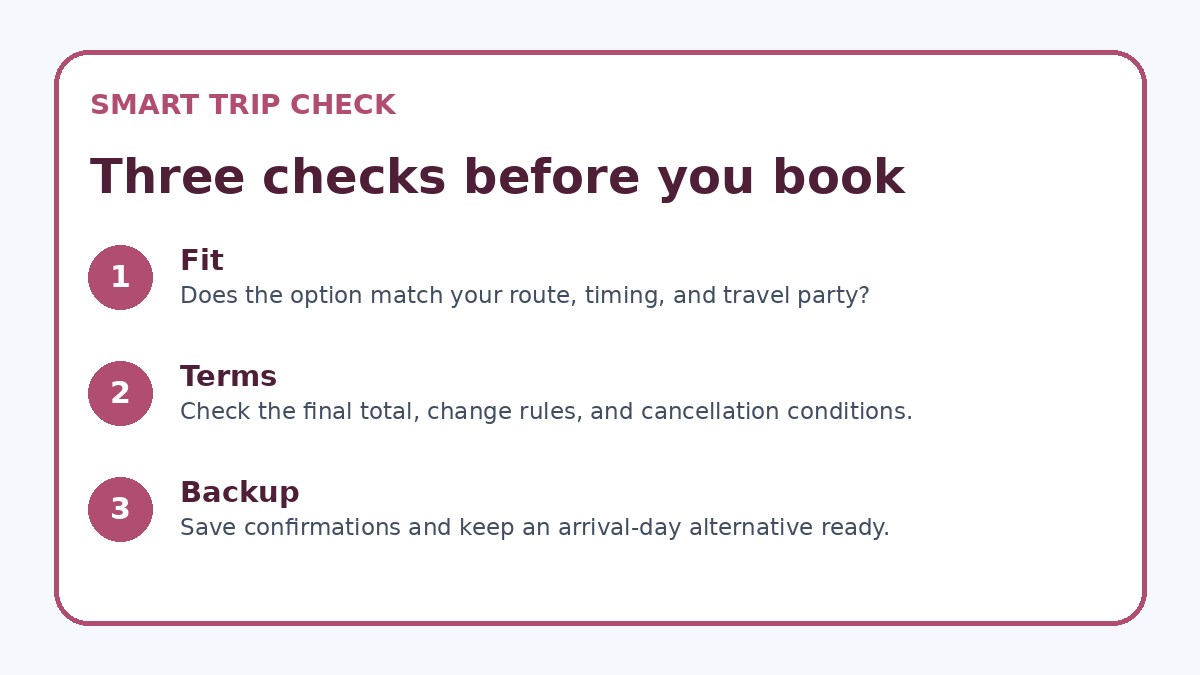
Use your exact dates and traveler details so the provider page can show the current total and conditions.
Choosing where to stay in Rome with heavy luggage
Location matters differently when you travel with big bags. A centrally located hotel can save time but may be up narrow streets or historic buildings without elevators; a short walk from a main station can mean heavy rolling over cobblestones. When you have flexible dates, search for nights when hotels with desirable physical features — ground-floor suites, elevator access, larger closets, or a helpful porter service — appear at similar rates. Also consider staying near major transport hubs like Termini or stations served by Leonardo Express or coach services so transfers involve fewer vehicle changes.
Filter properties for accessibility features and read recent guest comments about stairs, elevators, and luggage assistance. If a property doesn’t list elevator access clearly, contact them before booking. For apartments and vacation rentals, get accurate measurements of stairs, door widths, and elevator capacity from the host or property manager. If you’re arriving late or leaving early, check whether the property offers luggage hold or flexible check-in so you don’t have to wrestle bags into a room outside normal times.
Before you book
- Run flexible-date searches for flights and hotels covering at least ±3 days to surface alternatives with better baggage terms.
- On every flight’s final booking page, verify checked-bag weight limits, number of bags included, and carry-on size/weight rules.
- For connecting itineraries, confirm whether checked bags will be through-checked to Rome or require re-checking and customs pickup.
- Contact hotels or hosts to confirm elevator access, room floor, stair descriptions, and whether staff will assist with heavy luggage.
- Compare the total door-to-door time and any extra overnight or transfer costs against potential baggage fee savings.
- If uncertain, hold flexible reservations where possible or book refundable/transferable options until baggage and room details are confirmed.
Tradeoffs, decision criteria, and what to verify before you book
Using flexible dates usually means balancing cost, time, and convenience. You might accept a slightly longer travel day to avoid high overweight fees, or you may add a night in Rome to travel on a date with friendlier baggage rules. Make a checklist of your priorities (minimize fees, reduce walking with luggage, avoid overnight baggage storage) and score each date combination against those needs. Consider additional small costs such as an extra night’s stay, local taxi fares to avoid transfers, or paying for a porter service at arrival.
Before you commit, verify these details on the final booking pages: exact checked-bag allowances and fees by fare class; carry-on size/weight limits; whether checked bags are through-checked on connecting itineraries; hotel room floor, elevator access, and luggage hold policy; and any arrival-time restrictions. If you’re comparing many options at once, Trip.com can be used as one place to view current availability and conditions, but always confirm baggage and room details on the airline’s or hotel’s own booking page before payment.
Frequently asked questions
How many days should I flex on either side to find useful Rome travel deals for heavy luggage?
A practical starting point is to search at least three days before and after your preferred travel dates; expanding to seven days can reveal additional fare and room options. Short-range shifts (±1–2 days) often change flight fare class and connection patterns enough to affect baggage allowances, while a ±5–7 day window is more likely to show different hotel room types or quieter travel days. Use that window to compare total trip cost, connection comfort, and whether you can avoid added luggage fees or difficult transfers.
Should I prefer direct flights to Rome when I have oversized suitcases?
Direct flights reduce baggage handling complexity because you typically do not re-check bags between legs, lowering the chance of missed connections or having to carry cases between gates. However, direct options can be more expensive or less flexible on baggage inclusions. If a connecting itinerary provides a fare class that includes checked bags and has reliable minimum connection times, it can be a better tradeoff. Always verify on the airline booking page whether luggage is through-checked and what the allowed dimensions and weights are.
Can I rely on a hotel to store oversized bags if my arrival or departure times are awkward?
Many hotels offer luggage storage, but policies vary: some hold items for free for a few hours, others charge or have limits on size and liability. For apartments and smaller guesthouses, storage may be informal or unavailable. Before booking, contact the hotel or host to ask explicitly about storing oversized or heavy luggage, any fees, hours of access, and how long they will keep items. If secure long-term storage is needed, identify a reputable luggage-storage service in Rome and compare its hours, location, and cost against changing travel dates.
Final planning note
Traveling to Rome with extra luggage is a planning problem you can solve by using date flexibility as leverage. Small shifts in departure or return dates often change fare classes, connection patterns, and hotel availability in ways that lower baggage fees or simplify transfers. The key steps are to search a date window, measure total door-to-door time versus savings, and then verify baggage inclusions and room-access details on the provider’s booking page before paying. If multiple promising options remain, prefer the one that best balances lower fees, shorter or easier transfers, and confirmed hotel access for your luggage; keep refundable or changeable bookings where practical until those details are locked in.
Continue planning
Check current options and final conditions
Use the provider page to confirm live availability, the final total, cancellation terms, and every condition that matters to your trip.
This evergreen planning guide was created with AI-assisted drafting and a structured quality review. It does not display live prices, schedules, availability, visa guidance, or provider rankings. Verify current details before booking. Some links are affiliate links; we may earn a commission at no additional cost to you.