
For a business traveler, the travel day between New York City and Washington, DC is about more than departure and arrival: it’s a sequence of choices that affect time in transit, productivity, and stress levels. Start by picking the transport mode that matches your priorities—speed, flexibility, or cost—and then layer the practical checks that make the day smooth: departure terminals, transfer complexity, luggage rules, and realistic time buffers for security or traffic. Pack for work, pre-load files and meetings, and plan a fallback in case delays change your schedule. Below you’ll find a compact checklist of what to verify before you book, tradeoffs to weigh between different ways to travel, and concrete on-the-day tips to keep you professional and on time.
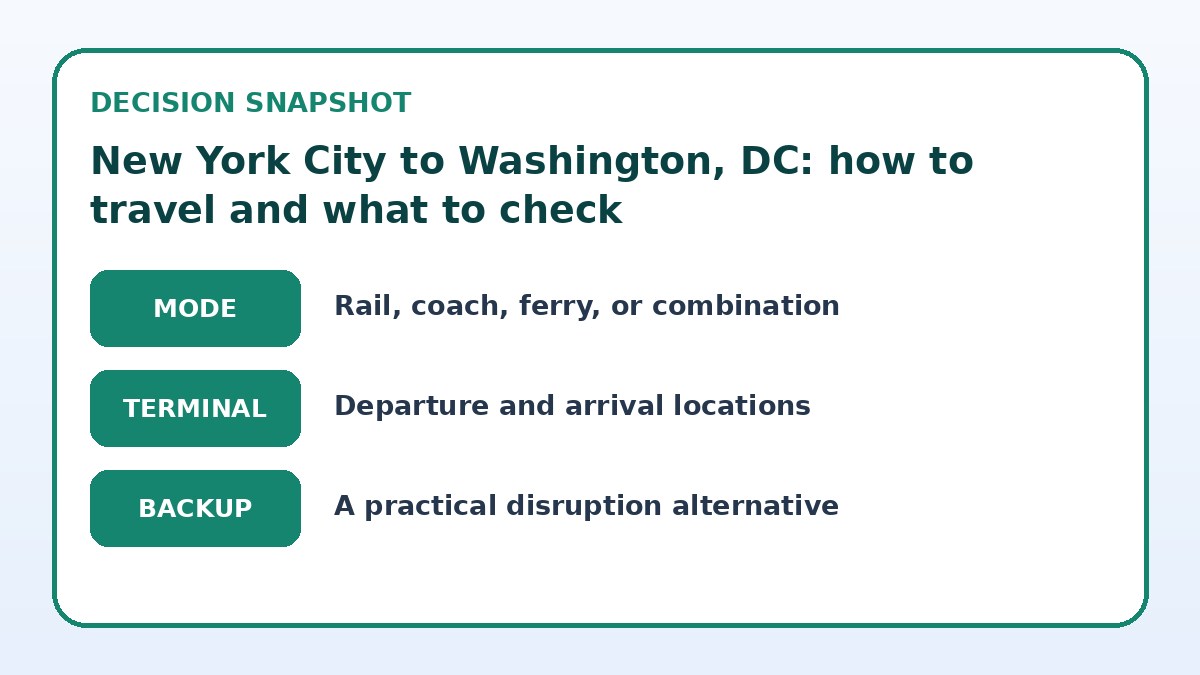
See current options before you compare the details
Availability and final conditions change. Open Trip.com now or keep reading for the practical comparison.
Choosing the mode: speed vs. predictability
Trains, planes, and private car services each change the travel day in different ways. Trains often remove check-in queues and let you work during the ride with a steadier, desk-like surface; however, they use specific stations that might require a connecting subway or taxi. Flights can be faster under ideal conditions but add time for security, boarding, and airport transfers at both ends, which makes them less predictable for tight meeting schedules. Driving or car service offers door-to-door control but exposure to highway traffic variability and limited workspace unless you have a well-equipped vehicle.
When you’re deciding, think about the whole door-to-door clock, not just in-vehicle time. Estimate time to reach the departure point, the minimum arrival lead time your provider recommends, any likely transfers, and typical traffic or platform walk times at each end. If meetings are the priority, lean toward the option that reliably gives you a cushion before the appointment. For more flexible days where cost matters, allow extra time and consider slower but less expensive alternatives.
Packing and on-board productivity
Pack like you’ll be working immediately on arrival: devices charged, chargers and power bank accessible, and files offline in case of spotty internet. A small, organized carry-on with business essentials—presentation materials, a spare shirt or tie, noise-reducing earbuds, and printed copies of critical documents—saves time if checked baggage delays occur. Also prepare for security checks and rapid gate changes by using packing cubes or quick-access compartments for items you’ll need between security and boarding.
On-board productivity is influenced by power availability, Wi-Fi reliability, and workspace ergonomics. If working on a train or plane, bring a lightweight lap desk or folder that stabilizes a laptop, and prioritize concise, high-focus tasks that tolerate interruptions. For confidential work, use a privacy screen and a VPN. Finally, plan phone calls around quieter segments of travel and check whether your chosen carrier allows or restricts phone conversations or other onboard activities.
| Approach | Best for | Tradeoff to check |
|---|---|---|
| High-speed train | Working en route and avoiding airport security queues | Station-to-station travel may require local transfers that add time |
| Flight | Shortest scheduled travel time in good conditions | Security, boarding, and airport transfers make total door-to-door time less predictable |
| Private car or rideshare | Door-to-door convenience and flexible departure times | Subject to road traffic; limited workspace compared with trains |
| Hybrid (train + car) | Balance of reliable schedule and last-mile flexibility | Requires extra coordination and potential transfer time between services |
Ready to check the option that fits your plan?
Use your exact dates and traveler details so the provider page can show the current total and conditions.
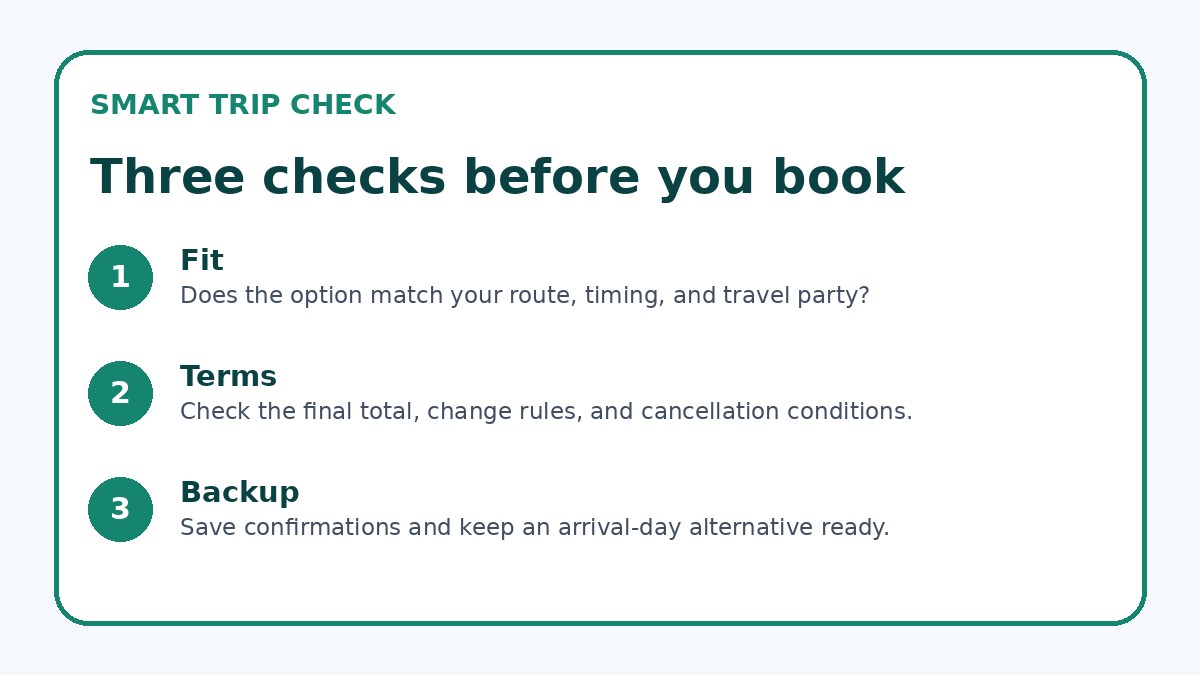
Timing the travel day and contingency planning
Build realistic buffers into your itinerary: leave extra time for security lines, congested city streets, or platform changes that often eat into tight schedules. For connections, allow room for a missed first leg; know the provider’s change or rebooking policy and the process for same-day transfers. Keep contact numbers for your hotel, corporate travel manager, and a reliable local taxi or ride-hailing service handy. If you must arrive by a specific time, prefer earlier departures that give you margin rather than cutting it close.
Identify a plan B before you leave: a later train or flight, an alternative station or airport, and a local meeting point to reschedule in-person commitments if needed. Save frequently used addresses in your phone and map the quickest routes from different arrival points to common downtown destinations. Consider travel insurance or corporate trip protections where recommended by your employer, and make sure your team and key contacts are aware of your travel windows so they can adapt if delays occur.
Before you book
- Confirm exact departure and arrival locations and map door-to-door travel time including local transfers.
- Review cancellation and change rules on the provider’s official booking page before finalizing purchase.
- Pack a carry-on with essential meeting materials, chargers, power bank, and an extra outfit element if needed.
- Save alternate later departures and local transfer options in case you need to rebook the same day.
- Pre-load important files offline, enable a VPN for secure connections, and bring a privacy screen for screens.
- Share your itinerary and an arrival buffer with meeting contacts and your travel manager or assistant.
Booking checklist and what to verify online
Before you complete any booking, verify the departure and arrival locations and how they connect to your next destination—some stations and airports carry similar names but are far apart. Confirm change and cancellation terms, baggage allowances, and what constitutes an on-time arrival for your purposes. If you plan to use corporate expense channels, check what fares and service classes are eligible for reimbursement. When using a third-party search site such as Trip.com to compare availability, always open the provider’s official booking page to confirm final conditions and fees.
Also check the small but important operational details that affect the travel day: how far the platform or gate is from the ticketing area, whether check-in or seat assignment is mandatory in advance, and if there are any peak-time surcharges or restricted boarding rules. For trains, look for seat reservations and quiet car policies; for flights, verify which terminal and typical transfer times; for car services, confirm pickup points and cancellation windows. Having these details saved before you go streamlines the day and reduces surprises.
Frequently asked questions
Should a business traveler prefer train or plane between New York City and Washington, DC?
The right choice depends on priorities. If uninterrupted working time, stable Wi-Fi, and no airport security are important, trains often offer a predictable onboard environment with fewer pre-departure formalities. If shaving the in-vehicle clock is essential and you can account for airport transfers and security time, flights may be faster under ideal conditions. Compare door-to-door time, total expected transfer time at both ends, and how each option fits your meeting schedule. Verify schedules and terminal details on the providers’ official pages before booking.
How much buffer time should I build into meeting schedules when traveling between these cities?
Aim for conservative buffers: allow time to reach the departure point, recommended minimum arrival before departure, and an allowance for transfers and local traffic at the arrival city. For crucial meetings, prefer at least one to two hours between scheduled arrival and meeting start to absorb minor delays without stress. If your logistics include unfamiliar local transit or multiple connections, increase that buffer. Communicate those buffers to coworkers and clients so expectations remain realistic if the plan needs to change.
What on-the-day tech and packing habits reliably reduce stress for business travel?
Charge all devices fully before travel and carry a small charger kit including a power bank and multi-tip cables. Keep important documents, boarding passes, and IDs in an easy-access pocket and have digital backups in cloud storage. Pack noise-canceling earbuds and a compact lap desk or stable folder for laptop work. Wear business-appropriate but comfortable clothes that are wrinkle-resistant to streamline quick touch-ups. Finally, download transit and meeting-location maps for offline use and save key contacts on your phone so you can adapt quickly if plans shift.
Final planning note
A smooth business travel day between New York City and Washington, DC comes down to matching the mode to your priorities and preparing for the small frictions that become big delays: transfers, security, and last-mile logistics. Choose the option that gives you the right balance of reliability and productivity, verify all operational details on the provider’s booking page, and carry a compact emergency plan with alternative departures and local transport contacts. With targeted packing and realistic buffers, you’ll preserve meeting time, reduce stress, and arrive ready to work.
Continue planning
Check current options and final conditions
Use the provider page to confirm live availability, the final total, cancellation terms, and every condition that matters to your trip.
This evergreen planning guide was created with AI-assisted drafting and a structured quality review. It does not display live prices, schedules, availability, visa guidance, or provider rankings. Verify current details before booking. Some links are affiliate links; we may earn a commission at no additional cost to you.