Practical answer first: if your priority is simplicity and the shortest door-to-door time, choose a direct London to Paris flight when available. If you prioritize lower fare flexibility, more schedule options, or want to combine different carriers, a connecting itinerary can make sense — but it brings extra transfer risk and complexity. For first-time visitors, the real choice is between time and convenience versus potential savings and scheduling options. Think in terms of total travel time (including transfers), how much walking and security you’re willing to do, and how important a single-ticket itinerary is for protection if a delay occurs. Below you’ll find clear tradeoffs, decision steps, and a checklist to use while comparing direct and connecting routes so you can pick the right option for your trip.
How to compare total travel time and convenience
A flight’s airborne time is only one piece of the puzzle. For London to Paris, compare door-to-door time: add your travel to the departure airport, recommended check-in or arrival time, time for security and passport control, the flight time, and onward transport in Paris. For connecting itineraries, include layover length, transfer distance between gates or terminals, and whether you’ll pass through another country’s passport control. First-time visitors often underestimate walking distances and security lines—give yourself extra time if you’re unfamiliar with a large airport.
Practical comparisons use the same start and end points for both options. Map the trip from your accommodation in London to the airport and from Paris airport to your first destination. If a connecting option uses a different London airport or lands at a smaller Paris airport, factor in the extra ground travel. Also weigh comfort: direct flights reduce the number of times you must queue or re-clear security and usually mean simpler luggage handling, especially important if you travel with checked bags or limited mobility.
Cost tradeoffs, flexibility, and what to verify
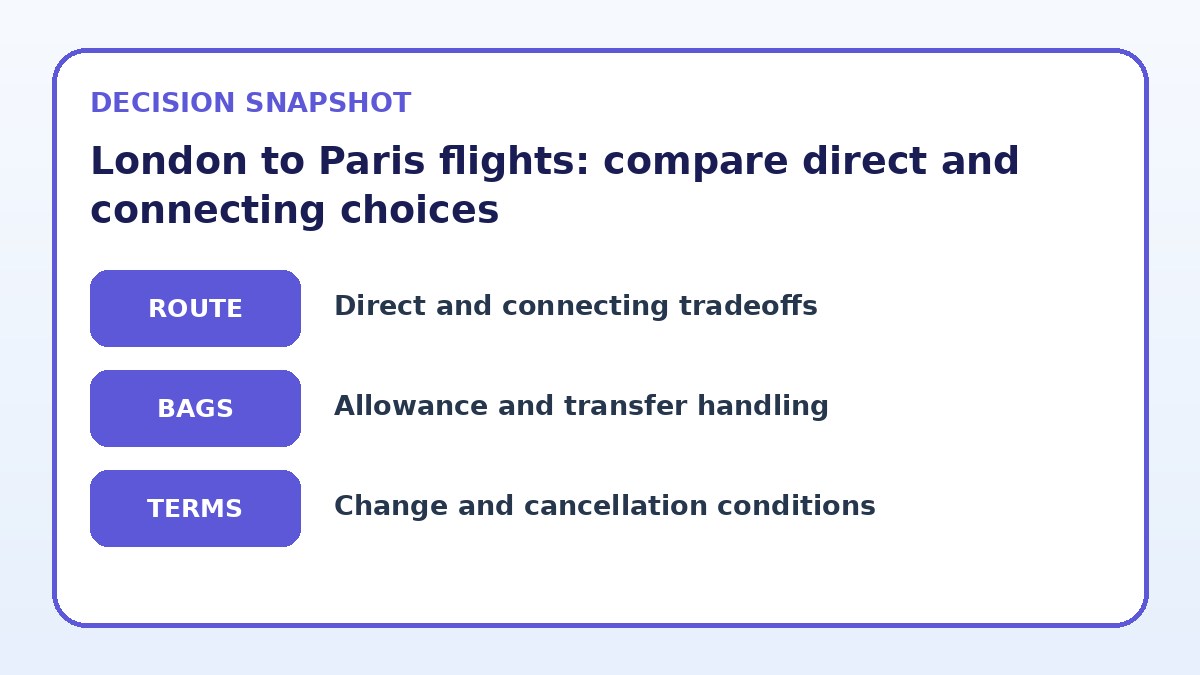
Connecting itineraries can present lower base fares or creative route combinations, but the headline price doesn’t tell the whole story. Check baggage allowances, change fees, and seat assignments for each leg. Low-cost carriers often price each segment separately — a cheap connecting fare can become expensive once you add checked baggage or priority boarding. For direct flights, the ticket may include more predictable services, but flexibility varies by fare class and carrier, so read the fare rules before buying.
When providerspecific facts matter, verify them on the airline or booking site’s final page before purchase. Confirm whether checked bags are transferred between flights, whether you need to collect and recheck luggage during a connection, and what protections exist if a delay causes you to miss a connection. If you book separate tickets with different airlines, there’s usually no interline protection; plan longer layovers or buy travel insurance that covers missed connections on separate bookings.
| Approach | Best for | Tradeoff to check |
|---|---|---|
| Direct flights | Travelers prioritizing simplicity, shorter door-to-door time, and fewer transfer steps | Fewer scheduling options and sometimes higher fares or less flexible fare classes |
| Connecting flights on a single ticket | Those needing more schedule options while keeping some protection if delays occur | Longer total travel time and more points of potential disruption |
| Separate-ticket connections | Experienced planners seeking lower fares or multi-carrier routing flexibility | No interline protection—missed connections usually mean buying new tickets |
| Mixed-mode travel (air + train) | Travelers balancing cost and comfort, or aiming to avoid busy hub transfers | Requires coordinating different operators and may increase planning complexity |
Risks and disruption management for first-time flyers
Connecting journeys bring more points of failure: a delayed inbound flight, long transfer walks, or passport queue congestion can jeopardize your onward journey. If you prefer a low-risk plan, a direct flight reduces the number of moving parts and usually smooths the process at departure and arrival. However, direct flights can also be canceled or delayed; understand the carrier’s rebooking and refund policies and keep contact details handy. For peace of mind, choose longer layovers or single-ticket connections that give the carrier responsibility for re-accommodating you.
If you choose a connecting itinerary, build buffer time and prepare for fast transfers: know terminal maps, mobile boarding pass locations, and whether you must pass through security or immigration between flights. Pack essentials and a change of clothes in your carry-on in case checked bags are delayed. Consider travel insurance that explicitly covers missed connections and check whether your credit card or airline status provides additional protections or lounge access that can ease long waits.
Before you book
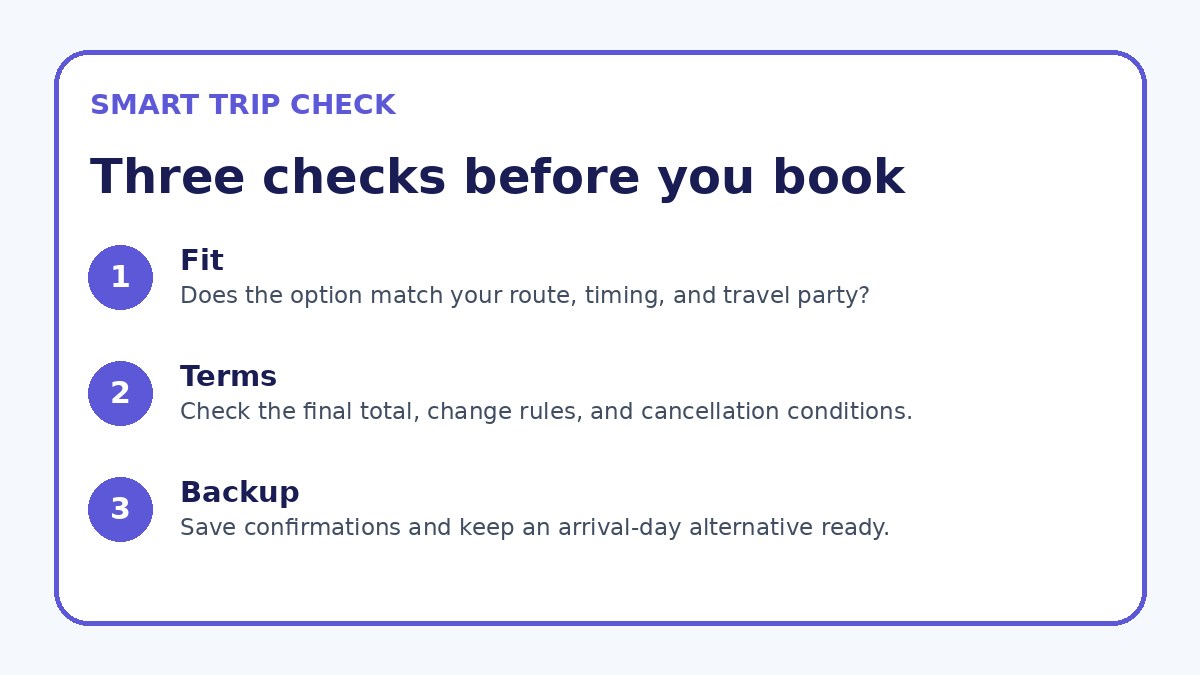
- Map door-to-door travel time for each option, including transit to and from airports and recommended arrival windows.
- Confirm luggage rules for every segment: checked bag transfer, fees per bag, and carry-on size limits.
- Verify connection terminals and minimum transfer times; look for single-ticket protection when possible.
- Check what happens if a flight is delayed or canceled—read rebooking and refund policies on the carrier’s final booking page.
- Compare total price including ancillary fees (baggage, seat selection, priority boarding) before deciding.
- Buy travel insurance or a flexible fare if your schedule is tight or you have nonrefundable plans in Paris.
When to prefer each option and practical booking tips
Choose direct flights if your trip duration is short, you’re traveling with family or heavy luggage, or you want the simplest arrival in Paris. Direct flights are particularly attractive for first-time visitors who want to reduce stress and maximize sightseeing time. When comparing direct options, check which London and Paris airports are involved and the ground transport options, because a shorter airborne time can be offset by longer transfers to the city center.
Opt for connecting flights when the broader schedule suits your plans, when direct seats are sold out, or if the connection unlocks a desirable loyalty benefit or alliance routing. If booking a connecting itinerary, prioritize single-ticket bookings and allow at least the carrier’s minimum recommended connection time plus a safety margin. Before you click buy, verify luggage transfer rules, the terminal change requirements, and whether you need a transit visa for any stopover country.
Frequently asked questions
Is flying direct from London to Paris always faster than connecting?
Not always. A direct flight removes intermediate connections, but total door-to-door time depends on airport proximity, time to clear security and passport control, and ground transport. A direct airborne flight may have a shorter flight time, but if it departs from a more distant airport or has long queues, a well-timed connecting itinerary that uses closer airports or faster ground links could have a similar or even shorter total travel time. Always compare the full travel window rather than airborne minutes alone.
Can I rely on checked luggage being transferred during a connection?
Only if the flights are on a single-ticket itinerary or the airlines have an interline agreement that explicitly covers baggage transfer. If you book both legs on the same ticket with the same carrier or partnered carriers, the airline usually transfers checked bags automatically. When flights are separate tickets, you typically must claim and recheck luggage yourself. Because policies and interline arrangements vary, verify baggage transfer rules on the airline or booking page before you book.
How long should my layover be for a safe connection?
There’s no universal minimum, but aim for a buffer beyond the airline’s published minimum connection time. For domestic-to-international or international-to-international transfers, plan at least 90–120 minutes in a busy hub; for cross-terminal or airport transfers, add more time. If you’re unfamiliar with the airport layout, traveling with checked bags, or needing passport control, err on the side of longer layovers. Always check the carrier’s recommended connection times and factor in time to navigate terminals and security lines.
Final planning note
For first-time visitors deciding between London to Paris flights, think in terms of tradeoffs rather than absolutes. Direct flights offer simplicity and fewer transfer hassles, ideal for short stays and travelers who value time and a low-stress arrival. Connecting options expand scheduling flexibility and can lower headline costs, but they add steps, transfer risk, and planning complexity. Use the decision checklist to compare total door-to-door time, baggage rules, and rebooking protections before you buy. Verify all provider-specific details on the airline’s or booking site’s final page (including Trip.com if you choose to compare availability), then pick the option that aligns with your comfort level and itinerary priorities.
Continue planning
Check current options and final conditions
Use the provider page to confirm live availability, the final total, cancellation terms, and every condition that matters to your trip.
This evergreen planning guide was created with AI-assisted drafting and a structured quality review. It does not display live prices, schedules, availability, visa guidance, or provider rankings. Verify current details before booking. Some links are affiliate links; we may earn a commission at no additional cost to you.