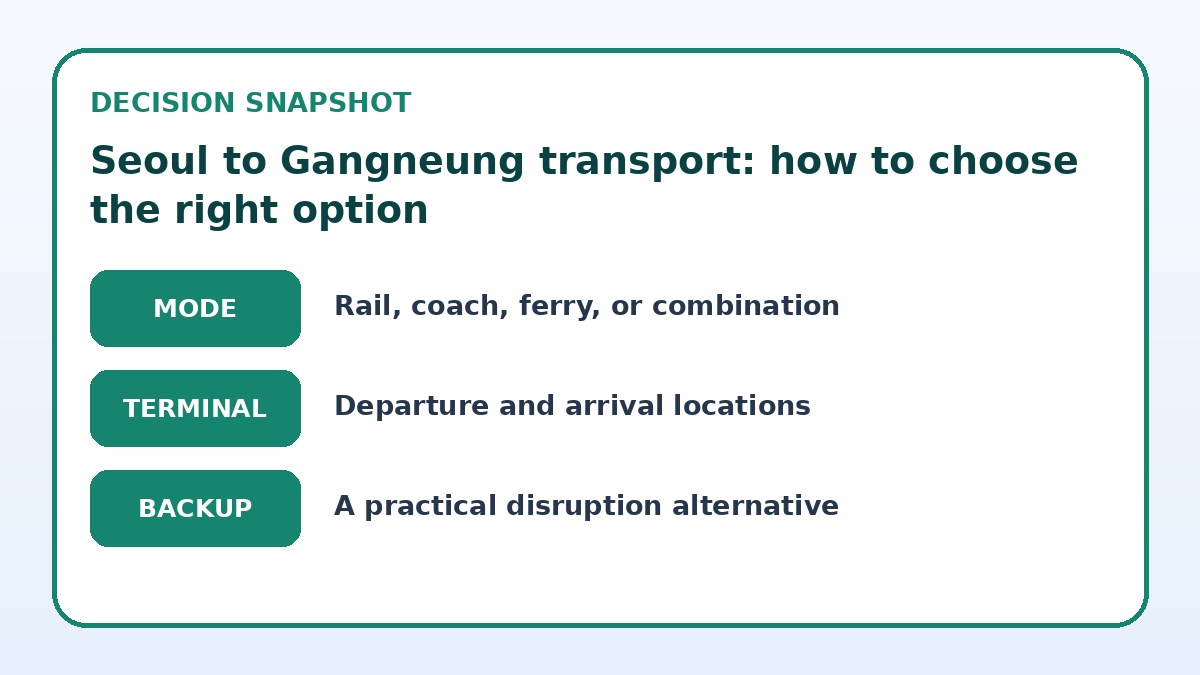
If you’re traveling solo from Seoul to Gangneung, pick the intercity option that fits your priorities: convenience, budget, or flexibility. For most solo travelers who value straightforward planning and reliable schedules, regional express trains or standard intercity buses are the most practical choices—each offers different tradeoffs in comfort, frequency, and where you’ll arrive in Gangneung. Your decision hinges on three personal variables: how much walking or luggage handling you’re willing to do, whether you prefer predictability over flexibility, and how much time you want to spend on the move versus exploring. This article gives a clear recommendation up front, then breaks down the tradeoffs and decision criteria so you can compare options practically and book with confidence.
See current options before you compare the details
Availability and final conditions change. Open Trip.com now or keep reading for the practical comparison.
The practical answer up front: which option fits most solo travelers
For a solo traveler whose priority is a stress-free, predictable journey with comfortable seating and straightforward boarding, a direct regional train tends to be the most practical choice. Trains generally have consistent schedules, clear platforms, and onboard seating that makes solo travel feel safer and less effortful than coordinating road traffic. They also require less luggage handling at departure and arrival when compared with low-cost transfer-heavy alternatives. Choose a train when you want to relax, read, work, or enjoy the scenery without worrying about road conditions or complicated transfers.
If your priorities lean toward finding more departure times in the late evening or reaching a stop closer to a specific neighborhood in Gangneung, an intercity bus can be the better practical choice. Buses often serve multiple terminals and can allow cheaper flexibility in routing, though boarding points in Seoul and drop-off locations in Gangneung will affect which bus is actually most convenient for your itinerary. For solo travelers comfortable with slightly less predictability in on-time performance but seeking more schedule choices, buses can be the sensible option.
How to weigh speed, comfort, and frequency
Speed is important but not the only factor; a faster service that departs infrequently or from a harder-to-reach station may actually cost you more time door-to-door. When comparing options, think in door-to-door terms: include your travel time to the Seoul departure point, waiting time, and transfer time on arrival in Gangneung. Convenience for a solo traveler often means shorter walks with luggage, clear signage, and readily available staff. If you’re traveling during a busy local event or holiday period, check how each option’s frequency and likely crowding will affect your comfort and plan accordingly.
Comfort covers seating, space for luggage, onboard facilities, and the ease of finding help if you need it. Trains generally offer more legroom and a stable ride, while buses can vary widely by carrier and coach type. Frequency matters for flexibility: if you want many potential departure times, a frequent bus or a high-frequency train corridor gives breathing room when plans shift. For late arrivals or early departures, ensure your chosen option has a schedule that matches your arrival windows or be ready to arrange local transfers if the connection is inconvenient.
| Approach | Best for | Tradeoff to check |
|---|---|---|
| Regional express train | Solo travelers valuing comfort, predictable schedules, and minimal transfers. | Fewer departure times and potentially higher fare compared with some buses; check station access. |
| Intercity highway bus | Those wanting more departure options and varied arrival points in Gangneung. | Variable comfort and possible traffic delays; boarding locations may be less central for some plans. |
| Self-drive or car hire | Travelers who need complete schedule flexibility and want to explore on the way. | Requires comfort driving in Korea, parking, and handling navigation and tolls; not ideal for first-time solo visitors. |
| Combination (train + local bus/taxi) | Travelers balancing cost and convenience who prefer a flexible final-mile option. | Adds transfer steps and luggage handling; verify connection times to avoid long waits. |
Ready to check the option that fits your plan?
Use your exact dates and traveler details so the provider page can show the current total and conditions.
Practical tradeoffs solo travelers should compare
Cost is always a consideration, but don’t compare sticker prices in isolation. Factor in the hidden time-costs: how much extra transit is required to reach the departure point, whether luggage storage or handling is needed, and whether a cheaper option forces an awkward arrival time. Solo travelers often value paying a little more for a direct, low-effort journey that reduces stress and the chance of missing a connection. Think about the tradeoff between saving money and adding complexity to your trip—sometimes a higher-priced direct train yields a better overall experience.
Safety and convenience are also key tradeoffs. Solo travelers should check which departure and arrival stations are well-lit, have luggage storage or lockers if needed, and offer clear staff assistance. If you plan to arrive late in Gangneung, consider how easy it will be to reach your accommodation from the arrival point and whether onward taxis or buses are available. When in doubt, choose the option that minimizes the number of moves and time spent in transit hubs, especially during off-peak hours.
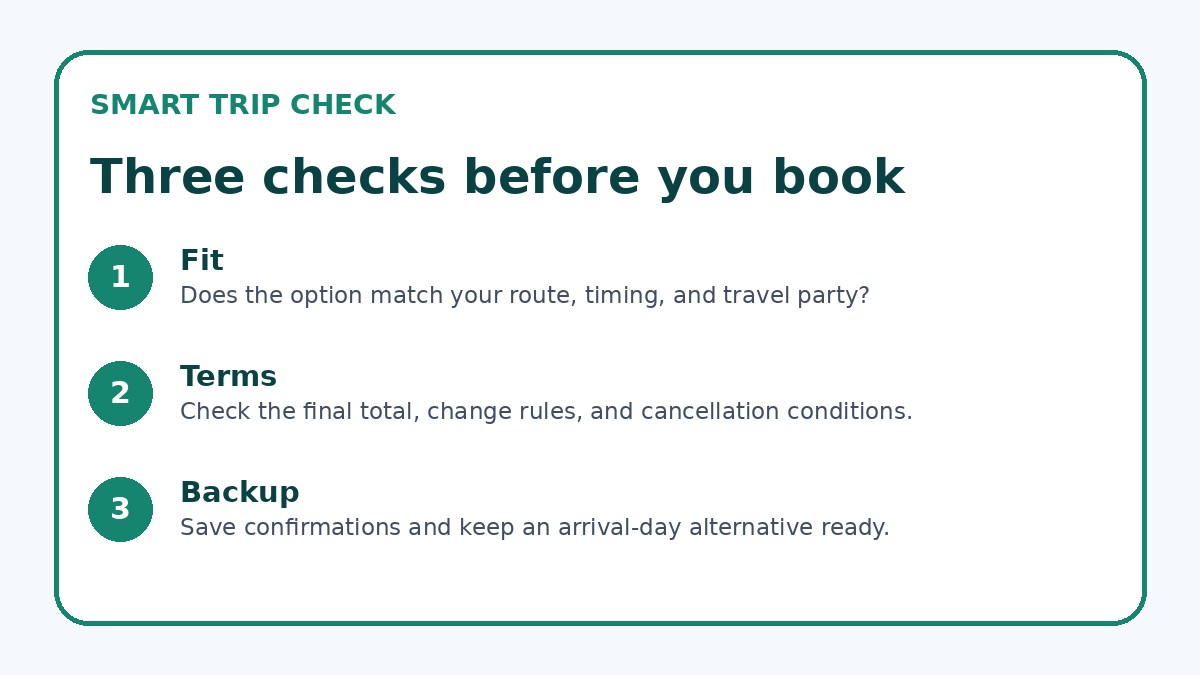
Before you book
- Decide whether door-to-door convenience or lower cost is your top priority and rank options accordingly.
- Check live schedules and seat availability on the operator’s official booking page before finalizing any reservation.
- Confirm exact departure and arrival addresses in Seoul and Gangneung and map the route to your accommodation.
- Verify luggage rules and storage availability so you can pack and plan for handling en route.
- Review change and cancellation policies on the carrier’s site and note any deadlines for free changes.
- Plan local onward transport from the arrival point in Gangneung (taxi stands, local buses, or walkability) and note timings.
How to research and book: what to verify before purchasing
Always verify the provider’s final booking page for live seat availability, exact boarding location, luggage allowances, and change/cancellation rules. Schedules, platform numbers, and baggage policies can change; the details on an operator’s site or an official booking channel are the authoritative source for what you’ll encounter on travel day. If you use third-party comparison tools, treat them as convenience aids and cross-check any important detail on the operator’s page. Trip.com can be a useful comparison point but should not replace confirmation with the carrier.
For trains examine whether the service is direct or requires any transfers. For buses check the exact pickup and drop-off addresses—some services use multiple terminals in both Seoul and Gangneung. Note whether seat reservation is recommended or mandatory for the chosen option, and whether tickets are digital or need to be printed. Finally, confirm how long before departure you must arrive at the station and whether there are procedures for boarding assistance if you are carrying heavy luggage or prefer staff help.
Frequently asked questions
Which transport option is safest for a solo traveler traveling only with a backpack?
For a solo traveler carrying only a backpack, safety concerns usually come down to personal comfort with crowds and transfers rather than the mode itself. Trains often provide a more stable environment with reserved seating, staff on hand, and clearer signage, which many solo travelers find reassuring. Buses can be safe too, but boarding and luggage stowage practices vary by company—confirm how backpacks are stored and whether overhead racks or separate bays are used. Regardless of mode, keep valuables close, note staff locations, and choose well-known, reputable operators; verify details on the operator’s booking page.
How should I decide between a direct service and a connecting route?
When comparing direct versus connecting services, think about total door-to-door time, transfer complexity, and your tolerance for uncertainty. A direct service minimizes the number of times you must handle luggage and reduces the chance of missed connections—often the right choice for solo travelers wanting simplicity. A connecting route can save money or provide better departure times, but it adds transfer steps and potential waiting time. If choosing a connection, build in a comfortable buffer between services and confirm transfer stations and platforms on the operator’s site before you travel.
What should I check about arrival logistics in Gangneung before I book?
Before booking, identify where the service drops you off in Gangneung and how you’ll complete the last mile to your accommodation. Check whether the arrival point is within walking distance of your hotel, if there are taxi stands or local buses nearby, and whether late-night options exist if you arrive after dark. Look at station facilities for luggage storage or assistance if you have an early morning or late return. Cross-check this practical information on the carrier’s pages and use maps to estimate walk times and taxi fares so you’re not surprised on arrival.
Final planning note
Choosing the most practical Seoul to Gangneung transport as a solo traveler comes down to a few clear priorities: how much convenience you want, how flexible your schedule is, and how comfortable you are handling luggage and transfers. For predictable comfort and fewer decisions on the travel day, direct trains often win; for more departure options and potentially different arrival points, buses are useful. Always verify live schedules, luggage policies, and cancellation terms directly on the provider’s booking page, and map your onward journey from the arrival point. With those checks done, you’ll pick the option that fits your travel style and enjoy a smoother trip to Gangneung.
Continue planning
Check current options and final conditions
Use the provider page to confirm live availability, the final total, cancellation terms, and every condition that matters to your trip.
This evergreen planning guide was created with AI-assisted drafting and a structured quality review. It does not display live prices, schedules, availability, visa guidance, or provider rankings. Verify current details before booking. Some links are affiliate links; we may earn a commission at no additional cost to you.